Cardio Workout At Home: 30 Minutes To Better Heart Health
Get your heart pumping with this expert-approved 30-minute cardio workout you can do anywhere, no equipment needed.
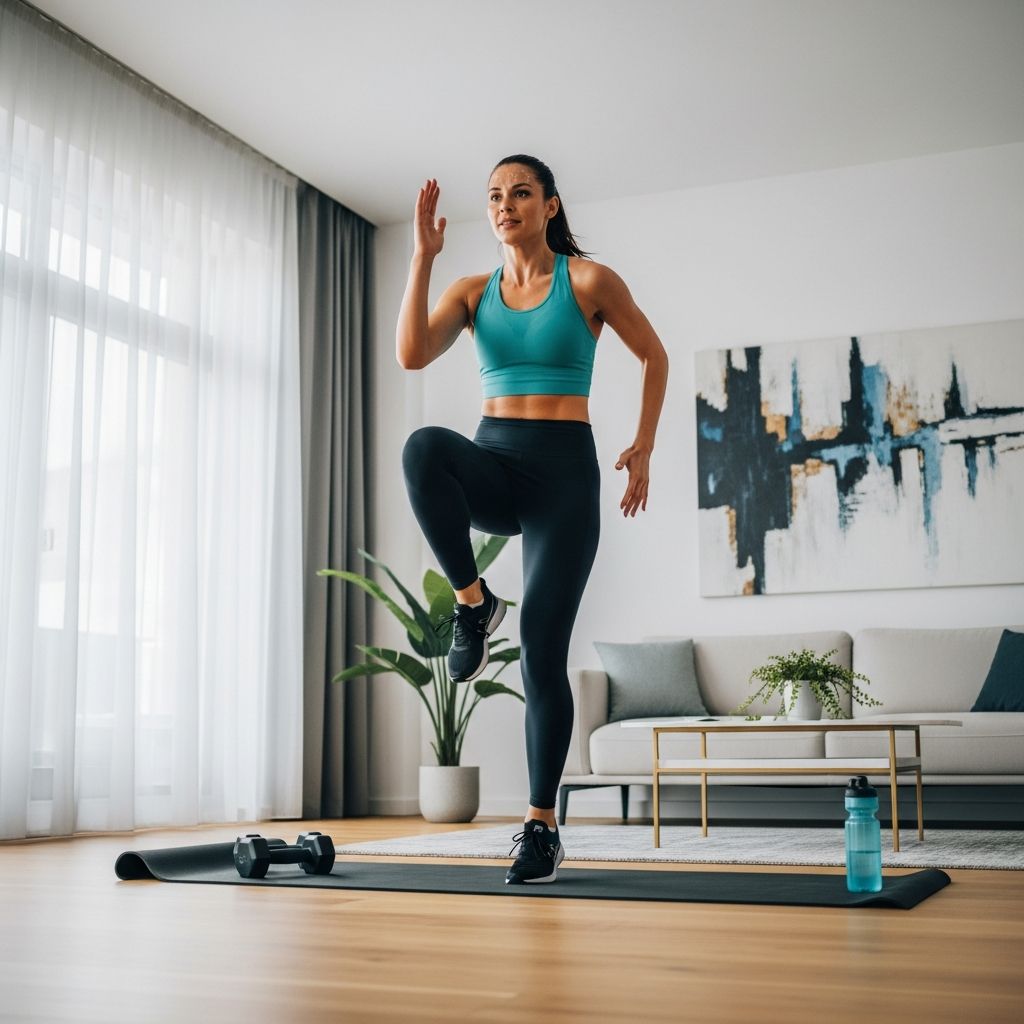
Cardiovascular exercise is essential for maintaining a healthy heart, improving endurance, and burning calories effectively. But you don’t need a gym membership or fancy equipment to get your heart rate up. This 30-minute no-equipment cardio workout designed by certified trainer Jen Widerstrom delivers high-intensity interval training (HIIT) that maximizes fat burn and cardiovascular benefits in minimal time.
Why Cardio at Home Works
Regular cardio exercise strengthens your heart muscle, lowers blood pressure, and reduces risk factors for chronic diseases. According to the CDC, adults should aim for at least 150 minutes of moderate-intensity aerobic activity or 75 minutes of vigorous-intensity activity weekly. HIIT workouts like this one count toward vigorous activity and provide benefits in less time.
A 2023 study published in the British Journal of Sports Medicine found HIIT improves VO2 max (a measure of cardiovascular fitness) more efficiently than steady-state cardio. This workout alternates intense bursts with recovery periods, creating an ‘afterburn’ effect where you continue burning calories post-workout.
- Time-efficient: Just 30 minutes delivers results comparable to longer sessions
- No equipment needed: Uses only bodyweight
- Scalable: Beginners can modify; advanced users can intensify
- Heart health benefits: Improves circulation, lowers cholesterol, reduces diabetes risk
The 30-Minute Cardio Workout
Perform this workout 3-4 times per week. Warm up first, then cycle through the circuit. Rest 1-2 minutes between rounds. Complete 3-4 rounds total.
Warm-Up (5 minutes)
Prepare your body and elevate your heart rate gradually to prevent injury.
| Exercise | Duration | Description |
|---|---|---|
| Marching in place | 1 min | High knees, swing arms |
| Arm circles | 30 sec forward, 30 sec backward | Big circles to loosen shoulders |
| Bodyweight squats | 1 min | Slow and controlled |
| Torso twists | 1 min | Standing, rotate upper body |
| Butt kicks | 1 min | Jog in place, heels to glutes |
Main Circuit (20-24 minutes)
Do each exercise for 40 seconds at high intensity, rest 20 seconds. Move quickly between exercises.
1. High Knees
Run in place, driving knees toward chest. Pump arms vigorously. Keep core tight. Mod: March instead of run.
2. Burpees
Squat, hands to floor, jump feet back to plank, optional push-up, jump feet forward, explosive jump up. Mod: Step back instead of jumping.
3. Mountain Climbers
Plank position, rapidly drive knees toward chest alternately. Keep hips low. Mod: Slow tempo.
4. Jump Squats
Squat low, explode up into jump, land softly. Mod: Air squats without jump.
5. Skaters
Leap side-to-side like speed skater, touching opposite hand to foot. Mod: Step side-to-side.
6. Push-Up to Plank
Push-up, then extend to forearm plank, back to push-up position. Mod: From knees.
7. Fast Feet
Quick feet shuffle in place like a boxer. Stay on balls of feet. Mod: Slower pace.
Related Stories



Cool-Down (3-5 minutes)
- Standing forward fold: 1 min
- Cat-cow stretches: 1 min
- Seated spinal twist: 30 sec each side
- Child’s pose: 1 min
- Deep breathing: 1 min
Benefits of This HIIT Cardio Routine
Fat Burning and Metabolism Boost
HIIT creates excess post-exercise oxygen consumption (EPOC), elevating metabolism for up to 24 hours. A 2023 meta-analysis in Sports Medicine confirmed HIIT superior for fat loss compared to moderate cardio of equal time.
Heart Health Improvements
The American Heart Association recommends 40 minutes of moderate-to-vigorous cardio 3-4 days weekly. This workout meets that threshold while improving endothelial function and reducing arterial stiffness per recent studies.
Improved VO2 Max
+15-20% gains in 8 weeks
Lower Blood Pressure
5-8 mmHg systolic reduction
Better Insulin Sensitivity
Reduces diabetes risk
Mood Enhancement
Boosts endorphins, reduces anxiety
Modifications for All Fitness Levels
| Exercise | Beginner | Intermediate | Advanced |
|---|---|---|---|
| High Knees | March in place | Moderate pace | Max speed + arms |
| Burpees | Step back, no jump | Half burpee | Full burpee + tuck jump |
| Mountain Climbers | Slow knee drives | Moderate speed | Max speed, cross-body |
| Jump Squats | Regular squats | Squat + reach | Plyo squat jumps |
Common Mistakes to Avoid
- Poor form: Maintain neutral spine, engage core
- Rushing recovery: Use full 20 seconds to catch breath
- Neglecting warm-up: Always prepare muscles and joints
- Overtraining: Include rest days for recovery
- Holding breath: Exhale on effort, inhale on recovery
How Often Should You Do This Workout?
Beginners: 2-3x/week + 1-2 strength sessionsIntermediate: 3-4x/week + 2 strength sessionsAdvanced: 4-5x/week + 2-3 strength sessions
Pair with resistance training 2x/week for optimal body composition changes. Include 1-2 active recovery days (walking, yoga).
Frequently Asked Questions
Can I do this workout every day?
HIIT should be limited to 3-4 days maximum per week to allow recovery. Daily cardio increases injury risk and overtraining symptoms like fatigue and poor performance.
Will this workout help me lose weight?
Yes, combined with calorie deficit. HIIT burns ~300-400 calories in 30 minutes plus afterburn effect. Track progress with measurements, not just scale weight.
Do I need any equipment?
No equipment required, but optional additions like dumbbells or jump rope increase intensity. Wear supportive shoes on firm surface.
Is this safe for beginners?
Yes with modifications. Consult doctor if you have heart conditions, joint issues, or are new to exercise. Start with 2 rounds, build up gradually.
How long until I see results?
Cardiovascular improvements in 2-4 weeks, visible body composition changes in 6-8 weeks with consistent nutrition and recovery.
Progression Tips
- Weeks 1-2: 3 rounds, 40/20 work/rest
- Weeks 3-4: 4 rounds, 45/15 work/rest
- Weeks 5+: 4 rounds, 50/10 work/rest or add weights
Track heart rate: Aim for 70-90% max heart rate during work intervals (220 – age = max HR estimate).
References
- Adult Activity: An Overview — Centers for Disease Control and Prevention. 2024-02-22. https://www.cdc.gov/physicalactivity/basics/adults/index.htm
- High-intensity interval training for health benefits and care of cardiac diseases — Wewege M et al. British Journal of Sports Medicine. 2019-07-01. https://bjsm.bmj.com/content/53/13/779
- Effects of High-Intensity Interval Training on Cardiometabolic Health — Atakan MM et al. Sports Medicine. 2023-04-11. https://pubmed.ncbi.nlm.nih.gov/36864345/
- Physical Activity Guidelines for Americans, 2nd edition — U.S. Department of Health and Human Services. 2018-11-12. https://health.gov/sites/default/files/2019-09/Physical_Activity_Guidelines_2nd_edition.pdf
- American Heart Association Recommendations for Physical Activity — American Heart Association. 2024-05-15. https://www.heart.org/en/healthy-living/fitness/fitness-basics/aha-recs-for-physical-activity-in-adults
Similar Articles








Read full bio of medha deb