Carotid Arteries: Structure, Function and Disease
Understanding your carotid arteries: Essential blood vessels supplying oxygen to your brain.
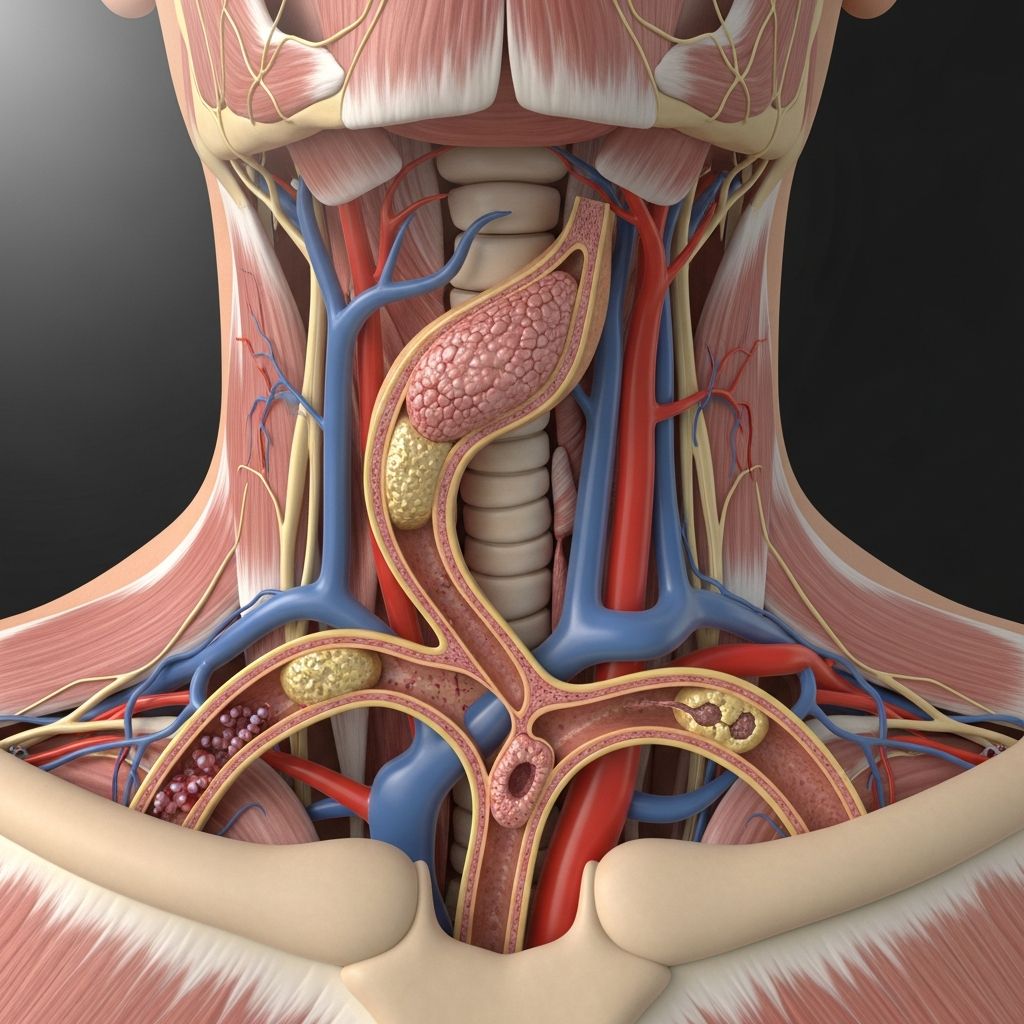
Your carotid arteries are two major blood vessels located in your neck that play a critical role in delivering oxygen-rich blood to your brain. These vital arteries are essential for maintaining proper brain function and overall cognitive health. When carotid arteries become diseased or blocked, the consequences can be severe, potentially leading to stroke and other serious neurological complications. Understanding the structure and function of your carotid arteries, along with recognizing signs of disease, is crucial for maintaining your health and preventing life-threatening conditions.
What Are Carotid Arteries?
The carotid arteries are two large blood vessels in your neck, one on each side, that supply approximately 80% of the blood flow to your brain. The name “carotid” comes from the Greek word meaning “to stupefy,” as ancient physicians noted that pressing on these arteries could cause unconsciousness due to reduced blood flow to the brain. Each carotid artery has two main branches: the internal carotid artery, which supplies blood directly to the brain, and the external carotid artery, which supplies blood to the face, scalp, and neck structures.
These arteries originate from the aorta in your chest and travel upward through your neck, where they can be felt as pulses on either side of your throat. The carotid arteries are strategically positioned to efficiently deliver the oxygen and nutrients your brain needs to function properly. Your brain consumes approximately 15% of your body’s blood supply despite being only 2% of your body weight, making these arteries absolutely vital to your survival and well-being.
The Anatomy of Carotid Arteries
Understanding the precise structure of carotid arteries helps explain how they can become diseased. Each carotid artery consists of three layers of tissue: the innermost layer called the intima, the middle muscular layer called the media, and the outer layer called the adventitia. This layered structure allows the artery to expand and contract with each heartbeat, accommodating the pulsatile flow of blood from your heart.
The carotid bifurcation, where the common carotid artery splits into internal and external branches, is particularly important clinically. This area is where blood flow patterns become turbulent, creating conditions favorable for plaque accumulation. The carotid artery is accessible to examination through physical inspection and ultrasound imaging, making it an ideal location for screening cardiovascular disease risk.
Function and Blood Flow Dynamics
The primary function of carotid arteries is to maintain consistent blood flow to your brain, delivering oxygen and removing metabolic waste products. Your brain requires approximately 50 to 60 milliliters of blood per 100 grams of brain tissue per minute to function optimally. The carotid arteries work in conjunction with the vertebral arteries, which supply the posterior portion of the brain, to ensure complete cerebral perfusion.
Blood flow through the carotid arteries is carefully regulated by your body’s autoregulatory mechanisms. When blood pressure drops, blood vessels dilate to maintain adequate flow, and when pressure increases, they constrict to protect delicate brain tissues. This sophisticated regulation system protects your brain from fluctuations in systemic blood pressure and ensures your brain receives consistent nourishment regardless of your activity level.
Related Stories



Carotid Artery Disease: Causes and Development
Carotid artery disease, also known as carotid artery stenosis, develops when plaque composed primarily of cholesterol and fat accumulates on the inner walls of these arteries. This process, called atherosclerosis, typically develops over many years and is influenced by multiple risk factors including high blood pressure, high cholesterol, smoking, diabetes, obesity, and a family history of cardiovascular disease.
The plaque buildup narrows the arterial lumen, restricting blood flow to the brain. As the stenosis progresses, it can significantly reduce the oxygen supply to brain tissues. In severe cases, the narrowed vessel becomes prone to blood clot formation, which can completely block blood flow and trigger a stroke. Additionally, pieces of plaque can break off and travel through the bloodstream to smaller brain vessels, where they lodge and cause acute ischemic strokes.
Risk Factors for Carotid Artery Disease
Several modifiable and non-modifiable risk factors contribute to the development of carotid artery disease:
- Age: Risk increases significantly after age 65, though disease can develop earlier in those with multiple risk factors
- Gender: Men are at higher risk than women, particularly before age 75
- Smoking: Tobacco use damages arterial walls and accelerates plaque formation
- High Blood Pressure: Hypertension injures arterial walls, promoting atherosclerosis
- High Cholesterol: Elevated LDL cholesterol promotes plaque accumulation
- Diabetes: Impairs blood vessel function and accelerates atherosclerosis
- Obesity: Associated with multiple cardiovascular risk factors
- Physical Inactivity: Regular exercise helps maintain vascular health
- Family History: Genetic predisposition increases disease risk
- Previous Stroke: Prior stroke indicates significant vascular disease burden
Symptoms of Carotid Artery Disease
Many people with carotid artery disease experience no symptoms, particularly in early stages. However, warning signs can indicate significant narrowing or recent vessel occlusion. The most important warning sign is a transient ischemic attack (TIA), sometimes called a mini-stroke, which produces temporary stroke-like symptoms.
Symptoms of TIA or stroke include sudden weakness or numbness on one side of the body, sudden difficulty speaking or understanding speech, sudden vision loss in one or both eyes, sudden severe headache without apparent cause, and sudden difficulty walking or loss of balance. These symptoms typically last from several minutes to 24 hours in a TIA, but represent a medical emergency requiring immediate evaluation.
Other warning signs include a bruit, an abnormal sound a healthcare provider hears when listening to your carotid artery with a stethoscope, which indicates turbulent blood flow from narrowing. Some patients experience amaurosis fugax, a temporary vision loss in one eye that resembles a curtain falling, which indicates embolic events from carotid plaque.
Diagnosis of Carotid Artery Disease
Healthcare providers use several diagnostic methods to identify and assess carotid artery disease. The initial evaluation includes a thorough history and physical examination. During the physical exam, your provider listens to your carotid arteries with a stethoscope to detect abnormal sounds indicating turbulent blood flow.
Ultrasound Imaging: Carotid ultrasound, also called carotid duplex ultrasound, is the primary screening tool for carotid artery disease. This non-invasive imaging technique uses sound waves to visualize the carotid arteries and measure blood flow velocity. It provides information about the degree of stenosis and plaque characteristics. The Cleveland Clinic vascular laboratory performs approximately 70,000 ultrasound studies annually, providing expert assessment of arterial narrowing.
Advanced Imaging: For patients with symptoms suggesting recent stroke or TIA, computed tomography (CT) and magnetic resonance imaging (MRI) of the brain reveal ischemic changes. CT angiography and MR angiography provide detailed visualization of carotid artery anatomy and degree of stenosis.
Catheter Angiography: This invasive procedure involves injecting contrast dye into the carotid arteries while taking X-ray images. While it provides excellent visualization, it carries small risks of stroke and is typically reserved for patients undergoing intervention.
Severity Classification and Treatment Thresholds
The degree of carotid artery narrowing determines treatment recommendations. Stenosis severity is categorized based on the percentage of arterial luminal narrowing:
| Stenosis Category | Degree of Narrowing | Clinical Significance |
|---|---|---|
| Mild Stenosis | 0-49% | Low stroke risk; medical management sufficient |
| Moderate Stenosis | 50-69% | Intermediate risk; revascularization considered with symptoms |
| Severe Stenosis | 70-99% | High risk; intervention recommended even without symptoms |
| Complete Occlusion | 100% | Complete blockage; surgery typically not beneficial |
Treatment Approaches for Carotid Artery Disease
Treatment strategies depend on symptom status, degree of stenosis, and individual patient factors. The goal of treatment is to prevent stroke by improving blood flow through the carotid artery and reducing the risk of thromboembolic events.
Medical Management
Patients with mild to moderate asymptomatic stenosis typically receive medical therapy focused on controlling risk factors and preventing disease progression. This includes antiplatelet medications such as aspirin or clopidogrel to reduce thrombotic risk, statins to lower cholesterol and stabilize plaques, antihypertensive medications to control blood pressure, and medications for diabetes management. Lifestyle modifications including smoking cessation, regular exercise, heart-healthy diet, weight management, and stress reduction are essential components of medical therapy.
Surgical Intervention: Carotid Endarterectomy
Carotid endarterectomy (CEA) is a traditional surgical procedure that removes plaque from inside the carotid artery. During this procedure, the surgeon makes an incision in the neck, opens the affected artery, and carefully removes the plaque buildup. The artery is then closed, restoring normal blood flow. CEA is an effective treatment for patients with symptoms and at least 50% blockage, and for those without symptoms who have at least 60% blockage.
The procedure can be performed under general or local anesthesia. Local anesthesia allows the patient to remain awake during surgery, enabling the surgeon to assess neurological function continuously. Cleveland Clinic’s experienced surgeons perform over 400 carotid procedures annually, with outcomes exceeding national benchmarks.
Endovascular Intervention: Carotid Angioplasty and Stenting
Carotid angioplasty and stenting (CAS) is a minimally invasive alternative to surgery. During this procedure performed under sedation, a catheter with a balloon is guided through blood vessels to the narrowed carotid artery. An embolic protection device, typically a filter, is deployed beyond the stenosis to catch debris. The balloon is inflated briefly to widen the artery, and a stent—a small mesh tube—is placed to maintain arterial patency. The stent remains permanently in the artery, acting as a scaffold to keep the artery open as it heals around it over several weeks.
CAS offers advantages including shorter recovery time, no general anesthesia required, and lower operative risk in certain patient populations. However, it carries risks including stent thrombosis, in-stent restenosis, and embolic complications.
Preventing Carotid Artery Disease
Prevention of carotid artery disease focuses on modifying controllable risk factors. Maintain a healthy blood pressure below 130/80 mmHg through diet, exercise, and medication if necessary. Achieve and maintain a healthy weight with a body mass index below 25 kg/m². Avoid tobacco completely and limit alcohol consumption. Engage in at least 150 minutes of moderate-intensity aerobic exercise weekly. Follow a heart-healthy diet emphasizing fruits, vegetables, whole grains, and lean proteins while limiting saturated fats, trans fats, and sodium. Manage diabetes and maintain cholesterol levels with LDL below 100 mg/dL. Manage stress through relaxation techniques and seek treatment for depression or anxiety if present.
Frequently Asked Questions
Q: How common is carotid artery disease?
A: Carotid artery disease is relatively common, particularly in older adults. Approximately 7% of people over age 65 have significant carotid stenosis. The prevalence increases with age and presence of cardiovascular risk factors.
Q: Can carotid artery disease be reversed?
A: While established plaque cannot be completely removed by medication alone, aggressive medical management can stabilize plaques and slow disease progression. Intensive lipid lowering and blood pressure control may lead to modest plaque regression in some patients.
Q: What is the difference between a stroke and a TIA?
A: A TIA (transient ischemic attack) causes temporary stroke-like symptoms that completely resolve within 24 hours, usually within minutes to hours. A stroke causes permanent neurological damage. Both represent medical emergencies requiring immediate evaluation.
Q: How often should I have carotid ultrasound screening?
A: Screening recommendations depend on individual risk factors. Those without symptoms or risk factors typically don’t need routine screening. Patients with risk factors or known disease should follow their physician’s recommendations, typically annually or as symptoms warrant.
Q: Are there newer treatments for carotid artery disease?
A: Research continues on advanced endovascular techniques including flow-reversal systems and newer embolic protection devices. Transcarotid artery revascularization (TCAR) is an emerging technique combining benefits of surgery and stenting. Discuss available options with your healthcare provider.
References
- Carotid Artery Stenosis Treatment — Cleveland Clinic. 2024. https://my.clevelandclinic.org/services/carotid-artery-stenosis-treatment
- Carotid Artery Disease — Cleveland Clinic. 2024. https://my.clevelandclinic.org/podcasts/love-your-heart/carotid-artery-disease
- Carotid Artery Disease – Cleveland Clinic Abu Dhabi — Cleveland Clinic Abu Dhabi. 2024. https://www.clevelandclinicabudhabi.ae/en/health-hub/health-resource/diseases-and-conditions/carotid-artery-disease
- Carotid Artery Stenting: Procedure and Recovery — Cleveland Clinic. 2024. https://my.clevelandclinic.org/health/treatments/16850-carotid-artery-disease-carotid-stenting
- Carotid Endarterectomy: Surgery and Recovery — Cleveland Clinic. 2024. https://my.clevelandclinic.org/health/treatments/16849-carotid-endarterectomy
Similar Articles








Read full bio of medha deb