Carotid Sinus Hypersensitivity: Causes, Symptoms, and Treatment
Understanding carotid sinus hypersensitivity: symptoms, diagnosis, and effective management strategies.
Understanding Carotid Sinus Hypersensitivity
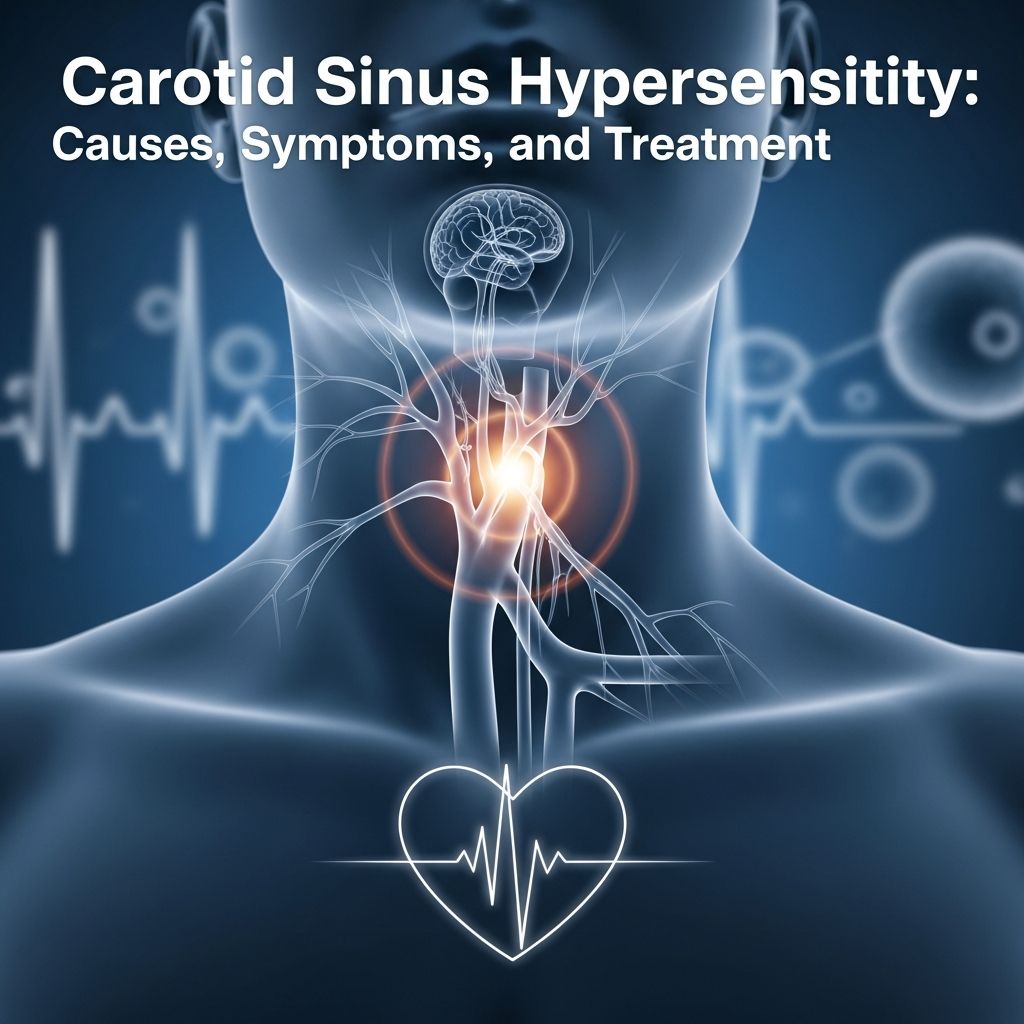
Carotid sinus hypersensitivity (CSH) is an exaggerated response of the baroreceptors located in the carotid sinus, a specialized area in the carotid artery in the neck. This condition results in an abnormal reflex that causes a sudden drop in heart rate, a significant decrease in blood pressure, or both. When these physiological changes occur rapidly, they can lead to a temporary reduction in blood flow to the brain, resulting in syncope (fainting) or presyncope (lightheadedness).
CSH is particularly prevalent in older adults and becomes increasingly common with advancing age. The condition can be triggered by relatively minor stimuli such as wearing tight collars, making sudden neck movements, or applying pressure to the carotid sinus area. Understanding this condition is crucial for proper diagnosis and management, as CSH can significantly impact quality of life and increase the risk of injury from falls.
What Causes Carotid Sinus Hypersensitivity?
In most cases, carotid sinus hypersensitivity is idiopathic, meaning the exact cause is unknown. However, several underlying factors and conditions can contribute to the development of CSH:
Structural and Anatomical Factors: Atherosclerosis may diminish carotid sinus compliance, resulting in a reduction in afferent impulse traffic in the baroreflex pathway. This arterial stiffness can increase the sensitivity of the carotid sinus to stimulation.
Neck-Related Causes: Extensive scarring from prior neck surgery in the area of the carotid sinus can predispose individuals to CSH. Additionally, inflammatory and malignant lymph nodes in the neck, carotid body tumors, or metastatic cancer can irritate or compress the carotid sinus, triggering an exaggerated response.
External Triggers: Tight collars, neck scarves, sudden head movements, and direct pressure applied to the carotid sinus area can precipitate symptoms. Even shaving or neck massage can trigger syncope in susceptible individuals.
Prior Neck Trauma: History of neck injury or trauma increases the risk of developing CSH later in life.
Recognizing the Symptoms
The symptoms of carotid sinus hypersensitivity vary depending on the severity of the condition and the type of response (cardioinhibitory, vasodepressor, or mixed). Common symptoms include:
Primary Symptoms:
- Syncope (fainting or loss of consciousness)
- Presyncope (feeling faint or lightheaded)
- Dizziness or vertigo
- Sudden weakness or confusion
- Falls without loss of consciousness, sometimes called drop attacks
- Blurred vision or visual disturbances
Warning Signs: Some individuals may experience prodromal symptoms before a syncopal episode, such as nausea, sweating, or a sensation of impending doom. Awareness of these warning signs is important for preventing injuries.
It is important to note that approximately 35 percent of community-dwelling older adults may have asymptomatic carotid sinus hypersensitivity, meaning they fulfill diagnostic criteria but experience no symptoms. These individuals typically do not require intervention beyond trigger avoidance and management of other medical conditions.
Types of Carotid Sinus Hypersensitivity
Carotid sinus hypersensitivity is classified into three distinct subtypes based on the physiological response observed during diagnostic testing:
| Type | Characteristics | Prevalence | Primary Response |
|---|---|---|---|
| Cardioinhibitory | At least three-second asystole (pause in heart rhythm) | 70-75% | Heart rate slowing with maintained blood pressure |
| Vasodepressor | Blood pressure drop of at least 50 mm Hg without significant heart rate slowing | 5-10% | Blood pressure reduction |
| Mixed | Combination of both cardioinhibitory and vasodepressor responses | 20-25% | Both heart rate slowing and blood pressure reduction |
Related Stories



Understanding which subtype is present is essential because treatment approaches differ significantly among the three types. The cardioinhibitory form generally responds well to pacemaker therapy, while vasodepressor CSH requires different management strategies.
Diagnostic Evaluation
Clinical Assessment: Diagnosis of carotid sinus hypersensitivity begins with a thorough clinical history and physical examination. Physicians will assess the patient’s syncope episodes, including the circumstances surrounding each event, any prodromal symptoms, and recovery patterns.
Carotid Sinus Massage: The gold standard diagnostic test for CSH is carotid sinus massage performed under controlled conditions. This procedure involves gentle massage of the carotid sinus while the patient is monitored with continuous electrocardiographic (ECG) monitoring and blood pressure measurement. Recent guidelines recommend 5 to 10 seconds of carotid sinus massage in both supine (lying down) and upright (sitting or standing) positions with beat-to-beat monitoring.
Diagnostic Criteria: A positive response is defined as either a prolonged pause in the heart rhythm (asystole of 3 seconds or more) or a drop in systolic blood pressure of 50 mm Hg or greater in response to massage. The test is considered significant only if the response is accompanied by symptoms typical of the patient’s presenting complaint.
Differentiation from Other Conditions: It is crucial to differentiate carotid sinus hypersensitivity from other causes of syncope, such as vasovagal syncope, orthostatic hypotension, or cardiac arrhythmias. This differentiation ensures that patients receive appropriate treatment tailored to their specific condition.
Treatment and Management Strategies
Contemporary management of carotid sinus hypersensitivity centers on trigger avoidance, prevention of symptomatic episodes, and improving quality of life. Treatment approaches are tailored to the CSH subtype, symptom severity, and individual patient factors.
Lifestyle Modifications
Patient Education: Patient education forms the foundation of CSH management. Individuals should receive clear instructions about the condition, common triggers, and warning signs. This knowledge empowers patients to take control of their condition and reduce the risk of syncope.
Trigger Avoidance:
- Avoid wearing tight collars, neckties, or scarves that apply pressure to the neck
- Make deliberate movements when turning the head or extending the neck
- Be cautious during shaving or neck massage
- Maintain awareness of activities that have previously triggered symptoms
- Modify clothing to ensure open collars and loose-fitting neckwear
General Health Measures: Maintaining adequate hydration and being aware of prodromal symptoms can significantly reduce the risk of syncope. Patients should drink sufficient fluids throughout the day and avoid situations that might lead to dehydration, such as excessive heat exposure or prolonged periods without fluid intake.
Pharmacologic Therapy
For Vasodepressor CSH: In cases of vasodepressor hypersensitivity, lifestyle changes such as increased fluid and salt intake (up to 6 grams of sodium chloride daily if not contraindicated) are generally the first-line approach. For persistent cases, pharmacologic agents such as fludrocortisone or midodrine hydrochloride may be considered to increase blood pressure and reduce symptoms. However, careful monitoring is necessary, especially in patients with hypertension or heart failure, as these medications can potentially worsen these conditions.
Emerging Therapies: The selective serotonin reuptake inhibitors (SSRIs) sertraline and fluoxetine have been used in patients who were unresponsive to other interventions. However, comprehensive evidence supporting their effectiveness is limited.
Device-Based Interventions
Cardiac Pacing: Permanent cardiac pacemaker implantation is the most effective treatment for cardioinhibitory carotid sinus hypersensitivity, particularly in patients with recurrent syncope and documented asystolic pauses during carotid sinus massage. Dual-chamber pacemakers are typically employed to maintain normal heart rhythm and prevent prolonged pauses. Cardiac pacing has little or no effect on the vasodepressor type of CSH.
Mixed CSH Management: Patients with mixed CSH may benefit from pacing, but additional measures to address the vasodepressor component, such as lifestyle adjustments or pharmacotherapy, are usually required for optimal symptom control.
Driving and Activity Restrictions
Individuals diagnosed with symptomatic carotid sinus hypersensitivity must carefully consider activities requiring full consciousness, including driving. Patients and healthcare providers should discuss driving privileges, and decisions should be made based on the severity of symptoms, the frequency of syncope, and state-specific medical advisory board recommendations. Resumption of restricted activities should follow a symptom-free observation period as determined by local regulations and clinical judgment.
Screening and Prevention
Screening for carotid sinus hypersensitivity should be considered in older adults presenting with unexplained syncope, falls, or drop attacks. Healthcare providers should use appropriate clinical evaluation and monitoring techniques to identify at-risk individuals. Early identification and intervention can substantially reduce associated morbidity and mortality in this population.
When to Seek Medical Attention
Individuals should seek medical evaluation if they experience:
- Sudden fainting episodes without clear cause
- Recurrent episodes of lightheadedness or dizziness
- Unexplained falls, particularly in older adults
- Drop attacks or sudden loss of consciousness
- Episodes triggered by neck movements or tight collars
Frequently Asked Questions
Q: Is carotid sinus hypersensitivity life-threatening?
A: While CSH itself is not directly life-threatening, the syncope episodes it causes can result in injuries from falls. Prompt diagnosis and appropriate management can significantly reduce the risk of complications and improve quality of life.
Q: Can carotid sinus hypersensitivity be cured?
A: CSH cannot be cured, but it can be effectively managed through lifestyle modifications, medications, and in some cases, pacemaker implantation. Most patients can achieve significant symptom reduction with appropriate treatment.
Q: Who is most at risk for developing carotid sinus hypersensitivity?
A: Older adults, particularly those over 50 years of age, are at highest risk. Risk increases with advancing age and may be exacerbated by conditions such as hypertension, atherosclerosis, and prior neck surgery or trauma.
Q: What should I do if I feel an episode coming on?
A: If you experience warning signs such as dizziness or nausea, sit or lie down immediately to prevent injury from falling. Avoid neck movements and pressure on the carotid sinus. Maintain adequate hydration and inform your healthcare provider of all episodes.
Q: Is carotid sinus massage safe?
A: Carotid sinus massage should only be performed by trained healthcare professionals in a controlled medical setting with appropriate monitoring equipment. It should not be performed by untrained individuals, as it can be risky if not done properly.
References
- Carotid Sinus Hypersensitivity — National Center for Biotechnology Information (NCBI), National Library of Medicine. 2024. https://www.ncbi.nlm.nih.gov/books/NBK559059/
- Carotid Sinus Hypersensitivity in Asymptomatic Older Persons — JAMA Internal Medicine, American Medical Association. https://jamanetwork.com/journals/jamainternalmedicine/fullarticle/409980
- Symptomatic Presentation of Carotid Sinus Hypersensitivity Is Associated with Impaired Cerebral Autoregulation — Journal of the American Heart Association (JAHA). 2013. https://www.ahajournals.org/doi/10.1161/JAHA.113.000514
- Carotid Sinus Hypersensitivity: Clinical Assessment and Management — Patient.info Medical Resources. https://patient.info/doctor/cardiovascular-disease/carotid-sinus-hypersensitivity
- 5-Minute Clinical Consult: Carotid Sinus Hypersensitivity — Unbound Medicine Clinical Reference. https://www.unboundmedicine.com/5minute/view/5-Minute-Clinical-Consult/1688636/all/Carotid_Sinus_Hypersensitivity
Similar Articles








Read full bio of medha deb