Carpal Tunnel Syndrome: Symptoms, Causes & Treatment
Complete guide to understanding carpal tunnel syndrome, its symptoms, causes, diagnosis and treatment options.
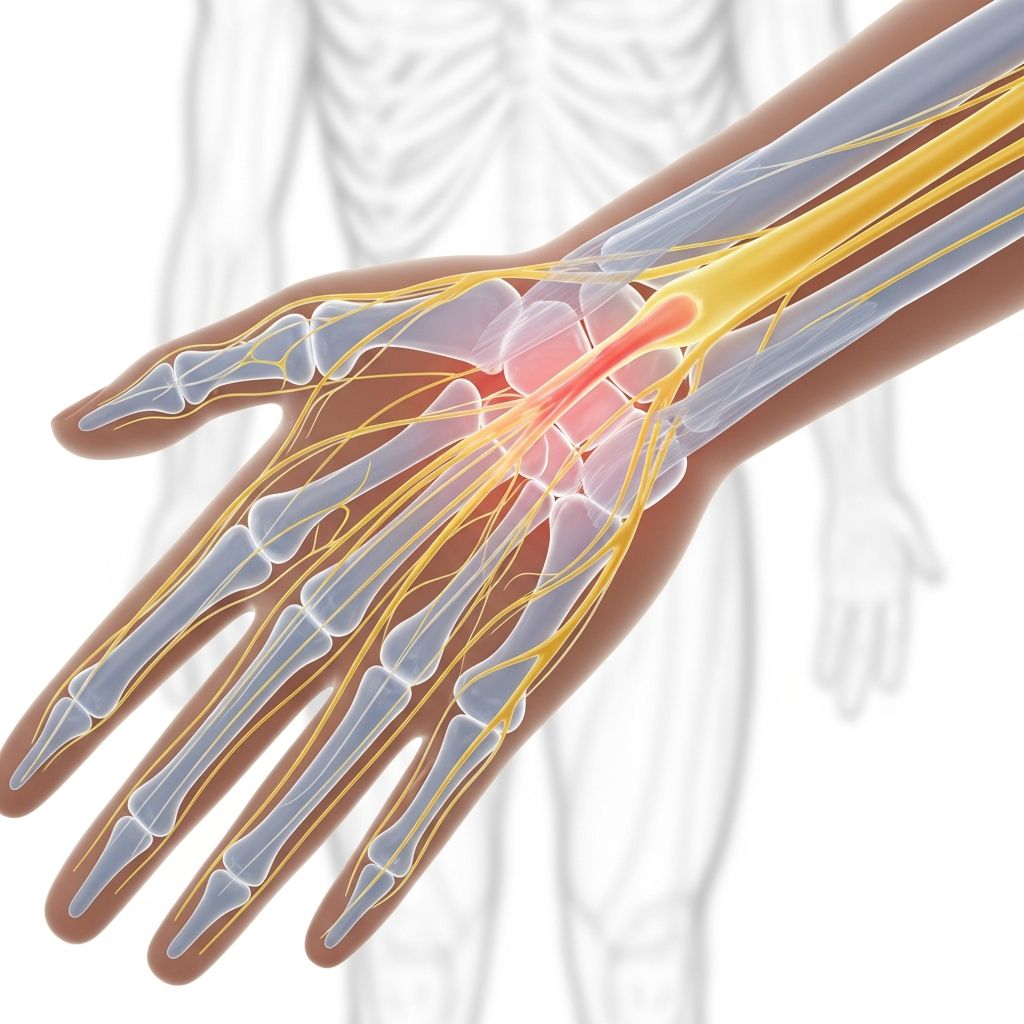
Understanding Carpal Tunnel Syndrome
Carpal tunnel syndrome (CTS) is a common health condition that affects millions of people worldwide, causing pain, numbness, tingling, and weakness in the hand and wrist. The condition occurs when the median nerve, which runs through a narrow passageway in your wrist called the carpal tunnel, becomes compressed or squeezed. This compression manifests as uncomfortable symptoms that can disrupt daily activities, interfere with sleep, and impact work performance. Understanding the causes, symptoms, and available treatment options is essential for managing this condition effectively and improving quality of life.
What Is the Carpal Tunnel?
The carpal tunnel is a narrow, rigid passageway located on the palm side of your wrist. This tunnel is formed by carpal bones on the bottom and the flexor retinaculum, a thick ligament, on top. Within this confined space runs the median nerve, which is responsible for controlling movement and sensation in your forearm, wrist, and hand, particularly in the thumb, index finger, middle finger, and half of the ring finger. The carpal tunnel also contains nine tendons that control finger and hand movements. When pressure builds up within this tight space, it can compress the median nerve, leading to the symptoms characteristic of carpal tunnel syndrome.
Causes of Carpal Tunnel Syndrome
Carpal tunnel syndrome can develop from various factors that increase pressure within the carpal tunnel. While most cases are idiopathic (no specific cause identified), several conditions and activities can contribute to nerve compression:
– Repetitive hand and wrist motions, particularly activities involving gripping or flexing- Prolonged keyboard use or typing- Hand or wrist injuries, such as sprains or fractures- Inflammatory conditions like rheumatoid arthritis- Hormonal changes associated with pregnancy or menopause- Thyroid disorders and other metabolic conditions- Obesity, which can increase overall tissue pressure- Diabetes, which affects nerve health and function- Previous wrist surgery or anatomical variations
The two major sites of compression occur at the outlet of the tunnel under the flexor retinaculum roof and at the hamulus of the hamate bone. Understanding the underlying cause is crucial for developing an effective treatment plan tailored to your specific situation.
Recognizing Symptoms of Carpal Tunnel Syndrome
Symptoms of carpal tunnel syndrome typically develop gradually and may initially be intermittent before becoming persistent. Common symptoms include:
– Tingling or numbness in the thumb, index finger, middle finger, and half of the ring finger- Burning sensations in the palm and fingers- Hand and wrist pain that may radiate up the forearm- Weakness in grip strength and hand weakness- Difficulty performing fine motor tasks like typing, writing, or buttoning clothing- Pain that worsens at night, often disrupting sleep- Inability to hold or lift objects without dropping them- Reduced movement and flexibility in the affected hand
Symptoms often worsen during activities that involve wrist flexion or extension, and many people experience increased discomfort during sleep when the wrist is naturally bent. The condition can significantly impact daily functioning, making routine tasks like holding a coffee cup, typing, or gripping objects painful and challenging.
Diagnosis of Carpal Tunnel Syndrome
Proper diagnosis is critical for effective treatment planning. Healthcare providers use a comprehensive approach combining patient history, physical examination, and diagnostic testing. Your provider will conduct a detailed assessment including:
Patient History and Physical Examination
Your healthcare provider will ask about your symptoms, when they started, activities that worsen or improve them, and how they affect your daily life. A thorough physical examination includes:
Related Stories



– Inspection of your hand and wrist for swelling or deformities- Palpation to identify tender areas- Range of motion testing- Grip strength assessment- Phalen’s test, where you hold your wrists bent for 60 seconds to reproduce symptoms- Tinel’s test, which involves tapping on the median nerve to elicit tingling- Assessment of sensation and motor function
Electrodiagnostic Tests
If physical examination findings suggest carpal tunnel syndrome, your provider may recommend electrodiagnostic testing to confirm the diagnosis:
– Electromyography (EMG) measures electrical activity in muscles- Nerve conduction studies assess how quickly the median nerve transmits electrical signals- These tests can confirm nerve compression and determine severity
Imaging Tests
Additional imaging may include:
– Ultrasound to visualize the median nerve and surrounding structures- Magnetic resonance imaging (MRI) in complex cases- X-rays to evaluate for underlying bone abnormalities or arthritis
Treatment Options for Carpal Tunnel Syndrome
Treatment approaches are individualized based on symptom severity, disease progression, and underlying causes. Most healthcare providers recommend starting with conservative, nonsurgical treatments before considering surgery.
Conservative (Nonsurgical) Treatment
Conservative treatments are typically the first line of intervention and often effectively manage symptoms:
Activity Modification
Adjusting daily activities to reduce stress on the wrist is fundamental. This includes taking frequent breaks during repetitive activities, using proper ergonomics when typing, modifying grip techniques, and avoiding activities that aggravate symptoms.
Splinting and Bracing
Wrist splints or braces immobilize the wrist in a neutral position, reducing tension on the median nerve. Night splinting is particularly effective, as it prevents the wrist from bending while sleeping, which commonly exacerbates symptoms. Research demonstrates that innovative compression devices can significantly improve symptoms within two weeks by altering the carpal canal’s size and shape, providing the nerve breathing room.
Medications
Over-the-counter nonsteroidal anti-inflammatory drugs (NSAIDs) like ibuprofen or naproxen can reduce inflammation and pain. For more severe inflammation, corticosteroid injections may be administered directly into the carpal tunnel to reduce swelling around the median nerve.
Physical Therapy
Therapeutic exercises and stretching routines strengthen wrist muscles and improve flexibility. Physical therapists teach proper body mechanics and ergonomic techniques to prevent symptom recurrence. Therapeutic modalities like ultrasound and cold therapy may also provide symptom relief.
Ergonomic Adjustments
Modifying your workspace ergonomics is crucial. Ensure your keyboard and mouse are positioned to maintain neutral wrist alignment, use an ergonomic keyboard or wrist rest, maintain proper posture while working, and position your desk at appropriate height.
Surgical Treatment
If conservative treatments fail to provide relief within 6 to 12 weeks, or if symptoms are severe and affecting your quality of life significantly, surgery may be recommended. Carpal tunnel release surgery aims to relieve pressure on the median nerve by enlarging the carpal tunnel space.
Surgical Approaches
Two main surgical techniques are available:
– Open carpal tunnel release involves a longer incision in the palm to access and cut the flexor retinaculum ligament- Endoscopic carpal tunnel release uses smaller incisions and a camera for visualization, often resulting in faster recovery
Cleveland Clinic offers minimally invasive procedures that allow most patients to return home the same day. Surgical outcomes are generally favorable, with most patients experiencing significant symptom relief.
Recovery and Outcomes
Recovery timelines vary depending on the treatment approach. Conservative treatment outcomes can be observed within 2 to 4 weeks, while surgical recovery typically requires 4 to 6 weeks for initial healing, with complete functional recovery taking several months. Many patients experience complete symptom resolution with appropriate treatment, though some may develop recurrent symptoms over time.
Prevention Strategies
While not all cases of carpal tunnel syndrome are preventable, several strategies can reduce your risk:
– Maintain proper wrist ergonomics during work and daily activities- Take frequent breaks from repetitive hand and wrist activities- Use appropriate tools and equipment designed to reduce wrist strain- Keep your wrists in neutral position whenever possible- Strengthen wrist and hand muscles through regular exercise- Manage underlying conditions like diabetes and thyroid disorders effectively- Maintain a healthy weight to reduce overall tissue pressure- Wear protective gear in occupations with injury risk
When to Seek Medical Attention
Consult a healthcare provider if you experience persistent tingling, numbness, or hand pain that interferes with daily activities or sleep. Seek immediate attention if you notice progressive weakness, inability to perform fine motor tasks, or symptoms that don’t improve with conservative treatment after several weeks. Early diagnosis and treatment can prevent progression and improve outcomes significantly.
Frequently Asked Questions About Carpal Tunnel Syndrome
Q: Can carpal tunnel syndrome go away on its own?
A: Mild cases may improve with conservative measures like activity modification, splinting, and rest. However, without treatment, symptoms typically progress and worsen over time. Most cases benefit from active intervention.
Q: How long does carpal tunnel surgery recovery take?
A: Initial recovery takes 2 to 4 weeks, during which you should avoid strenuous activities. Complete functional recovery and return to all activities usually requires 8 to 12 weeks. Minimally invasive procedures may have faster recovery times.
Q: Is carpal tunnel syndrome permanent?
A: Carpal tunnel syndrome is not permanently disabling with appropriate treatment. Most patients achieve complete symptom relief through conservative or surgical interventions. However, some individuals may experience recurrent symptoms if risk factors persist.
Q: Can pregnancy cause carpal tunnel syndrome?
A: Yes, hormonal changes and fluid retention during pregnancy can increase pressure in the carpal tunnel. Pregnancy-related carpal tunnel syndrome often improves after delivery as hormonal levels normalize.
Q: What is the success rate for carpal tunnel surgery?
A: Carpal tunnel release surgery has success rates between 70 and 90 percent, with most patients experiencing significant symptom relief. Success depends on symptom severity before surgery and adherence to post-operative rehabilitation.
Q: Can both wrists be affected by carpal tunnel syndrome?
A: Yes, bilateral carpal tunnel syndrome is possible, particularly in individuals with systemic conditions like rheumatoid arthritis or metabolic disorders. Treatment can be tailored for each wrist based on severity.
Q: Is there a connection between diabetes and carpal tunnel syndrome?
A: Yes, individuals with diabetes have a higher risk of developing carpal tunnel syndrome due to increased inflammation and changes in nerve structure. Good glycemic control and early intervention are priorities for diabetic patients.
References
- Carpal Tunnel Syndrome Treatment — Cleveland Clinic. 2024. https://my.clevelandclinic.org/services/carpal-tunnel-syndrome-treatment
- Carpal Tunnel Syndrome Intervention Improves Symptoms in Two Weeks — Cleveland Clinic Foundation Research. 2023. https://www.lerner.ccf.org/news/article/?title=Carpal+Tunnel+Syndrome+Intervention+Improves+Symptoms+in+Two+Weeks
- Carpal Tunnel Syndrome: Pathophysiology and Comprehensive Management — PubMed Central (PMC9389835). 2022. https://pmc.ncbi.nlm.nih.gov/articles/PMC9389835/
- Carpal Tunnel Syndrome: Symptoms, Causes & Treatment — Cleveland Clinic. 2024-01-12. https://my.clevelandclinic.org/health/diseases/4005-carpal-tunnel-syndrome
- Carpal Tunnel Syndrome: The Cause Dictates the Treatment — Cleveland Clinic Journal of Medicine. 2023. https://www.ccjm.org/content/ccjom/66/3/159.full.pdf
Similar Articles








Read full bio of medha deb