Carrion’s Disease: 2 Phases, Symptoms, Treatment, Prevention
Understanding Carrion's disease: from Oroya fever to verruga peruana, symptoms, transmission, diagnosis, and treatment strategies.

What is Carrion’s disease?
Carrion’s disease, also known as Oroya fever and verruga peruana, is a rare bacterial infection caused by Bartonella bacilliformis, a gram-negative, facultative intracellular alpha-2-proteobacterium. This neglected tropical disease is endemic to the Andean valleys of Peru, Ecuador, and Colombia, primarily at altitudes between 500 and 3,200 meters. It manifests in two distinct phases: an acute hemolytic phase called Oroya fever, characterized by severe anemia and high mortality if untreated (up to 88-90%), and a chronic eruptive phase featuring angioproliferative skin lesions known as verruga peruana.
The disease was first described in the 16th century by Spanish conquerors who observed the skin lesions, but its biphasic nature was tragically demonstrated in 1885 when medical student Daniel Alcides Carrión inoculated himself with infected blood, succumbing to Oroya fever and giving the disease its name. Transmission occurs exclusively through bites from infected female sandflies of the genus Lutzomyia (primarily L. verrucarum), which thrive in warm, humid river valleys. The bacterium invades erythrocytes during the acute phase, causing massive hemolysis, and later endothelial cells, inducing vascular proliferation.
Who gets Carrion’s disease?
Carrion’s disease predominantly affects individuals living or traveling in endemic Andean regions, particularly rural populations in Peru’s inter-Andean valleys, such as Urubamba, and parts of Ecuador and Colombia. Children under 15 years are most susceptible to the severe Oroya fever phase due to lack of prior exposure and immunity, while adults and previously exposed individuals more commonly develop verruga peruana. Immunocompromised patients, including those with HIV, pregnant women, and malnourished children, face higher risks of complications like secondary infections, miscarriages, or fetal death.
- High-risk groups: Children, newcomers to endemic areas (immunologically naïve), pregnant women.
- Geographic limitation: Peru (80% of cases), Ecuador, Colombia; rare outbreaks elsewhere due to migration.
- Occupational exposure: Farmers, construction workers in valleys.
Incidence peaks during rainy seasons (December-May) when sandfly populations surge, with attack rates up to 10-50% in naïve populations during epidemics.
What causes Carrion’s disease?
The causative agent is Bartonella bacilliformis, a motile, aerobic bacterium unique for its ability to infect human erythrocytes and endothelial cells. After sandfly inoculation, bacteria disseminate via the lymphatic system into the bloodstream, evading immunity by intracellular residence. In the acute phase, it invades up to 90% of red blood cells, leading to splenic clearance and hemolytic anemia. Surviving patients enter the chronic phase where bacteria persist in endothelial cells, stimulating angiogenesis via Rho GTPases (Rho, Rac, Cdc42), causing nodular proliferations.
Host factors like genetic predisposition, inoculum size, and strain virulence influence disease severity; reinfection is rare due to immunity.
What are the clinical features of Carrion’s disease?
Acute phase (Oroya fever)
Oroya fever incubates 3-12 weeks post-bite, presenting suddenly with high fever (38-40°C), chills, malaise, myalgia, arthralgia, headache, and pallor. Severe hemolytic anemia (hemoglobin <5 g/dL) causes jaundice, tachycardia, hepatosplenomegaly, and pallor; transient immunosuppression leads to secondary bacteremia (e.g., Salmonella) in 25-50% of cases. Untreated mortality reaches 40-90%, mainly from anemia, shock, or complications.
Chronic phase (verruga peruana)
Occurring 2-8 months after Oroya fever (or independently), verruga peruana features blood-filled, angiomatous nodules (1-5 cm) on exposed skin, especially head, neck, extremities. Lesions evolve from erythematous papules to miliary (small), sub-miliary, or mular (large, pedunculated) forms, sometimes ulcerating and bleeding. They persist weeks to months, regressing spontaneously with immunity.
Related Stories



| Phase | Symptoms | Duration | Mortality |
|---|---|---|---|
| Acute (Oroya) | Fever, anemia, jaundice, bone pain | 2-4 weeks | 40-90% untreated |
| Chronic (Verruga) | Skin nodules, mild fever | Weeks-months | <10% |
Diagnosis
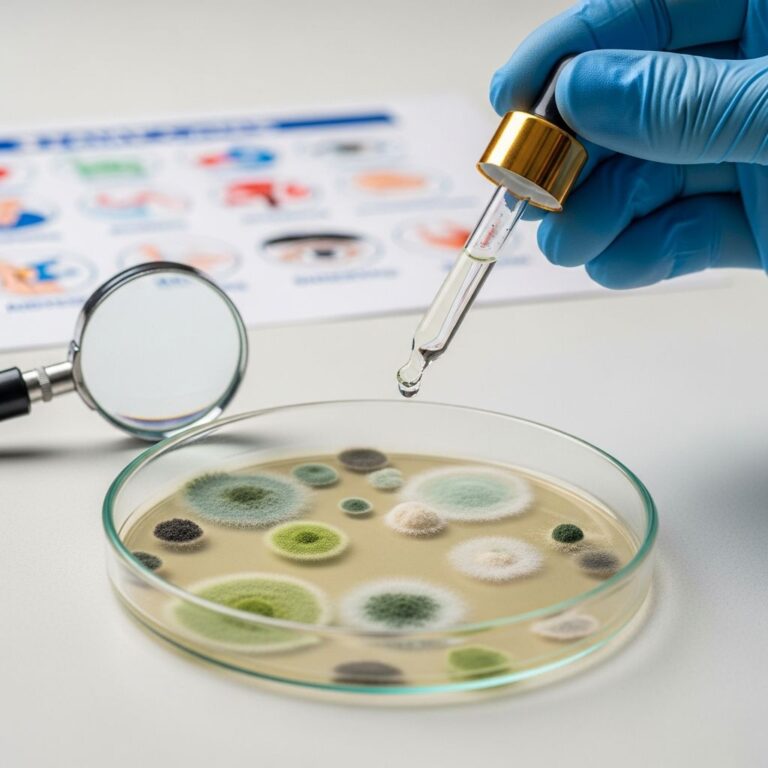
Diagnosis combines clinical suspicion, epidemiology, and lab confirmation. Acute phase: peripheral blood smear shows intraerythrocytic bacilli (Giemsa stain); PCR detects B. bacilliformis DNA; culture on blood agar (slow-growing colonies). Chronic phase: biopsy of lesions reveals endothelial proliferation with Warthin-Starry silver stain-positive bacteria. Serology (IFA) detects antibodies but cross-reacts with other Bartonella spp. Differential includes malaria, leptospirosis, dengue, typhoid.
- Gold standard (acute): Blood smear visualization.
- Supportive: Anemia (Hb <7 g/dL), thrombocytopenia, elevated LDH.
Treatment of Carrion’s disease
Antibiotics are lifesaving: chloramphenicol (50-80 mg/kg/day) plus penicillin G for acute severe cases (14-21 days); alternatives include ciprofloxacin, azithromycin, rifampin. Chronic phase responds to rifampin (10 mg/kg/day, 20 days) or macrolides. Supportive care includes blood transfusions for anemia (Hb <7 g/dL), fluids, and monitoring for complications. Verruga lesions rarely require excision unless bleeding/ulcerated.
With timely treatment, acute mortality drops to ~10%; chronic phase is self-limiting.
Complications
- Acute: Superinfections (Salmonella, Streptococcus), heart failure, shock, neurological (meningitis), cardiovascular collapse.
- Chronic: Lesion ulceration, bleeding, secondary infection; rare systemic spread.
- Other: Asymptomatic bacteremia (up to 3 years), transfusion risk, miscarriages.
Prevention
Vector control is key: insecticide spraying (DDT, pyrethroids) in homes/kennels, fine-mesh bednets, repellents (DEET). Eliminate sandfly breeding sites (organic debris). Screen blood donations in endemic areas; no vaccine available. Personal protection: long clothing, repellents during dusk/dawn.
Prognosis
Untreated Oroya fever: 40-90% fatality; treated: <10%. Verruga peruana resolves in 80% within months, conferring lifelong immunity; reinfection rare. Survivors may carry asymptomatic bacteremia.
History and epidemiology
Described since 16th century; biphasic link proven by Carrión’s 1885 self-experiment. Endemic in Peru (Carrillo and Urubamba belts); ~5,000 cases/year, underreported. Outbreaks linked to deforestation, migration.
Frequently Asked Questions
What is the incubation period for Oroya fever?
Typically 3-12 weeks after sandfly bite.
Can Carrion’s disease be transmitted person-to-person?
No, only via sandflies; rare blood transfusion risk.
Is there a vaccine for Carrion’s disease?
No vaccine; prevention relies on vector control.
How fatal is untreated Oroya fever?
Up to 90% mortality due to anemia and complications.
Where is Carrion’s disease most common?
Andean valleys of Peru, Ecuador, Colombia.
References
- Carrión disease | Description, Cause, Symptoms, & Treatment — Britannica. 2023-10-15. https://www.britannica.com/science/Carrion-disease
- Carrion’s disease: more than a neglected disease — PubMed Central (PMC). 2019-03-27. https://pmc.ncbi.nlm.nih.gov/articles/PMC6434794/
- Carrion’s Disease — MalaCards. 2024-01-01. https://www.malacards.org/card/carrions_disease
- Carrion’s Disease: More Than a Sand Fly–Vectored Illness — PubMed Central (PMC). 2016-10-12. https://pmc.ncbi.nlm.nih.gov/articles/PMC5063350/
- CLINICAL MANIFESTATIONS OF CARRION’S DISEASE — JAMA Internal Medicine. 1970-01-01. https://jamanetwork.com/journals/jamainternalmedicine/article-abstract/554435
- Bartonella bacilliformis (Carrion Disease) — DynaMedex. 2025-06-01. https://www.dynamedex.com/condition/bartonella-bacilliformis-carrion-disease
Similar Articles








Read full bio of Sneha Tete