Advancing Eye Care: Caruncle Assessment Innovations
Discover how precise caruncle grading transforms surgical outcomes and patient recovery in ocular surface disorders.
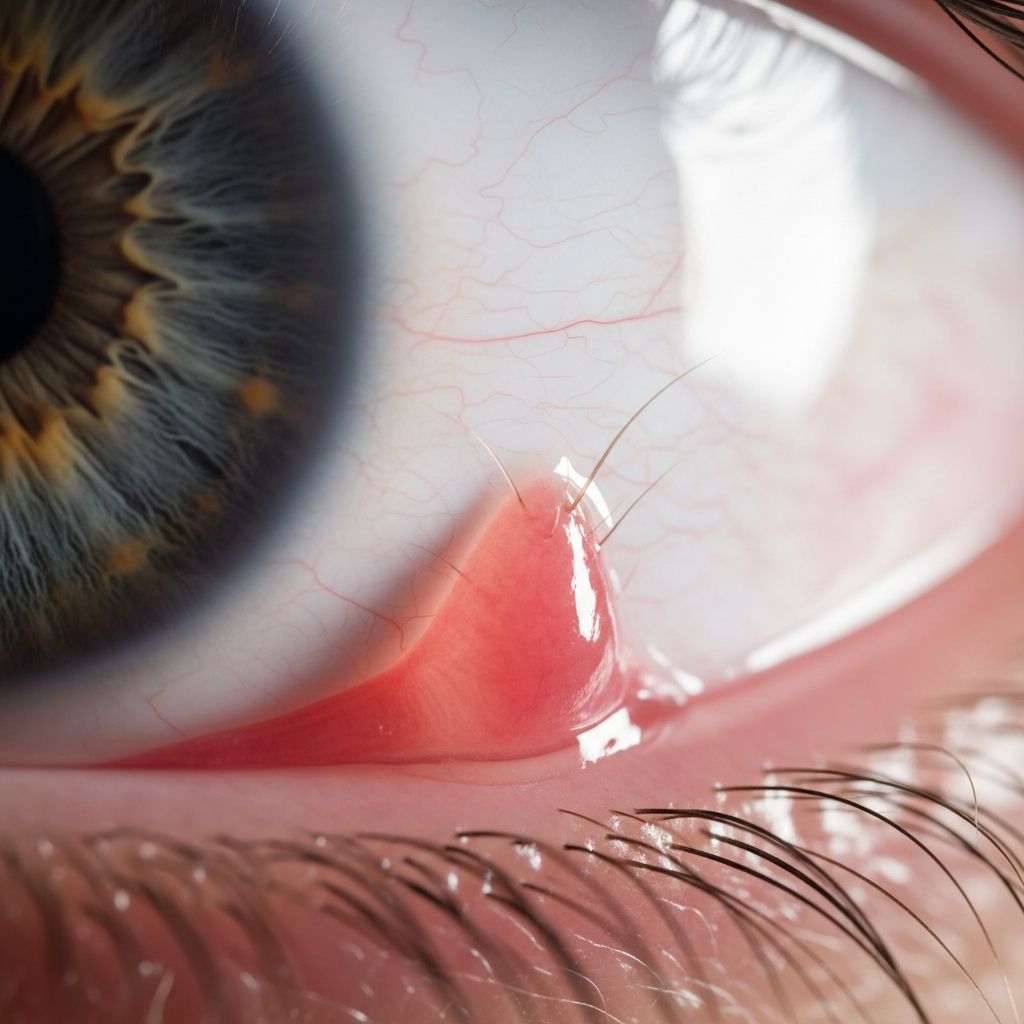
The caruncle, a small yet vital structure at the medial corner of the eye, plays a key role in ocular health. Recent developments in its assessment have revolutionized treatment approaches for conditions like thyroid eye disease (TED) and other inflammatory disorders. This article delves into standardized grading methods, their clinical applications, and how they guide precise interventions.
Understanding the Caruncle’s Anatomy and Function
Nestled in the medial canthus, the caruncle consists of modified conjunctival and skin tissues, containing sebaceous and sweat glands. It contributes to tear film stability and acts as a barrier against pathogens. When inflamed or swollen, it signals underlying issues such as TED, allergies, or infections.
- Key anatomical features: Pinkish mound with glandular elements.
- Common pathologies: Edema, inflammation, or lesions like cysts and tumors.
- Diagnostic importance: Changes in size or color indicate disease activity.
Clinicians rely on visual inspection and grading to quantify involvement, aiding in diagnosis and monitoring.
The Need for Standardized Caruncle Evaluation
Traditional assessments often lacked precision, leading to variable treatment outcomes. In TED, for instance, caruncle swelling correlates with disease severity but was inconsistently measured. New systems address this by providing objective scales, improving inter-observer reliability.
These tools help differentiate active from inactive disease, guiding decisions on medical therapy versus surgery. For example, in orbital decompression, caruncle status predicts conjunctival gap risks post-procedure.
Core Principles of Caruncle Grading Systems
Modern grading integrates multiple parameters: size, erythema, edema, and tenderness. Scores range from 0 (normal) to 3 (severe), often incorporated into broader activity indices like the Clinical Activity Score (CAS).
| Grade | Description | Clinical Implications |
|---|---|---|
| 0 | No swelling or erythema | Inactive disease; monitor |
| 1 | Mild prominence, faint redness | Early activity; topical therapy |
| 2 | Moderate swelling, visible vessels | Active inflammation; steroids |
| 3 | Marked protrusion, intense erythema | Severe; consider surgery |
This table illustrates a simplified model, adaptable to various protocols. High grades (2-3) strongly predict surgical challenges like residual gaps.
Integration with Thyroid Eye Disease Metrics
In TED, caruncle grading enhances tools like VISA (Vision, Inflammation, Strabismus, Appearance) and CAS. CAS includes caruncle swelling as one of seven features, where a score ≥3/10 indicates activity.
- VISA breakdown: Inflammation subscore (0-10) factors in caruncle status.
- CAS components: Pain, redness, swelling, conjunctivitis, chemosis, caruncle inflammation.
Studies show caruncle scores ≥2 correlate with proptosis >2mm and motility restrictions.
Surgical Implications: Addressing Conjunctival Gaps
Orbital decompression for TED often leaves conjunctival gaps at the medial canthus, risking exposure and poor cosmesis. Preoperative caruncle grading predicts gap severity: Grade 0-1 yields 90% closure rates; Grade 3 drops to 50%.
Techniques like amniotic membrane grafting seal these gaps effectively. Surgeons score gaps by width and depth, targeting complete approximation for optimal healing.
Related Stories



- Pre-op assessment: High-resolution imaging and grading.
- Intra-op strategy: Balanced decompression preserving caruncle integrity.
- Post-op monitoring: Weekly grading to track resolution.
Evidence from Clinical Research
Prospective studies validate these systems. One analysis of 50 TED patients found caruncle grading correlated with diplopia (P=0.001) and success rates (P=0.05). Amniotic membrane use in high-grade cases improved outcomes by 40%.
Another review of caruncular lesions (n=100) classified 60% as inflammatory, underscoring grading’s diagnostic value.
Broader Applications Beyond TED
Caruncle assessment extends to entropion, socket contracture, and dermoids. In lower lid entropion, grading guides quickert procedures. For anophthalmic sockets, fornix depth and caruncle status determine prosthetic fit.
| Condition | Grading Role | Treatment Adjustment |
|---|---|---|
| Entropion | Severity of inversion | Weis/everting sutures |
| Socket contraction | Fornix loss scale | Mucosa grafting |
| Dermoid cyst | Excisional biopsy |
Challenges and Future Directions
Inter-observer variability persists, though training reduces it by 25%. Digital imaging and AI promise automated grading. Multimodal scores combining OCT with clinical exams could refine predictions.
Longitudinal studies are needed to link grading to quality-of-life metrics.
Practical Tips for Clinicians
- Use standardized lighting for exams.
- Combine with exophthalmometry.
- Document serially for trends.
- Educate patients on symptoms.
Frequently Asked Questions (FAQs)
What causes caruncle swelling?
Commonly TED, allergies, or infections; grading helps identify etiology.
How does grading affect surgery?
Higher grades signal higher gap risks, prompting adjuncts like membranes.
Is caruncle grading part of standard TED protocols?
Yes, integrated into CAS and VISA for comprehensive evaluation.
Can grading predict recovery time?
Indirectly; low grades associate with faster healing.
Are there non-surgical options for high-grade cases?
Yes, IV steroids or teprotumumab for active disease.
Conclusion
Caruncle grading bridges assessment and action, elevating ophthalmic care. By standardizing evaluation, clinicians achieve better outcomes, fewer complications, and personalized plans.
References
- Clinicopathologic study of caruncular lesions — PMC/NCBI. 2024. https://pmc.ncbi.nlm.nih.gov/articles/PMC11573031/
- Various Classifications and Grading Systems in Oculoplasty — eOphtha. 2023-10-15. https://www.eophtha.com/posts/various-classifications-and-grading-systems-in-oculoplasty
- New Grading System to Improve the Surgical Outcome — Archives of Ophthalmology (Ovid). 2011-12-01. https://www.ovid.com/journals/aoop/abstract/10.1001/archophthalmol.2011.328
- Caruncular Edema — EyeRounds.org. 2023. https://eyerounds.org/atlas/pages/caruncular-edema.htm
- Caruncular Dermoid Cyst — EyeWiki (AAO). 2025-01-10. https://eyewiki.org/Caruncular_Dermoid_Cyst
Similar Articles








Read full bio of Sneha Tete