Carvedilol Tablets: Uses, Dosage, Side Effects, Key Facts
Comprehensive guide to carvedilol tablets: uses, dosage, side effects, and key information for treating heart failure and hypertension effectively.
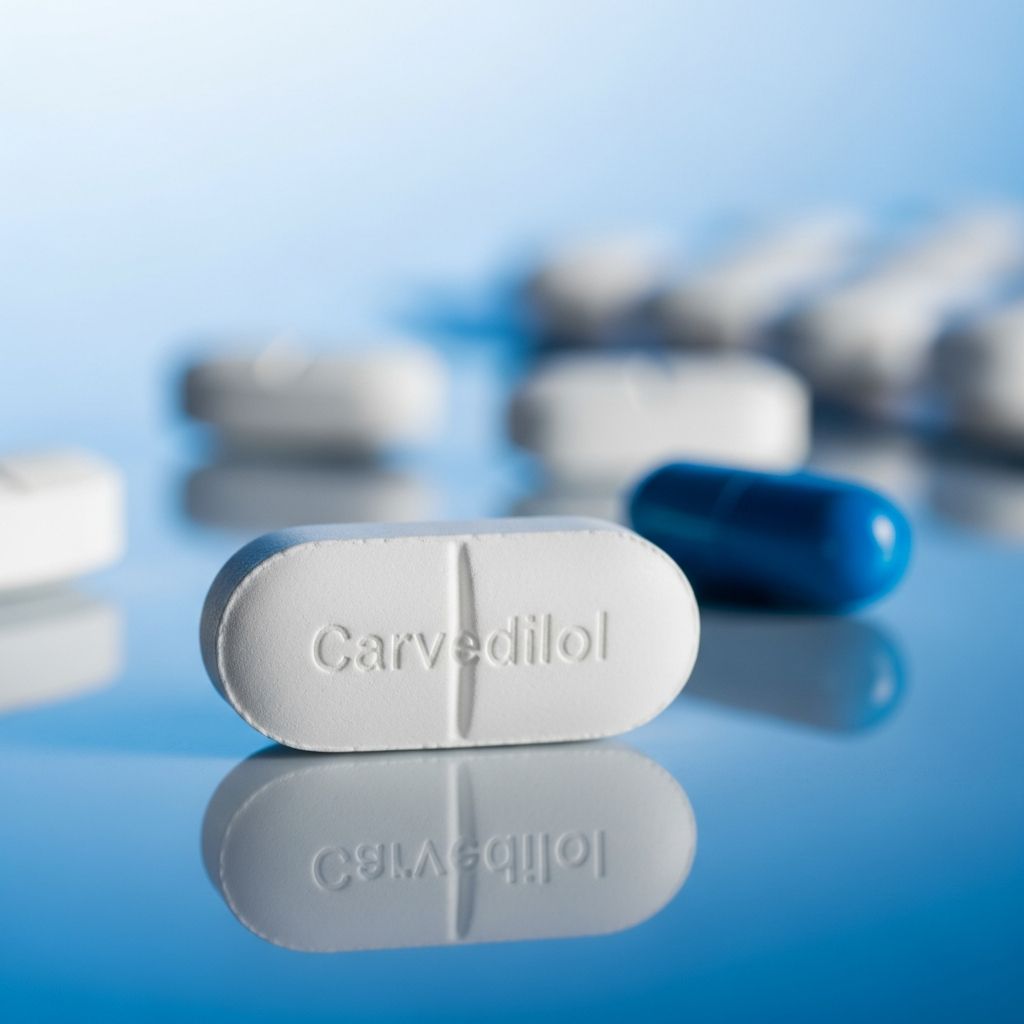
Carvedilol is a non-selective beta-adrenergic antagonist (beta-blocker) with alpha-1 blocking properties, primarily used to treat mild to severe chronic heart failure, hypertension, and left ventricular dysfunction following myocardial infarction in clinically stable patients.
About carvedilol tablets
Carvedilol tablets belong to a group of medicines called beta-blockers. These medications work by blocking the effects of certain hormones, such as adrenaline, on the heart and blood vessels. This action slows the heart rate, reduces blood pressure, and eases the workload on the heart.
Unlike selective beta-blockers that primarily target beta-1 receptors in the heart, carvedilol is non-selective, affecting both beta-1 and beta-2 receptors. It also blocks alpha-1 receptors in blood vessels, leading to vasodilation (widening of blood vessels), which further lowers blood pressure and improves blood flow.
Carvedilol is available in immediate-release tablets and extended-release capsules. It is often prescribed under brand names like Coreg. The medication is particularly beneficial for patients with heart failure with reduced ejection fraction (HFrEF), as it reduces mortality and hospitalization risks.
Key facts about carvedilol tablets
- Carvedilol starts to work within 1-2 hours, but full benefits for heart failure may take weeks.
- Common side effects include dizziness, tiredness, and low blood pressure.
- It’s usually taken twice daily for tablets or once daily for extended-release forms.
- Do not stop taking suddenly, as this can worsen heart conditions.
- Suitable for adults; not typically for children unless specified by a doctor.
- Pregnancy category: C (use only if benefit outweighs risk).
About beta-blockers
Beta-blockers like carvedilol are a class of drugs that manage cardiovascular conditions by antagonizing beta-adrenergic receptors. They reduce heart rate, myocardial contractility, and blood pressure, which is crucial for conditions like hypertension and heart failure.
Carvedilol’s unique profile includes antioxidant properties and calcium channel blocking at higher doses, protecting against oxidative stress in coronary circulation.
How do beta-blockers work for heart failure?
In heart failure, the heart struggles to pump blood effectively. Beta-blockers counteract the harmful effects of chronic activation of the sympathetic nervous system, which overstimulates the heart. Carvedilol reduces tachycardia (rapid heart rate) via beta-blockade and lowers vascular resistance via alpha-1 blockade, improving cardiac output without significantly dropping heart rate compared to selective beta-blockers.
Clinical trials like COPERNICUS demonstrate carvedilol’s role in reducing mortality in HFrEF patients.
When are beta-blockers not suitable?
Beta-blockers may not be suitable in certain conditions:
- Severe bradycardia (very slow heart rate).
- Second- or third-degree heart block without a pacemaker.
- Cardiogenic shock.
- Decompensated heart failure requiring IV inotropes.
- Severe asthma or COPD with bronchospasm.
- Untreated pheochromocytoma.
- Known hypersensitivity to carvedilol.
Who can and cannot take carvedilol tablets
Most adults with stable heart conditions can take carvedilol, but it’s not recommended for:
- People with severe liver problems, as it increases drug levels.
- Those with asthma or severe lung disease due to non-selective beta-blockade.
- Pregnant or breastfeeding individuals without medical advice.
- Patients with uncontrolled diabetes, as it may mask hypoglycemia symptoms.
Related Stories



How and when to take carvedilol tablets
Follow your doctor’s instructions precisely. Tablets are usually taken twice daily with food to reduce absorption variability.
Dosage
| Condition | Starting Dose | Maintenance Dose |
|---|---|---|
| Hypertension | 6.25 mg twice daily | 25 mg twice daily |
| Heart Failure (HFrEF) | 3.125 mg twice daily | 25 mg twice daily (up to 50 mg if >85kg) |
| Post-MI LVD | 6.25 mg twice daily | 25 mg twice daily |
Tips: Swallow whole; do not crush. If you miss a dose, take it as soon as remembered unless near next dose.
Dosage for carvedilol tablets
Dosage is individualized based on response and tolerance. Titrate slowly over 2 weeks for heart failure to minimize side effects.
- Extended-release: Once daily, equivalent total dose.
- Max daily: 50 mg for <85kg, 100 mg for >85kg in HF.
How to take it with food or drink
Take with food to enhance bioavailability and reduce orthostatic hypotension.
- Avoid grapefruit juice, as it may affect metabolism.
- Alcohol can enhance blood pressure lowering; limit intake.
Common questions about taking carvedilol
- Can I drive? Yes, but watch for dizziness initially.
- Can I drink alcohol? Moderately; it may increase side effects.
- Will lifestyle changes help? Yes, combine with diet, exercise, low salt.
Side effects of carvedilol tablets
Most side effects are mild and improve over time.
Common side effects
- Dizziness (most common, due to blood pressure drop).
- Fatigue or tiredness.
- Headache.
- Nausea or upset stomach.
- Low blood pressure (hypotension).
- Slow heart rate (bradycardia).
Serious side effects
Seek immediate medical help for:
- Shortness of breath or wheezing.
- Swelling of ankles/feet (worsening HF).
- Fainting or severe dizziness.
- Irregular heartbeat.
- Depression or hallucinations (rare).
How to cope with side effects of carvedilol tablets
- Dizziness: Rise slowly; stay hydrated.
- Tiredness: Take evening doses if possible.
- Bradycardia: Monitor pulse; report if <50 bpm.
Pregnancy and breastfeeding with carvedilol tablets
Not recommended in pregnancy unless essential; may cause fetal bradycardia. Limited data on breastfeeding; weigh risks.
Other medicines, food, drink and carvedilol tablets
Carvedilol interacts with many drugs via CYP2D6 metabolism.
- Avoid with: Other beta-blockers, verapamil/diltiazem (bradycardia risk).
- Caution with: Amiodarone (increases carvedilol levels), NSAIDs (reduced effect), insulin (hypoglycemia mask).
- Food: Take with meals.
Different strengths and forms of carvedilol
- Tablets: 3.125 mg, 6.25 mg, 12.5 mg, 25 mg.
- Extended-release capsules: 10 mg, 20 mg, 40 mg, 80 mg.
Reporting side effects
Report to FDA via MedWatch or local equivalent.
Frequently asked questions (FAQs)
How long does carvedilol take to work?
Blood pressure lowers in 1-2 weeks; heart failure benefits in 4-8 weeks.
Can I stop taking carvedilol suddenly?
No, taper off to avoid rebound hypertension or angina worsening.
Does carvedilol cause weight gain?
Possible due to fluid retention in HF; monitor and use diuretics if needed.
Is carvedilol better than metoprolol?
Both effective in HFrEF; carvedilol’s alpha-blockade may offer advantages in some.
Can carvedilol cause erectile dysfunction?
Possible but less common than other beta-blockers; discuss with doctor.
This comprehensive guide ensures safe and effective use of carvedilol. Always consult your healthcare provider for personalized advice.
References
- Carvedilol: Uses, Interactions, Mechanism of Action — DrugBank Online. 2023-10-01. https://go.drugbank.com/drugs/DB01136
- Carvedilol (Coreg, Coreg CR) – Uses, Side Effects, and More — WebMD. 2024-05-15. https://www.webmd.com/drugs/2/drug-5574/carvedilol-oral/details
- Carvedilol – StatPearls — NCBI Bookshelf. 2024-07-17. https://www.ncbi.nlm.nih.gov/books/NBK534868/
- Carvedilol: MedlinePlus Drug Information — MedlinePlus. 2023-11-20. https://medlineplus.gov/druginfo/meds/a697042.html
- Common questions about carvedilol — NHS. 2024-02-10. https://www.nhs.uk/medicines/carvedilol/common-questions-about-carvedilol/
- Carvedilol Tablets — Cleveland Clinic. 2024-01-05. https://my.clevelandclinic.org/health/drugs/20564-carvedilol-tablets
- Coreg® (carvedilol) Tablets — Coreg.com. 2023-12-01. https://coreg.com
Similar Articles








Read full bio of medha deb