Cashews vs Pecans: Nutrition, Health Benefits & Comparison
Compare cashews and pecans: nutritional profiles, health benefits, and which nut is best for your diet.
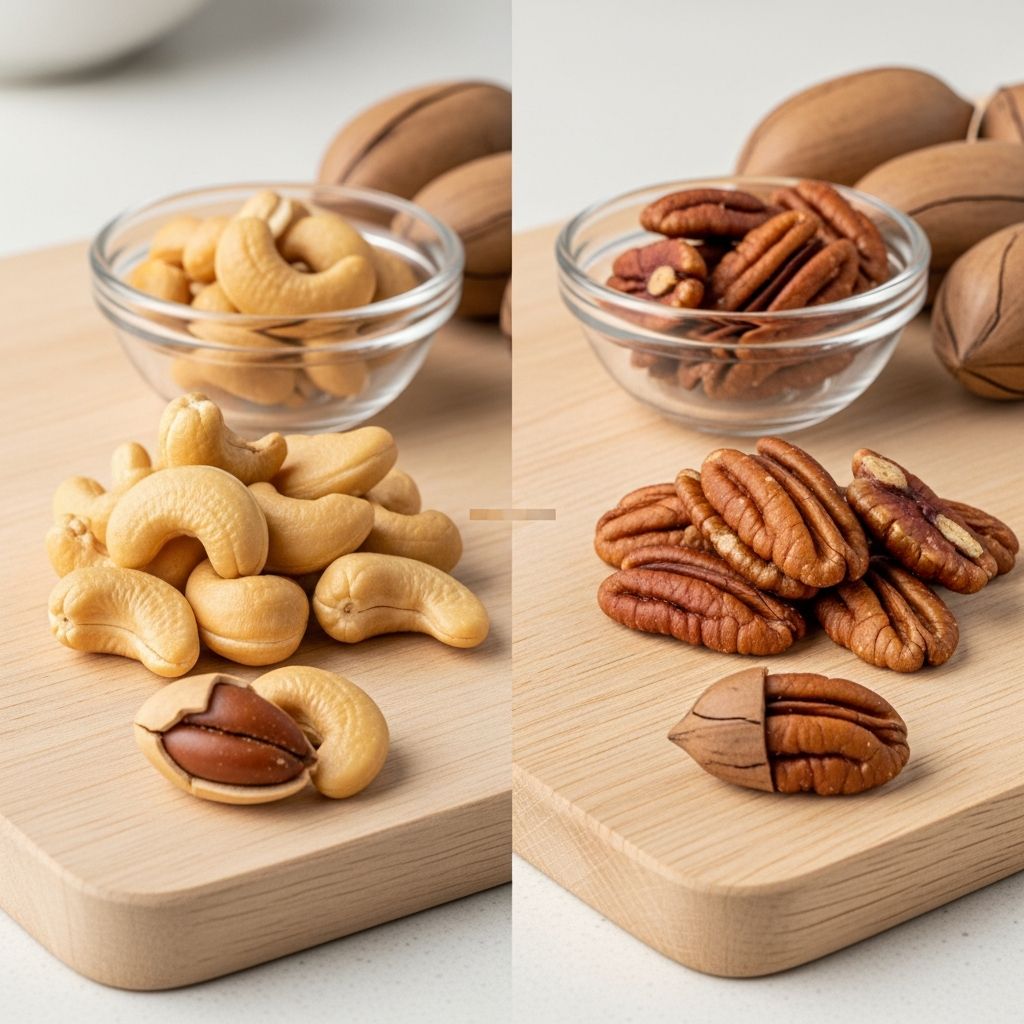
Cashews vs Pecans: A Comprehensive Nutritional Comparison
When it comes to choosing between cashews and pecans, understanding their nutritional profiles can help you make informed dietary decisions. Both nuts are nutrient-dense foods packed with essential vitamins, minerals, and healthy fats, but they differ significantly in their composition. This comprehensive guide explores the key differences between these two popular tree nuts and their respective health benefits.
Nutritional Overview: Key Differences
Pecans and cashews have distinct nutritional characteristics that make each valuable in different dietary contexts. Pecans contain more calories and fats, while cashews offer significantly higher protein and carbohydrate content. Understanding these differences is essential for anyone looking to optimize their nut consumption based on their dietary goals.
Macronutrients and Calorie Content
Calories
Calorie content varies notably between these two nuts. In a 1-ounce serving, pecans contain 196 calories, while cashews contain 157 calories. Per 100-gram serving, pecans provide 138 more calories than cashews, making pecans a more calorie-dense option. This difference is important to consider if you’re monitoring overall caloric intake or following a specific diet plan.
Fat Content
Pecans are significantly higher in total fat content. Pecans consist of 72% fats, while cashews contain only 44% fats. In a 1-ounce serving, pecans provide 20.4 grams of total lipid fat, compared to cashews’ 12.4 grams. However, it’s important to note that the fats in both nuts are predominantly healthy monounsaturated and polyunsaturated fats that support cardiovascular health.
Protein Content
Cashews contain approximately 2 times more protein than pecans. Per 100-gram serving, pecans contain 9.17 grams of protein, while cashews provide 18.22 grams of protein. This makes cashews an excellent choice for individuals seeking to increase their protein intake through plant-based sources, particularly for vegetarians and vegans.
Carbohydrates
Cashews provide 2 times more carbohydrates than pecans. Cashews contain 8.56 grams of net carbs per 1-ounce serving, while pecans contain 3.94 grams of net carbs. This 16.33-gram difference per 100-gram serving is significant for those following low-carbohydrate or ketogenic diets, where pecans may be the more suitable choice.
Vitamin Content Analysis
Both nuts offer distinct vitamin profiles that contribute to overall health and wellness:
Pecans’ Vitamin Advantages
- Vitamin B1 (Thiamine): Pecans contain approximately 2 times more vitamin B1 than cashews, supporting energy metabolism and nervous system function
- Vitamin B2 (Riboflavin): Pecans provide about 2 times more of this B vitamin, essential for energy production and cell growth
- Vitamin E: Pecans contain approximately 2 times more vitamin E, a powerful antioxidant protecting cells from damage
- Vitamin A: Pecans contain small amounts of vitamin A, which cashews completely lack
Cashews’ Vitamin Advantages
- Vitamin B6: Cashews provide 2 times more vitamin B6, crucial for brain development and immune function
- Vitamin K: Cashews contain 10 times more vitamin K, essential for bone health and blood clotting
- B Vitamin Complex: Cashews contain a comprehensive range of B vitamins, supporting overall metabolic health
Related Stories



Both nuts contain similar amounts of vitamin B5 and vitamin B3, and neither nut provides significant amounts of vitamin B12 or vitamin D.
Mineral Content Comparison
Compared to pecans, cashews have relatively higher amounts of minerals overall. This mineral density makes cashews particularly valuable for meeting daily micronutrient requirements.
Mineral Profile Breakdown
| Mineral | Cashews | Pecans | Notable Difference |
|---|---|---|---|
| Copper | Higher | Lower | Cashews provide 2 times more |
| Magnesium | Higher | Lower | Cashews provide 2 times more |
| Phosphorus | Higher | Lower | Cashews provide 2 times more |
| Iron | Higher | Lower | Cashews provide 3 times more |
| Manganese | Lower | Higher | Pecans provide 3 times more |
| Potassium | Higher | Lower | Cashews contain more |
| Zinc | Higher | Lower | Cashews contain more |
| Selenium | Higher | Lower | Cashews contain more |
The predominant minerals found in pecans are copper and manganese. While cashews also contain both of these minerals, they additionally provide significant amounts of iron, magnesium, and phosphorus, making them more mineral-diverse.
Health Benefits of Pecans
Brain Function and Cognitive Health
Pecans offer remarkable benefits for brain health. Pecans are high in B-complex vitamins, which are directly linked to proper neurological development and function. Research has shown that monounsaturated fatty acids found in pecans may aid in the prevention of mental decline and inflammation. Additionally, pecans are high in potassium, which increases blood flow to the brain and promotes nervous system health.
Cardiovascular Support
The high monounsaturated fat content in pecans supports heart health by helping maintain healthy cholesterol levels. The combination of potassium and magnesium in pecans contributes to proper blood pressure regulation and overall cardiovascular function.
Antioxidant Power
With higher vitamin E content, pecans provide potent antioxidant protection against oxidative stress and cellular damage, supporting overall wellness and potentially reducing the risk of chronic diseases.
Health Benefits of Cashews
Protein-Rich Nutrition
With double the protein content of pecans, cashews are an excellent choice for muscle maintenance and growth. This makes them particularly valuable for athletes, active individuals, and those seeking plant-based protein sources. Almonds, cashews, pistachios, walnuts, and peanuts are abundant sources of B vitamins, supporting overall metabolic health.
Heart Health Support
Cashews provide substantial amounts of potassium and magnesium, minerals that may be protective against coronary heart disease. The combination of healthy fats and mineral content makes cashews heart-protective additions to a balanced diet.
Iron and Energy
The 3 times higher iron content in cashews compared to pecans makes them especially beneficial for individuals at risk of iron deficiency, including vegetarians, vegans, and women of childbearing age. This iron content supports oxygen transport and energy production throughout the body.
Mineral Density
Most nuts have a decent amount of zinc and iron, but pine nuts, cashews, and almonds stand above the rest. This mineral density supports immune function, wound healing, and overall wellness. Cashews also provide more copper, magnesium, and phosphorus, essential for bone health, energy metabolism, and cellular function.
Choosing Between Cashews and Pecans
Choose Pecans If You:
- Follow a low-carbohydrate or ketogenic diet
- Want to minimize caloric intake while maximizing satiety
- Seek high amounts of vitamin E for antioxidant protection
- Prioritize brain health and cognitive function
- Need more manganese for bone health and metabolism
Choose Cashews If You:
- Need additional protein for muscle building or maintenance
- Require higher iron intake for energy and oxygen transport
- Want a broader spectrum of essential minerals
- Seek foods rich in vitamin K for bone health
- Follow a plant-based diet seeking protein diversity
- Need more B vitamins for overall metabolic support
Incorporating Both Into Your Diet
Rather than choosing one nut exclusively, incorporating both cashews and pecans into your regular diet provides complementary nutritional benefits. You can enjoy pecans in salads, baked goods, and as snacks, while cashews work well in stir-fries, smoothie bowls, and as a basis for dairy-free cream sauces. Alternating between them ensures you receive the full spectrum of nutrients each nut offers.
Frequently Asked Questions
Q: Are cashews or pecans better for weight loss?
A: Pecans are lower in carbohydrates and calories per serving, making them slightly better for weight loss diets. However, both nuts are calorie-dense and should be consumed in measured portions. A small handful (about 1 ounce) of either nut makes a satisfying snack that supports satiety and prevents overeating.
Q: Can people with nut allergies eat cashews and pecans?
A: Tree nut allergies vary by individual. Some people allergic to one type of tree nut may tolerate another, while others have allergies to multiple nuts. It’s essential to consult with an allergist before consuming either nut if you have any known tree nut allergies.
Q: Which nut is better for heart health?
A: Both cashews and pecans support cardiovascular health through their monounsaturated fat content and mineral profiles. Cashews provide more potassium and magnesium, while pecans offer potassium and antioxidant vitamins. Consuming both as part of a heart-healthy diet maximizes cardiovascular benefits.
Q: How should I store cashews and pecans?
A: Both nuts should be stored in cool, dry places to prevent rancidity. Refrigerating or freezing them extends their shelf life. Keep them in airtight containers away from heat and light to maintain freshness and prevent oxidation of their healthy oils.
Q: What is a healthy serving size for these nuts?
A: A healthy serving is typically one ounce, or about a small handful (approximately 23 pecans or 18 cashews). This portion provides significant nutritional benefits while keeping calories and fat intake moderate.
Q: Are raw or roasted nuts more nutritious?
A: Both raw and roasted nuts provide excellent nutrition. While some heat-sensitive vitamins may decrease slightly during roasting, boiling cashews and pistachios for 60 minutes did not affect their properties. Roasted varieties often have enhanced flavor, making them easier to incorporate into your regular diet.
References
- Pecans vs. Cashews — Health Impact and Nutrition Comparison — FoodStruct. 2024. https://foodstruct.com/compare/pecan-vs-cashew
- Composition of Nuts and Their Potential Health Benefits—An Overview — National Center for Biotechnology Information (NCBI). 2023. https://pmc.ncbi.nlm.nih.gov/articles/PMC10000569/
Similar Articles








Read full bio of Sneha Tete