Cassava: Nutrition, Benefits, And 3 Safe Preparation Steps
Discover the nutritional value, health benefits, and potential risks of cassava, a staple root vegetable worldwide.
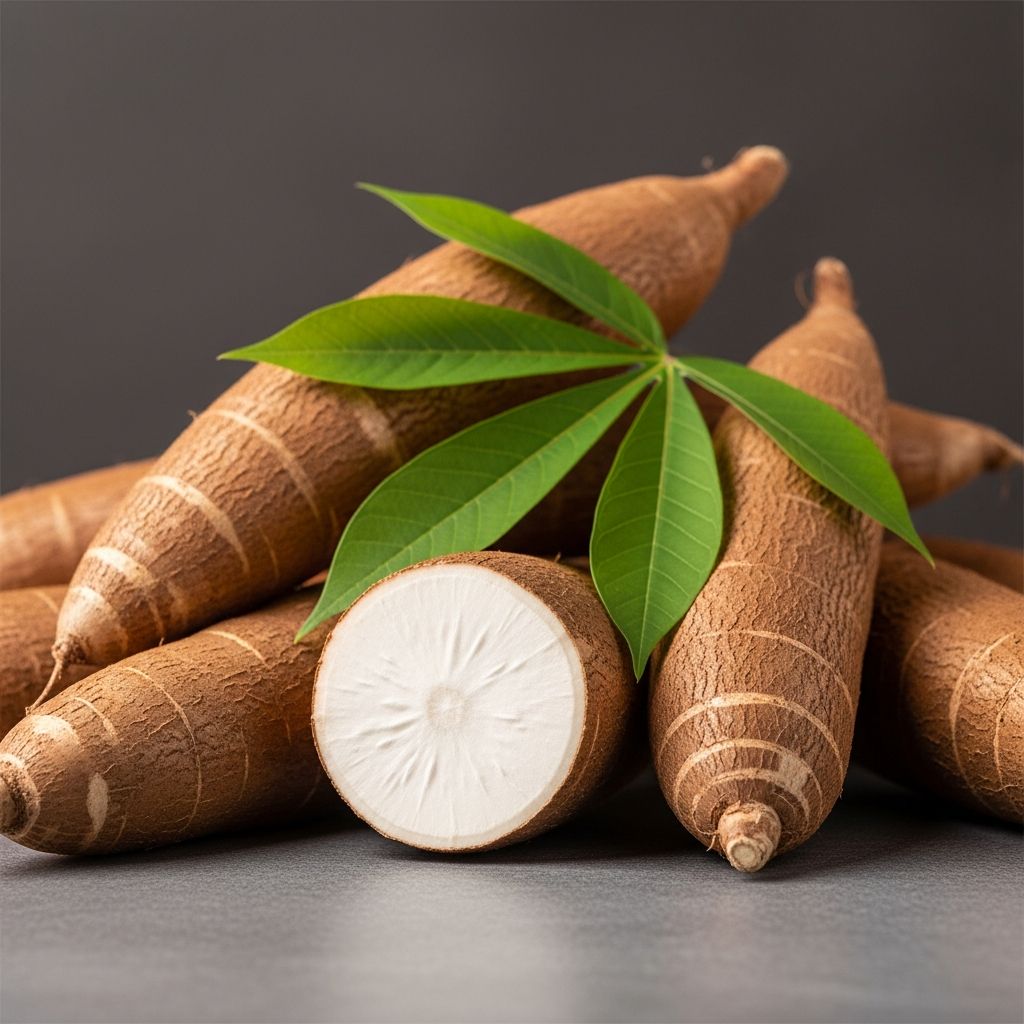
Cassava, also known as yuca or manioc (Manihot esculenta Crantz), is a starchy root vegetable that serves as a dietary staple for over 800 million people worldwide, particularly in Africa, Asia, and South America. This resilient crop thrives in poor soils and provides high-calorie energy, but its consumption demands proper preparation due to cyanogenic glycosides that can release toxic cyanide.
What Is Cassava?
Cassava is a perennial shrub native to South America, cultivated for its tuberous roots, which are harvested after 8-12 months of growth. The roots are long, cylindrical, and brown-skinned with white flesh, while leaves and stems are also edible after processing. Globally, it’s the third-largest carbohydrate source after rice and maize, valued for its drought tolerance and yield in marginal lands.
There are two main varieties: sweet cassava with lower cyanogenic glycosides (safer for direct cooking) and bitter cassava, higher in toxins but more resilient and used for industrial starch like tapioca. Leaves are nutrient-dense, rich in protein and vitamins, often consumed as greens in soups or stews.
Cassava Nutrition Facts
A 3.5-ounce (100-gram) serving of boiled cassava root delivers approximately 160 calories, primarily from carbohydrates (38g, including 1.8g fiber). It provides 20% of the daily value (DV) for vitamin C, significant copper (15-20% DV), and smaller amounts of folate, manganese, and potassium. Cassava leaves offer higher protein (up to 25% dry weight), iron, and beta-carotene.
| Nutrient | Amount per 100g Boiled Cassava Root | % Daily Value |
|---|---|---|
| Calories | 160 kcal | 8% |
| Carbohydrates | 38g | 14% |
| Dietary Fiber | 1.8g | 6% |
| Vitamin C | 20.6mg | 20% |
| Copper | 0.1mg | 11% |
| Manganese | 0.4mg | 17% |
Source: Adapted from USDA data via Healthline review. Processed forms like tapioca lose some micronutrients but retain carbs.
Potential Health Benefits of Cassava
Beyond basic nutrition, cassava shows promise in several health areas due to resistant starch, antioxidants, and phytochemicals.
Supports Digestive Health with Resistant Starch
Cassava root contains resistant starch, which resists digestion in the small intestine and ferments in the colon, feeding beneficial gut bacteria. This promotes short-chain fatty acid production, reduces inflammation, and improves bowel regularity. Studies link resistant starch to better gut barrier function and reduced risk of colon issues. A half-cup serving provides about 3g fiber equivalent.
Boosts Immunity and Skin Health via Vitamin C
With 20% DV per serving, cassava’s vitamin C acts as an antioxidant, protecting cells from oxidative stress, enhancing immune cell function, and aiding collagen synthesis for skin, joints, and wound healing. Research confirms vitamin C’s role in immunity and skin protection.
Antioxidant and Anti-Inflammatory Properties
Cassava leaves and extracts are rich in flavonoids like rutin, quercetin, and kaempferol, exhibiting anti-inflammatory effects. Studies in rats show reduced MMP-8 in periodontitis models and liver protection from paracetamol-induced damage via lowered malondialdehyde and enzymes. These compounds combat oxidative stress, supporting hepato- and nephroprotection.
Anti-Diabetic and Blood Sugar Management
Related Stories



Resistant starch slows glucose absorption, aiding blood sugar control. Pharmacological reviews note anti-diabetic activity in extracts, potentially improving insulin sensitivity.
Other Pharmacological Benefits
- Anti-Cancer: Ethanol extracts from leaves show cytotoxic effects on HT-29 colon cancer cells in vitro.
- Anti-Bacterial/Anthelmintic: Effective against pathogens and parasites.
- Hypocholesterolemic: Reduces cholesterol levels.
- Wound Healing: Enhances collagen and fibroblast synthesis.
- Anti-Diarrheal: Ethanolic leaf extracts inhibit motility and fluid accumulation in rats dose-dependently.
Dangers and Risks of Cassava
Raw or poorly processed cassava poses serious risks due to cyanogenic glycosides (e.g., linamarin), which hydrolyze to hydrogen cyanide (HCN). Bitter varieties contain 50-400 mg/kg, sweet ones 10-50 mg/kg.
Cyanide Poisoning Symptoms
Acute exposure causes headache, dizziness, nausea, vomiting, rapid breathing, seizures, coma, and death. Chronic low-level intake leads to:
- Konzo: irreversible spastic paralysis in children, prevalent in SSA during droughts.
- Tropical ataxic neuropathy: sensory loss, vision impairment, gait issues.
- Goiter and hypothyroidism from iodine interference.
- Impaired thyroid/nerve function.
SSA studies highlight amplified risks in vulnerable populations with poor processing and nutrition. Protein deficiency exacerbates toxicity as it aids cyanide detoxification.
Who Is at Risk?
Children, pregnant women, and malnourished individuals in cassava-dependent regions face highest risks, especially with bitter varieties or during food shortages.
How to Safely Prepare and Eat Cassava
Proper processing reduces cyanogenic glycosides by 90-97%:
- Peel: Remove outer skin.
- Soak: Submerge in water 4-6 days, changing water daily.
- Cook: Boil 30+ minutes, ferment, or roast. Never eat raw.
Pair with protein-rich foods to enhance cyanide clearance. Use sweet varieties for home cooking; bitter for fermented products like gari.
Common Ways to Use Cassava
- Flour: Tapioca for baking, puddings.
- Fufu/Gari: West African staples.
- Chips/Fries: Fried slices.
- Leaves: In stews like saka-saka.
Moderation is key due to high calories; aim for balanced diets.
Cassava Leaves: A Nutrient Powerhouse
Often overlooked, cassava leaves provide 5-10g protein/100g fresh, plus iron, calcium, and vitamins A/C. They exhibit stronger pharmacological effects than roots, used traditionally for inflammation and diarrhea. Boil thoroughly to remove toxins.
FAQs
Is cassava healthy?
Yes, when properly prepared, offering carbs, resistant starch, and vitamins, but risks exist if raw.
Can you eat cassava raw?
No, raw cassava is toxic due to cyanide precursors.
What’s the difference between sweet and bitter cassava?
Sweet has low cyanide (safer); bitter has high but is processed for food/industry.
Does cassava cause weight gain?
It’s calorie-dense; portion control prevents this.
Is tapioca from cassava safe?
Yes, processing removes toxins, though micronutrients are reduced.
How much cassava is safe daily?
200-400g cooked for adults, varied with other foods.
References
- Cassava (Manihot esculenta Crantz): A Systematic Review for the… — PMC/NCBI. 2023-10-11. https://pmc.ncbi.nlm.nih.gov/articles/PMC10571719/
- Cassava: Nutrients, Benefits, Downsides, Uses — Healthline. 2023. https://www.healthline.com/nutrition/cassava
- Cyanide in cassava: unveiling health risks in the lens of… — Frontiers in Sustainable Food Systems. 2025. https://www.frontiersin.org/journals/sustainable-food-systems/articles/10.3389/fsufs.2025.1636177/full
- Cassava: Nutrition, benefits, toxicity, and uses — Medical News Today. 2023-06-14. https://www.medicalnewstoday.com/articles/323756
- Health Benefits of Cassava Root — Advanced Health. 2024-02. https://advancedhealth.com/wp-content/uploads/2024/02/78-Mar-Cassava-handout.pdf
- Cyanide Poisoning and Cassava — Centre for Food Safety (Hong Kong Gov). 2019. https://www.cfs.gov.hk/english/multimedia/multimedia_pub/multimedia_pub_fsf_19_01.html
Similar Articles








Read full bio of Sneha Tete