Cat Scratch Fever: Causes, Symptoms & Treatment
Learn about cat scratch fever, its causes, symptoms, and how to treat and prevent this bacterial infection.
What Is Cat Scratch Fever?
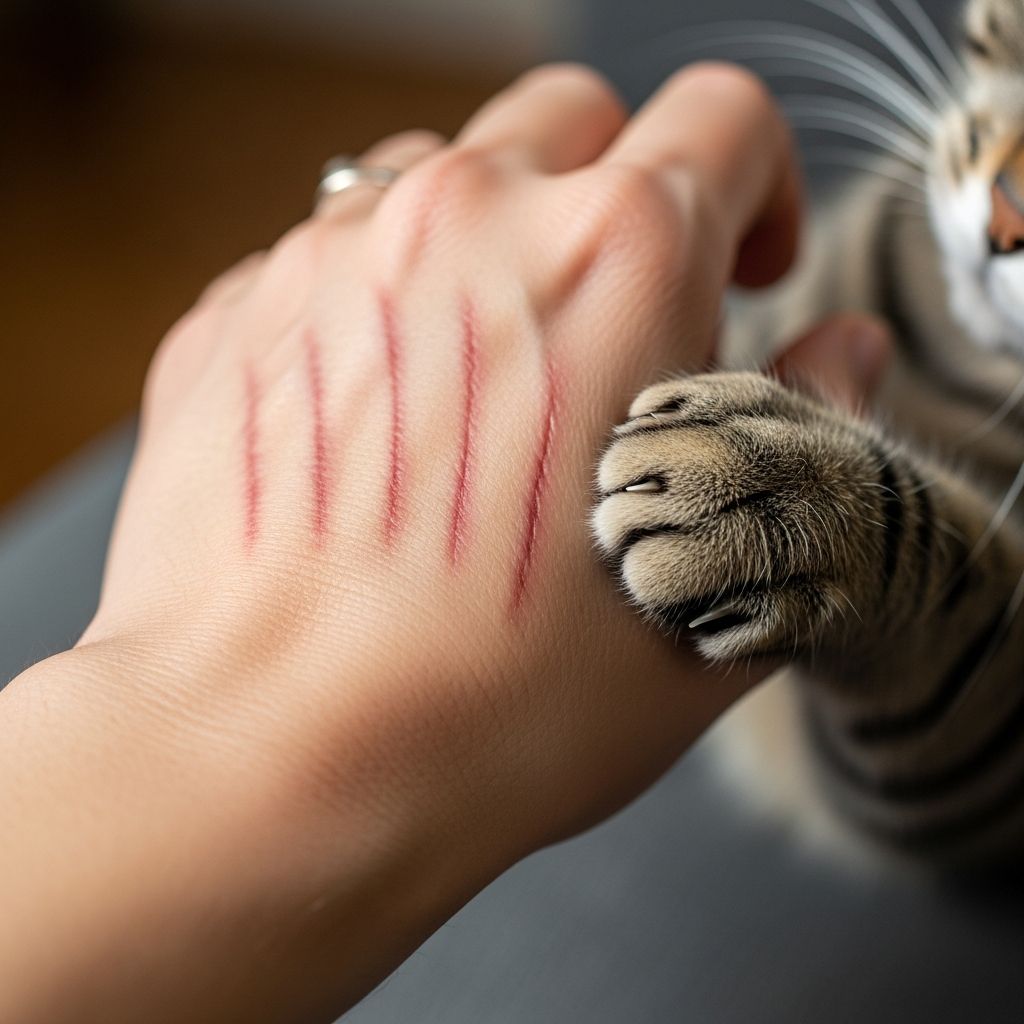
Cat scratch fever, also known as cat scratch disease (CSD), is a bacterial infection caused by Bartonella henselae. This infection is typically transmitted to humans through a cat scratch, bite, or when an infected cat licks an open wound. While most cases are mild and resolve on their own, some individuals may experience more severe symptoms, especially if they have a weakened immune system.
Causes of Cat Scratch Fever
The primary cause of cat scratch fever is the bacterium Bartonella henselae. Cats, particularly kittens, can carry this bacterium in their mouths and under their claws. The bacteria are spread to cats through flea bites, and cats can then transmit the infection to humans through scratches, bites, or by licking an open wound.
- Fleas are the main vector for Bartonella henselae in cats.
- Cats can carry the bacteria without showing any symptoms.
- Transmission to humans occurs when a cat scratches, bites, or licks an open wound.
Symptoms of Cat Scratch Fever
Symptoms of cat scratch fever usually appear within 3 to 10 days after a cat scratch or bite. The most common symptoms include:
- Swollen, tender lymph nodes, often near the site of the scratch or bite.
- A rash or bumps on the skin at the site of the scratch or bite.
- Low-grade fever.
- Headache.
- Fatigue.
- Poor appetite.
The swollen lymph nodes may persist for several weeks or even months. In some cases, the skin over the swollen lymph nodes may appear discolored due to increased blood flow.
Diagnosis of Cat Scratch Fever
Diagnosing cat scratch fever typically involves a combination of clinical evaluation and laboratory tests. A healthcare provider will consider the patient’s history of cat exposure and the presence of typical symptoms. Laboratory tests may include:
- Blood tests to check for signs of infection.
- Biopsy of a swollen lymph node to identify the presence of Bartonella henselae.
Treatment of Cat Scratch Fever
Most cases of cat scratch fever resolve on their own without specific treatment. However, supportive care can help alleviate symptoms:
- Over-the-counter pain relievers such as ibuprofen or naproxen can help reduce fever and pain.
- Applying a warm compress to swollen lymph nodes may help reduce swelling.
- In some cases, a healthcare provider may drain a very large or painful lymph node.
Antibiotics may be prescribed for individuals with weakened immune systems, severe symptoms, or complications. Commonly used antibiotics include azithromycin.
Prevention of Cat Scratch Fever
Preventing cat scratch fever involves reducing the risk of exposure to infected cats and fleas:
- Keep pet cats indoors to reduce their exposure to fleas.
- Treat cats regularly for fleas.
- Avoid contact with stray or feral cats.
- Wash any cat scratches or bites immediately with soap and water.
- Do not allow cats to lick open wounds.
Related Stories



Risk Factors and Complications
While cat scratch fever is generally mild, certain individuals are at higher risk for complications:
- Children under 5 years old.
- Adults with weakened immune systems.
- Individuals with chronic diseases such as HIV/AIDS or cancer.
Complications can include the infection spreading to other organs, such as the liver, spleen, and heart valves. In rare cases, cat scratch fever can lead to more serious conditions like encephalitis or endocarditis.
When to See a Doctor
Most cases of cat scratch fever do not require medical attention. However, you should see a doctor if:
- Symptoms persist for more than a few weeks.
- You have a weakened immune system.
- You develop severe symptoms such as high fever, severe pain, or signs of infection spreading to other parts of the body.
Frequently Asked Questions (FAQs)
Q: Can cat scratch fever be serious?
A: Most cases of cat scratch fever are mild and resolve on their own. However, individuals with weakened immune systems or severe symptoms may experience complications and should seek medical attention.
Q: How long does cat scratch fever last?
A: Symptoms typically last a few weeks to a few months. Swollen lymph nodes may persist for several weeks or even months.
Q: Can I get cat scratch fever from a dog?
A: No, cat scratch fever is specifically caused by Bartonella henselae, which is primarily transmitted by cats. Dogs do not typically carry this bacterium.
Q: How can I prevent cat scratch fever?
A: Prevent cat scratch fever by keeping your cats indoors, treating them for fleas, avoiding contact with stray or feral cats, and washing any scratches or bites immediately with soap and water.
Q: Is cat scratch fever contagious between humans?
A: No, cat scratch fever is not contagious between humans. It is only transmitted from cats to humans through scratches, bites, or licking open wounds.
References
- Cat Scratch Disease — Cleveland Clinic. 2023. https://my.clevelandclinic.org/health/diseases/23537-cat-scratch-fever
- About Bartonella henselae — CDC. 2023. https://www.cdc.gov/bartonella/about/about-bartonella-henselae.html
- Cat Scratch Disease — StatPearls. 2023. https://www.ncbi.nlm.nih.gov/books/NBK482139/
Similar Articles








Read full bio of Sneha Tete