Cataract Surgery: Recovery and How It Works
Learn how cataract surgery restores vision with quick recovery and minimal complications.
Understanding Cataracts and Cataract Surgery
Cataracts develop when the lens of your eye becomes cloudy, causing vision problems that affect your daily life. Your eye functions similarly to a camera, with a lens that focuses light to create clear images. The lens is primarily composed of water and proteins. As a cataract forms, these proteins naturally break down over time, causing the lens to become increasingly cloudy and yellowed. This progressive clouding makes vision blurry, dull, and difficult, impacting everything from reading to driving to enjoying outdoor activities.
Aging is the most common cause of cataracts, affecting millions of people worldwide. However, cataracts can also develop due to certain medical conditions, specific medications, eye injuries, or previous eye surgeries. The good news is that cataract surgery is a highly effective, quick, and painless procedure that removes the cloudy lens and restores clear vision. In fact, cataract surgery improves vision in 97% of people, making it one of the most successful surgical procedures available today.
What Is Cataract Surgery?
Cataract surgery is a specialized eye procedure designed to remove a cloudy lens and improve your vision. An ophthalmologist, a medical doctor specializing in eye care, performs the surgery and helps you select the most appropriate type of intraocular lens (IOL) for your specific needs and lifestyle.
During the procedure, your surgeon removes the cloudy lens and replaces it with a clear, artificial lens. This artificial lens not only restores transparency but can also correct refractive errors like nearsightedness and farsightedness simultaneously. Most people receive an IOL implant as part of their cataract surgery. These lenses are transparent, allowing light to pass through and be properly focused by your eye, just as a healthy natural lens would.
Cataract surgery is currently the only proven way to effectively treat cataracts in adults. Most people experience vision restoration without complications, making it a quick outpatient procedure with fast recovery times. If cataracts affect both eyes, your ophthalmologist will typically schedule two separate surgeries approximately one to two weeks apart.
When Do You Need Cataract Surgery?
You only need cataract surgery when cataracts prevent you from performing your usual daily tasks and activities. Some people with mild cataracts may find temporary relief through glasses or contact lenses, but this is typically not a long-term solution. As cataracts progress to moderate or advanced stages, glasses and contacts become ineffective, and surgery becomes the only viable treatment option.
Your ophthalmologist will assess your specific situation and recommend surgery only when it will meaningfully improve your quality of life. Factors considered include the severity of your symptoms, how much the cataracts are affecting your daily activities, and your overall eye health. Even minor cataracts do not require surgery unless they’re causing significant vision problems that interfere with your lifestyle.
Types of Intraocular Lenses (IOLs)
Your surgeon will guide you through selecting the type of artificial lens best suited to your vision needs and lifestyle. Standard IOLs are covered by most insurance plans and provide excellent vision correction for distance vision. However, several specialty IOL options are also available:
Related Stories



Standard IOLs
These lenses offer single-focus vision, typically correcting for distance viewing. Most insurance plans cover these lenses, making them an accessible option for many patients.
Specialty IOLs
Your surgeon may offer specialty IOLs to correct astigmatism and presbyopia. Toric lenses specifically address astigmatism, which is an abnormal corneal curvature that causes blurry vision. Multifocal lenses provide multiple focal points, reducing dependence on glasses or contact lenses for both near and distance vision. While these specialty lenses aren’t typically covered by insurance, they may significantly reduce your need for corrective eyewear after surgery.
How Cataract Surgery Works
The Basic Procedure
Cataract surgery is a straightforward procedure that removes your cloudy lens and replaces it with a permanent clear lens implant. The entire surgery typically takes only about 10 minutes, though you should plan to spend a few hours at the surgery center. When you arrive, you’ll be checked in and nurses will place dilating drops in your eye to prepare it for surgery.
Step-by-Step Process
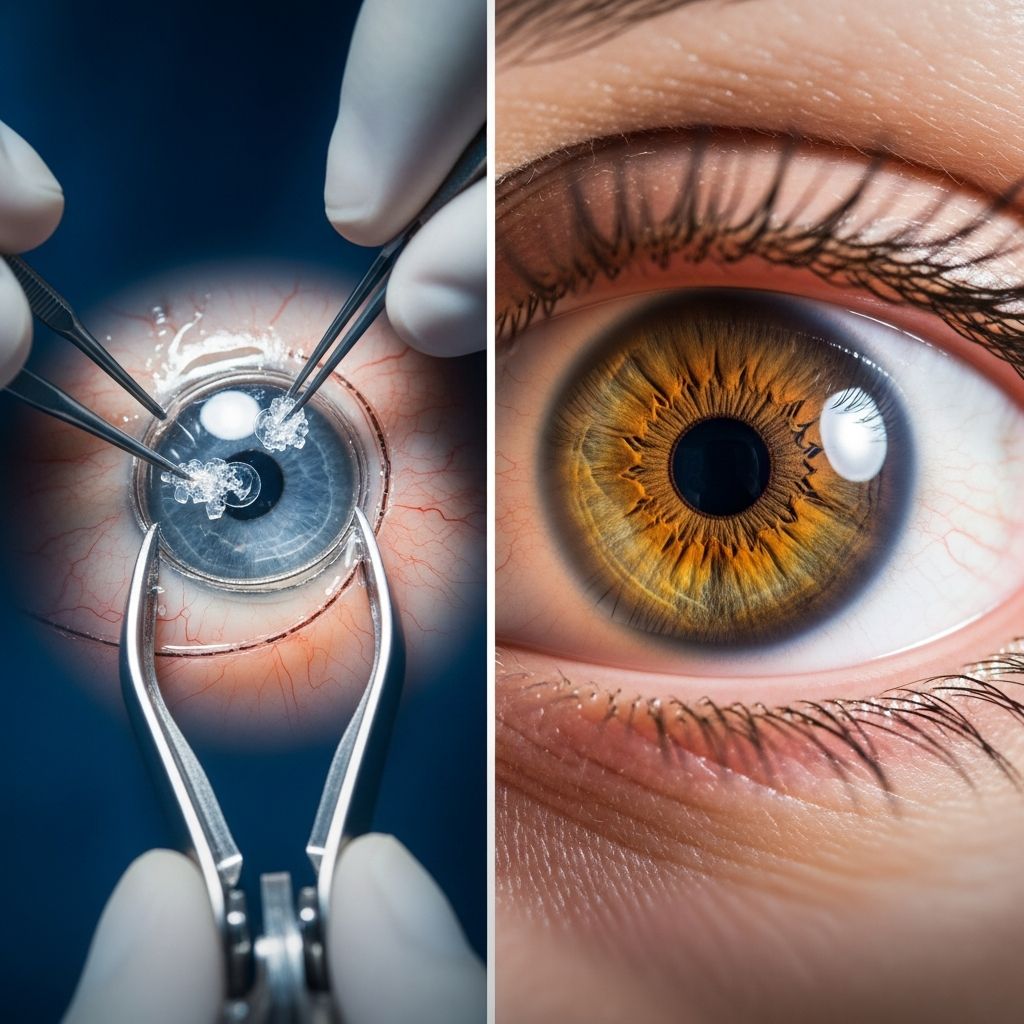
During the procedure, your surgeon creates a small incision in your eye. Through this tiny opening, specialized instruments break up the cloudy lens into small fragments. Your surgeon then gently removes these fragments through the incision. Finally, the artificial intraocular lens is carefully inserted through the same incision, where it unfolds and positions itself to replace your natural lens.
One of the advantages of modern cataract surgery is that the incision is so small that typically no stitches are required. Your eye’s natural wound healing ability seals the incision, allowing for a quick and comfortable recovery.
Advanced Surgical Options: Femtosecond Laser Surgery
Cleveland Clinic offers advanced femtosecond laser cataract surgery, representing the latest innovation in cataract treatment. This cutting-edge technique uses computer-guided lasers instead of manual incisions, providing greater precision and accuracy than conventional cataract surgery.
How Femtosecond Laser Surgery Works
During femtosecond laser cataract surgery, your surgeon uses a touch-screen computer with 3-D imaging to create a surgical plan. The laser system enables precise programming of the size, shape, and location of each incision. The surgeon then guides the laser to create tiny, delicate incisions in your eye through which the cloudy lens can be removed. Simultaneously, the laser can reshape the curve of your cornea to correct astigmatism, addressing another common cause of blurry vision.
After the laser portion of the surgery, your surgeon views your eye under a microscope and removes the cataract manually, replacing it with a new clear synthetic lens. This combined approach refines the cataract extraction process, allowing for a more accurate and quicker procedure overall.
Advantages of Laser-Assisted Surgery
By using computer-guided precision, femtosecond laser cataract surgery offers several advantages. The procedure is typically more accurate than conventional manual surgery, with superior outcomes for vision correction. The laser can also address surgically correctable astigmatism at the same time as removing the cataract, potentially reducing your need for glasses after surgery. The procedure usually takes less than an hour and is relatively painless, with patients remaining awake but comfortable throughout.
What to Expect Before Surgery
Before your cataract surgery, your eye doctor will conduct a comprehensive evaluation. During this appointment, your ophthalmologist will assess your overall eye health, discuss your symptoms in detail, and review your medical history. They will perform various tests to measure your eye’s shape and size, helping determine the appropriate power of your artificial lens.
This evaluation also includes a discussion of your IOL options. Your surgeon will help you understand the different types of lenses available and guide you toward the choice that best aligns with your vision goals and lifestyle needs. This personalized approach ensures that your surgery is tailored specifically to you.
You’ll also receive detailed pre-operative instructions regarding medications, when to stop eating or drinking before surgery, and what to bring on your surgery day. It’s important to follow these instructions carefully to ensure the smoothest possible surgical experience.
What to Expect During Surgery
On surgery day, you’ll arrive at the surgical facility where nurses and medical staff will prepare you. Although you remain awake during cataract surgery, you will receive numbing drops and sedative medication to ensure you’re as comfortable as possible throughout the procedure. You may hear and feel some sensations during surgery, but you shouldn’t experience pain.
Your surgeon will position themselves to view your eye and carefully perform the procedure with precision. The entire surgery typically takes only 10 to 15 minutes, depending on the complexity of your individual case and which surgical technique is used.
Recovery After Cataract Surgery
Immediate Post-Surgery Period
One of the most significant advantages of cataract surgery is the rapid recovery. Typically, you won’t need stitches, and recovery is very quick. Most patients can go home the same day as their surgery, making it a true outpatient procedure. However, you will need someone to drive you home, as your eyes will be dilated and your vision temporarily blurred from the surgery and the drops used.
Recovery Timeline
In the days and weeks following your surgery, your vision will continue to improve. While many people notice improved vision within the first few days, your eyes may take several weeks to fully heal and your vision to stabilize completely. During this recovery period, it’s crucial to follow your surgeon’s post-operative instructions carefully.
Post-Operative Care Instructions
After your surgery, you’ll receive specific instructions to promote healing and protect your eye. These typically include using prescribed eye drops as directed, avoiding rubbing or pressing on your eye, and protecting your eye from dust and water during the initial healing period. You may be advised to wear sunglasses to protect your eye and reduce light sensitivity. Strenuous activities and heavy lifting should be avoided for a period of time, though light walking is usually encouraged.
Your ophthalmologist will schedule follow-up appointments to monitor your healing progress and ensure your vision is improving as expected. These appointments allow your doctor to detect any complications early and make any necessary adjustments to your medications or care routine.
Success Rates and Complications
Cataract surgery is one of the safest and most effective surgical procedures available. Surgery improves vision for 97% of people, and most people experience no complications at all. This exceptional success rate reflects both the proven nature of the procedure and the skill of experienced ophthalmologists.
When complications do occur, they are typically minor and easily managed. Possible complications may include temporary inflammation, mild irritation, or temporary changes in eye pressure. Serious complications are rare, occurring in less than 1% of cases. Your ophthalmologist will discuss potential risks with you during your consultation and explain how these risks apply to your specific situation.
Secondary Cataract (Posterior Capsulotomy)
Occasionally, some patients experience cloudy or blurry vision months or even years after successful cataract surgery. This condition, sometimes called secondary cataract, occurs when the membrane that supports the artificial lens becomes cloudy over time. If this happens, a simple one-time laser procedure called a posterior capsulotomy, or YAG procedure, can be performed to restore clear vision. This quick outpatient treatment uses a specialized laser to clear the cloudy membrane, improving your vision without requiring additional surgery.
Why Choose Cleveland Clinic for Cataract Surgery
Cleveland Clinic’s ophthalmology program stands out for its exceptional expertise and innovative approach to cataract surgery. The ophthalmologists at Cleveland Clinic Cole Eye Institute are board-certified and possess substantial experience with both conventional and femtosecond laser cataract surgery as well as other sophisticated eye treatments.
Our specialists perform nearly 17,000 clinical procedures each year, placing us among the highest patient volume providers in the nation. This extensive experience translates directly into superior outcomes and exceptional patient care. Cleveland Clinic is among the few healthcare providers in Northeast Ohio to offer the first FDA-approved femtosecond laser system for cataract procedures. Cole Eye Institute’s ophthalmology program is consistently ranked among the Top 10 nationwide by U.S. News & World Report and ranked number one in Ohio.
Our skilled eye surgeons have performed thousands of cataract surgeries every year, including complex cases involving children and adults with severe eye disease. This experience means patients receive exceptional care and the very best results possible. Cleveland Clinic Cole Eye Institute continues to remain on the leading edge of cataract surgery innovation and patient care.
Cost and Insurance Considerations
Cataract surgery is typically covered by most insurance plans, including Medicare and private insurance. Standard IOLs are usually fully covered, allowing patients to receive the procedure without significant out-of-pocket costs. However, specialty IOLs that correct astigmatism or provide multifocal vision are often not covered by insurance, so patients choosing these premium options may have additional costs.
During your consultation, your ophthalmologist’s office can help you understand your insurance coverage and discuss any out-of-pocket costs associated with your specific surgery and IOL choice. This financial transparency allows you to make informed decisions about your treatment options.
Lifestyle Improvements After Cataract Surgery
Following successful cataract surgery, most patients experience dramatic improvements in their quality of life. Many people report being able to return to hobbies and activities that had become difficult due to cataracts. Reading, driving, watching television, and enjoying outdoor activities become clear and enjoyable again. The restoration of clear vision often has positive effects on independence, safety, and overall well-being.
Frequently Asked Questions
Q: How long does cataract surgery take?
A: The actual surgical procedure typically takes only 10 to 15 minutes. However, you should plan to spend a few hours at the surgery center for preparation, the procedure, and post-operative monitoring.
Q: Is cataract surgery painful?
A: No. Cataract surgery is painless. You receive numbing drops and sedative medication to keep you comfortable throughout the procedure. You may feel some mild pressure or hear sounds, but you will not experience pain.
Q: Can cataracts return after surgery?
A: The artificial lens implanted during surgery cannot develop cataracts. However, the membrane supporting the lens may become cloudy over time in some patients, a condition that can be easily treated with a laser procedure if needed.
Q: When can I return to normal activities?
A: Most people can return home the same day. Light activities can usually resume within a few days, though strenuous activities and heavy lifting should be avoided for a few weeks. Your ophthalmologist will provide specific guidance based on your individual recovery.
Q: Will I still need glasses after cataract surgery?
A: This depends on your IOL choice. Standard lenses may require glasses for reading or close work. However, specialty multifocal or toric lenses can reduce or eliminate your need for glasses for many activities.
Q: What is the success rate for cataract surgery?
A: Cataract surgery has an exceptional success rate, with about 97% of people experiencing improved vision. Most people experience no complications at all.
References
- Cataract Surgery: Recovery and How It Works — Cleveland Clinic. 2024. https://my.clevelandclinic.org/health/treatments/21472-cataract-surgery
- Is Femtosecond Laser Cataract Surgery Right for You? — Cleveland Clinic Cole Eye Institute. 2024. https://pages.clevelandclinic.org/femtosecond-cataract-surgery-index.html
- Cataract Surgery in Cleveland, OH — Corrective Eye Center. 2024. https://www.correctiveeye.com/eye-care-services/cataracts
- Get Cataract Surgery — Cleveland Clinic Services. 2024. https://my.clevelandclinic.org/services/cataracts-surgery
- Cataract Surgery Options: What You Need to Know — Clear Choice Laser. January 4, 2023. https://www.youtube.com/watch?v=oDDuP0PYzJY
Similar Articles








Read full bio of medha deb