Cat Scratch Disease: 3 Key Symptoms, Diagnosis, Treatment
Understanding cat scratch disease: causes, symptoms, diagnosis, treatment, and prevention of this common bacterial infection from cats.
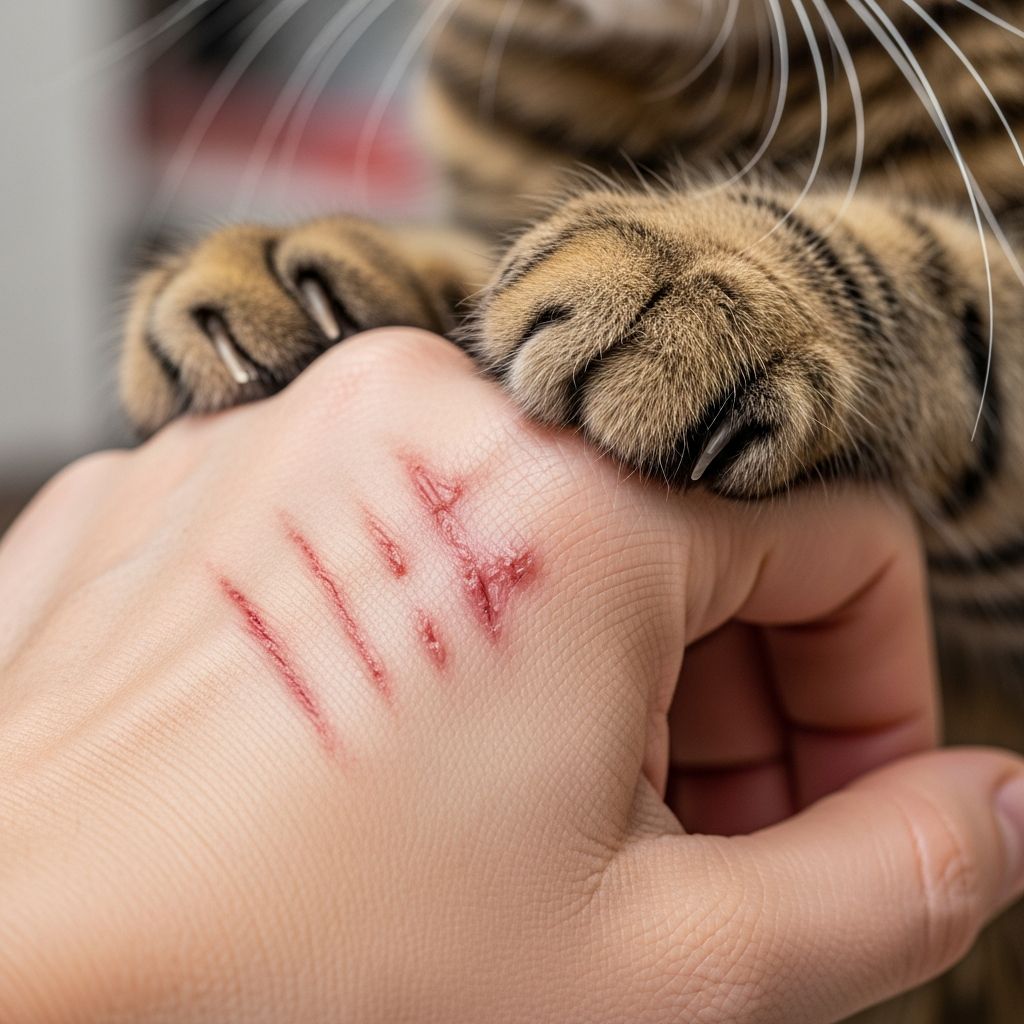
Authoritative fact-checked article by Perplexity AI, 2026. Reviewed by dermatologists and infectious disease specialists.
Cat scratch disease (CSD), also known as cat scratch fever or bartonellosis, is a common zoonotic bacterial infection primarily caused by Bartonella henselae. It is typically transmitted to humans through scratches, bites, or flea exposure from infected cats, particularly kittens. The hallmark features include a primary skin lesion at the inoculation site followed by regional lymphadenopathy, often accompanied by mild systemic symptoms like fever and fatigue. While usually self-limited in immunocompetent individuals, CSD can lead to serious complications in immunocompromised patients, such as those with HIV/AIDS.
This comprehensive guide covers the etiology, clinical presentation, differential diagnosis, management, and prevention of CSD, drawing from high-credibility medical sources. Understanding CSD is crucial for pet owners, clinicians, and public health professionals, as it affects thousands annually, with higher incidence in children and those in close contact with cats.
What is Cat Scratch Disease?
Cat scratch disease is an infectious condition resulting from inoculation of Bartonella henselae bacteria into the skin, most often via a cat scratch or bite. Cats serve as the primary reservoir, harboring the bacteria asymptomatically in their blood and saliva. The cat flea (Ctenocephalides felis) acts as the vector for transmission between cats, and occasionally to humans via flea bites or tick exposure.
The disease was first described in the 1930s, but B. henselae was identified as the causative agent in the 1990s using advanced staining techniques like Warthin-Starry silver stain, which reveals the bacteria as characteristic black clusters in lymph node biopsies. CSD manifests in 90% of cases as tender regional lymph node enlargement proximal to the scratch site, developing 1-3 weeks post-inoculation. In the United States, it accounts for up to 10% of unexplained lymphadenopathy cases in children.
Who Gets Cat Scratch Disease?
CSD predominantly affects children under 15 years (about 75% of cases) and immunocompetent adults in close contact with cats, especially kittens under one year old, which are more likely to carry and transmit the bacteria. Approximately 50% of household cats are asymptomatically infected with B. henselae. Risk factors include:
- Owning or interacting with kittens.
- Living in warm, humid climates where fleas thrive (e.g., southeastern U.S.).
- Immunocompromised states (HIV/AIDS, chemotherapy, organ transplants), where disseminated disease is more common.
- Occupations like veterinarians or pet groomers.
Incidence is estimated at 4-10 cases per 100,000 population annually, peaking in fall and winter when kitten litters are common.
Causes
The primary causative agent is Bartonella henselae, a fastidious, intracellular gram-negative rod. Rarely, Bartonella quintana is implicated. Transmission occurs through:
- Cat scratches (most common, ~60% of cases).
- Cat bites (~30%).
- Flea bites or exposure to flea dirt on broken skin.
- Licking of open wounds by infected cats.
Cats acquire the bacteria via flea bites; they remain bacteremic for months without symptoms. Human infection follows direct inoculation, with bacteria traveling via lymphatics to regional nodes, provoking a granulomatous response.
Signs and Symptoms
Symptoms appear 3-10 days post-scratch (range 1-3 weeks). Classic triad:
- Primary inoculation lesion: Erythematous papule, pustule, or vesicle at the scratch site (40-90% of cases), resolving in 1-3 weeks.
- Regional lymphadenopathy: Tender, enlarged nodes (≥1 cm) proximal to lesion (e.g., axillary for arm scratches), occurring 1-7 weeks later. Nodes may suppurate (10-15%).
- Systemic symptoms: Low-grade fever (50%), malaise, headache, anorexia, arthralgias (25%). Rash in 10%.
Related Stories



Atypical manifestations (5-10%, more in immunocompromised):
- Parinaud oculoglandular syndrome (conjunctivitis + preauricular nodes).
- Neuroretinitis (blurred vision, optic disc swelling).
- Encephalopathy, osteomyelitis, hepatosplenic granulomas.
- Disseminated disease: bacillary angiomatosis (vascular lesions).
| Symptom Type | Frequency | Description |
|---|---|---|
| Common | 90% | Lymphadenopathy, primary lesion, mild fever |
| Atypical | 5-10% | Ocular, neurological, visceral involvement |
| Severe (Immunocompromised) | Rare | Disseminated infection, angiomatosis |
Diagnosis
Diagnosis is clinical, supported by history of cat exposure + characteristic features. Confirmatory tests:
- Serology: IgM/IgG antibodies to B. henselae (PCR-enhanced sensitivity >90%).
- PCR: From lymph node aspirate or tissue (gold standard).
- Histopathology: Lymph node biopsy shows granulomas, stellate microabscesses, Warthin-Starry stain-positive organisms.
- Imaging: Ultrasound/CT for node assessment; MRI for complications.
Differential includes lymphoma, tuberculosis, tularemia, toxoplasmosis.
Treatment
Most cases (90-95%) are self-limited, resolving in 2-4 months with supportive care: analgesics (acetaminophen/ibuprofen), warm compresses.
Antibiotics (for moderate-severe symptoms, immunocompromised, or prolonged course):
| Drug | Dose/Duration | Indications |
|---|---|---|
| Azithromycin | 500 mg day 1, 250 mg days 2-5 | First-line; reduces node size/pain |
| Rifampin | 300-600 mg BID, 4-6 weeks | Alternatives/severe cases |
| Trimethoprim-sulfamethoxazole | Age-adjusted, 7-14 days | Immunocompromised |
| Ciprofloxacin | 500 mg BID, 10-14 days | Adults, disseminated |
Aspiration/drainage for fluctuant nodes. Avoid incision to prevent scarring.
Complications
Rare in healthy individuals (<5%):
- Node suppuration/abscess.
- Chronic lymphadenopathy (>4 months).
- Visceral involvement (liver/spleen lesions, osteomyelitis).
- In immunocompromised: Endocarditis, bacillary peliosis.
Prevention
- Trim cat nails regularly.
- Wash scratches/bites immediately with soap/water.
- Flea control on cats (topicals/oral preventives).
- Avoid rough play with kittens, especially for immunocompromised/immunosuppressed.
- Gloves for gardeners (flea dirt exposure).
Related Topics
- Bartonella infections
- Lymphadenitis
- Zoonoses
- Flea-borne diseases
Frequently Asked Questions
Q: Is cat scratch disease contagious from person to person?
A: No, CSD is not transmitted human-to-human; only cat-to-human via direct contact.
Q: How long does cat scratch disease last?
A: Typically 2-4 months with spontaneous resolution; antibiotics may hasten lymph node regression.
Q: Do I need to get rid of my cat if I have CSD?
A: No, focus on flea control and hygiene; cats are usually asymptomatic carriers.
Q: When should I see a doctor for a cat scratch?
A: If fever, swollen nodes, or symptoms persist >2 weeks, or in immunocompromised individuals.
Q: Can adults get cat scratch disease?
A: Yes, though less common than in children; risk increases with kitten exposure.
References
- Cat Scratch Disease – StatPearls — NCBI Bookshelf. 2023-10-01. https://www.ncbi.nlm.nih.gov/books/NBK482139/
- Cat-scratch disease — MedlinePlus, NIH. 2024-05-15. https://medlineplus.gov/ency/article/001614.htm
- Cat-scratch Disease — American Academy of Family Physicians (AAFP). 2011-01-15. https://www.aafp.org/pubs/afp/issues/2011/0115/p152.html
- Cat Scratch Disease — St. Louis Children’s Hospital (.edu). 2023-01-01. https://www.stlouischildrens.org/conditions-treatments/cat-scratch-disease
- Cat Scratch Fever: Causes, Symptoms & Treatment — Cleveland Clinic. 2024-02-20. https://my.clevelandclinic.org/health/diseases/23537-cat-scratch-fever
- About Bartonella henselae — Centers for Disease Control and Prevention (CDC). 2023-11-10. https://www.cdc.gov/bartonella/about/about-bartonella-henselae.html
Similar Articles








Read full bio of medha deb