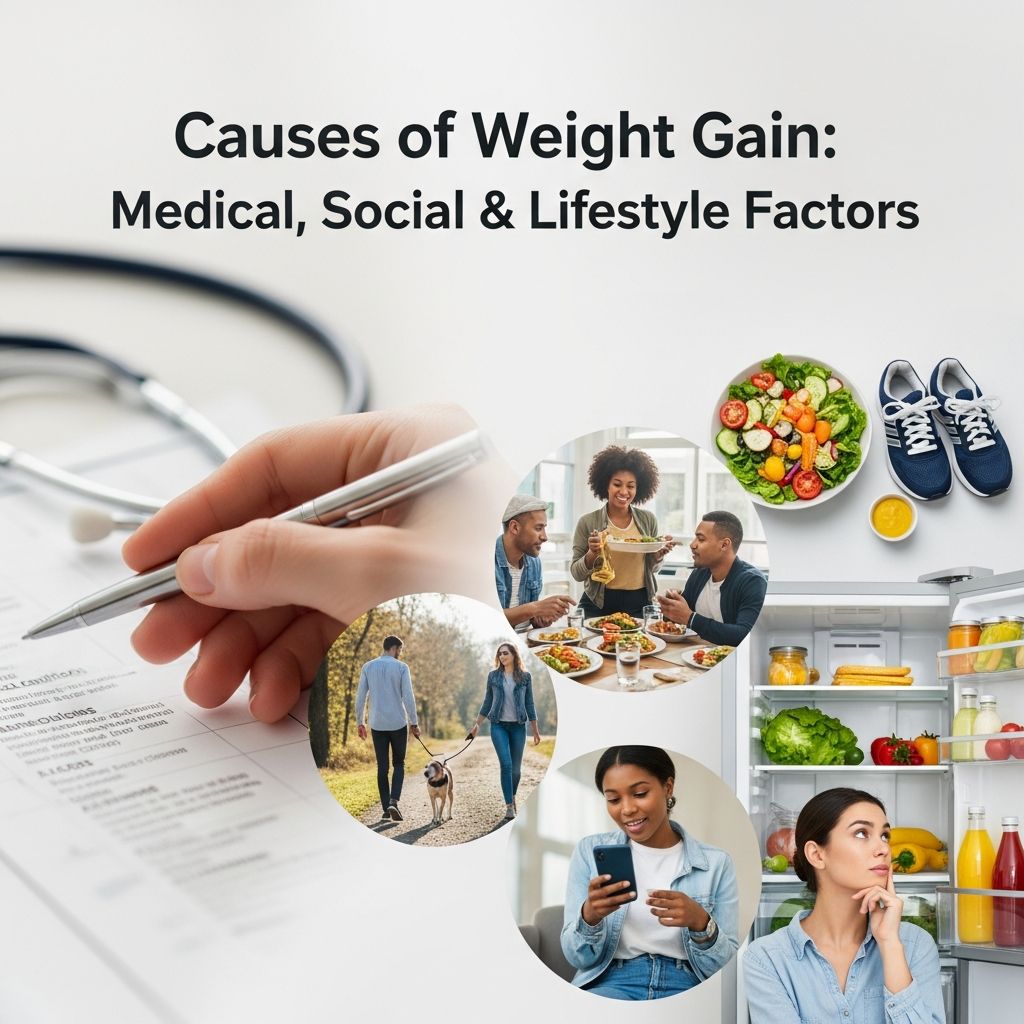
Causes of Weight Gain: Medical, Social & Lifestyle Factors
Explore the complex factors behind weight gain, from medical conditions to lifestyle choices and genetics.
Understanding Weight Gain: Beyond Calories
Weight gain is a complex phenomenon that is rarely caused by simply eating more or being less active. While calorie imbalance plays a role, numerous other factors contribute to weight changes, including social, cultural, psychological, and medical elements. Understanding these underlying causes is essential for addressing weight gain effectively and maintaining long-term health.
Primary Causes of Weight Gain
The most straightforward explanation for weight gain involves consuming more calories than your body expends through daily activities and exercise. However, this oversimplification misses the broader picture of weight management. Different individuals have vastly different caloric requirements based on age, sex, activity level, ethnicity, and metabolic factors. A young athletic male, for instance, requires significantly more calories than an inactive older person to maintain the same weight.
Caloric Intake and Energy Balance
When you consistently consume more calories than your body burns, the excess energy converts into fat and gets stored in your body over time. Conversely, eating fewer calories than you expend forces your body to access its fat stores for energy, resulting in weight loss. This fundamental energy balance equation underlies weight management, though individual variation in metabolic rate and nutritional processing means the equation isn’t equally simple for everyone.
Dietary Factors Contributing to Weight Gain
The quality and type of food consumed significantly influence weight gain, not just the quantity. Modern dietary patterns, particularly the consumption of processed and ultra-processed foods, create conditions favorable for weight accumulation.
Processed and Ultra-Processed Foods
Ultra-processed foods (UPFs) represent a major dietary contributor to weight gain. These foods undergo extensive industrial modifications with added substances and additives designed to enhance flavor artificially. High-sugar and high-fat foods trigger reward centers in the brain, making them especially effective at overriding the body’s natural feedback mechanisms that typically maintain stable weight. Excessive consumption of UPFs has been linked directly to obesity development and significantly increases future risk of type 2 diabetes, heart attacks, and strokes.
Sugar and Fat Balance
Scientific experts remain divided about whether fat or sugar represents the primary culprit in weight gain. However, the most sensible dietary approach involves consuming a balanced diet with limited amounts of both sugars and fats. Rather than eliminating either macronutrient entirely, moderation and balance appear more sustainable for long-term weight management. Whole foods with minimal processing provide superior nutritional value and typically contain fewer calories than their processed counterparts.
Medical Conditions Associated with Weight Gain
Certain medical conditions substantially increase the likelihood of weight gain by affecting metabolism, mobility, or hormone regulation. Identifying and treating these conditions becomes crucial for managing weight effectively.
Related Stories



Metabolic and Hormonal Disorders
- Hypothyroidism (Underactive Thyroid): This condition reduces metabolic rate, making weight gain more likely even with normal caloric intake.
- Polycystic Ovary Syndrome (PCOS): Women with PCOS frequently experience overweight or obesity due to hormonal imbalances.
- Cushing’s Syndrome: Though rare, this condition causes significant weight gain, particularly in the face and upper back.
Mobility-Limiting Conditions
Any medical condition that reduces physical activity capacity increases weight gain risk. These include:
- Wheelchair dependency from disability, illness, or injury
- Exercise-induced pain from osteoarthritis or other joint conditions
- Breathlessness during physical activity from heart failure or chronic obstructive pulmonary disease (COPD)
- Other chronic conditions limiting exercise capacity
The good news is that treating these underlying conditions and adjusting dietary intake accordingly often allows individuals to maintain healthy weights despite medical challenges.
Psychological and Lifestyle Factors
Beyond medical causes, psychological and behavioral factors profoundly influence weight. Stress, sleep deprivation, and emotional eating patterns significantly contribute to weight gain.
Stress and Emotional Eating
Psychological stress frequently triggers increased food consumption, particularly of high-calorie comfort foods. Individuals experiencing stress or anxiety may eat more calories before feeling full or experience heightened hunger sensations. These stress-related eating patterns can quickly lead to excessive caloric intake and subsequent weight gain.
Sleep Quality and Duration
Inadequate sleep and poor sleep quality have emerged as significant weight gain factors. Sleep deprivation disrupts hormonal regulation of hunger and satiety, increasing appetite and cravings for high-calorie foods. Establishing consistent sleep patterns and prioritizing sleep quality supports weight management efforts.
Age and Metabolic Changes
Aging naturally affects weight management. Metabolic rate typically declines with age, requiring fewer calories to maintain the same weight. Additionally, muscle mass decreases with age unless actively maintained through exercise, further reducing caloric needs. These age-related changes make weight management increasingly challenging without lifestyle adjustments.
Genetic and Biological Influences
Genetics significantly influences body weight regulation. Some individuals genetically predispose toward weight gain, while others maintain stable weight more easily despite similar caloric intake. These genetic variations affect appetite regulation, metabolic efficiency, and fat storage patterns. However, genetic predisposition does not guarantee obesity; environmental and behavioral factors interact with genetic influences to determine actual weight outcomes.
Appropriate Weight Gain
Not all weight gain represents a health concern. Certain life circumstances warrant intentional weight gain:
- Pregnancy: Healthy weight gain during pregnancy supports fetal development and maternal health.
- Recovery from Illness: Individuals recovering from severe illness or eating disorders may need to gain weight to restore normal body mass index (BMI).
- Athletic Training: Athletes intentionally gain weight through muscle development during training phases.
- Child and Adolescent Growth: Growing children and teenagers naturally gain weight as part of normal development.
Why Weight Gain Matters for Health
Weight gain becomes health-relevant when BMI exceeds 30, indicating obesity classification. At this threshold, excess weight begins causing measurable damage to health through multiple mechanisms. However, not all weight gain necessarily threatens health, particularly when maintaining normal BMI ranges or when weight gain serves appropriate purposes like pregnancy or recovery.
Health Risks of Excessive Weight
Individuals carrying excess weight face increased risk for numerous serious health conditions, including type 2 diabetes, heart disease, certain cancers, and stroke. The relationship between weight and health risk is generally progressive—greater excess weight correlates with higher health risks. However, even modest weight loss significantly reduces these elevated health risks.
Waist Circumference and Health Risk
Beyond BMI calculations, waist circumference provides crucial health risk information. Individuals with very high waist circumference may face substantial health risks even at lower obesity grades. Fat distribution patterns matter considerably; central obesity (weight concentrated around the abdomen) poses greater health risks than weight distributed elsewhere on the body.
The Role of Gut Health in Weight Gain
Emerging research suggests that weight gain may relate to the microscopic organisms inhabiting our digestive systems. The human gut contains millions of microbes—bacteria, fungi, protozoa, and viruses—that influence metabolism and weight regulation. These microbial communities, collectively called the microbiome, affect how the body processes nutrients and stores energy. Understanding and supporting gut health through diverse fiber intake, fermented foods, and appropriate probiotic sources may offer additional weight management strategies beyond traditional diet and exercise approaches.
Taking Action on Weight Gain
If weight gain is moving you out of a healthy weight range, taking action becomes important for long-term health maintenance. However, successful weight management requires mental readiness and preparation. Simply deciding to lose weight without addressing underlying causes frequently leads to frustration and failure.
Seeking Professional Support
Consulting with a general practitioner or practice nurse provides access to professional guidance and support. Healthcare providers can assess individual circumstances sensitively, identify underlying medical contributors, and discuss evidence-based options for sustainable weight management. This professional support dramatically increases success rates compared to unsupported self-directed weight loss attempts.
Lifestyle Modification Strategies
Successful weight management combines multiple approaches rather than relying on single interventions. Key strategies include consuming a balanced diet emphasizing whole foods over processed options, engaging in regular physical activity, managing stress effectively, prioritizing adequate sleep, and addressing any underlying medical conditions. This multimodal approach addresses the complex, multifactorial nature of weight regulation.
Frequently Asked Questions
Q: Is weight gain always caused by eating too much?
A: No. While caloric excess plays a role, weight gain results from complex interactions involving medical conditions, medications, genetics, stress levels, sleep quality, age, and psychological factors. Many individuals gain weight despite not eating significantly more, indicating that factors beyond simple caloric intake influence weight changes.
Q: Can medical conditions cause weight gain without overeating?
A: Yes. Conditions like hypothyroidism, PCOS, Cushing’s syndrome, and mobility-limiting illnesses can cause weight gain through hormonal disruption, reduced activity capacity, or altered metabolism, independent of increased food consumption.
Q: At what BMI does weight gain become a health concern?
A: Weight gain becomes health-relevant at BMI exceeding 30, which indicates obesity classification. However, waist circumference also matters; high central obesity poses greater risks even at lower BMI categories.
Q: Can weight loss improve health even with modest amounts?
A: Yes. Even small amounts of weight loss significantly reduce the elevated health risks associated with overweight and obesity, making sustainable modest reductions worthwhile.
Q: How does gut health influence weight gain?
A: Emerging research indicates that microorganisms in the digestive system influence metabolism and nutrient processing. Supporting gut health through diverse fiber intake and appropriate probiotic foods may contribute to weight management, though research in this area continues developing.
Q: Is all weight gain unhealthy?
A: No. Weight gain is appropriate and healthy during pregnancy, childhood and adolescent growth, recovery from illness or eating disorders, and athletic muscle-building training. Context determines whether weight gain represents a health concern.
References
- Causes of Weight Gain — Patient.info. 2024. https://patient.info/healthy-living/obesity-overweight/weight-gain
- Obesity and Overweight: Overview and Health Risks — World Health Organization (WHO). 2021. https://www.who.int/news-room/fact-sheets/detail/obesity-and-overweight
- Obesity and Weight Loss — Patient.info. 2024. https://patient.info/healthy-living/obesity-overweight
- Obesity: Symptoms and Causes — Mayo Clinic. 2024. https://www.mayoclinic.org/diseases-conditions/obesity/symptoms-causes/syc-20375742
- Overweight, Obesity, and Health Risk — JAMA Internal Medicine. 2003. https://jamanetwork.com/journals/jamainternalmedicine/fullarticle/415798
Similar Articles








Read full bio of Sneha Tete