Cavities and Tooth Decay: Causes, Symptoms & Treatment
Comprehensive guide to understanding cavities, their causes, symptoms, and effective treatment options.
Understanding Cavities: What You Need to Know
A cavity is a hole in your tooth that develops from tooth decay, medically known as dental caries. Cavities form when acids in your mouth wear down and erode your tooth’s hard outer layer, called enamel. This progressive damage eventually creates permanent holes in your teeth that require professional dental intervention. Anyone can develop cavities, regardless of age, though proper oral hygiene and regular dental cleanings can significantly reduce your risk.
The development of cavities is a gradual process that begins with bacterial activity in your mouth. When bacteria combine with food particles and saliva, they create a sticky film called plaque. This plaque produces acids that attack your tooth enamel, initiating the decay process. Understanding how cavities form is the first step toward prevention and early treatment.
How Cavities Develop: The Five Stages of Tooth Decay
Tooth decay progresses through five distinct stages, each representing deeper penetration into your tooth structure:
Stage 1: Initial Enamel Erosion
The decay process begins on your tooth’s outer enamel surface. At this stage, you typically won’t experience any pain or visible symptoms. Acids gradually soften the enamel, creating microscopic changes in the tooth structure.
Stage 2: Enamel Breakdown
As acid continues to attack, a small white or chalky area may appear on your tooth surface. This visible sign indicates that the enamel is breaking down, though the cavity hasn’t penetrated deeper layers yet.
Stage 3: Dentin Layer Involvement
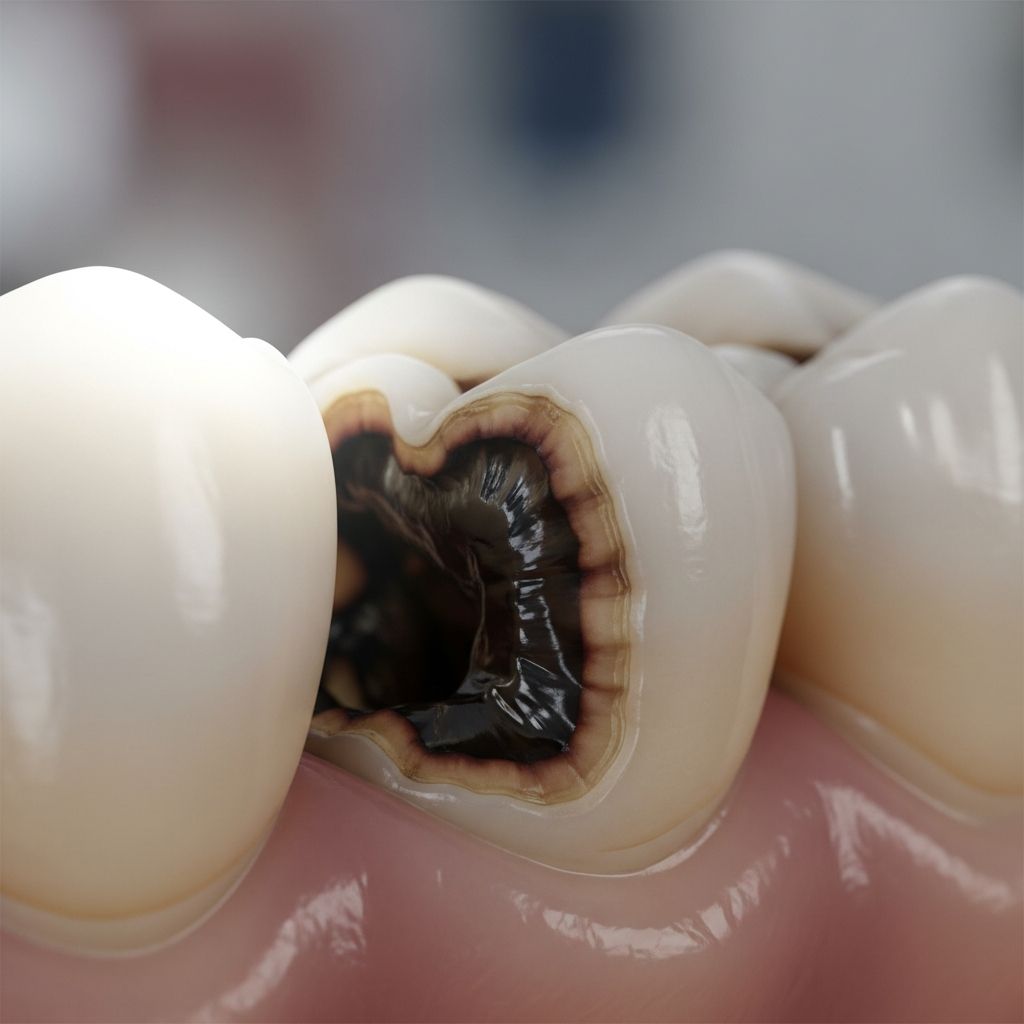
Once decay breaks through the enamel and reaches the dentin layer, the process accelerates significantly. The dentin is softer than enamel, allowing decay to spread more rapidly. You may notice brown or black spots on your tooth, and sensitivity might begin to develop.
Stage 4: Pulp Chamber Exposure
As decay approaches the pulp chamber—where the nerve and blood vessels reside—you’ll likely experience increased pain and sensitivity. This stage often requires root canal therapy to save the tooth.
Stage 5: Advanced Decay and Infection
Without treatment, decay can reach the pulp, causing severe pain, infection, and abscess formation. At this point, tooth extraction may become necessary.
Recognizing Cavity Symptoms
Early-stage cavities often produce no symptoms, making regular dental checkups essential for detection. As decay progresses, you may experience the following warning signs:
- Tooth pain or discomfort when biting down
- Sensitivity to hot, cold, or sweet foods and beverages
- Visible holes or pits in your teeth
- Brown or black discoloration on tooth surfaces
- Pain that radiates throughout your jaw
- Difficulty sleeping due to dental discomfort
Small, white chalky areas on your enamel represent the earliest visible sign of cavity formation. As decay worsens, these areas darken to brown or black. If pain develops, it indicates the decay has reached the deeper layers of your tooth, requiring immediate professional attention.
Related Stories



Common Types and Locations of Cavities
Cavities can develop on any tooth surface, but they typically occur in specific locations where bacteria and food particles accumulate:
Smooth Surface Cavities
These form on the flat outer surfaces of your teeth, particularly along the gum line. They develop slowly and are often the easiest to prevent with proper brushing.
Pit and Fissure Cavities
These occur in the grooves and crevices on your chewing surfaces, especially on molars and premolars. These areas trap food particles and bacteria, making them cavity hotspots.
Root Cavities
In adults with receding gums, the tooth root becomes exposed to plaque and acids. This softer root structure is particularly vulnerable to decay.
Risk Factors and Contributing Causes
Multiple factors increase your susceptibility to cavity development. Understanding these risk factors empowers you to make lifestyle choices that protect your teeth:
Dietary Habits
Frequent consumption of sugary snacks, sodas, and acidic beverages dramatically increases cavity risk. Bacteria in your mouth consume these sugars and produce acids that attack your enamel. Limiting sugar intake and maintaining a balanced diet reduces your cavity risk significantly.
Poor Oral Hygiene
Inadequate brushing and flossing allow plaque to accumulate on your teeth. Plaque buildup creates an environment where bacteria thrive and produce cavity-causing acids. Consistent daily oral hygiene is fundamental to cavity prevention.
Dry Mouth
Saliva plays a crucial role in neutralizing acids and protecting your teeth. People with reduced saliva production face higher cavity risk. Certain medications and health conditions contribute to dry mouth.
Bacterial Transmission
While you cannot “catch” a cavity itself, the bacteria causing cavities can transfer from one person to another through kissing or sharing utensils. Early exposure to these bacteria may increase cavity risk over time.
Age-Related Factors
Adults often develop new cavities around the edges of previously treated cavities. Additionally, receding gums expose tooth roots to decay, making older adults particularly vulnerable.
When to See a Dentist
Schedule a dental appointment immediately if you experience any of the following:
- Persistent tooth pain lasting more than a few days
- Visible holes or pits in your teeth
- Sensitivity that interferes with eating or drinking
- Swelling or tenderness in your gums
- Any visible discoloration on your teeth
Regular preventive dental visits every six months help dentists identify and treat cavities before they become painful or serious. Early detection often eliminates the need for invasive treatment.
Cavity Treatment Options
Early-Stage Intervention: Reversing Incipient Cavities
In the very early stages, cavities may be reversible. If decay hasn’t penetrated beyond your enamel, your teeth can remineralize themselves with professional fluoride treatments and improved oral hygiene. However, once decay spreads into the dentin layer, professional restoration becomes necessary.
Dental Fillings
Once a hole forms in your tooth, a dentist removes the decayed tissue and fills the void. Fillings consist of composite resin (tooth-colored material), silver amalgam, or gold. Composite resin has become increasingly popular because it matches your natural tooth color, providing a more aesthetic solution.
Silver Diamine Fluoride (SDF)
For very small cavities in specific situations, dentists occasionally apply silver diamine fluoride to arrest cavity progression. This treatment effectively stops decay but darkens the tooth significantly, limiting its use to cases where appearance is less critical, such as baby teeth or cavities around dental crowns.
Root Canal Therapy
When decay reaches your tooth’s pulp chamber, causing severe pain and infection risk, endodontists perform root canal treatment. During this procedure, the infected pulp is removed, and the canals are filled with gutta-percha, a special filling material. A dental crown may be placed afterward to strengthen the treated tooth.
Tooth Extraction
If a cavity causes an abscessed tooth or damage is too extensive for restoration, tooth extraction may become necessary. Most dentists prefer saving natural teeth whenever possible, but severe decay sometimes makes extraction the best option.
Can You Treat Cavities at Home?
Unfortunately, home remedies cannot fix cavities once they form. Popular suggestions like oil pulling with coconut oil, vitamin D supplements, and other internet remedies don’t work. A cavity is a physical hole in your tooth that requires professional repair. You cannot fill a cavity by swishing coconut oil or using do-it-yourself methods.
However, you can prevent cavities from forming through consistent home care: regular brushing with fluoride toothpaste, daily flossing, limiting sugary foods and drinks, and maintaining good overall oral hygiene.
Prevention: Your Best Defense Against Cavities
Preventing cavities is far easier than treating them. Implement these evidence-based strategies to protect your teeth:
- Brush your teeth twice daily with fluoride toothpaste
- Floss daily to remove food particles between teeth
- Limit sugary snacks and acidic beverages
- Visit your dentist every six months for professional cleanings
- Ask your dentist about dental sealants and fluoride treatments
- Maintain adequate hydration to support healthy saliva production
Fluoride strengthens tooth enamel and reduces cavity risk by approximately 25%. Both children and adults benefit from fluoride treatments during dental visits, which help remineralize enamel and reverse early tooth decay.
Special Considerations for Children
Children face unique cavity challenges due to developing teeth and developing oral hygiene habits. Parents should help their children establish healthy routines early, including supervised brushing and flossing. Early childhood exposure to cavity-causing bacteria may influence the types of bacteria colonizing a child’s mouth for years, potentially affecting lifetime cavity rates.
Children should have their first dental appointment after their first tooth emerges or by age one. Regular checkups every six months support healthy development and early cavity detection.
Frequently Asked Questions
Q: Can cavities be reversed?
A: Yes, in very early stages where decay hasn’t penetrated beyond the enamel, cavities may be reversed through fluoride treatments and improved oral hygiene. Once decay reaches the dentin layer, professional dental restoration is required.
Q: What percentage of adults have cavities?
A: According to the CDC, 90% of adults age 20 and older have experienced at least one cavity during their lifetime.
Q: Is cavity treatment painful?
A: Modern cavity treatment using numbing agents like novocaine is minimally uncomfortable. Delaying treatment can result in severe pain as decay reaches the pulp.
Q: How quickly do cavities develop?
A: Cavity progression varies based on factors like diet, oral hygiene, and individual susceptibility. Small cavities gradually enlarge, with decay accelerating once it reaches the softer dentin layer.
Q: Can babies get cavities?
A: Yes, babies and young children can develop cavities in their primary teeth. Limiting sugary foods and maintaining good oral hygiene from infancy helps prevent early childhood decay.
References
- Cavities (Tooth Decay): Symptoms, Causes & Treatment — Cleveland Clinic. 2024. https://my.clevelandclinic.org/health/diseases/10946-cavities
- How to Get Rid of Cavities: Do Home Remedies Work? — Cleveland Clinic Health. 2024. https://health.clevelandclinic.org/how-to-get-rid-of-cavities
- Tips for Preventing Cavities in Children — Cleveland Clinic Health. 2024. https://health.clevelandclinic.org/how-to-prevent-cavities-in-children
- Fluoride: Uses, Benefits & Side Effects — Cleveland Clinic. 2024. https://my.clevelandclinic.org/health/treatments/11195-fluoride
- Risks of Neglecting Your Oral Health — Cleveland Clinic Newsroom. 2025-01-13. https://newsroom.clevelandclinic.org/2025/01/13/risks-of-neglecting-your-oral-health
- Oral Hygiene: Best Practices & Instructions for Good Routine — Cleveland Clinic. 2024. https://my.clevelandclinic.org/health/treatments/16914-oral-hygiene
Similar Articles








Read full bio of medha deb