Celebrating Seder: A Guide to Passover Traditions
Explore the rich traditions, symbolic foods, and meaningful rituals of the Passover seder celebration.
Understanding the Passover Seder
The Passover seder is one of the most cherished and widely observed Jewish holidays, commemorating the liberation of the Israelites from slavery in ancient Egypt. The word “seder” translates from Hebrew as “order,” reflecting the structured, prescribed nature of this sacred home ritual. A seder is fundamentally a religious service set around a dinner table, blending religious rituals, food, song, and storytelling into a memorable evening that brings families and friends together.
Families typically hold a seder on the first and sometimes second night of Passover, with the celebration lasting several hours as participants progress through fifteen distinct steps. The order of these steps is outlined in the traditional Hebrew rhyme: Kadeish, Ur’chatz, Karpas, Yachatz, Magid, Rachtzah, Motzi, Matzah, Maror, Korech, Shulchan Oreich, Tzafun, Barech, Hallel, Nirtzah. This structured approach ensures that the story of Exodus is told consistently while allowing families to personalize their celebration.
The Historical and Religious Significance
The seder commemorates the story of Exodus, when the Jewish people were freed from slavery under Pharaoh in ancient Egypt. The Torah provides clear biblical foundations for seder customs, with Exodus 12:3-11 describing the meal of lamb, unleavened bread, and bitter herbs that the Israelites ate just prior to their departure. Additionally, multiple passages in Exodus (12:26-27, 13:8, and 13:14) and Deuteronomy (6:20-21) emphasize the duty of parents to tell the story of Exodus to their children, making storytelling a central component of the holiday.
Passover traditions represent a merging of two ancient festivals celebrating spring—one of nomadic origin and one from villages—that have evolved significantly throughout history. The modern seder differs considerably from historical Passover observances, demonstrating how traditions adapt while maintaining their essential meaning and purpose.
Key Symbols and the Seder Plate
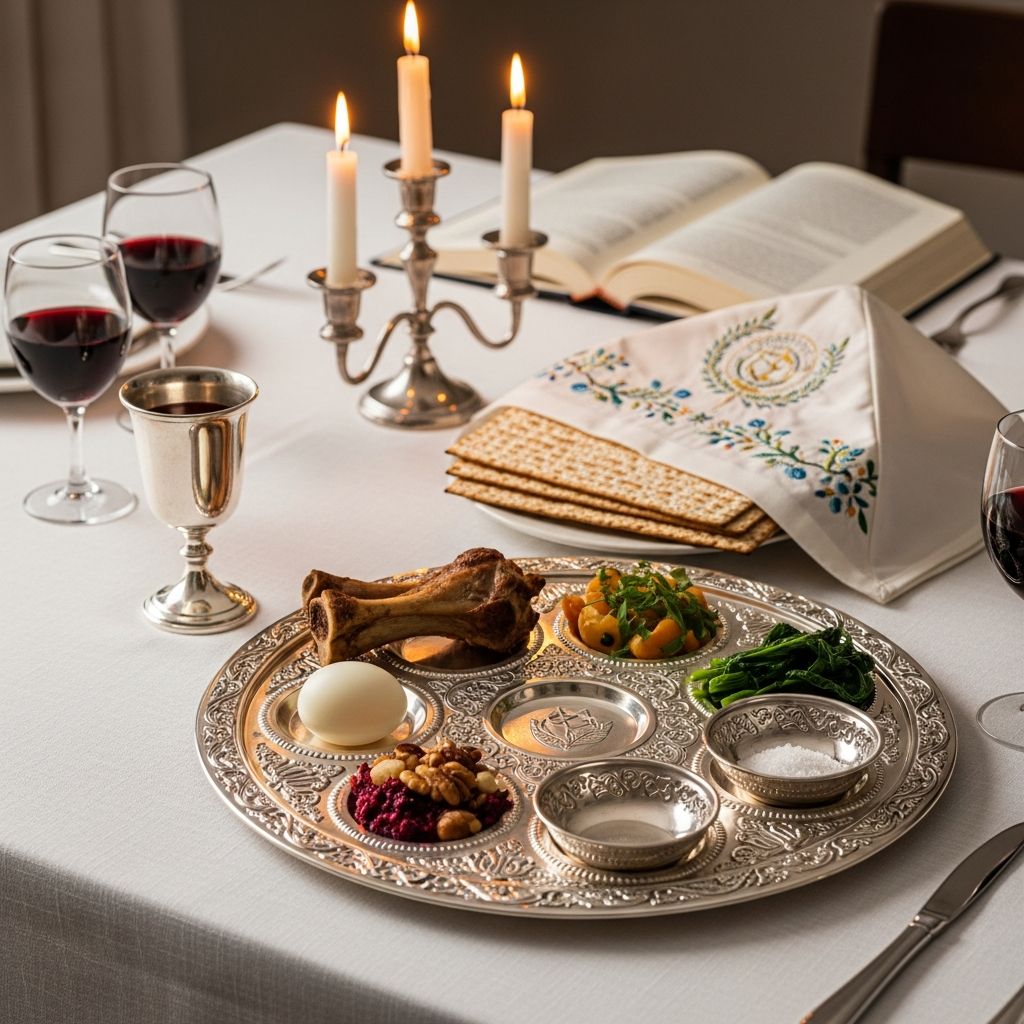
The heart of any seder table is the seder plate, a specially partitioned dish containing small amounts of specific symbolic foods. Each food represents a meaningful aspect of the Passover story and the Exodus experience:
- Roasted Shank Bone (Zero’a) — Represents the Paschal sacrifice made by the Israelites
- Egg (Betzah) — Symbolizes spring and the cycle of life and rebirth
- Bitter Herbs (Maror) — Represent the bitterness and suffering of slavery in Egypt
- Haroset — An applesauce-like mixture made with wine, nuts, and apples that symbolizes the mortar used by enslaved Jews to build Egyptian structures
- Green Vegetable (Karpas) — Often parsley, representing spring and renewal
Beyond the seder plate itself, the table includes additional symbolic elements. Three pieces of matzah—unleavened bread—are placed in a stack and represent the bread the Israelites took with them during their escape from Egypt. Near the beginning of the seder, the middle matzah is broken into two pieces for use during the ceremony. Salt water placed on the table represents the tears shed by enslaved people, while wine glasses (or kiddish cups) are used for the four ceremonial cups of wine consumed during the seder.
To symbolize freedom and comfort, families often place pillows on chairs, encouraging participants to recline at the table as a sign of liberation. This custom reflects ancient Roman dining practices, which signified freedom and leisure.
Related Stories



Why Matzah and Not Leavened Bread?
One of the most distinctive aspects of Passover is the prohibition against consuming chametz—leavened foods made from grain. This includes pasta, cookies, bread, and cereal. To commemorate the hasty departure from Egypt, when there was no time for bread to rise, Jews abstain from leavened bread for eight days during Passover.
Traditional observance differs among Jewish communities. Ashkenazi Jews are additionally prohibited from eating rice, corn, and legumes—known as kitniyot—though Sephardic Jews of Mediterranean and Spanish descent permit these foods during the holiday. Any bread-like substances served at the seder, such as cakes or dumplings, must be made from matzoh meal, fat, and eggs to remain kosher for Passover.
Traditional Passover Foods
While the symbolic foods on the seder plate tell the story of Exodus, a festive meal served during the seder provides both nourishment and culinary tradition. The menu varies depending on family heritage and personal preferences, but several dishes appear frequently at Passover tables:
- Matzo ball soup—a beloved comfort dish in Jewish tradition
- Gefilte fish—a traditional appetizer with deep historical roots
- Beef brisket—a hearty main course prepared in various styles
- Roasted chicken—a versatile protein option
- Potatoes—prepared roasted, mashed, or in other preparations
Sephardic Jewish communities bring a Mediterranean flair to their Passover celebrations, incorporating flavors and ingredients reflecting their Spanish and Middle Eastern heritage. These regional variations demonstrate how Jewish communities worldwide have adapted Passover traditions to their local cuisines while maintaining the essential observance.
If bringing a dish to a seder hosted by others, it is customary to select items from the kosher-for-Passover section of supermarkets, or to bring kosher wine or flowers as appreciative gifts.
The Fifteen Steps of the Seder
The traditional seder follows a carefully structured progression through fifteen steps, each with distinct purposes and rituals:
- Kadeish (Sanctification) — A blessing is recited over wine to honor the holiday
- Ur’chatz (Hand Washing) — Participants ritually wash their hands without reciting a blessing
- Karpas (Greens) — A small portion of green vegetable is dipped in salt water and eaten
- Yachatz (Breaking Matzah) — The middle of three matzahs is broken; the larger piece becomes the afikomen
- Magid (Telling) — The Exodus story is recounted, including responses to the Four Questions
- Rachtzah (Second Hand Washing) — Hands are washed again with a blessing before eating bread
- Motzi (Blessing Over Bread) — A blessing is recited over matzah as bread
- Matzah (Eating Matzah) — Pieces of matzah are eaten
- Maror (Bitter Herbs) — Bitter herbs are dipped in haroset and eaten
- Korech (Sandwich) — Matzah, maror, and haroset are combined into a “Hillel sandwich”
- Shulchan Oreich (Festive Meal) — The main meal is served and enjoyed
- Tzafun (Hidden Matzah) — The hidden afikomen is found and eaten as dessert
- Barech (Blessing After Meal) — Blessings of gratitude are recited after eating
- Hallel (Praise) — Psalms of praise are sung or recited
- Nirtzah (Conclusion) — The seder concludes with hopes that next year’s seder will be celebrated in Jerusalem
Important Passover Rituals and Traditions
The Four Questions
A central tradition of the seder involves the Four Questions, traditionally asked by the youngest child present at the table. These questions ask about specific Passover rituals, inviting elders to explain the significance of various customs and symbols. This intergenerational dialogue ensures that Passover’s meaning is transmitted to new generations.
The Afikomen Hunt
A beloved tradition at many seders involves hiding a piece of matzah called the afikomen, which children then search for during the celebration. The winner of the hunt receives a prize, adding an element of fun and engagement to the religious observance and ensuring younger participants remain involved throughout the lengthy ceremony.
Opening the Door for Elijah
During the meal, someone opens the door to welcome the prophet Elijah, exemplifying the Haggadah’s principle: “Let all who are hungry, come and eat.” This gesture reflects the Jewish commitment to inclusivity and hospitality, inviting not only those physically present but also symbolic guests to participate in the celebration.
Singing Dayenu
Many families sing Dayenu during their seder, a joyous tune celebrating the many blessings God bestowed upon the Jewish people during the Exodus. The word “dayenu” means “it would have been enough,” expressing gratitude for divine protection and guidance throughout Jewish history.
Global Passover Customs and Variations
While the fundamental structure of the seder remains consistent, Jewish communities worldwide have developed unique customs that reflect their cultural heritage:
- Persian Tradition — During the singing of Dayenu, participants gently hit each other with scallions, the green leafy end representing the whips of Egyptian taskmasters, allowing families to playfully commemorate the suffering of their ancestors.
- North African Tradition — In parts of Spain, Morocco, Turkey, and Tunisia, it is customary for the seder leader to tap participants on the head three times with the seder plate, considered a blessing and an encouragement to ask questions.
- Hungarian and Austrian Tradition — Women at the seder would decorate the table with their jewelry collections, based on Exodus 3:21-22, which describes the escaping Jews taking the treasures of the Egyptians.
The Significance of Four in Passover
Several elements of the Passover seder appear in groups of four, each with profound meaning. The four cups of wine, four questions, and the passage describing four types of sons all correspond to the four terms God used when promising to take the people out of Egypt. This numerical pattern reinforces the religious significance of the Exodus and helps participants remember key concepts throughout the celebration.
Preparing for Your Seder
Successful seder celebrations require thoughtful preparation. Consider these steps:
- Obtain a Haggadah, the central text that guides the seder’s progression and contains prayers, blessings, and the Exodus narrative
- Prepare or purchase all symbolic foods for the seder plate well in advance
- Plan and prepare your menu, ensuring all dishes are kosher for Passover
- Clean your home thoroughly to remove all chametz
- Set the seder table with appropriate dishes, glasses, and symbolic items
- Invite guests and communicate any dietary restrictions or preferences
- Brief participants, especially children, on the basic structure and key rituals
Making the Seder Your Own
While the Passover seder follows a prescribed structure, families everywhere add personal touches to make the celebration meaningful and relevant to their lives. The Haggadah’s flexible framework allows for contemporary discussions of social justice issues, personal reflections on freedom, and adaptations that honor both tradition and modern values. This balance between structure and personalization is what keeps the seder vibrant and meaningful across generations.
Frequently Asked Questions About Passover and Seder
Q: What is the minimum number of people required for a seder?
A: While traditionally a family affair, a seder can technically be observed by individuals or small groups. The key is maintaining the structure and meaning of the ritual.
Q: Can non-Jewish people attend a seder?
A: Yes, many families welcome non-Jewish guests to their seder. The ritual explicitly invites “all who are hungry” to join, emphasizing hospitality and inclusivity.
Q: How long does a typical seder last?
A: A seder typically lasts between 2.5 to 4 hours, depending on how thoroughly each step is observed and how much discussion and storytelling occurs.
Q: What if I don’t have all the traditional seder foods?
A: While traditional foods carry symbolic meaning, the essence of the seder is the ritual and storytelling. Creative substitutions can be made while respecting the symbolism of each element.
Q: Is it acceptable to modify the Haggadah text?
A: Yes, many contemporary families use modified or supplemental Haggadahs that include discussions of modern social justice issues, personal prayers, or contemporary commentary while maintaining the traditional structure.
Q: What is the difference between Ashkenazi and Sephardic Passover observance?
A: The primary differences involve dietary restrictions—Ashkenazi Jews avoid rice and legumes during Passover, while Sephardic Jews permit these foods—and variations in traditional meal preparations that reflect their regional cuisines.
References
- History Behind 7 Passover Traditions: Seder, No Bread, More — TIME. 2018-03-29. https://time.com/5188494/passover-history-traditions/
- Passover History & Traditions — PJ Library. 2017-03. https://pjlibrary.org/beyond-books/pjblog/march-2017/passover-101
- Passover: Customs and Rituals — Reform Judaism. https://reformjudaism.org/jewish-holidays/passover/passover-customs-and-rituals
- Passover Traditions Around the World — South African Jewish Museum. https://www.sajewishmuseum.co.za/post/passover-traditions-around-the-world
- 10 Passover Customs from Around the World — My Jewish Learning. https://www.myjewishlearning.com/article/10-passover-customs-from-around-the-world/
- 7 Ways to Give Your Passover Seder a Unique World Cultural Experience — Aish. https://aish.com/7-ways-to-give-your-passover-seder-a-unique-world-cultural-experience/
- 14 Passover Facts and Traditions Every Jew Should Know — Chabad. https://www.chabad.org/holidays/passover/pesach_cdo/aid/3297509/jewish/14-Passover-Facts-and-Traditions-Every-Jew-Should-Know.htm
Similar Articles








Read full bio of Sneha Tete