Celery
Explore celery's origins, uses, nutritional benefits, and potential skin reactions including photosensitivity and allergies.
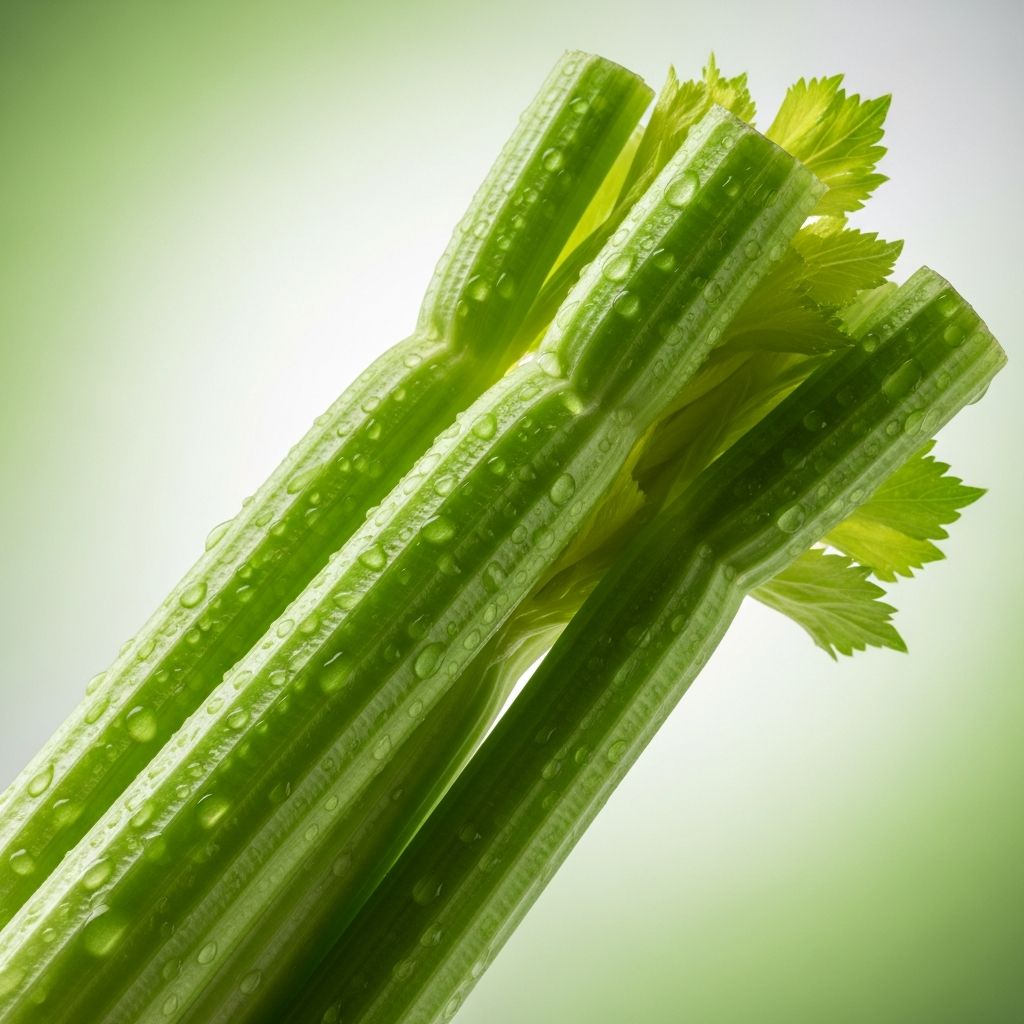
Celery (Apium graveolens) is a widely cultivated biennial plant known for its crisp stalks and leaves, used in salads, soups, and as a seasoning. While valued for its nutritional profile and potential health benefits, celery contains compounds that can trigger skin reactions, particularly photosensitivity and allergies, affecting workers in agriculture and food processing.
What is celery?
Celery originates from the Mediterranean region but is now commercially grown worldwide in cool climates. It is a biennial plant sown from seed, featuring succulent, crisp stalks and leaves. The plant thrives in temperate conditions and is harvested for its edible parts, including stalks, leaves, roots (celeriac), and seeds.
Nutritionally, raw celery is composed of approximately 95% water, 3% carbohydrates, 0.7% protein, and minimal fat, providing about 16 calories per 100 grams. It is notably rich in vitamin K, supplying 28% of the daily value, along with antioxidants like caffeic acid, p-coumaric acid, ferulic acid, apigenin, luteolin, tannin, saponin, and kaempferol.
Uses of celery
Celery’s stalks and leaves are consumed raw in salads, cooked as a vegetable, or incorporated into soups and stews. Celery seeds serve as a spice, often ground into celery salt, which is used in seasonings, cured meats, and spice blends. Celery root (celeriac) is popular in Europe, while celery seed oil finds applications in perfumes and cosmetics.
Health-wise, celery exhibits anti-inflammatory activity and may reduce the risk of stomach cancer, as observed in nutritional surveys linking raw vegetable consumption, including celery, to lower incidence. Varieties have shown benefits against schistosomiasis, a parasitic infection. Additionally, celery demonstrates antiparasitic properties, with seed oil effective as a larvicide against Aedes aegypti mosquitoes, and antiplatelet effects due to apigenin, which inhibits platelet aggregation.
Allergens in celery
Celery contains furanocoumarins such as xanthotoxin (methoxsalen), bergapten, and 5-methoxypsoralen, which are photoreactive chemicals that cause skin sensitivity to sunlight (phototoxicity). These compounds are concentrated in infected celery, particularly with Sclerotinia sclerotiorum (pink rot), amplifying risks.
Celery also harbors allergens like Api g 1, a preventive allergen protein, contributing to IgE-mediated reactions. Sensitization rates vary; a 2014 survey noted 6.3% in the general population, rising to 40% among food allergy patients in Switzerland.
Reactions to celery
Photodermatitis / phytophotodermatitis
Direct contact with celery sensitizes skin to ultraviolet light, leading to phytophotodermatitis—a non-immunologic reaction causing inflammation, erythema, and blistering upon sun exposure. This affects vegetable pickers, canners, and food handlers, manifesting as linear streaks on hands and fingers.
Ingestion can induce systemic photosensitivity; cases report severe sunburn after consuming celery soup followed by sun exposure or tanning beds. Symptoms appear 24-48 hours post-exposure, starting with burning, progressing to painful blisters and hyperpigmentation.
Protein contact dermatitis / allergic contact dermatitis
Repeated exposure in occupational settings can cause protein contact dermatitis or allergic eczema. This irritant or allergic response presents as chronic hand dermatitis in celery workers.
Immediate contact reactions
Celery may provoke acute urticaria (hives), angioedema (swelling), or anaphylaxis from skin contact or ingestion. Symptoms range from mild itching to life-threatening collapse, often within two hours.
Oral allergy syndrome
In pollen-allergic individuals, raw celery triggers oral allergy syndrome (OAS), with tingling or itching in the mouth due to cross-reacting proteins. Heating celery may mitigate this for some.
Cross reactions
Celery allergy often cross-reacts with birch and mugwort pollen, as well as foods like cherries, peaches, hazelnuts, peanuts, and carrots, due to structural similarities in proteins. Those with celery allergy should avoid celeriac, celery powder, and spice mixes containing celery.
Other information
Celery’s pharmacological potential includes antioxidant activity scavenging free radicals, antihypertensive effects from extracts lowering blood pressure in studies, and use in traditional medicine. However, claims like celery juice for detoxification lack robust evidence despite popularity.
Occupational risks are higher during harvest; protective gloves and sun avoidance are advised. Patch testing may confirm allergies using fresh celery extracts.
Patch testing
Diagnosis of celery-related dermatitis involves patch tests with fresh plant material or extracts, alongside photopatch testing for photoreactions. Specific IgE component tests identify risk profiles for severe allergies.
Frequently Asked Questions
Can celery cause sunburn?
Yes, furanocoumarins in celery induce photosensitivity, causing severe blistering sunburn from minimal sun exposure after contact or ingestion.
Is celery allergy common?
Sensitization affects about 6.3% generally, higher in Europe (up to 40% in food allergy cases); reactions range from mild OAS to anaphylaxis.
What foods cross-react with celery?
Common cross-reactivities include birch/mugwort pollen, cherries, peaches, hazelnuts, peanuts, and carrots.
Can cooking celery prevent allergy?
Cooking breaks down some proteins, potentially allowing tolerance in mild cases, but severe allergies require total avoidance.
Who is at risk from celery handling?
Vegetable pickers, food processors, and gardeners face highest risks of phytophotodermatitis and contact dermatitis.
Table: Common Reactions to Celery
| Reaction Type | Symptoms | Trigger | Management |
|---|---|---|---|
| Phytophotodermatitis | Burning, blisters, hyperpigmentation | Contact + UV light | Sun protection, topical steroids |
| Allergic Contact Dermatitis | Eczema, itching | Direct contact | Avoidance, patch testing |
| Urticaria/Anaphylaxis | Hives, swelling, collapse | Contact/Ingestion | Epinephrine, avoidance |
| Oral Allergy Syndrome | Mouth tingling | Raw ingestion (pollen co-allergy) | Cooked celery, antihistamines |
This comprehensive overview highlights celery’s dual role as a nutritious food and potential dermatological hazard. Individuals with sensitivities should consult allergists for personalized advice.
References
- Celery – DermNet — DermNet NZ. 2023. https://dermnetnz.org/topics/celery
- Celery Allergen Facts, Symptoms, and Treatment — Thermo Fisher Scientific. 2024. https://www.thermofisher.com/allergy/us/en/allergen-fact-sheets/celery.html
- A Review on the Pharmacotherapy and Health Aspects of Apium Graveolens (Celery) Plant — International Journal of Pharmacy Research and Applications. 2023. https://ijprajournal.com/issue_dcp/A%20Review%20on%20the%20Pharmacotherapy%20and%20Health%20Aspects%20of%20Apium%20Graveolens%20(Celery)%20Plant.pdf
- Photocontact Dermatitis – DermNet — DermNet NZ. 2023. https://dermnetnz.org/topics/photocontact-dermatitis
- Phytophotodermatitis – DermNet — DermNet NZ. 2023. https://dermnetnz.org/topics/phytophotodermatitis
- Phytophotodermatitis: Rash, Causes & Treatment — Cleveland Clinic. 2024. https://my.clevelandclinic.org/health/diseases/phytophotodermatitis
Similar Articles




Read full bio of medha deb