Celery Juice: Health Benefits, Side Effects & Science
Explore the science behind celery juice trends, from cardiovascular benefits to potential side effects.
Celery juice has become a popular wellness trend, with enthusiasts claiming it can cure everything from inflammation to liver damage. While celery is undoubtedly nutrient-rich, separating fact from fiction is essential when evaluating these bold health claims. Understanding the actual scientific evidence—and the limitations of current research—helps consumers make informed decisions about whether celery juice fits their health goals.
What Is Celery Juice?
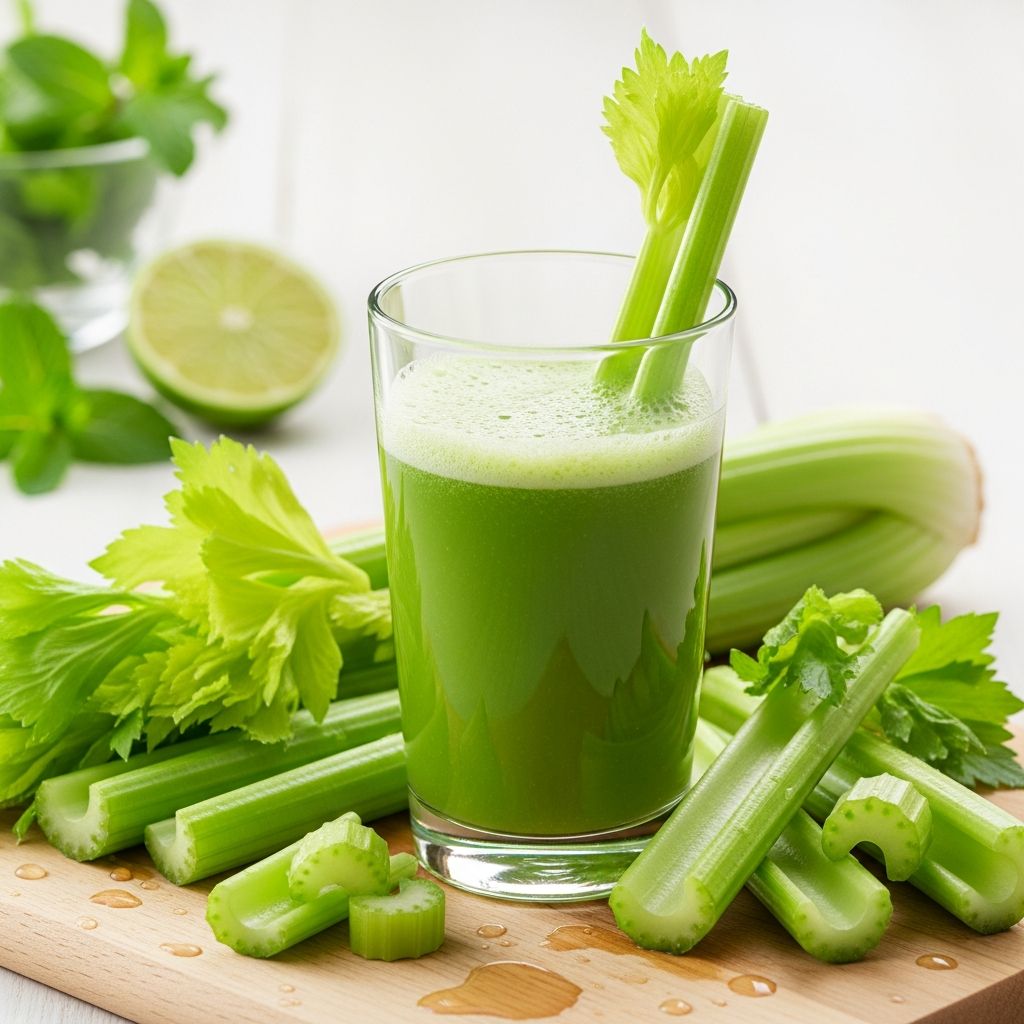
Celery juice is simply the liquid extracted from celery stalks, typically consumed fresh or as a cold-pressed beverage. Unlike whole celery, which contains insoluble and soluble fiber that supports digestive health, juicing removes most of the fibrous content while concentrating nutrients and bioactive compounds. This processing creates a nutrient-dense liquid that delivers vitamins, minerals, and plant phytonutrients in a readily absorbable form.The juice has become increasingly popular as a health beverage in people’s daily lives.
Pure celery juice contains minimal added ingredients, though many commercial versions may include additives or sweeteners that reduce nutritional value. Consuming fresh, homemade celery juice maximizes the intake of bioactive compounds that provide potential health benefits.
Nutritional Profile of Celery Juice
Celery’s health-promoting properties stem from its impressive array of nutrients and bioactive compounds. A single serving of celery juice provides essential vitamins and minerals that support various bodily functions:
- Vitamin C: An antioxidant that combats free radical damage and supports immune function
- Vitamin K: Essential for immune system support and wound healing
- Vitamin A: Promotes eye health and vision
- Potassium: Supports heart health and electrolyte balance
- Folate: Important for cellular function and DNA synthesis
Beyond vitamins and minerals, celery contains specific antioxidants including apigenin and luteolin, which research shows reduce inflammation and may help treat various inflammatory diseases. Additional bioactive compounds include:
- Phthalides: Support blood flow and reduce blood pressure
- Flavonoids: Help ward off toxins and protect cells from damage
- Phenolic acids: Can help prevent cell damage
- Furocoumarins: Support bone health and provide anti-inflammatory effects
- Terpenoids: Contribute anti-inflammatory properties
- Caffeic acid and tannins: Work actively to combat free radicals
It’s important to note that celery juice contains less fiber than raw celery, which means juicing eliminates some of the digestive benefits associated with consuming whole celery.
The Proven Health Benefits of Celery Juice
Cardiovascular Health and Blood Pressure Regulation
One of the most well-researched benefits of celery juice is its potential to support cardiovascular health. Scientists have examined celery and hypertension reduction among animals and human subjects and found celery can have a beneficial effect lowering blood pressure. The natural nitrate found in celery has been shown to help reduce blood pressure.
A meta-analysis of eight randomized controlled trials with a total sample size of 473 participants found that celery significantly reduced systolic blood pressure levels compared to control groups. However, it’s important to understand that while results are promising, the evidence remains limited compared to pharmaceutical interventions.
Related Stories



Limited research shows that celery juice may help lower blood pressure in people with hypertension, with a small 2019 study in Java finding that administration of celery juice reduced both systolic and diastolic blood pressure. Additionally, as a good source of fiber, celery supports a high fiber diet, which is favorably connected with lower blood pressure and reduced risk of cardiovascular disease.
The cardiovascular benefits extend beyond blood pressure. Celery juice can protect patients receiving doxorubicin therapy from congestive heart failure in the treatment of various cancers, though more human research is needed to confirm these protective mechanisms in other populations.
Anti-Inflammatory Properties
Celery provides antioxidants, which can have anti-inflammatory action. Celery contains a plant compound called apigenin, which has been studied for its anti-inflammatory properties and has long been used in Chinese medicine to reduce inflammation.
The anti-inflammatory effects work through multiple mechanisms. Flavonoids in celery act like protective shields, safeguarding cells from inflammation-induced damage. Because celery is rich in vitamin C, it gives it antioxidant properties, and antioxidants help your body stay strong and fight off harmful substances.
These anti-inflammatory properties may have broader health implications, potentially reducing the risk of chronic diseases associated with persistent inflammation.
Digestive and Gut Health
Celery has high water content and is high in dietary fiber (both soluble and insoluble), which can help combat bloating and is gut-friendly. While whole celery provides these fiber benefits more effectively than juice, consuming celery juice still supports hydration and nutrient delivery to the digestive system.
Animal research has provided additional insights into celery’s digestive benefits. Studies have shown that celery extract can encourage secretion of gastric mucous and help combat stomach ulcers, though human studies are needed to confirm these effects.
Blood Sugar and Metabolic Health
3-n-butylphthalide, a compound present in celery seeds, has been found to improve insulin resistance and lower blood glucose levels. Additionally, celery reduces glucose and blood lipids, supporting overall metabolic health and potentially reducing the risk of type 2 diabetes and related conditions.
Common Claims vs. Scientific Evidence
The Detox Myth
One of the most popular claims surrounding celery juice is that it detoxifies the liver and removes harmful substances from the body. However, this claim lacks scientific support. Our bodies have a built-in detox machine: the liver. If you treat it right with healthy food, physical activity and a healthy body weight, it can do the heavy lifting in eliminating toxins from your body. Drinking juice won’t magically fix or enhance it.
There is insufficient evidence to suggest drinking celery juice aids weight loss or helps remove toxins from the body. While celery juice may support liver health through its antioxidants, it is not a detoxifying agent in the way popular wellness culture suggests.
Disease Prevention and Treatment
While some proponents claim celery juice can reverse liver damage, treat cancer, or cure specific diseases, these claims exceed the current scientific evidence. The most well-supported claims relate to supporting cardiovascular health and reducing inflammation, not curing or reversing serious conditions.
Superiority Over Other Vegetables
There is no specific healing-benefit celery has over other types of vegetables. While celery is nutritious, many other vegetables provide similar or complementary nutrient profiles. Health experts recommend consuming a wide variety of vegetables and fruits to receive the different vitamins and minerals your body needs.
Potential Side Effects and Considerations
Loss of Fiber
The primary nutritional drawback of celery juice is the removal of fiber. Celery alone has great nutritional benefits and is chock full of vitamins, minerals and antioxidants, but having it just as a juice is eliminating fiber that your body needs to keep you feeling full and to support a healthy gut. If consuming celery juice, pairing it with whole fruits and vegetables ensures adequate fiber intake.
Bioactive Compound Stability
Celery subjected to thermal processing has a decreased antioxidant activity of phenolic compounds, and their structure is converted into one that is not absorbed and metabolized in the human body. This means heat-treated celery products are less beneficial than raw juice. Raw vegetables retain their nutrients in large amounts, and compared to boiled celery water, celery juice is more effective in reducing hypertension.
High Sugar Content (Store-Bought Versions)
Commercial celery juice products may contain added sugars and preservatives that diminish health benefits. As long as you’re drinking pure celery juice and avoiding store-bought juices with extra additives and sugars, you’re still getting a lot of good. Homemade fresh juice is the most nutritious option.
Allergic Reactions and Medication Interactions
Some individuals may experience allergic reactions to celery, and certain compounds in celery may interact with medications. Consulting with a healthcare provider before introducing celery juice as a health supplement is advisable, particularly for those on blood pressure medications or with existing health conditions.
How to Incorporate Celery Juice Into Your Diet
For those interested in consuming celery juice, here are evidence-based recommendations:
- Fresh is best: Make fresh celery juice at home using a juicer or blender to maximize nutrient retention
- Consume promptly: Drink freshly made juice immediately to prevent nutrient degradation
- Start small: Begin with a small amount to assess tolerance, as concentrated juices can cause digestive reactions
- Balance your diet: Use celery juice as a supplement to a balanced diet, not as a replacement for whole vegetables and fruits
- Combine with whole celery: Eat whole celery to benefit from the fiber content that juicing removes
- Consider daily intake: You need to have a cup of chopped celery every day to achieve potential blood pressure benefits
The Bottom Line: What the Science Really Says
Celery juice is a nutrient-dense beverage with some legitimate health benefits supported by scientific research, particularly regarding cardiovascular health and anti-inflammatory properties. However, the evidence is most robust when celery is part of a broader healthy diet, not a standalone cure-all.
Few studies have investigated whether drinking celery juice improves people’s health. Instead, most research has examined the health benefits that experts associate with consuming specific nutrients that celery and its seeds contain. This distinction is important: nutrients in celery show promise, but celery juice itself requires more rigorous human testing.
The popular wellness narrative around celery juice often exceeds scientific evidence, particularly regarding detoxification claims. While celery juice can be a healthy addition to a balanced diet, it should not replace medical treatment or be viewed as a miracle cure.
Frequently Asked Questions
Q: Is celery juice better than eating whole celery?
A: Whole celery is superior because it retains fiber, which supports digestive health and satiety. Celery juice delivers concentrated nutrients but lacks the fiber benefits. Ideally, consume both whole celery and juice for maximum benefit.
Q: How much celery juice should I drink daily?
A: Research suggests consuming approximately one cup of chopped celery (or equivalent juice) daily to achieve potential blood pressure benefits. Start with smaller amounts and adjust based on tolerance.
Q: Can celery juice cure health conditions?
A: No. While celery juice may support health and potentially reduce certain risk factors, it is not a cure for any disease. Always consult healthcare providers for medical conditions and never use celery juice as a replacement for prescribed treatments.
Q: Is store-bought celery juice as beneficial as fresh-made?
A: Fresh-made celery juice is superior because it retains more bioactive compounds. Store-bought versions may lose nutrients during processing and often contain added sugars or preservatives. Choose cold-pressed options if purchasing commercially.
Q: Does celery juice detoxify the liver?
A: No. While celery contains antioxidants that support liver health, there is no scientific evidence that celery juice detoxifies or cleanses the liver. The liver naturally detoxifies your body when supported by healthy lifestyle choices.
Q: Can celery juice help with weight loss?
A: Insufficient evidence supports celery juice as a weight loss aid. While it is low in calories and contains nutrients, the removal of fiber during juicing reduces satiety benefits compared to whole celery.
Q: Are there any safety concerns with celery juice?
A: Most people tolerate celery juice well, but allergic reactions are possible. Additionally, certain compounds may interact with medications, particularly blood pressure medications. Consult your healthcare provider before consuming celery juice regularly, especially if you take medications.
References
- Celery juice improves blood pressure and blood glucose: a systematic review and meta-analysis of randomized controlled trials — Frontiers in Nutrition. 2025-01-15. https://www.frontiersin.org/journals/nutrition/articles/10.3389/fnut.2025.1597680/full
- Celery juice: Benefits and myths — Medical News Today. 2024. https://www.medicalnewstoday.com/articles/324932
- Comprehensive Quality and Bioactive Constituent Analysis of Celery Juice — National Center for Biotechnology Information (NCBI). 2022. https://pmc.ncbi.nlm.nih.gov/articles/PMC9498075/
- Celery Juice Benefits: Is It Healthy? — Cleveland Clinic. 2024. https://health.clevelandclinic.org/celery-juice-is-a-trendy-detox-drink-but-does-it-actually-have-benefits
- A Review of the Antioxidant Activity of Celery (Apium graveolens L) — National Center for Biotechnology Information (NCBI). 2019. https://pmc.ncbi.nlm.nih.gov/articles/PMC5871295/
- What are the health benefits of celery juice? — Juice Press. 2024. https://www.juicepress.com/blogs/news/celery-juice-benefits
- Celery Juicing: Superfood or Super Fad? — UnityPoint Health. 2024. https://www.unitypoint.org/news-and-articles/celery-juicing-superfood-or-super-fad
Similar Articles








Read full bio of medha deb