Cerebral Angiogram: Purpose, Procedure & Risks
Complete guide to cerebral angiogram: how it works, why it's needed, and what to expect.
What Is a Cerebral Angiogram?
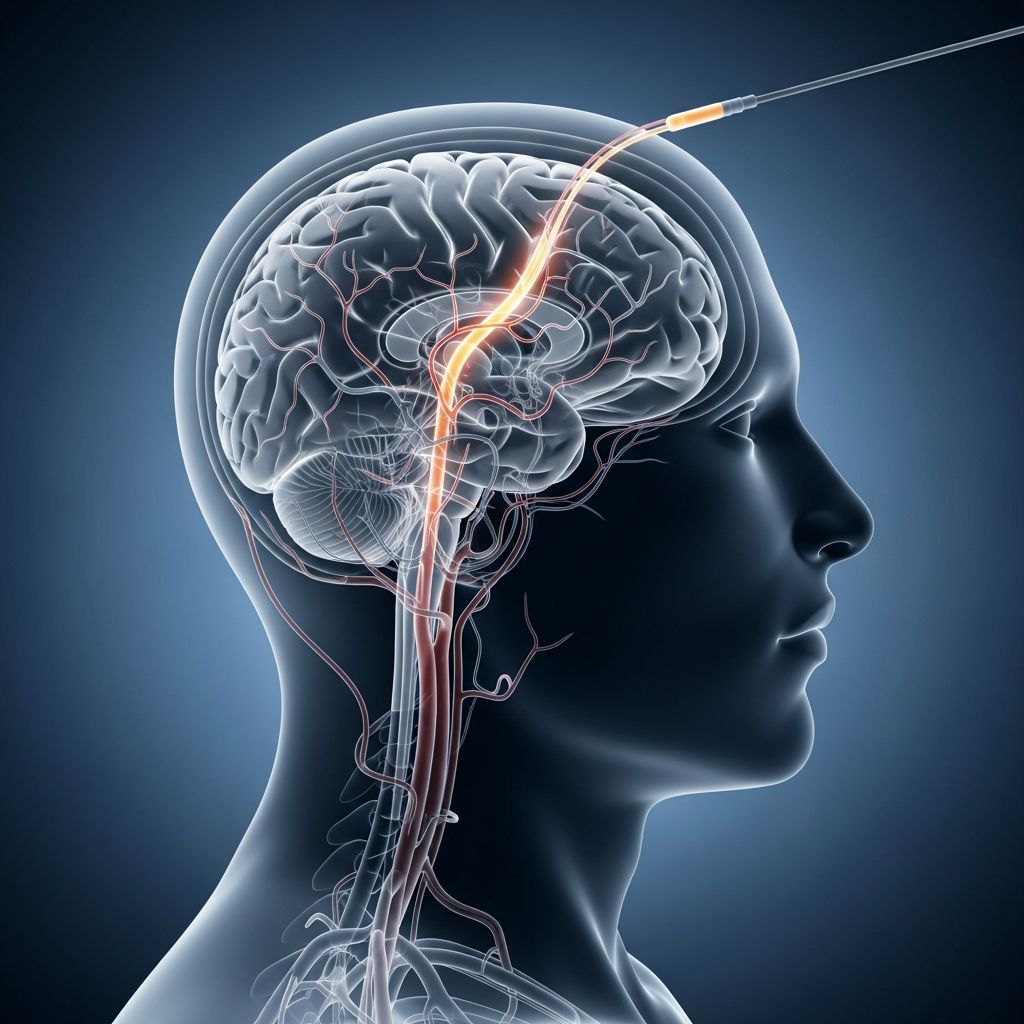
A cerebral angiogram is a diagnostic procedure that reveals issues with the blood vessels in your brain. This specialized imaging test helps healthcare providers diagnose and evaluate various cerebrovascular conditions by using X-rays and a special contrast dye. Specially trained healthcare providers perform this procedure in a hospital or outpatient operating room setting, where they have access to advanced imaging equipment and monitoring devices.
During a cerebral angiogram, a thin plastic tube called a catheter is inserted into an artery, typically in your wrist or groin area. A contrast material, also known as a special dye, is then injected through the catheter to visualize the structure and function of your blood vessels. Once the contrast material flows through your vessels, X-ray images are captured to create detailed pictures of the blood vessels in your brain and surrounding areas. This procedure has become an invaluable tool for identifying and evaluating various cerebrovascular disorders.
Purpose and Diagnostic Applications
Healthcare providers use cerebral angiograms for multiple diagnostic purposes. One primary use is to diagnose or confirm blood vessel abnormalities in your brain. The procedure can effectively detect several types of cerebrovascular conditions, each requiring different treatment approaches. Some of the most common abnormalities that cerebral angiograms can identify include:
- Brain aneurysms—weakened areas in blood vessel walls that can rupture and cause bleeding
- Blood clots that may obstruct blood flow and lead to stroke
- Atherosclerosis—the buildup of plaque in blood vessels that narrows or blocks blood flow
- Narrowed or blocked blood vessels that restrict cerebral blood circulation
- Arteriovenous malformations—abnormal connections between arteries and veins
- Vasculitis—inflammation of blood vessels in the brain
- Mycotic intracranial aneurysms, which are suspected to increase the risk of intracranial bleeding during cardiac surgery
Beyond diagnostic purposes, cerebral angiograms have additional clinical applications. Healthcare providers may use this procedure to confirm suspected blood vessel disorders, monitor the progress of known conditions, or guide interventional treatments. In some cases, the procedure itself can be therapeutic, allowing interventional specialists to treat certain conditions such as aneurysms or blood clots during the same procedure.
Preparation for Your Cerebral Angiogram
Proper preparation is essential to ensure the safety and effectiveness of your cerebral angiogram. Your healthcare provider will conduct a comprehensive evaluation before scheduling your procedure to determine whether it is appropriate for your specific situation.
Pre-Procedure Assessment: Your healthcare team will perform a thorough physical examination and review your complete medical history. This includes discussing any medications you take regularly, previous allergic reactions, and any existing health conditions. Blood tests will likely be ordered to assess your kidney function and blood clotting ability, as these factors are important for the safety of the procedure.
Medication and Fasting Instructions: You will receive specific instructions regarding your regular medications. Some medications may need to be adjusted or temporarily discontinued before the procedure. You will typically be instructed to fast for several hours before the angiogram, though your healthcare provider will give you exact timing based on your individual circumstances.
Allergy Considerations: It is crucial to inform your healthcare team if you have any allergies, particularly to contrast dyes or shellfish, as the contrast material used in the procedure may trigger allergic reactions in sensitive individuals. Your team will take appropriate precautions if you have known allergies.
Related Stories



What to Expect During the Procedure
Understanding what happens during your cerebral angiogram can help reduce anxiety and prepare you mentally for the experience. The procedure typically takes one to three hours from start to finish, though additional time may be needed for preparation and post-procedure care.
Before the Procedure Begins
When you arrive for your cerebral angiogram, you will change into a hospital gown and be positioned on a procedure table. A member of your healthcare team will insert an intravenous line (IV) into your arm to deliver fluids, medications, and the contrast agent. Monitoring devices will be attached to track your heart rate and blood pressure throughout the procedure. Most patients receive sedative medications through the IV to help them relax, though some anxiety-prone patients or those with specific medical conditions may receive general anesthesia instead. This sedation is important because you must remain still during the imaging process for the X-rays to produce clear, diagnostic-quality images.
Your head will be carefully positioned and stabilized using a strap, tape, or sandbags to prevent any movement during the procedure. This immobilization is critical for obtaining accurate images of your cerebral blood vessels.
Catheter Insertion and Contrast Injection
Your doctor will carefully select the insertion site for the catheter, which is often located in the artery in your groin, though the wrist may also be used. The skin at the insertion site will be shaved, thoroughly cleaned, and numbed with a local anesthetic. Your doctor will then make a small incision and carefully insert the catheter—a thin, flexible tube—through the incision into the artery.
Using real-time X-ray imaging as a guide, your doctor will thread the catheter through your blood vessels and position it at the appropriate location to visualize your cerebral circulation. This process requires specialized training and expertise in interventional radiology or neuroradiology.
Once the catheter is properly positioned, the contrast dye is injected through it and flows into your brain’s blood vessels. As the contrast material circulates through your cerebral vasculature, you may experience a warm sensation or temporary flushing, which is a normal response to the contrast injection. At this point, your healthcare team will take multiple X-ray images in rapid succession to capture detailed pictures of your blood vessels as the contrast material flows through them.
During the imaging phase, you will be asked to remain completely still and may be instructed to hold your breath briefly while X-rays are being taken. Following these instructions carefully is important for obtaining clear images that will accurately show your cerebral blood vessels.
Completion and Catheter Removal
Once all necessary images have been obtained, your doctor will carefully remove the catheter from the artery. A dressing or pressure bandage will be applied to the insertion site to control bleeding and promote healing. The IV line will also be removed at this time.
Understanding the Risks
While cerebral angiography is generally considered a safe procedure when performed by experienced specialists, it does carry certain risks that you should understand before undergoing the test. Your healthcare provider will discuss these risks with you and explain how they apply to your specific situation.
Common Risks: Some patients experience mild discomfort or bruising at the catheter insertion site. Allergic reactions to the contrast dye, ranging from mild to severe, can occur in some individuals. There is also a small risk of infection at the insertion site.
Serious but Rare Complications: More serious complications are uncommon but can include stroke caused by the catheter, arterial perforation, or excessive bleeding. Damage to the artery at the insertion site and kidney problems related to the contrast material are also possible but rare complications.
Your healthcare team will monitor you closely during and after the procedure to detect any complications early. The benefits of obtaining accurate diagnostic information typically outweigh the small risks associated with the procedure for most patients.
After Your Cerebral Angiogram
After the procedure is complete, you will be moved to a recovery area where healthcare staff will monitor your vital signs and catheter insertion site. Most patients remain under observation for several hours following the angiogram. You may experience mild soreness or bruising at the insertion site, which typically resolves within a few days.
Activity Restrictions: You will be advised to rest and avoid strenuous activities for a specified period following your procedure. Your healthcare provider will give you specific instructions regarding when you can return to your normal activities.
Fluid Intake: Drinking plenty of fluids after the procedure is usually recommended to help flush the contrast material from your system and protect your kidney function.
Results and Follow-Up: A radiologist will analyze the images from your cerebral angiogram and compile a comprehensive report of the findings. This report will be sent to your healthcare provider who ordered the test. Your provider will review the results with you, explain what they mean, and discuss any necessary follow-up examinations or treatment options. You may need additional tests or imaging to further evaluate your condition, and your healthcare team will explain the rationale for any recommended procedures.
When to Seek Immediate Medical Attention
While complications following cerebral angiography are uncommon, you should contact your healthcare provider or seek emergency care if you experience certain warning signs:
- Signs of a stroke, including slurred speech, weakness, numbness, or vision problems
- Redness and swelling at the catheter insertion site that worsens or does not improve
- Swelling or coldness of the leg or foot on the side where the catheter was inserted
- Chest pain or difficulty breathing
- Dizziness or severe headaches
- Fever or signs of infection
- Excessive bleeding from the insertion site
Frequently Asked Questions
Q: Is a cerebral angiogram painful?
A: The procedure itself is not painful because you receive sedation or anesthesia. You may feel pressure or slight discomfort during catheter insertion, but this is typically minimal. Some warmth or flushing may be felt when contrast is injected, which is normal.
Q: How long does a cerebral angiogram take?
A: The actual procedure usually takes one to three hours, though additional time is needed for preparation and recovery. Total time at the facility may be four to six hours.
Q: Can I drive home after my cerebral angiogram?
A: No. Because you receive sedation, you will need someone to drive you home. You should arrange for a trusted friend or family member to provide transportation.
Q: How soon will I get my results?
A: The radiologist typically interprets the images within 24 hours. Your healthcare provider will contact you with results and schedule a follow-up appointment to discuss findings and next steps.
Q: What should I do about my medications before the procedure?
A: Follow your healthcare provider’s specific instructions. Some medications may need to be temporarily stopped, while others can continue. Never stop taking medications without consulting your doctor.
Conclusion
A cerebral angiogram is a valuable diagnostic tool that provides detailed information about blood vessels in your brain. While the procedure involves some risks, these are generally manageable when performed by experienced specialists in appropriate medical settings. If your healthcare provider has recommended a cerebral angiogram, understanding the procedure, preparation requirements, and what to expect can help you approach it with confidence. Don’t hesitate to ask your healthcare team any questions about the procedure, as they are available to support you throughout the process.
References
- Cerebral Angiogram: What It Is, Purpose, Procedure & Risks — Cleveland Clinic. 2024. https://my.clevelandclinic.org/health/diagnostics/13476-cerebral-angiogram
- What Is a Cerebral Angiography? — Healthline. July 9, 2017. https://www.healthline.com/health/cerebral-angiography
- Cerebral Angiography — Healthgrades Health Library. https://resources.healthgrades.com/right-care/brain-and-nerves/cerebral-angiography
- Clinical utility of cerebral angiography in the preoperative assessment of patients with suspected mycotic intracranial aneurysm — PubMed Central. 2014. https://pubmed.ncbi.nlm.nih.gov/25362111/
- Brain Aneurysm: What It Is, Causes, Symptoms & Treatment — Cleveland Clinic. https://my.clevelandclinic.org/health/diseases/16800-brain-aneurysm
Similar Articles








Read full bio of medha deb