Cerebral Cortex: Functions, Structure & Location
Discover how your cerebral cortex controls thinking, memory, emotion and consciousness.
Understanding the Cerebral Cortex: Your Brain’s Command Center
Your cerebral cortex, commonly referred to as gray matter, is the outermost layer of nerve cell tissue in your brain. This remarkable structure plays a fundamental role in nearly every higher-level function that makes you who you are. From the moment you wake up to solve complex problems at work, to the evening when you process your day’s emotions, your cerebral cortex is working continuously to support your thinking, learning, memory formation and conscious awareness. Understanding how this vital brain region functions can help you appreciate the complexity of human cognition and recognize when something might not be working as it should.
The Structure and Appearance of the Cerebral Cortex
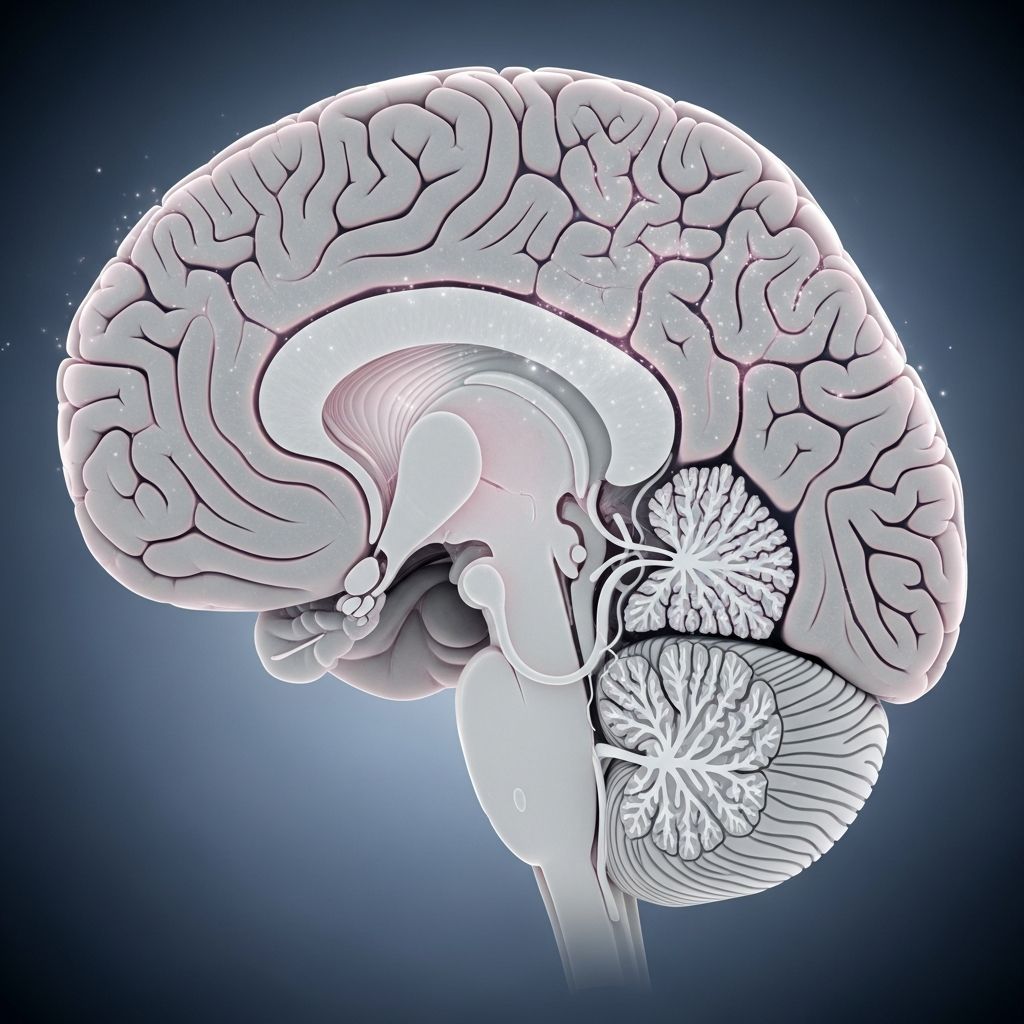
The cerebral cortex has a distinctive wrinkled appearance that serves an important biological purpose. This surface is covered with many folds, deep grooves called sulci and raised areas known as gyri. These folds are not merely cosmetic; they significantly increase the surface area available for processing information. By maximizing surface area, your brain can pack more nerve cells into a confined space, allowing for greater computational power and more sophisticated neural processing. Your cerebral cortex comprises approximately half of your brain’s total mass, making it one of the most substantial structures in your nervous system.
The cerebral cortex is composed of between 14 billion and 16 billion nerve cells, each contributing to the intricate network of communication that underlies all higher brain functions. These nerve cells work together through complex connections to process the vast amount of information your brain handles every single day.
Anatomical Organization: The Four Lobes
Your cerebral cortex is organized into four distinct lobes, each specialized for processing different types of information and controlling specific functions:
Frontal Lobe
Located at the front of your brain behind your forehead, the frontal lobe is responsible for executive functions including planning, decision-making, reasoning and impulse control. Special areas within this lobe include the motor cortex, which controls voluntary body movements; the prefrontal cortex, which manages executive functions and directs other brain areas; and Broca’s area, which is essential for speech production. This lobe essentially acts as your brain’s CEO, coordinating and managing the majority of your higher cognitive functions.
Parietal Lobe
Positioned behind the frontal lobe, the parietal lobe serves as a major sensory processing hub for your brain. It integrates information from multiple sensory systems to create a cohesive understanding of your environment and body position in space.
Temporal Lobe
Located on the sides of your brain near your ears, the temporal lobe processes auditory information and plays a crucial role in memory formation and storage, particularly for verbal and declarative memories.
Occipital Lobe
Situated at the back of your brain, the occipital lobe is your brain’s visual processing center, responsible for interpreting all visual information from your environment.
The Neocortex: The Newest Part of Your Brain
Most of your cerebral cortex is composed of the neocortex, with “neo” meaning new. This region is called “new” because its structure is thought to be relatively recent in the evolutionary history of vertebrates. In humans, an impressive 90% of the cerebral cortex is neocortex, reflecting the significant evolutionary development of higher cognitive functions in our species. This relatively large neocortex compared to other mammals is largely responsible for the advanced reasoning, language and abstract thinking capabilities that distinguish humans.
Related Stories



The Cerebrum and Its Connection to the Cortex
Your cerebral cortex forms the outer layer that sits atop your cerebrum, which is the largest area of your brain. The cerebrum is divided into two halves called hemispheres, connected by a bundle of nerve fibers called the corpus callosum. This connection allows your two hemispheres to communicate and share information, creating an integrated system that coordinates all higher brain functions. While each hemisphere has certain specialized functions, they work together seamlessly through this neural bridge.
White Matter and Brain Communication
Beneath your cerebral cortex lies white matter, composed of bundles of axons wrapped in myelin. Myelin is a protective sheath that gives this tissue its whitish color and significantly speeds up the transmission of neural signals. This white matter provides the communication infrastructure that connects different regions of your cortex, allowing seamless integration of sensory, motor and cognitive information across your entire brain.
Functions of the Cerebral Cortex
Your cerebral cortex is involved in numerous high-level functions that define human experience and capability:
Higher-Level Cognitive Processes
The cerebral cortex orchestrates reasoning, emotion, thought, memory, language and consciousness. These interconnected processes work together to create your unique personality, beliefs and perspectives. Your ability to contemplate abstract concepts, make moral decisions and engage in complex social interactions all depend on coordinated activity throughout your cortex.
Sensory Processing Areas
Sensory areas of your cerebral cortex receive information from your senses and environment. These regions process visual input, auditory signals, tactile sensations, taste and smell, translating raw sensory data into meaningful information your brain can use to understand your world.
Motor Control Areas
Motor areas of your cerebral cortex are involved in voluntary muscle movement. These functions are processed mainly by your frontal lobe, coordinating the precise muscular control needed for everything from fine motor tasks like writing to gross motor movements like walking.
Association Areas
Association areas are spread throughout all four lobes and connect and add complexity to various functions. These regions integrate information from multiple sensory and motor systems, allowing your brain to create complex understanding, make connections between ideas and engage in abstract reasoning.
How Damage to the Cerebral Cortex Affects Function
Damage to any area of your cerebral cortex typically results from tumors, trauma, autoimmune diseases or a cerebrovascular accident such as a brain bleed or stroke. The specific symptoms experienced depend entirely on which area of the cortex has been damaged. Because different regions control different functions, damage in one location might affect language ability while damage elsewhere might impair movement or visual perception.
Effects by Location
Damage to the occipital lobe affects vision, potentially causing visual field defects or difficulty processing visual information. Frontal lobe damage can result in changes to personality, judgment and impulse control. Temporal lobe damage might affect memory and language comprehension, while parietal lobe damage can impact sensory processing and spatial awareness.
Conditions Affecting the Cerebral Cortex
Several neurological and psychiatric conditions can affect the cerebral cortex, including epilepsy, which causes abnormal electrical activity; Alzheimer’s disease, which involves cortical degeneration; stroke, which can cause sudden cortical damage; and various psychiatric conditions that involve cortical dysfunction. Understanding these conditions requires recognizing that the cerebral cortex doesn’t function in isolation but rather as part of an integrated brain system.
Supporting Your Cerebral Cortex Health
While your cerebral cortex naturally changes throughout your life, you can take steps to support its optimal functioning. Engaging in lifelong learning, maintaining physical activity, practicing mindfulness and meditation, getting adequate sleep and maintaining social connections all contribute to cortical health. These activities promote neuroplasticity—your brain’s ability to form new neural connections and reorganize existing ones—helping to preserve cognitive function throughout your lifetime.
Frequently Asked Questions
Q: What is the primary difference between the cerebral cortex and the rest of the brain?
A: The cerebral cortex is the outermost layer of your brain composed of gray matter, responsible for higher-level functions like reasoning, memory and consciousness. The rest of your brain includes deeper structures involved in more basic functions like respiration, heart rate and hormone regulation.
Q: Can the cerebral cortex repair itself after injury?
A: While the cerebral cortex has some capacity for neuroplasticity and can form new connections, significant damage typically results in permanent functional loss. However, rehabilitation and therapy can help maximize remaining function and develop compensatory strategies.
Q: How much of my brain is cerebral cortex?
A: Your cerebral cortex comprises approximately half of your brain’s total mass and contains between 14 billion and 16 billion nerve cells.
Q: Which lobe controls decision-making?
A: The frontal lobe, particularly the prefrontal cortex region, controls decision-making, planning and executive functions.
Q: What are the folds in the cerebral cortex called?
A: The folds in the cerebral cortex consist of deep grooves called sulci and raised areas called gyri. These folds increase surface area for information processing.
References
- Cerebral Cortex: What It Is, Function & Location — Cleveland Clinic. 2022-05-23. https://my.clevelandclinic.org/health/articles/23073-cerebral-cortex
- Brain: Parts, Function, How It Works & Conditions — Cleveland Clinic. 2025-01-25. https://my.clevelandclinic.org/health/body/22638-brain
- Prefrontal Cortex: What It Is, Function, Location & Damage — Cleveland Clinic. 2025-09-29. https://my.clevelandclinic.org/health/body/prefrontal-cortex
- Frontal Lobe: What It Is, Function, Location & Damage — Cleveland Clinic. 2022-12-08. https://my.clevelandclinic.org/health/body/24501-frontal-lobe
- Parietal Lobe: What It Is, Function, Location & Damage — Cleveland Clinic. https://my.clevelandclinic.org/health/body/24628-parietal-lobe
- Cerebrum: What It Is, Function & Anatomy — Cleveland Clinic. https://my.clevelandclinic.org/health/body/23083-cerebrum
Similar Articles








Read full bio of Sneha Tete