Cerumol Ear Drops: Complete Guide to Earwax Management
Understanding how Cerumol ear drops safely soften and remove accumulated earwax buildup
Understanding Earwax and Its Impact on Hearing
Earwax, medically known as cerumen, is a naturally occurring waxy substance produced by glands in the ear canal. This material serves an important protective function, forming a defensive barrier that shields the delicate skin lining the ear canal from moisture, dust, and bacteria. The body’s production of earwax varies significantly from person to person—some individuals produce minimal amounts while others generate excessive quantities.
While earwax is beneficial in appropriate amounts, accumulation can create problematic situations. When earwax builds up and becomes compacted within the ear canal, it can obstruct sound waves from reaching the eardrum effectively. This obstruction commonly results in temporary hearing impairment, a sensation of fullness in the ear, itching, or general discomfort. For some individuals, accumulated earwax becomes hardened and resistant to natural drainage, requiring intervention to restore normal hearing and alleviate associated symptoms.
What Is Cerumol and How It Functions
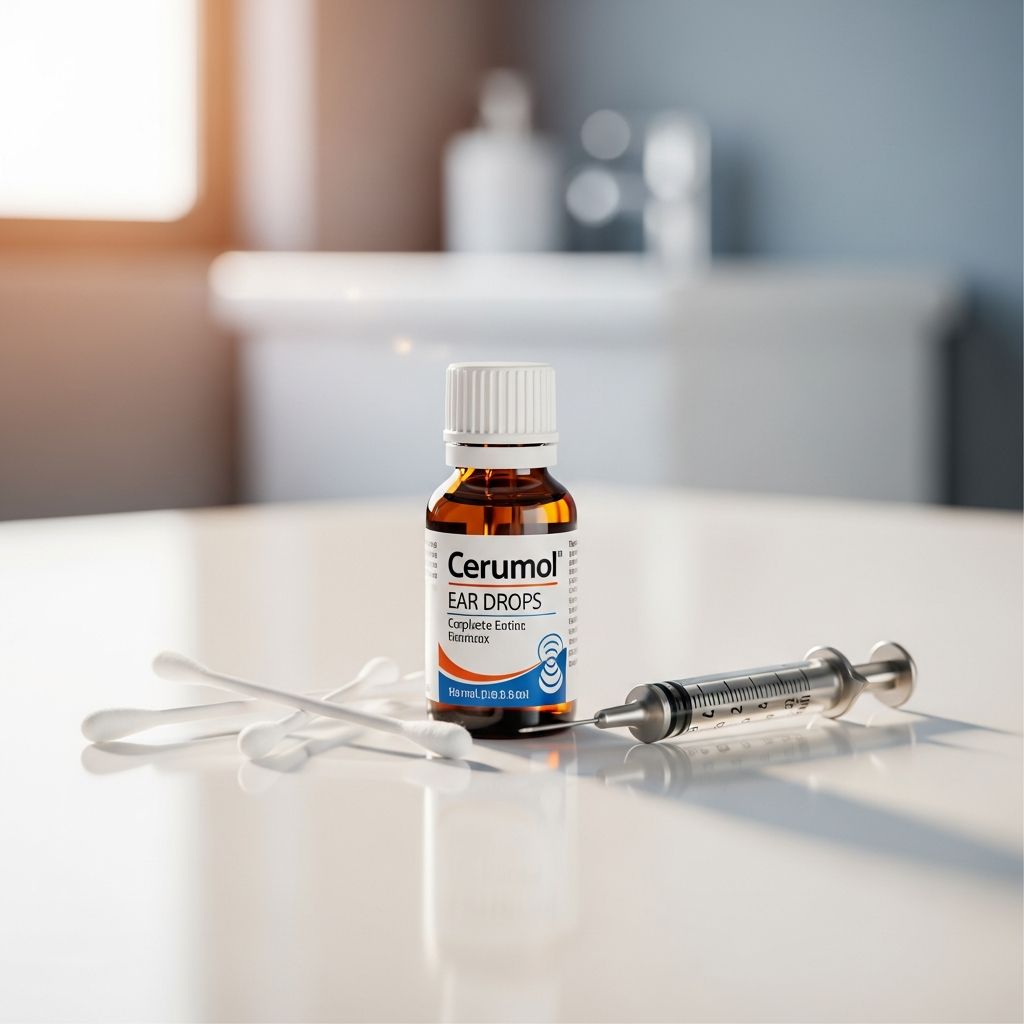
Cerumol ear drops represent a pharmaceutical solution specifically formulated to address problematic earwax accumulation. The product contains two primary active ingredients: propylene glycol and chlorocresol, combined with additional components including dicaprylocaprate, butoxyl, and turpentine oil. This dual-action formulation works through a mechanical process that penetrates hardened earwax, softening its consistency and facilitating natural drainage from the ear canal.
The mechanism of action involves the liquid components absorbing into compacted wax deposits, causing them to lose their rigid structure. As the wax softens, gravity and natural ear canal movements gradually encourage the loosened material to exit the ear. This approach differs from mechanical removal methods in that it promotes the body’s natural clearance processes rather than forcefully extracting the material.
Research indicates that cerumenolytic treatments—compounds designed to disintegrate ear wax—may increase the likelihood of complete wax clearance from approximately 5% when no treatment is applied to approximately 20% when ear drops are used consistently. While this represents meaningful improvement, these statistics underscore that chemical softening alone may not resolve all cases of severe or deeply impacted earwax.
Key Characteristics and Formulation Details
Cerumol has undergone formula refinement to accommodate individuals with specific allergies and sensitivities. The updated formulation no longer contains arachis oil (peanut oil), making it suitable for people with peanut allergies or soy sensitivities. This modification significantly broadened the product’s accessibility to populations that previously required alternative treatments.
The available package size is 10 milliliters, typically presented with an integrated dropper applicator that controls dosage delivery. The product can be purchased without prescription at most pharmacies, classifying it as an over-the-counter medication available directly to consumers seeking self-directed earwax management.
Proper Application Techniques for Maximum Effectiveness
Correct application methodology is essential for achieving optimal results with Cerumol ear drops. The standard initial dosage involves placing approximately 5 drops directly into the affected ear canal using the provided dropper. This foundational application should be performed once daily for the first treatment session.
Step-by-step application process:
- Position yourself in a comfortable seated or reclined posture, tilting your head to the side to expose the target ear
- Use the dropper to carefully introduce 5 drops into the ear canal opening, avoiding insertion of the dropper tip into the canal itself
- Prepare a small cotton wool pad approximately the size of a thumbnail
- Optionally, moisten the cotton pad with additional Cerumol or petroleum jelly
- Gently place the prepared cotton pad into the ear entrance without forcing it deep into the canal
- Allow the drops to remain in contact with the earwax for approximately one hour
- Remove the cotton pad and allow any excess liquid to drain naturally
Related Stories



Following the initial treatment, subsequent applications typically involve placing 2 to 3 drops into the ear canal twice daily. This maintenance protocol should continue for 3 to 4 days as needed. Users may experience a harmless tingling sensation as the drops make contact with the ear canal—this is a normal reaction and not cause for concern.
Important Safety Considerations and Contraindications
Cerumol is not appropriate for all individuals or all ear conditions. Certain circumstances necessitate avoiding this product and consulting healthcare providers instead.
Do not use Cerumol if you have any of the following conditions:
- Existing inflammation or soreness within the ear
- A perforated (ruptured) eardrum or suspected eardrum damage
- Active ear infection with discharge or pain
- Known allergies or hypersensitivity to any ingredients in the formulation
- A damaged or malfunctioning dropper applicator
Additionally, treatment of young children under 5 years of age should only proceed under direct medical supervision from a healthcare professional. Storage requirements include keeping the product below 30 degrees Celsius and avoiding freezing temperatures. Once opened, the product should be discarded after 6 months to maintain safety and efficacy.
When Professional Medical Intervention Becomes Necessary
While Cerumol provides effective treatment for many cases of earwax buildup, certain situations benefit from professional medical assessment and intervention. Deeply compacted or heavily impacted earwax may require surgical syringing—a procedure where healthcare providers use specialized equipment to irrigate and remove stubborn deposits that resist chemical softening alone.
If symptoms persist despite completing a full course of Cerumol treatment, consulting a general practitioner is advisable. Healthcare providers can assess whether professional removal techniques are necessary, evaluate for underlying ear conditions, and recommend alternative management strategies if appropriate.
Distinguishing Cerumol From Improper Earwax Removal Methods
Many individuals attempt to address earwax accumulation using household items or inappropriate techniques that can cause harm. Cotton buds (swabs) represent a particularly problematic approach—when inserted into the ear canal, they frequently push wax deeper rather than removing it, potentially compounding the problem and increasing discomfort.
Similarly, introducing any solid object into the ear canal carries risks of eardrum perforation or canal damage. Cerumol’s liquid formulation specifically avoids these risks by utilizing the body’s natural drainage mechanisms rather than mechanical extraction, making it a safer self-treatment option when contraindications are not present.
Comparative Efficacy Among Cerumenolytic Options
Multiple cerumenolytic treatments exist on the market, encompassing both oil-based and water-based formulations. Research examining comparative effectiveness among various cerumenolytic agents has not yet produced definitive conclusions demonstrating that one type substantially outperforms others. Both oil-based treatments (such as those containing almond oil or mineral oil derivatives) and water-based options (such as docusate sodium or carbamide peroxide) demonstrate similar efficacy profiles.
Cerumol’s oil-based formulation containing propylene glycol and other components represents one established approach with long-standing consumer recognition and clinical use. The choice between available options may depend on individual tolerance, existing allergies, or personal preference rather than significant differences in therapeutic outcome.
Symptoms Indicating Earwax Accumulation Requiring Treatment
Recognizing when earwax has accumulated to problematic levels helps determine when intervention becomes appropriate. Common indicators include reduced hearing acuity or sensation that sounds seem muffled or distant, itching or irritation within the ear canal, a feeling of fullness or pressure in the affected ear, and in some cases, mild earache or discomfort.
Not all earwax requires removal—the ear naturally cleanses itself in many individuals, with wax naturally migrating outward and drying. Intervention becomes appropriate only when accumulation produces symptoms or when medical procedures require clear canal access for examination or treatment.
Frequently Asked Questions About Cerumol
Is Cerumol suitable for children?
While Cerumol can be used in children older than 1 year, children under 5 years should only receive treatment under direct medical supervision from a doctor or nurse to ensure safe administration and appropriate monitoring.
Can Cerumol be used preventatively for regular ear maintenance?
Cerumol is designed for treating existing earwax accumulation rather than preventive maintenance. Regular use is not necessary for individuals without earwax buildup symptoms. Using ear drops unnecessarily may remove protective earwax layers, potentially compromising natural ear canal defense mechanisms.
How quickly should improvements become noticeable?
Response timelines vary depending on earwax consistency and accumulation severity. Some individuals notice hearing improvement within the first few days of treatment, while others may require the full 3 to 4-day treatment course to achieve optimal results. Profound improvement may require professional removal if wax is deeply impacted.
What should be done if symptoms worsen during treatment?
Discontinue use and contact a healthcare provider immediately if pain, discharge, or other concerning symptoms develop during Cerumol treatment. These could indicate eardrum damage, infection, or other conditions requiring professional evaluation.
Does Cerumol require a prescription?
No, Cerumol is available as an over-the-counter medication that can be purchased directly from pharmacies without requiring a prescription from a physician.
Summary of Key Treatment Considerations
Cerumol ear drops provide a safe, accessible option for individuals experiencing earwax-related hearing impairment or ear discomfort. The product’s updated formulation accommodates those with peanut allergies, and its straightforward application process enables self-treatment without professional intervention. However, successful treatment requires proper technique, awareness of contraindications, and realistic expectations regarding effectiveness limitations for severely impacted earwax. When symptoms persist following appropriate Cerumol use, professional medical consultation ensures proper diagnosis and access to alternative removal techniques when necessary. By understanding how Cerumol functions, recognizing appropriate use scenarios, and knowing when to seek professional guidance, individuals can effectively manage earwax-related concerns while maintaining overall ear health and hearing function.
References
- Ear drops for the removal of ear wax — National Center for Biotechnology Information (NIH). 2015. https://pmc.ncbi.nlm.nih.gov/articles/PMC6492540/
- Cerumol Ear Drops Product Information — STADA Pharmaceuticals. 2024. https://www.cerumol.com.au/cerumol-ear-drops
- Ear Wax Problems and Treatment Solutions — Cerumol Official. 2024. https://www.cerumol.com.au/ear-wax-problems
- Healthify New Zealand Medicines Database: Cerumol — Healthify New Zealand. 2024. https://healthify.nz/medicines-a-z/c/cerumol
Similar Articles








Read full bio of medha deb