Cervical Cancer: Symptoms, Screening, And Treatment Guide
Understand cervical cancer symptoms, causes, diagnosis, staging, treatments, and prevention strategies for early detection and effective management.
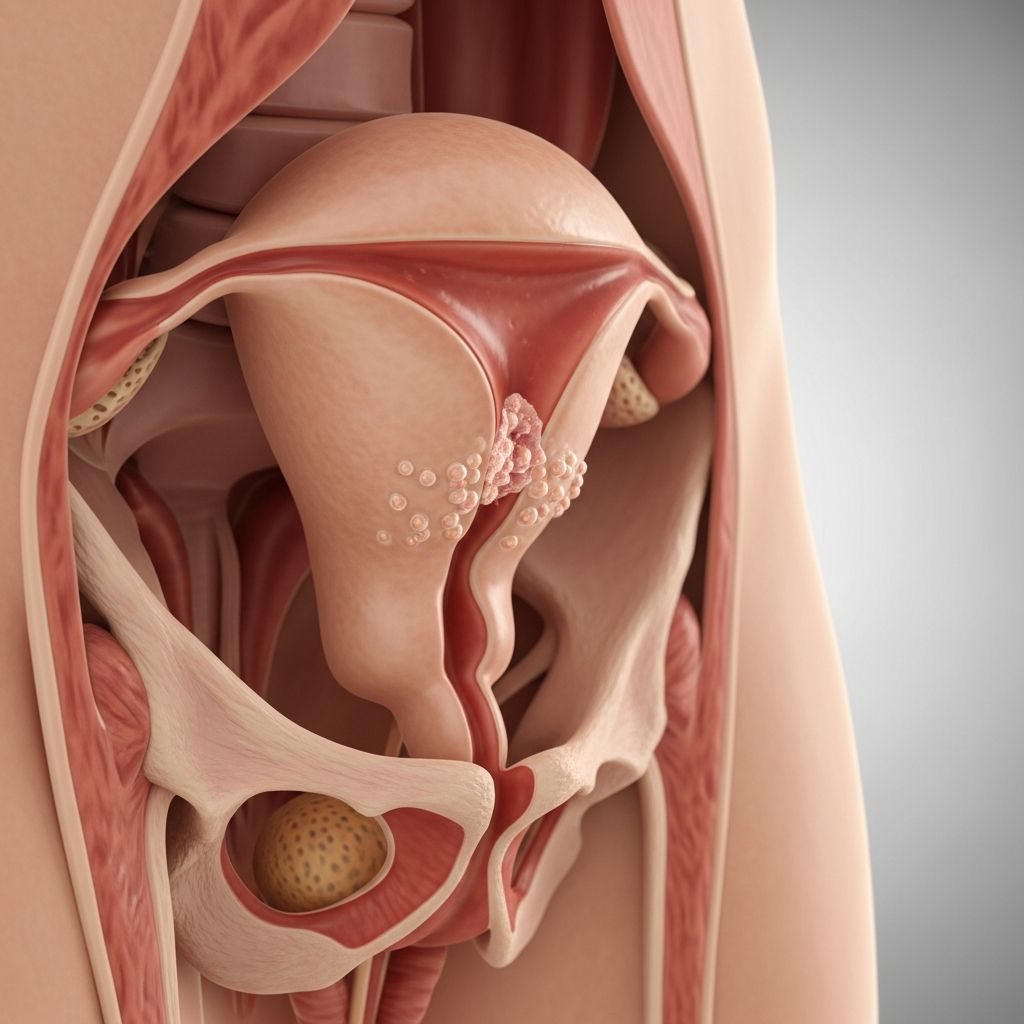
Cervical cancer develops in the cells of the cervix, the lower part of the uterus connecting to the vagina, primarily caused by persistent human papillomavirus (HPV) infection. It is the fourteenth most common cancer in women in the UK, with most cases diagnosed at an early stage for better outcomes.
What is cervical cancer?
The
cervix
is the neck of the womb (uterus), located at the top end of the vagina. It forms a canal about 1.5 cm long. The endocervix is the lining of the canal, while the exocervix (ectocervix) is the outer surface visible during a speculum exam. Cervical cancer usually begins in the transformation zone where these meet.There are two main types:
squamous cell carcinoma
(70-90% of cases, from exocervix squamous cells) andadenocarcinoma
(from endocervix glandular cells). Rare types include small cell, neuroendocrine, sarcoma, and lymphoma. Persistent high-risk HPV types (16, 18) cause nearly all cases.How common is cervical cancer?
Globally, cervical cancer ranks fourth among women’s cancers. In the UK, it affects about 3,200 women yearly, with 890 deaths. Incidence peaks at ages 30-35 (HPV exposure) and 70-75. UK rates have declined 70% since 1988 due to screening, though 20-30% occur in screened women.
| Region | Annual Cases | Deaths |
|---|---|---|
| UK | 3,200 | 890 |
| Global | Top 4 in women | High in low-resource areas |
Risk factors include early sexual activity, multiple partners, smoking, immunosuppression, and low socioeconomic status.
Symptoms of cervical cancer
Early stages are often asymptomatic, detected via screening. Symptoms appear with progression.
- Vaginal bleeding: Between periods, after sex, post-menopause.
- Vaginal discharge: Watery, bloody, foul-smelling.
- Pelvic pain or pain during sex.
- Advanced: Leg swelling, back pain, urinary/bowel issues, weight loss.
Any unusual bleeding warrants GP consultation and urgent referral if cancer suspected.
Cervical screening
UK NHS offers screening from age 25-64 (HPV primary test from 2023 in England): 25-49 every 3 years, 50-64 every 5 years. It detects high-risk HPV; HPV-positive cases get cytology triage. No screening over 65 if prior negatives; under 25 not offered due to transient infections.
Abnormal results (e.g., HPV16/18+, HSIL) lead to colposcopy. Vaccination (Gardasil9) targets ages 12-13, up to 26 if unvaccinated.
Suspected cancer pathway
Urgent specialist referral (within 2 weeks) for suspicious cervix appearance or symptoms like postcoital/intermenstrual bleeding. GP examines and refers via suspected cancer pathway.
Assessing symptoms
Boxes in original guide GPs/NHS for symptoms needing urgent action, e.g., persistent bleeding.
Further assessments if cervical cancer is suspected or diagnosed
Colposcopy (magnified cervix view, biopsies) confirms diagnosis. Further staging: CT/MRI, chest X-ray, ultrasound, blood tests to assess spread.
Results
Biopsy reveals cell changes: CIN1-3 (pre-cancer) or invasive cancer. Punch biopsy for visible lesions; cone biopsy for discrepancies.
Related Stories



Cervical cancer stages
Staging determines treatment. FIGO system:
- Stage I: Confined to uterus (IA1: ≤3mm invasion; IA2: >3-5mm; IB: ≥5mm).
- Stage II: Beyond uterus, not pelvic wall/lower vagina.
- Stage III: Pelvic wall/lower vagina involvement, hydronephrosis.
- Stage IV: Beyond pelvis (bladder/rectum invasion or distant mets).
Most UK cases early-stage.
Treatment of cervical cancer
Treatment depends on stage, size, position, lymphovascular invasion, patient health, fertility wishes. Multidisciplinary team decides.
Stage 1A1
LLETZ/cone biopsy often curative if no invasion or negative margins.
Stage 1A2 & most stage 1B1
Large cone biopsy or simple trachelectomy/hysterectomy. Fertility-sparing: radical trachelectomy.
Stages IB2, IIA, IIB
Chemoradiotherapy (preferred) or radical hysterectomy + nodes.
Stage III, IVA
Chemoradiotherapy.
Stage IVB
Chemotherapy (palliative), symptom control.
What are the treatment aims?
Cure for early stages; control/prolong life for advanced.
Treatment options
Surgery: Hysterectomy (simple/radical), trachelectomy, pelvic lymphadenectomy. Radical: removes cervix, uterus, upper vagina, ligaments.
Radiotherapy: External beam + brachytherapy (improves survival). High-dose-rate recommended.
Chemotherapy: Cisplatin with radiotherapy; for advanced: cisplatin + paclitaxel/bevacizumab.
Targeted therapy: Bevacizumab for metastatic.
Which treatments are used for specific stages of cancer?
Early: Surgery. Locally advanced: Chemoradiotherapy. Metastatic: Systemic therapy.
Frequently Asked Questions
What causes cervical cancer?
Persistent high-risk HPV infection.
How is it prevented?
HPV vaccination, regular screening.
What are side effects of treatment?
Surgery: Bladder issues, lymphoedema. Radiotherapy: Menopause, bowel/bladder changes, vaginal stenosis. Chemo: Nausea, fatigue.
Follow-up after treatment?
Regular exams, cytology, imaging to detect recurrence.
Pregnancy and cervical cancer?
Possible with fertility-sparing options in early stages.
Your operation
Pre-op: Scans, fitness tests. Keyhole/open surgery. Post-op: Catheter, hospital 3-7 days, fatigue 6 weeks. Complications: Infection, clots, bladder dysfunction.
Radiotherapy
External (20-30 sessions) + brachytherapy. Side effects: Fatigue, skin changes, diarrhea, long-term vaginal dryness.
Chemotherapy
Drugs kill cancer cells, given IV/cycles. Side effects managed supportively.
After treatment
Follow-up detects recurrence, manages side effects. Lifestyle: Healthy diet, exercise, no smoking. Support: Counseling, groups.
References
- Cervical Cancer: A Guide for Patients — ESMO. 2023. https://www.esmo.org/for-patients/patient-guides/cervical-cancer
- Understanding Cervical Changes — National Cancer Institute (NCI). 2021-09. https://www.cancer.gov/publications/patient-education/understanding-cervical-changes
- Cervical Cancer: Your Guide — Foundation for Women’s Cancer. 2023-07. https://foundationforwomenscancer.org/wp-content/uploads/2023/07/FWC_Cervical-Cancer-Your-Guide.pdf
- Cervical Cancer Fact Sheet — World Health Organization (WHO). 2024. https://www.who.int/news-room/fact-sheets/detail/cervical-cancer
- Cervical Cancer: The Basics — OncoLink. 2025. https://www.oncolink.org/cancers/gynecologic/cervical-cancer/cervical-cancer-the-basics
- Cervical Cancer Pro — Patient.info. 2025. https://patient.info/doctor/oncology/cervical-cancer-pro
- Cervical Cancer: Symptoms, Diagnosis, and Treatment — Patient.info. 2025. https://patient.info/cancer/gynaecological-cancer/cervical-cancer
Similar Articles








Read full bio of medha deb