Cervical Cone Biopsy: Procedure, Recovery, and Results
Complete guide to understanding cone biopsy for cervical health evaluation and treatment.
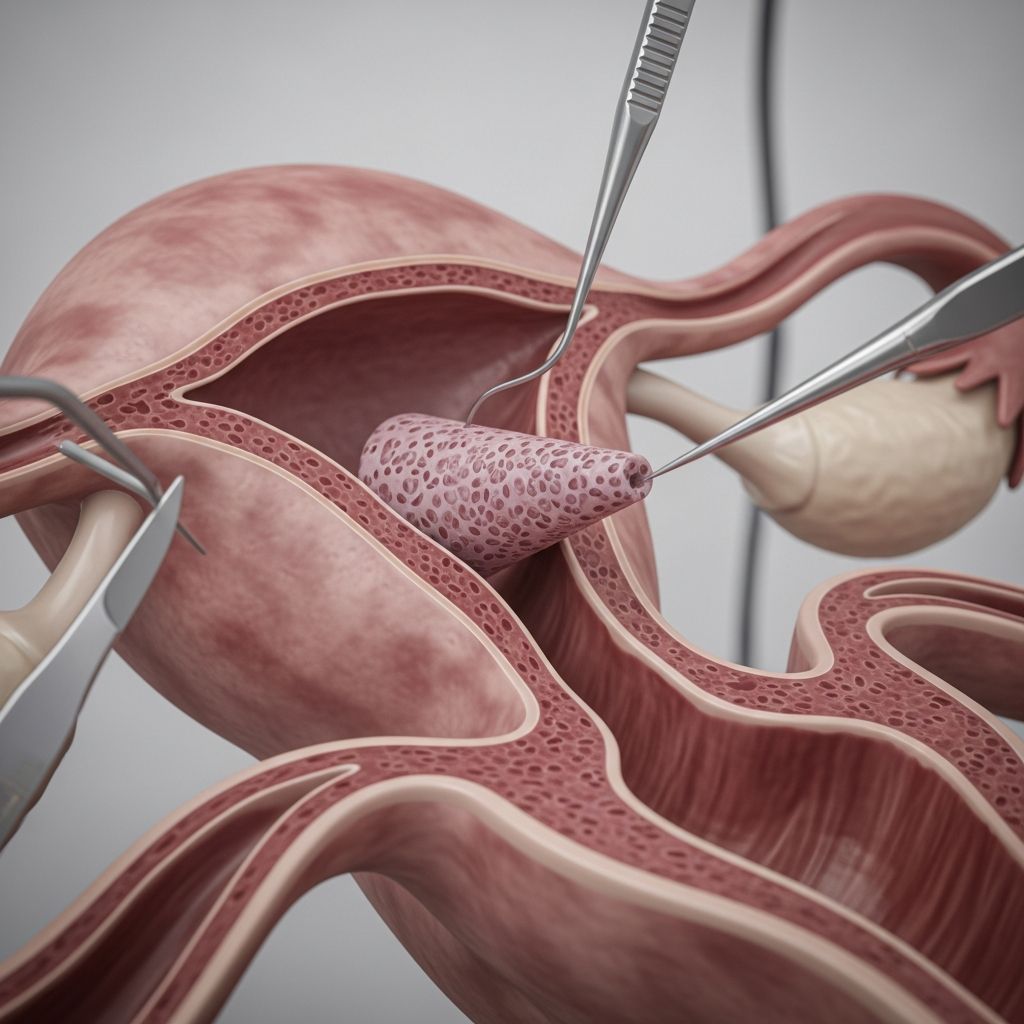
A cone biopsy, medically known as conization, represents an important surgical procedure used in gynecological medicine to evaluate and treat abnormalities of the cervix. This procedure involves the removal of a cone-shaped tissue sample from the cervix, which is subsequently examined under a microscope to identify any precancerous or cancerous cells. The procedure serves dual purposes: it functions both as a diagnostic tool to detect cervical abnormalities and as a therapeutic intervention to remove diseased tissue before it progresses to cancer.
What Is a Cone Biopsy and How Does It Work?
The cervix is the lower portion of the uterus that connects the main body of the uterus to the vagina. When cellular abnormalities are detected through screening tests, a cone biopsy may be recommended to obtain a larger tissue sample that includes deeper layers of the cervix. The procedure acquires its name from the shape of the tissue sample removed—a cone-shaped wedge that extends from the surface of the cervix into deeper tissue layers.
This approach allows healthcare providers to assess not only surface abnormalities but also the extent of cellular changes throughout the cervical tissue. The removed sample is then sent to a pathology laboratory where microscopic examination can determine whether the cells are normal, precancerous, or cancerous.
Indications for Performing a Cone Biopsy
Healthcare providers may recommend a cone biopsy for several clinical reasons. The procedure is typically indicated following abnormal results from cervical screening tests, such as a Pap test or HPV (human papillomavirus) testing, when further investigation is necessary to determine the exact nature of the cellular changes.
- Detection of precancerous changes: When screening tests reveal cervical dysplasia or cervical intraepithelial neoplasia (CIN), a cone biopsy helps determine the severity and extent of these changes
- Evaluation of abnormal cells: Persistent or progressive abnormal cell patterns that cannot be fully assessed through less invasive methods may necessitate a cone biopsy
- Assessment of very early-stage cancer: For patients diagnosed with stage 0 or IA1 cervical cancer, this procedure can determine whether the lesion has been completely removed with adequate margins of normal tissue
- Treatment of moderate to severe dysplasia: CIN II and CIN III classifications often warrant cone biopsy as both diagnostic and therapeutic intervention
Technical Approaches to Cone Biopsy
Healthcare providers can perform cone biopsy using several different techniques, each with specific advantages depending on the clinical situation and the extent of tissue requiring evaluation.
| Technique | Method | Characteristics |
|---|---|---|
| Cold Knife Conization | Surgical scalpel | Removes a larger cone-shaped tissue specimen; typically performed under general anesthesia; provides excellent tissue margins for pathological examination |
| LEEP (Loop Electrosurgical Excision Procedure) | Electrically heated wire loop | Uses radiofrequency energy; can be performed in office settings with local anesthesia; faster procedure with shorter recovery time |
| Laser Conization | Laser beam | Precise tissue removal with minimal bleeding; used when specific margin control is critical; may be preferred for certain anatomical presentations |
Related Stories



The choice of technique depends on factors including the size and location of the lesion, the clinical presentation, whether adequate tissue margins are required for pathological assessment, and patient preference regarding anesthesia options.
Pre-Procedure Preparation and What to Expect
Before undergoing a cone biopsy, patients should understand the preparatory steps and what will occur during the procedure. Prior to the scheduled surgery, patients typically receive instructions regarding fasting requirements, medication adjustments, and any necessary laboratory tests.
On the day of the procedure, patients are advised to arrange transportation, as they will not be able to drive immediately following surgery due to anesthesia effects. Upon arrival at the surgical facility, standard preoperative assessments are conducted, including vital signs monitoring and confirmation of medical history.
The procedure typically takes between 15 to 45 minutes, depending on the technique used and the extent of tissue requiring evaluation. During the procedure, patients are positioned on an examination table with feet supported in stirrups to provide optimal access to the cervix. A speculum is inserted into the vagina to visualize the cervix and the areas requiring biopsy.
Anesthesia Options and Pain Management
Anesthesia selection significantly impacts the surgical experience and recovery timeline. Most cone biopsy procedures performed using the cold knife technique utilize general anesthesia, which renders the patient unconscious throughout the procedure. This approach eliminates discomfort and allows the surgeon to work efficiently without movement limitations imposed by an awake patient.
Regional anesthesia, such as spinal or epidural blocks, represents an alternative option that numbs the lower portion of the body while allowing the patient to remain conscious but sedated. For LEEP procedures performed in office settings, local cervical anesthesia with a cervical block may be sufficient, supplemented by oral or intravenous pain medication if needed.
Regardless of anesthesia type selected, patients will not experience pain during the procedure itself. Sensations during the procedure may include awareness of pressure or movement, but these should not be painful.
The Procedural Steps Explained
Once anesthesia has taken effect, the surgical team proceeds with the biopsy. After the cervix is visualized through the speculum, the surgeon identifies the area containing abnormal cells. In some cases, the cervix may need to be mechanically or chemically opened to gain adequate access to the lesion.
Using the selected technique—whether a surgical knife, electrosurgical loop, or laser—the surgeon carefully removes a cone-shaped section of tissue. The procedure is designed to remove not only the abnormal tissue but also a margin of normal surrounding tissue. This margin removal is crucial for pathological assessment, as it helps determine whether all abnormal cells have been completely removed.
Following tissue removal, bleeding is controlled using either cauterization or packing with hemostatic materials. In some cases, endocervical curettage (ECC) may be performed, which involves gentle scraping of the inner cervical canal to obtain additional cells for microscopic examination.
Recovery Timeline and Post-Operative Care
Unlike procedures requiring overnight hospitalization, cone biopsy is an outpatient procedure, meaning patients return home on the same day. Immediately following the procedure, patients recover in a monitored area where healthcare staff assess vital signs, bleeding status, and pain levels. This recovery period typically lasts several hours.
Before discharge, the surgical team ensures the patient is alert, hemodynamically stable, and experiencing manageable pain levels. Any packing material placed during the procedure is typically removed before leaving the facility. Patients receive detailed discharge instructions covering activity restrictions, bleeding precautions, and signs requiring medical attention.
In the days following the procedure, patients may experience vaginal drainage or light bleeding for several days to two weeks. Spotting or mild bleeding is considered normal and should gradually diminish. However, heavy bleeding that saturates more than one pad per hour warrants immediate medical evaluation.
Activity restrictions typically include avoiding strenuous exercise, sexual intercourse, and tampon use for approximately two to four weeks following the procedure. These restrictions allow the cervix adequate time to heal completely. Patients can typically resume normal activities gradually, increasing intensity as healing progresses and without discomfort.
Understanding Pathology Results and Interpretations
The tissue sample removed during cone biopsy is processed by a hospital pathology laboratory where a pathologist examines the tissue under a microscope for cellular abnormalities. Results typically become available within one to two weeks, though this timeline may vary depending on laboratory protocols and whether additional specialized testing is required.
Normal results indicate that no precancerous or cancerous cells were identified in the tissue sample. This finding may suggest that previous screening abnormalities were transient or that any present abnormalities were completely removed during the procedure.
Abnormal results indicate the presence of cervical dysplasia classified as cervical intraepithelial neoplasia (CIN). The classification system ranges from CIN 1 (mild dysplasia) to CIN 3 (severe dysplasia or carcinoma in situ). Results also specify the status of surgical margins—whether abnormal cells extend to the edge of the removed tissue or whether a clear margin of normal tissue surrounds the lesion.
Margin status is particularly important clinically. Clear margins suggest that all abnormal tissue has been removed, potentially completing treatment. Involved margins, where abnormal cells extend to the edge of the specimen, may indicate incomplete removal and could require additional intervention.
Potential Complications and Side Effects
While cone biopsy is generally considered safe, certain complications can occur. Excessive bleeding immediately following the procedure or in the days afterward represents the most common complication. Infection, though uncommon, may develop at the biopsy site and present with fever, unusual vaginal discharge, or pelvic pain.
Cervical stenosis, a narrowing of the cervical opening, can develop following cone biopsy as a rare delayed complication. This condition may interfere with menstrual flow or create challenges with future fertility treatments. Additionally, some studies suggest that cone biopsy may impact fertility or increase risks for preterm delivery in future pregnancies, though these associations remain subject to ongoing clinical investigation.
Pain beyond the immediate post-operative period, persistent heavy bleeding, signs of infection, or fever exceeding 100.4°F (38°C) should prompt immediate contact with the healthcare provider.
Cone Biopsy Versus LEEP: Understanding the Differences
While both cone biopsy and LEEP accomplish similar goals of removing abnormal cervical tissue, important differences distinguish these procedures. LEEP utilizes a thin wire loop heated by electrical current, removing a smaller tissue sample compared to cold knife conization. LEEP can often be performed in an office setting with local anesthesia, whereas cone biopsy typically requires hospital or surgical center settings with general or regional anesthesia.
Recovery from LEEP is generally faster than recovery from cold knife cone biopsy, with shorter restrictions on activity and sexual intercourse. However, cone biopsy may provide better visualization and control for removing larger lesions or those located high in the cervical canal. The choice between these procedures depends on lesion characteristics, required tissue volume for pathological assessment, and patient factors.
Frequently Asked Questions About Cone Biopsy
Will a cone biopsy affect my fertility?
Most women maintain normal fertility following cone biopsy. However, rarely, severe complications such as cervical stenosis could impact fertility. Additionally, some research suggests that cone biopsy might marginally increase preterm delivery risk in future pregnancies, though this risk remains small and requires discussion with your healthcare provider based on individual circumstances.
How long before I can return to work?
Most patients can return to light desk work within a few days. Returning to strenuous activity or jobs requiring significant physical exertion typically requires two to four weeks. Your healthcare provider will provide specific guidance based on your individual recovery and job demands.
What does it mean if my margins are involved?
Involved margins indicate that abnormal cells extended to the edge of the removed tissue specimen. This finding suggests that some abnormal tissue may remain in the cervix and may require additional evaluation or intervention to ensure complete removal and prevent recurrence.
Can cone biopsy eliminate the need for a hysterectomy?
For early-stage cervical cancer or severe precancerous changes, cone biopsy can successfully remove the abnormal tissue while preserving the uterus and cervix. This approach allows many women to avoid hysterectomy while achieving cure. Advanced cancers or cases with involved margins after cone biopsy may still require hysterectomy depending on clinical circumstances.
How often do I need follow-up after cone biopsy?
Follow-up protocols depend on biopsy results and margin status. Patients with clear margins and benign results typically undergo routine cervical screening at standard intervals. Those with CIN or involved margins generally require more frequent colposcopy and cervical cytology assessments to monitor for recurrence or residual disease.
Conclusion: Moving Forward with Your Cervical Health
A cone biopsy represents an important tool in modern gynecological medicine for evaluating and treating cervical abnormalities. Understanding the procedure, recovery expectations, and result interpretations empowers patients to make informed healthcare decisions and actively participate in their cervical health management. Discussion with your healthcare provider regarding specific concerns, risk factors, and post-procedure care ensures the best possible outcome and optimal health maintenance.
References
- Cone Biopsy — UCSF Benioff Children’s Hospitals. https://www.ucsfbenioffchildrens.org/medical-tests/cone-biopsy
- Cone Biopsy (Conization): Procedure, Recovery & Results — Cleveland Clinic. https://my.clevelandclinic.org/health/diagnostics/23381-cone-biopsy
- Definition of Cone Biopsy — National Cancer Institute (NCI) Dictionary of Cancer Terms. https://www.cancer.gov/publications/dictionaries/cancer-terms/def/cone-biopsy
- Cervical Biopsy (Cone Biopsy) — Cancer Research UK. https://www.cancerresearchuk.org/about-cancer/tests-and-scans/cone-biopsy
- Cervical Cone Biopsy — St. George Surgical Center. https://www.stgeorgesurgical.com/procedure/cervical-cone-biopsy/
- Patient Resources: Cervical Cone Biopsy — American Society for Colposcopy and Cervical Pathology (ASCCP). https://www.asccp.org/
Similar Articles








Read full bio of Sneha Tete