Cervical Myelopathy: Symptoms, Causes & Treatment
Understanding cervical myelopathy: causes, symptoms, diagnosis, and effective treatment options.
What Is Cervical Myelopathy?
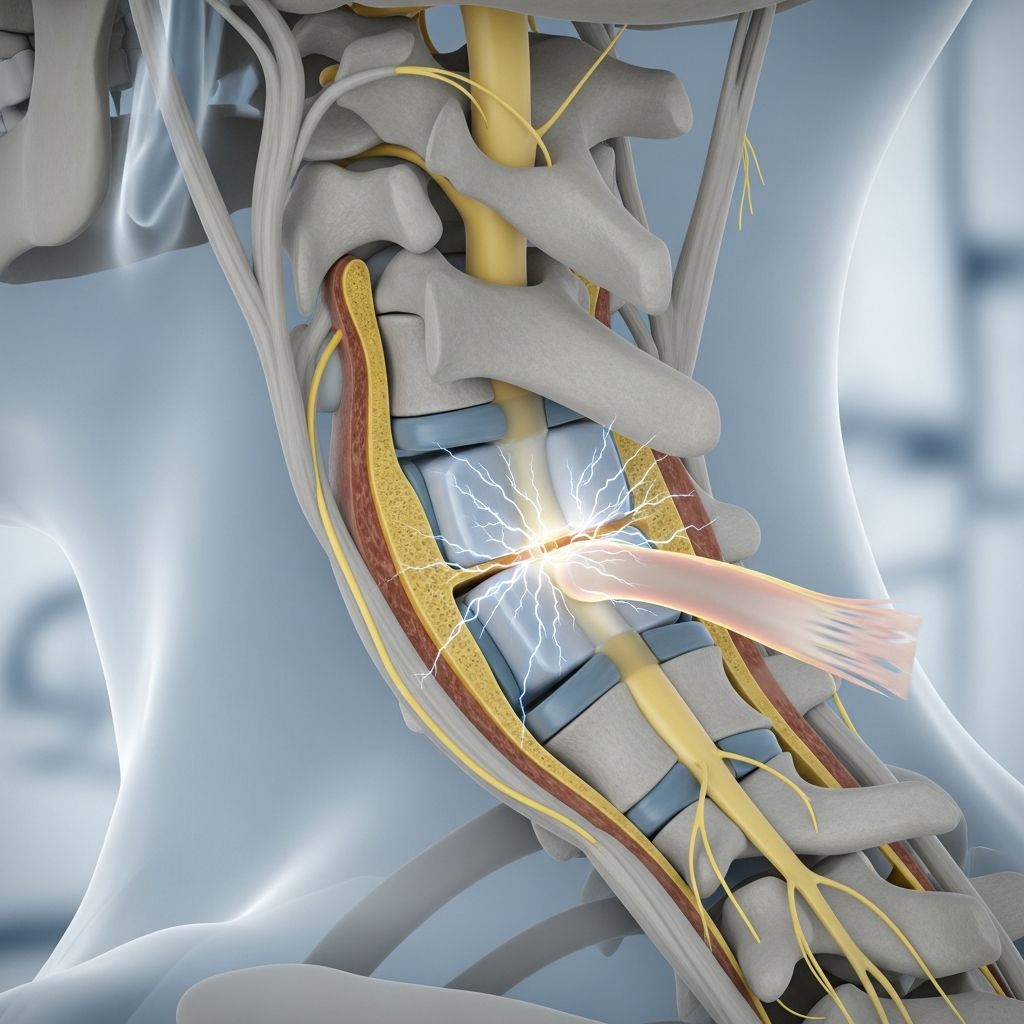
Cervical myelopathy is a condition characterized by compression of the spinal cord in your cervical spine, which is located in your neck. This compression can develop due to various causes, including injuries, tumors, or herniated disks that place pressure on the spinal cord. The condition can significantly impact your quality of life, affecting your ability to perform everyday activities like turning your head or maintaining proper balance.
The most common form of cervical myelopathy is cervical spondylotic myelopathy (CSM), also known as degenerative cervical myelopathy. This type develops gradually as your body ages and your bones, disks, and ligaments become thinner, lose flexibility, or lose strength. In the United States, cervical spondylotic myelopathy affects thousands of people annually, with 15,000 to 20,000 hospital visits each year related to symptoms of this condition.
Understanding the Causes
Cervical myelopathy develops when the spinal cord in your neck becomes compressed or squeezed. Several factors can contribute to this compression, making it essential to understand the underlying causes to recognize when you should seek medical attention.
Age-Related Degenerative Changes
The most prevalent cause of cervical myelopathy is cervical spondylotic myelopathy, which occurs as a natural part of aging. As you grow older, the vertebrae, disks, and ligaments in your cervical spine undergo degenerative changes. Bone spurs (osteophytes) may develop, disks may herniate or lose hydration, and ligaments may become thickened or less flexible. These changes collectively narrow the spinal canal, reducing the available space for the spinal cord and ultimately leading to compression.
Other Potential Causes
While age-related degeneration is the most common cause, cervical myelopathy can also result from:
– Traumatic injuries to the neck or spinal cord- Spinal tumors or abnormal growths- Herniated intervertebral disks- Congenital narrowing of the spinal canal (spinal stenosis)- Ligament thickening or calcification- Vertebral subluxation or misalignment
Recognizing the Symptoms
The symptoms of cervical myelopathy vary in severity and presentation depending on the degree of spinal cord compression and the rate of symptom progression. Recognizing these symptoms early is crucial for seeking appropriate medical care and preventing further complications.
Common Symptoms Include:
– Neck pain or stiffness- Muscle weakness in the arms, hands, or legs- Numbness or tingling sensations in the arms or hands- Loss of fine motor control or dexterity (difficulty with activities like writing or buttoning)- Difficulty with balance or coordination- Leg weakness or difficulty walking- Loss of grip strength- Clumsiness or lack of coordination in the arms or hands- Pain or stiffness in the shoulders
How Symptoms Progress
The progression of cervical myelopathy symptoms varies significantly among individuals. Some patients experience gradual onset and slow progression, while others may notice more rapid changes. Importantly, about 5% to 10% of patients enter a quiescent period where their symptoms remain stable over extended periods. However, if left untreated, cervical myelopathy symptoms can worsen progressively, potentially leading to severe complications including permanent nerve damage, intense pain, and difficulty moving.
Severity Classification
Healthcare providers classify cervical myelopathy into three categories based on clinical assessment and grading scales:
– Mild: Minimal symptoms that don’t significantly impact daily activities- Moderate: Noticeable symptoms affecting some daily functions- Severe: Significant symptoms with substantial impact on quality of life and physical function
Related Stories



Diagnosis and Testing
An accurate diagnosis of cervical myelopathy involves a comprehensive evaluation combining physical examination, neurological assessment, and imaging studies. Your healthcare provider will work systematically to understand your condition and rule out other potential diagnoses.
Physical and Neurological Examination
During your initial appointment, your healthcare provider will review your complete medical history and current symptoms. They will conduct a thorough neurological examination that may include:
– Testing your reflexes and muscle strength- Assessing balance and coordination- Evaluating your gait or walking pattern- Testing sensory function in your arms and legs- Examining fine motor skills and dexterity- Observing your posture and neck mobility
Imaging Tests
Imaging is essential for confirming cervical myelopathy and identifying the specific cause of spinal cord compression. Your provider may order several types of imaging tests:
– Magnetic Resonance Imaging (MRI): The most valuable diagnostic tool, MRI provides detailed images of the spinal cord, disks, and surrounding structures. It allows your provider to evaluate the degree of compression, identify tumors or other abnormalities, and detect syrinx (fluid-filled cavities in the spinal cord).- X-rays: Cervical radiographs can reveal osteophyte formation, kyphosis (abnormal forward curvature), or vertebral subluxation.- Computed Tomography (CT): CT scans provide detailed bone imaging and may be used to evaluate the severity of bony changes.- Myelography: This specialized test involves injecting contrast material into the spinal canal followed by imaging.
Outcome Measures
Healthcare providers may use standardized assessment tools such as the modified JOA (Japanese Orthopedic Association) score to quantify the severity of symptoms and track disease progression. These numerical scoring systems help guide treatment decisions and monitor the effectiveness of interventions over time.
Treatment Options
Treatment for cervical myelopathy depends on several factors including symptom severity, progression rate, overall health, and patient preferences. There are two primary treatment approaches: conservative management and surgical intervention.
Conservative (Nonsurgical) Treatment
Patients with mild cervical myelopathy who are not experiencing symptom progression may benefit from conservative management strategies. This approach focuses on monitoring disease progression and managing symptoms without surgery. Conservative treatment may include:
– Regular follow-up appointments (twice yearly or annually) with serial physical examinations- Physical therapy to strengthen neck muscles and improve flexibility- Ergonomic modifications to reduce strain on the neck- Activity modifications and lifestyle adjustments- Education about expected symptom progression- Careful monitoring for symptom worsening
However, it’s important to note that while conservative treatments may help manage symptoms, they cannot reverse spinal cord damage or permanently stop disease progression. If symptoms begin to worsen, surgical intervention becomes necessary.
Surgical Treatment
Patients with moderate or severe cervical myelopathy, or those with progressive symptoms despite conservative management, are typically recommended to undergo surgical intervention. Surgery can decompress the spinal cord, relieve pressure, and prevent further neurological deterioration. Early surgical treatment—typically within one year of symptom onset—is associated with substantial improvement in neurological outcomes.
Surgical Approaches and Procedures
There are three primary surgical options for treating cervical myelopathy, each with distinct advantages and considerations:
| Surgical Procedure | Approach | Technique | Best For |
|---|---|---|---|
| Anterior Cervical Discectomy and Fusion (ACDF) | Front of neck | Removes compressed disk and fuses vertebrae; may include disk replacement | Single or two-level disease with normal spinal alignment |
| Laminectomy and Fusion | Back of neck | Removes lamina (bone) and adds fusion to maintain stability | Multiple-level disease or malalignment |
| Laminoplasty | Back of neck | Reshapes and expands the spinal canal without fusion | Multi-level disease with normal alignment; preserves some motion |
Anterior Cervical Approach: The anterior cervical discectomy and fusion (ACDF) approach accesses the spine from the front of the neck and is commonly performed for one or two-level disease. This procedure involves removing the compressed disk material and then fusing the affected vertebrae together. In some cases, an artificial disk replacement may be performed instead of fusion, which can better preserve neck motion.
Posterior Cervical Approaches: When multiple spinal levels are involved, surgery is often performed from the back of the neck. Two main posterior options exist: laminectomy with fusion and laminoplasty. Laminectomy involves removing the lamina (the back portion of the vertebra) to expand the spinal canal and then adding fusion to maintain stability. Laminoplasty, alternatively, reshapes the lamina to expand the canal without completely removing bone or adding fusion, which helps preserve some neck motion and flexibility.
The choice between these procedures depends on factors such as the number of involved spinal levels, the presence of spinal misalignment, your age and overall health, and your surgeon’s training and preference. Fusion procedures eliminate motion at the treated levels, while laminoplasty attempts to preserve some cervical mobility.
Prognosis and Outlook
Your outlook with cervical myelopathy depends on several individual factors including the underlying cause, disease severity, and treatment received. Understanding what to expect can help you make informed decisions about your care.
Untreated Progression
If cervical myelopathy is left untreated, symptoms typically worsen over time. Severe cases can result in permanent, irreversible nerve damage leading to complications such as intense pain, paralysis, and significant functional limitations. This progression underscores the importance of seeking early medical evaluation when symptoms develop.
Post-Treatment Outcomes
Mild cases of cervical myelopathy that respond well to conservative management generally have positive outcomes, especially if surgical treatment becomes necessary later. However, it’s important to understand that while surgery can stop symptom progression and potentially improve neurological function, age-related degenerative changes may affect additional spinal levels in the future.
Life Expectancy and Quality of Life
Mild cervical myelopathy typically does not affect your life expectancy, though symptoms may impact your quality of life. Severe cases can lead to permanent nerve damage or complications like paralysis, which may significantly affect longevity and function depending on the specific circumstances. Each person’s prognosis varies based on factors including general health, age, disease severity, and treatment response. Your healthcare provider can offer personalized information about your individual situation.
When to Seek Medical Care
It’s crucial to contact a healthcare provider immediately if you develop symptoms suggestive of cervical myelopathy. Early intervention can prevent serious complications and preserve neurological function. Seek medical attention if you experience:
– Progressive neck pain or stiffness- Worsening weakness in your arms or legs- Increasing numbness or tingling- Difficulty with balance or coordination- Changes in your gait or walking pattern- Loss of grip strength or hand dexterity- Any symptoms that progressively worsen over time
Frequently Asked Questions
Q: Can cervical myelopathy be cured?
A: There isn’t a cure available for all causes of cervical myelopathy. However, surgery can significantly decrease symptoms and prevent further complications. Conservative management can help stabilize mild cases, though this doesn’t reverse existing damage.
Q: How quickly does cervical myelopathy progress?
A: Progression rates vary considerably among individuals. Some patients experience gradual onset and slow progression, while others notice more rapid changes. Approximately 5-10% of patients enter a quiescent period where symptoms remain stable.
Q: Is surgery always necessary for cervical myelopathy?
A: Surgery is not required for all patients. Mild, non-progressive cases can be managed conservatively with regular monitoring. However, moderate to severe cases or those showing symptom progression typically require surgical intervention.
Q: What’s the best timing for surgery?
A: Research suggests that performing surgery relatively early—typically within one year of symptom onset—is associated with substantial improvement in neurological outcomes.
Q: Will I regain full function after surgery?
A: Outcomes vary by individual. Early surgical intervention often produces better results. While surgery can halt progression and improve symptoms, complete restoration of function depends on factors like disease severity, pre-operative neurological status, and overall health.
Q: What should I do if I notice progressive symptoms?
A: Contact your healthcare provider promptly. Report any new or worsening symptoms to guide treatment decisions. Progressive symptoms often indicate the need for surgical intervention to prevent permanent nerve damage.
References
- Cervical Myelopathy: What It Is, Symptoms & Treatment — Cleveland Clinic. 2024. https://my.clevelandclinic.org/health/diseases/cervical-myelopathy
- Cervical spondylotic myelopathy: Make the difficult diagnosis, then refer for surgery — Cleveland Clinic Journal of Medicine. 2003. https://www.ccjm.org/content/ccjom/70/10/899.full.pdf
- Surgical Treatment of Cervical Spondylotic Myelopathy — Consult QD, Cleveland Clinic. 2024. https://consultqd.clevelandclinic.org/surgical-treatment-landscape-for-cervical-spondylotic-myelopathy-podcast
- Cervical Myelopathy Explained — National Spine Health Foundation. 2024. https://spinehealth.org/article/cervical-myelopathy-explained/
- Degenerative Cervical Myelopathy: Questions and Answers — Christopher Reeve Foundation. 2022. https://www.christopherreeve.org/wp-content/uploads/2023/06/Degenerative-Cervical-Myelopathy-QA-2-8-22-A-1.pdf
- Cervical Stenosis & Myelopathy — American Academy of Orthopaedic Surgeons, Spine.org. 2024. https://www.spine.org/Portals/0/Documents/KnowYourBack/CervicalStenosisMyelopathy.pdf
- Cervical Spondylotic Myelopathy: A Guide to Diagnosis and Management — PubMed Central, National Center for Biotechnology Information. 2020. https://pubmed.ncbi.nlm.nih.gov/32179614/
Similar Articles








Read full bio of medha deb