Visual Hallucinations from Vision Loss: Understanding Charles Bonnet Syndrome
Discover why vision loss triggers harmless hallucinations and how to manage them effectively.

What Happens When Vision Loss Triggers Phantom Images
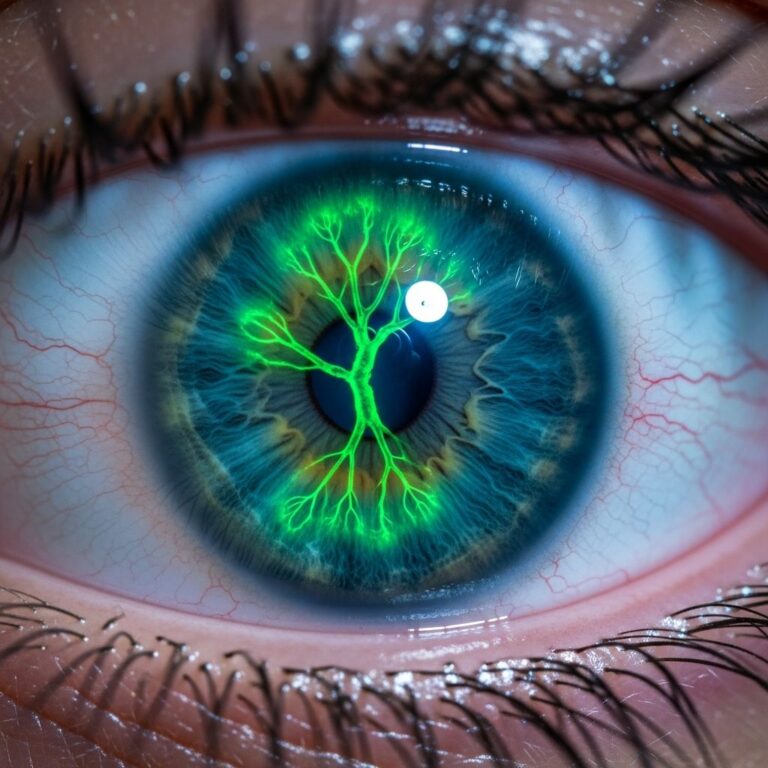
When the eyes fail to transmit adequate visual information to the brain, a remarkable phenomenon can occur: the brain begins generating images that don’t actually exist. Charles Bonnet syndrome (CBS) is a condition characterized by complex visual hallucinations occurring in individuals with visual impairment who otherwise maintain normal psychological functioning. This neurological response represents one of the most misunderstood consequences of significant vision loss, often causing unnecessary anxiety among those who experience it.
The condition affects a substantial portion of the population dealing with vision challenges. Research indicates that up to half of people with low vision experience CBS at some point, typically after age 80. Despite its prevalence, many individuals remain reluctant to disclose these experiences due to misconceptions about mental health and cognitive decline.
The Historical Origins and Discovery
The syndrome bears the name of an 18th-century Swiss philosopher who first documented the phenomenon. Charles Bonnet initially described CBS in 1760 after observing this phenomenon in his 90-year-old grandfather, who was suffering from cataracts. The grandfather’s case proved particularly instructive: after undergoing cataract surgery with initial vision improvement, his visual acuity subsequently deteriorated, accompanied by vivid visual hallucinations of entirely imaginary content.
What distinguished this early case was the clarity with which the grandfather recognized the unreality of his experiences. He maintained full awareness that these phantom images held no basis in actual perception, yet they appeared with striking vividness and complexity. This observation established the fundamental characteristic that differentiates CBS from other conditions involving hallucinations: the preservation of insight and mental clarity throughout the experience.
The Neurological Mechanism Behind the Hallucinations
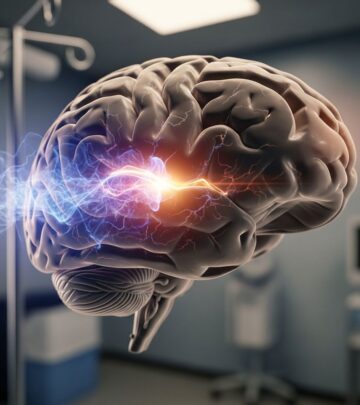
Understanding how vision loss generates hallucinations requires examining the relationship between sensory input and neural processing. The most widely accepted theory suggests that visual sensory deafferentation results in disinhibition of cortical regions affecting vision, ultimately leading to spontaneous firing of these vision-associated regions and resulting hallucinations. In simpler terms, when the eyes provide diminished information to the visual cortex, the brain’s processing centers become hyperactive in an attempt to compensate.
This compensatory mechanism operates similarly to how the brain fills sensory gaps in other contexts. When deprived of normal visual signals, the brain draws upon stored memories, learned visual patterns, and neural associations to construct perceptual experiences. The brain essentially creates these hallucinations because the normal amount of visual information coming from the eyes is reduced, and it attempts to complete the picture by using memories or creating new images.
Neuroimaging studies have provided compelling evidence for this mechanism. Research has demonstrated that during hallucinatory episodes, specific visual cortical regions, particularly the ventral occipital lobe, exhibit spontaneous neural activity in CBS patients. This spontaneous firing translates directly into the visual experiences reported by individuals with the condition.
Diverse Eye Conditions That Can Precipitate CBS
Charles Bonnet syndrome can originate from any factor affecting the visual pathway, extending from the visual cortex down to the eyes, except for congenital blindness. Numerous ophthalmological conditions can trigger the development of CBS through various mechanisms of vision impairment.
The most common conditions associated with CBS include:
Related Stories



- Age-related macular degeneration (ARMD), which affects central vision
- Cataracts, causing cloudiness and reduced light transmission
- Diabetic retinopathy, resulting from diabetes-related blood vessel damage
- Glaucoma, involving optic nerve damage and progressive field loss
- Retinitis pigmentosa, a degenerative retinal condition
- Retinal vein occlusion, causing sudden vision loss from blocked blood flow
- Optic neuritis, an inflammatory condition affecting the optic nerve
- High myopia, severe nearsightedness with retinal complications
- Cerebral infarctions and occipital strokes affecting visual processing areas
Each of these conditions creates visual impairment through different mechanisms—some affecting light entry to the eye, others damaging the light-sensitive retina, and still others disrupting the neural pathways carrying visual information to the brain. Regardless of the specific mechanism, the common thread involves significant reduction in the quantity and quality of visual signals reaching the brain.
Recognizing the Varied Manifestations of Visual Hallucinations
The hallucinations experienced in CBS display remarkable variability in their form, complexity, and characteristics. They can range from simple geometric patterns to elaborate, detailed scenes. The visual hallucinations can range from simple shapes like lines and dots, colored blobs and geometrical patterns, or more complex images involving faces (sometimes distorted or gargoyle-like), people (young or old), animals, objects or whole vivid scenes.
These hallucinations present with diverse characteristics that help distinguish CBS from other conditions:
| Characteristic | Description |
|---|---|
| Visual Modality | Exclusively visual; no involvement of hearing, smell, taste, or touch |
| Clarity Compared to Real Vision | Often clearer and more vivid than residual actual vision |
| Color and Movement | Can appear in black and white or full color; may be static or moving |
| Duration | Typically last from minutes to several hours |
| Frequency | May occur several times daily or only a few times per month |
| Voluntary Control | Not under voluntary control; appear spontaneously and unpredictably |
| Repetition | Some individuals see identical scenes repeatedly; others see varied content |
An important distinction that clarifies the nature of CBS involves the complexity distribution across different types of vision loss. In patients with CBS attributed to neurologic or retinal causes, simple hallucinations were more prevalent than complex ones at 90% and 37%, respectively. This variation suggests that the specific location and nature of visual pathway damage influence the character of resulting hallucinations.
Critical Factors That Increase CBS Susceptibility
Not every individual experiencing vision loss develops Charles Bonnet syndrome, suggesting that specific circumstances enhance susceptibility. Understanding these risk factors helps individuals and healthcare providers anticipate and prepare for potential hallucinatory experiences.
Several factors significantly increase the likelihood of CBS development:
- Age: The condition predominantly affects older adults, with prevalence increasing substantially after age 80
- Rapid Vision Loss: Sudden deterioration of sight presents higher risk than gradual decline
- Bilateral Vision Loss: Losing sight in both eyes increases susceptibility compared to unilateral vision loss
- Social Isolation: Limited social engagement and interaction appears to elevate hallucination frequency
- Environmental Factors: Spending extended periods in dark environments or indoors without natural light may increase risk
- Reduced Physical Activity: Limited mobility and exercise may contribute to hallucination occurrence
- Psychological Stress: Evidence suggests that increased anxiety and social isolation can trigger more frequent and disturbing hallucinations
Why CBS Is Not a Sign of Mental Illness
Perhaps the most crucial distinction regarding Charles Bonnet syndrome involves clarifying its neurological rather than psychiatric nature. Charles Bonnet syndrome is not caused by a mental health problem or dementia. This distinction proves essential for alleviating the significant anxiety and psychological distress that often accompanies CBS diagnoses.
Patients with CBS maintain intact mental intellect, awareness, reasoning, judgment, and applications of knowledge, distinguishing it from conditions involving cognitive decline. The hallucinations represent a physiological response to sensory deprivation rather than evidence of psychological pathology or dementia.
This distinction carries profound implications for individuals experiencing CBS. Many people initially fear that hallucinations indicate impending mental deterioration or cognitive decline. Understanding that CBS occurs in psychologically normal individuals with preserved cognitive function provides significant reassurance and reduces the psychological burden associated with the condition.
Management Strategies and Symptom Reduction Approaches
While no specific pharmaceutical treatment exists for Charles Bonnet syndrome, several evidence-based strategies can reduce hallucination frequency and severity. These approaches focus on addressing the underlying sensory deprivation and associated risk factors.
Environmental Modifications: Increasing environmental lighting, particularly natural light exposure, may reduce hallucination frequency. Spending time in well-lit spaces and avoiding extended periods in darkness helps maintain adequate visual stimulation.
Social Engagement: Regular social interaction and meaningful engagement with others has demonstrated effectiveness in reducing both hallucination frequency and distress. Participating in social activities, maintaining family connections, and joining community groups provides cognitive stimulation and reduces isolation.
Vision Rehabilitation: Optimizing residual vision through appropriate optical aids, lighting adjustments, and visual rehabilitation techniques provides the brain with enhanced visual input, potentially reducing compensatory hallucinations.
Physical Activity: Regular exercise and physical activity appear to contribute to hallucination reduction, possibly through multiple mechanisms including improved overall health, reduced anxiety, and enhanced cognitive function.
Stress Management: Addressing anxiety and psychological stress through relaxation techniques, counseling, or other therapeutic approaches may decrease hallucination frequency and intensity.
Acknowledgment and Normalization: Simply understanding and accepting CBS as a normal consequence of vision loss, rather than evidence of mental illness, often reduces the associated distress and anxiety.
The Course and Prognosis of Charles Bonnet Syndrome
The temporal pattern of CBS varies considerably among individuals. For many people visual hallucinations resolve after a year or two, though for others they may persist for years. Several factors influence whether hallucinations will spontaneously resolve or persist.
Improvements in vision, whether through surgical intervention, medical treatment, or natural stabilization of underlying eye disease, often correlate with hallucination reduction or elimination. Addressing social isolation and increasing environmental stimulation similarly contributes to symptom improvement. The progressive adaptation of the visual system over time may also contribute to spontaneous resolution in some individuals.
Frequently Asked Questions About Charles Bonnet Syndrome
Can Charles Bonnet syndrome occur in younger individuals?
While CBS predominantly affects older adults, it can occur at any age in individuals experiencing significant vision loss. Younger people with severe visual impairment from conditions like retinitis pigmentosa, high myopia, or traumatic vision loss may develop CBS, though prevalence increases substantially with advancing age.
Are the hallucinations in CBS frightening or disturbing?
The hallucinations themselves are typically not inherently disturbing or threatening. The hallucinations shouldn’t speak to you or touch you. However, the anxiety resulting from misunderstanding the condition or fearing mental illness can create significant psychological distress independent of the hallucinations themselves.
Can medications treat Charles Bonnet syndrome?
No specific medications have proven effective for treating CBS. While certain medications might reduce hallucination frequency in individual cases through indirect mechanisms like anxiety reduction, they are not targeted CBS treatments. Management focuses on addressing underlying causes and implementing the behavioral and environmental strategies discussed above.
Should I tell my doctor about CBS hallucinations?
Absolutely. Healthcare providers need accurate information about hallucination experiences to provide appropriate diagnosis and reassurance, rule out other conditions, and recommend management strategies. Disclosing these experiences allows physicians to distinguish CBS from conditions like dementia that require different approaches.
References
- Charles Bonnet Syndrome – StatPearls — National Center for Biotechnology Information (NCBI). 2024. https://www.ncbi.nlm.nih.gov/books/NBK585133/
- Charles Bonnet Syndrome (Visual Release Hallucinations) — Cleveland Clinic. 2024. https://my.clevelandclinic.org/health/diseases/24403-charles-bonnet-syndrome
- Charles Bonnet Syndrome — National Health Service (NHS). 2023. https://www.nhs.uk/conditions/charles-bonnet-syndrome/
- Charles Bonnet Syndrome — Moorfields Private Eye Hospital. 2024. https://www.moorfields.nhs.uk/private/eye-conditions-and-treatments/charles-bonnet-syndrome
- Hallucinations & Macular Degeneration: What is Charles Bonnet Syndrome — BrightFocus Foundation. 2024. https://www.brightfocus.org/resource/hallucinations-macular-degeneration-what-is-charles-bonnet-syndrome/
Similar Articles








Read full bio of Sneha Tete