Skin Self-Examination: 5 Steps To Spot Melanoma Early
Learn how to perform self-skin examinations to spot melanoma early using the Ugly Duckling sign and ABCDE+EFG rule for life-saving detection.
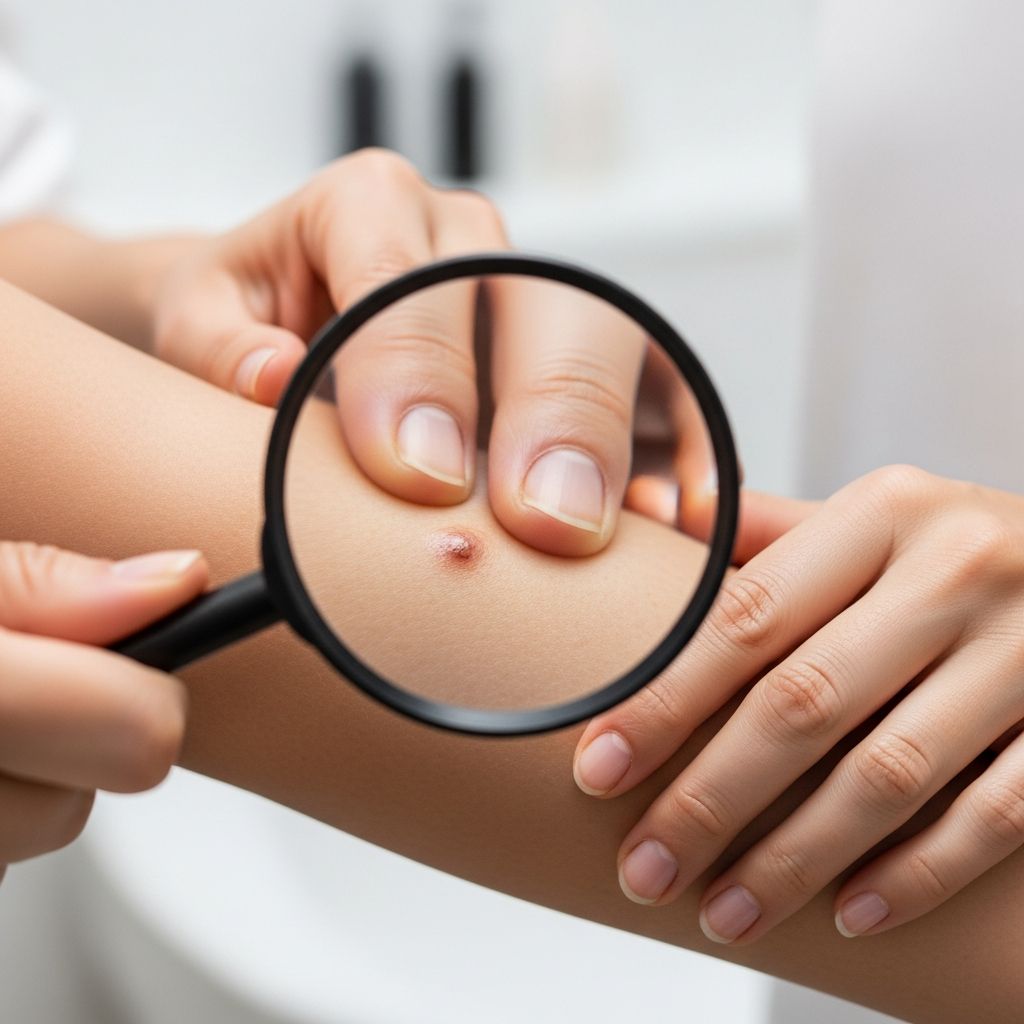
Skin cancer, particularly melanoma, is the most common cancer worldwide, affecting up to two-thirds of fair-skinned individuals in regions like New Zealand. Early detection through regular self-skin examinations dramatically improves cure rates, as melanoma is highly treatable when caught early but can lead to disfigurement or death if advanced. This guide equips you with practical methods like the Ugly Duckling sign and ABCDE+EFG rule to spot suspicious changes and know when to seek professional help.
Background on Skin Cancer
Skin cancer tops the list of prevalent cancers globally, with non-melanoma types like basal cell carcinoma (BCC) and squamous cell carcinoma (SCC) being most common, alongside the more dangerous melanoma. BCC often appears as a pearly nodule, SCC as a scaly red patch, and melanoma as an evolving pigmented lesion. These cancers are curable over 95% of the time with early intervention, emphasizing the value of vigilance. Factors increasing risk include fair skin, sun exposure history, family melanoma cases, numerous moles, or prior skin cancers. Everyone benefits from self-checks, but high-risk groups—those over 50, with sun-damaged skin, or genetic predispositions—should prioritize monthly exams.
Who Should Do a Self-Skin Examination?
Everyone should perform regular self-skin exams, as patients often first notice melanomas. It’s crucial for:
- Individuals with fair skin, freckles, or light hair/eyes.
- Those with a history of sunburns or excessive UV exposure.
- People over 35 developing new spots or with changing moles.
- Family history of melanoma or personal history of skin cancer.
- Those with many moles (>50) or atypical/dysplastic nevi.
Partner-assisted checks enhance thoroughness, especially for hard-to-see areas. Studies show self-exams contribute to early detection, though proficiency varies; combining with professional checks maximizes effectiveness.
When Should I Examine My Skin?
Conduct full-body self-exams monthly, ideally after showering in good lighting. Use a full-length mirror, hand mirror, and ruler for measurements. Document findings with photos for comparison—apps like Miiskin aid this by mapping moles and tracking changes. High-risk individuals may need exams every 1-3 months or professional mole mapping. Early detection hinges on consistency; subtle changes over time are common culprits missed in infrequent checks.
How to Perform a Self-Skin Examination
Follow these steps in a well-lit room:
- Face and scalp: Use mirrors to inspect face, ears, nose, mouth; part hair for scalp.
- Hands and arms: Check palms, backs, fingers, nails; extend arms.
- Torso: Front, back (use partner/mirror), underarms, neck, chest.
- Legs and feet: Front, back, between toes, soles, nails.
- Genitals and buttocks: Use hand mirror for thorough view.
Measure spots with a ruler, note ABCDE features, and photograph for baseline. Repeat monthly to spot evolution. Video guides from DermNet and Melanoma New Zealand demonstrate techniques.
What Do Skin Cancers Look Like?
Skin cancers vary:
- BCC: Pearly bump, pink patch, bleeding sore.
- SCC: Scaly red patch, wart-like growth, non-healing ulcer.
- Melanoma: Irregular mole, often pigmented but can be pink/amelanotic.
Rare types like Merkel cell exist but focus on common ones. Painless changes are dangerous; ignore no suspicious spot.
Warning Signs of Skin Cancer
Key red flags include:
- New growth or sore not healing in 4 weeks.
- Changing size, shape, color, or elevation.
- Itching, tenderness, oozing, bleeding.
- Crusting or bleeding without cause.
Related Stories



Trust instincts; not all changes hurt.
The Ugly Duckling Sign
This simple method: Spot the ‘ugly duckling’—the mole differing from others in size, shape, color, or asymmetry. Like ducklings matching except one, deviant lesions warrant scrutiny. Effective for early melanoma ID, especially with many moles. Combine with ABCDE for accuracy.
ABCDE+EFG Rule for Melanoma
Refined ABCDEs plus EFG:
| Feature | Description |
|---|---|
| A: Asymmetry | Halves don’t match. |
| B: Border | Irregular, notched, blurred. |
| C: Color | Varied: brown, black, red, white, blue. |
| D: Diameter | >6mm (pencil eraser size), though smaller possible. |
| E: Evolving | Any change in size/color/time. |
| +E: Elevation | Raised or dome-shaped. |
| F: Firmness | Hard on palpation. |
| G: Growing | Progressive growth. |
Memorize ABCDE+EFG; apply to all spots.
What Parts of My Skin Should I Check?
Examine everywhere: sun-exposed (face, neck, arms, hands, legs) and hidden areas (scalp, nails, genitals, soles, between toes). Melanomas hide in Enhance exams with tech: Photos every few months beat memory; apps remind and engage. See a GP or dermatologist immediately for: Expect full exam, dermoscopy, biopsy if needed. Early visits simplify treatment. High-risk? Annual professional checks or mole mapping. A: Monthly for most; every 1-3 months if high-risk. Consistency catches subtle changes. A: No, but evaluate any change. Benign mimics exist; professionals distinguish. A: Yes, but partner help for back/scalp improves accuracy. A: Photographic surveillance of body/moles for change detection in high-risk patients. A: No, they aid awareness/tracking, not diagnosis. See doctor for concerns. A: No, often painless, making self-checks vital. Adopt self-skin exams today—your best defense against skin cancer. Watch DermNet’s self-exam video for visual guidance.Advanced Tools: Apps and Photography
When Should I See My Doctor?
Frequently Asked Questions (FAQs)
Q: How often should I check my skin?
Q: Is every changing mole cancer?
Q: Can I do self-exams alone?
Q: What’s mole mapping?
Q: Are apps reliable for diagnosis?
Q: Does skin cancer always hurt?
References
Similar Articles


Read full bio of medha deb