Chest Workouts: Exercises for Strength and Function
Master chest exercises for building strength, improving posture, and enhancing overall upper body function.
Chest workouts are fundamental to building a strong, healthy upper body. Whether you’re looking to increase your strength, improve your posture, or enhance your overall fitness level, targeted chest exercises should be a key component of your exercise routine. The chest muscles, primarily the pectoralis major and minor, are involved in numerous daily activities and athletic movements. Understanding how to properly train these muscles can lead to significant improvements in both your physical performance and aesthetic appearance.
Why Chest Exercises Matter
Developing a strong chest provides numerous benefits that extend far beyond appearance. The pectoral muscles are essential for performing everyday tasks that involve pushing, lifting, and holding objects. From carrying groceries to pushing open doors, a well-developed chest enhances your functional fitness and makes daily life easier. Additionally, regular chest exercises contribute to better overall upper body strength and stability.
Enhancing Upper Body Strength
The chest muscles work in conjunction with the shoulders, triceps, and back to create powerful upper body movements. When you strengthen your pectorals through targeted exercises, you improve your ability to perform pushing movements, which translates to better performance in sports, recreational activities, and daily tasks. Strong chest muscles also provide stability for your entire upper body, reducing the risk of injury during physical activities.
Improving Posture and Respiratory Function
Strong chest muscles contribute significantly to maintaining proper posture. When your pectorals are well-developed and balanced with your back muscles, you’re naturally inclined to stand and sit upright, reducing the strain on your neck and lower back. Additionally, chest exercises help expand the ribcage, which can enhance lung capacity and improve respiratory function. This improved breathing capacity benefits both athletic performance and overall health.
Boosting Metabolic Rate
Chest workouts, particularly compound exercises that require significant muscle activation, help boost your metabolic rate. Since muscle tissue burns more calories than fat, even at rest, developing your chest muscles can contribute to more efficient weight management and overall metabolic health. This makes chest training valuable not only for strength and appearance but also for weight management goals.
Understanding Chest Muscle Anatomy
To effectively train your chest, it’s important to understand the anatomy of the chest muscles. The pectoralis major is the large, fan-shaped muscle that forms most of the chest mass, while the pectoralis minor sits beneath it. These muscles can be divided into upper, middle, and lower regions, and different exercises can target specific areas. The anterior deltoids (front shoulders) and triceps also assist in most chest movements, making chest training a comprehensive upper body workout.
Essential Chest Exercises
A well-rounded chest workout should incorporate both compound and isolation exercises. Compound movements engage multiple muscle groups and joints, while isolation exercises focus on specific chest regions. Combining these exercise types ensures balanced development and maximum muscle growth.
Barbell Bench Press
The barbell bench press is considered the gold standard of chest exercises. This compound movement targets the pectoralis major, anterior deltoids, and triceps simultaneously. The bench press builds overall chest mass and strength while allowing you to lift heavier weights than most other exercises. To perform the barbell bench press, lie flat on a bench with your feet firmly on the floor, grip the barbell slightly wider than shoulder-width, lower the weight to your mid-chest, and press upward explosively while maintaining control.
Related Stories



Dumbbell Bench Press
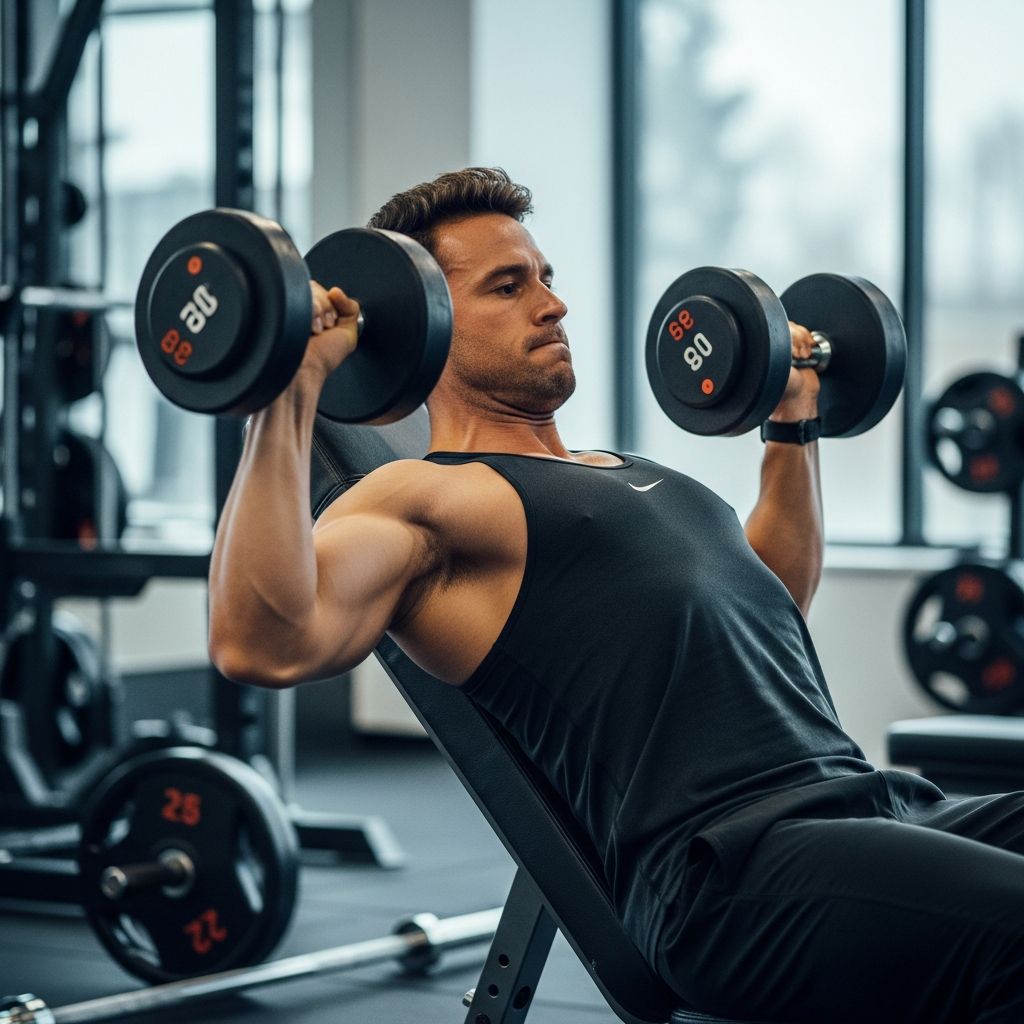
The dumbbell bench press offers several advantages over the barbell version, including increased range of motion and the ability to work each side of your chest independently. This exercise improves chest muscle mass, upper body strength, and stability. The freedom to move dumbbells independently also allows for customization based on your individual strength levels and range of motion limitations. Perform this exercise on a flat bench, holding dumbbells at chest level, then press them upward while maintaining control throughout the movement.
Incline Barbell Bench Press
The incline bench press primarily targets the upper chest while also engaging the front deltoids and triceps. This exercise is crucial for developing the upper pectorals, which are often undertrained compared to the middle and lower chest. By adjusting the bench to an incline (typically 30-45 degrees), you shift the emphasis upward on the pectoral muscle, creating a more balanced and sculpted chest overall. This compound movement enhances upper body power and aesthetic development.
Decline Barbell Bench Press
The decline bench press emphasizes the lower portion of the pectoral muscles, contributing to a more balanced and proportionate chest. This variation also engages the triceps and shoulders, promoting overall upper-body strength. The decline angle helps isolate the lower chest fibers, making it an essential exercise for complete chest development. Performing decline presses also increases your overall bench press strength through varied stimulus.
Push-Ups
Push-ups are a versatile bodyweight exercise that effectively targets the pectoral muscles while also engaging the shoulders, triceps, and core. One of the greatest benefits of push-ups is their adaptability—by varying hand placement, you can target different areas of the chest. Push-ups require no equipment, making them accessible anywhere, and they can be modified to suit any fitness level. Performing 4 sets of 15-20 reps is a good starting point, and you can adjust based on your current fitness level.
Chest Flyes
Chest flyes are isolation exercises that effectively target the pectoral muscles while minimizing tricep involvement. Both dumbbell and machine variations are available, with the machine version offering added stability and reduced injury risk. Flyes work best with a slight bend in the elbows and focus on the stretching and contracting sensation in the chest. These exercises improve chest muscle definition and contribute to fuller, more sculpted chest appearance. They also promote shoulder stability and flexibility, making them valuable additions to any chest routine.
Cable Crossovers
Cable crossovers provide constant tension throughout the entire movement, enhancing muscle activation compared to free weight exercises. This exercise is particularly effective for targeting the inner pectoral muscles and the chest’s medial fibers. The continuous tension from the cable helps build chest strength while maintaining joint health. Cable crossovers can be performed from various angles—high, middle, or low—to target different regions of the chest.
Effective Techniques for Pectoral Development
Simply performing chest exercises isn’t enough for optimal results. Understanding and implementing effective training techniques can dramatically improve your chest development and strength gains.
Compound and Isolation Exercise Balance
Optimal chest training requires integrating both compound and isolation movements. Compound exercises like bench presses recruit multiple muscle groups and allow you to lift heavier weights, building overall strength and mass. Isolation movements such as pec deck flyes or cable crossovers target specific areas of the chest, ensuring balanced development and preventing muscular imbalances. A well-designed routine typically starts with compound movements when energy and strength are highest, followed by isolation exercises.
Pyramid Training
Pyramid training involves progressively increasing or decreasing weight with each set, challenging your muscles differently throughout the workout. This technique provides increased intensity and can lead to enhanced strength and hypertrophy. By varying both the weight and rep count, pyramid training also builds endurance alongside muscle mass, making it a comprehensive workout strategy. Implementing pyramid training requires careful attention to form and adequate recovery between sets to prevent injuries.
Progressive Overload
Regardless of your fitness goals, progressive overload is essential for continued chest development. You can achieve progressive overload by increasing weight, adding more reps, reducing rest periods, or improving exercise form. Lifting heavy weights with lower reps (3-8 range) is typically associated with increased strength, while higher reps at lighter weight (12-15+ range) can help with muscle endurance and toning. Combining both approaches in your workout regimen leads to comprehensive chest development.
Sample Chest Workout Routine
The following table outlines an effective chest workout routine combining compound and isolation exercises:
| Exercise | Sets | Reps | Rest Period |
|---|---|---|---|
| Barbell Bench Press | 4 | 6-8 | 2-3 minutes |
| Incline Dumbbell Press | 3-4 | 8-10 | 90-120 seconds |
| Dumbbell Bench Press (Flat) | 3-4 | 8-10 | 90-120 seconds |
| Decline Barbell Press | 3 | 8-10 | 90-120 seconds |
| Cable Crossovers | 3 | 10-12 | 60-90 seconds |
| Dumbbell Flyes (Flat Bench) | 3 | 10-12 | 60-90 seconds |
Proper Form and Safety Considerations
Maintaining proper form is crucial for both maximizing results and preventing injuries. When performing bench press variations, keep your shoulder blades retracted and maintain a neutral spine position. Your feet should be firmly planted on the floor or a footrest, providing stability for the movement. Lower weights with control, avoiding bouncing or jerky movements that can lead to injury.
When performing dumbbell or cable exercises, focus on the mind-muscle connection and feel the chest working throughout the movement. Avoid using momentum or excessive weight that forces you to sacrifice form. If you experience sharp pain (as opposed to muscle fatigue), stop the exercise immediately and assess whether proper form can be maintained.
Common Mistakes to Avoid
Many people make preventable mistakes that limit their chest development or increase injury risk. Avoid using too much weight before mastering proper form. Don’t allow your elbows to flare excessively during pressing movements, as this reduces chest activation and increases shoulder stress. Additionally, ensure you’re not neglecting lower chest development—this often-undertrained area is important for balanced chest aesthetics and function.
Recovery and Program Design
Muscle growth occurs during rest periods, not during the workout itself. Ensure adequate recovery between chest workouts—typically 48 hours is recommended before training the same muscle group again. This allows for proper muscle repair and glycogen replenishment. Additionally, prioritize quality sleep, proper nutrition with adequate protein intake, and hydration to support your chest development goals.
A well-designed chest training program should include variety, progressive overload, and adequate recovery. Rotate between different exercises every 4-6 weeks to prevent adaptation plateaus and keep workouts interesting. Track your workouts to ensure you’re progressively increasing weight, reps, or volume over time.
Frequently Asked Questions (FAQs)
Q: How often should I train my chest?
A: Most people benefit from training chest 1-2 times per week. This allows adequate recovery between sessions while providing sufficient stimulus for muscle growth. Beginners may start with once per week, while more advanced lifters can handle twice-weekly chest training.
Q: Can I build chest muscle with just bodyweight exercises?
A: Yes, bodyweight exercises like push-ups and dips can effectively target chest muscles and build strength. However, as you become stronger, progressive overload becomes more challenging without weights. Combining bodyweight and weighted exercises provides the most versatile and challenging approach.
Q: Do I need expensive equipment for effective chest workouts?
A: No. While a barbell and bench are useful, dumbbells, resistance bands, and bodyweight exercises can provide effective chest training. You can achieve significant results with minimal equipment investment.
Q: How long does it take to see chest development results?
A: With consistent training and proper nutrition, you can notice improvements in strength within 2-3 weeks. Visible muscle growth typically becomes apparent after 6-8 weeks of dedicated training.
Q: Should I focus on heavy weight or higher reps for chest development?
A: Both approaches have merit. Heavy weights (lower reps) build strength and mass, while higher reps build endurance and muscular definition. Incorporating both rep ranges into your program provides comprehensive chest development.
Q: How can I prevent shoulder pain during chest exercises?
A: Maintain proper form, don’t let elbows flare excessively, and avoid overtraining. Strengthen your rotator cuff with specific exercises, and ensure adequate rest between sessions. If pain persists, consult a healthcare professional.
References
- Strength Training for Upper Body Development — American Council on Exercise (ACE). 2024. https://www.acefitness.org
- Exercise Physiology and Muscle Development — National Institutes of Health. 2024. https://www.nih.gov
- Proper Bench Press Technique and Safety Guidelines — National Strength and Conditioning Association (NSCA). 2024. https://www.nsca.com
- Progressive Overload in Resistance Training — Journal of Applied Physiology. 2023. https://journals.physiology.org
- Chest Muscle Anatomy and Function — American Anatomical Society. 2024. https://www.anatomy.org
Similar Articles








Read full bio of medha deb