Chewing Exercise: 5 Proven Health Benefits
Discover how simple gum chewing exercises can boost oral muscle strength, aid digestion, support weight management, and enhance overall health.
Chewing Exercise: A Simple Path to Better Health
Chewing exercise, often performed through structured gum chewing routines, offers a low-effort way to enhance oral muscle strength, improve digestion, and even support weight management. This accessible practice leverages the natural mechanics of mastication to deliver measurable health benefits, as demonstrated in recent scientific research.
What Is Chewing Exercise?
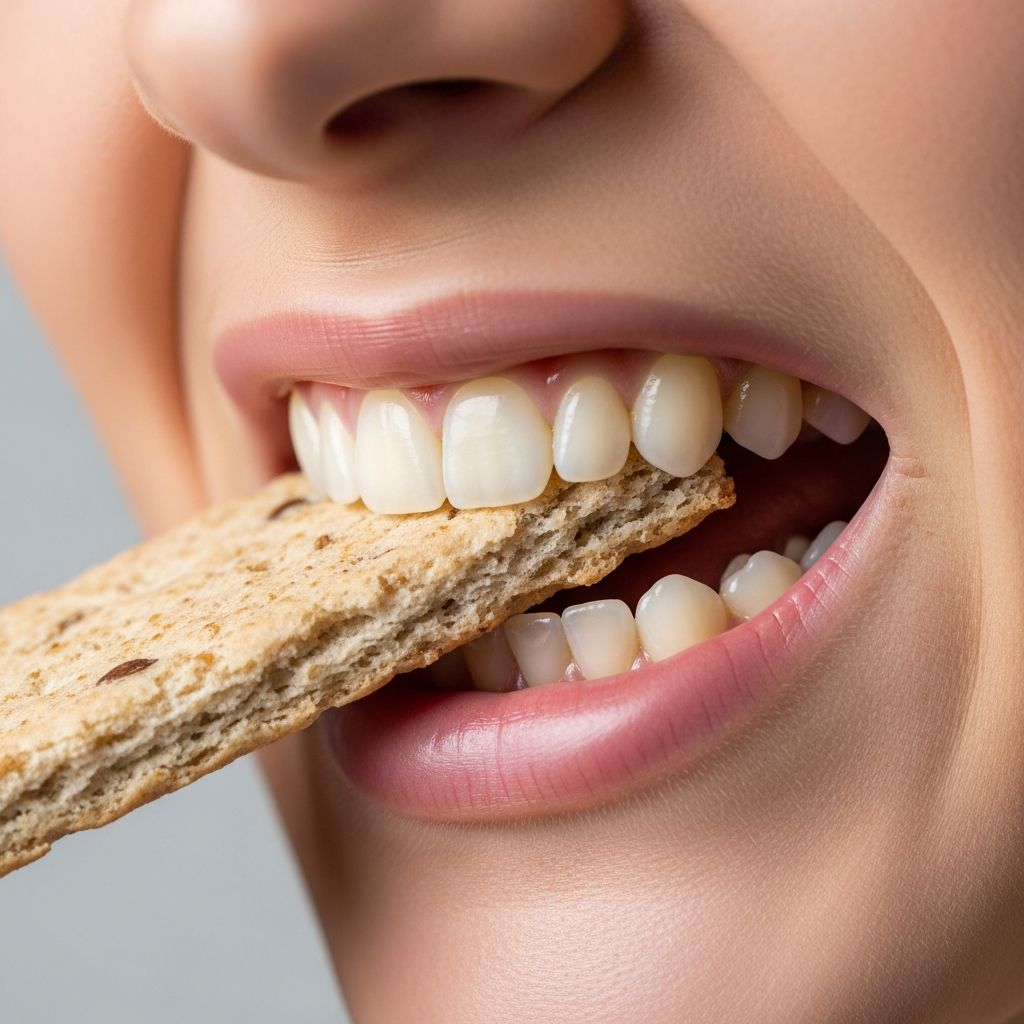
Chewing exercise involves deliberate, controlled gum chewing sessions designed to target specific muscle groups around the mouth, including the tongue, cheeks, and lips. Unlike casual snacking, it follows a structured protocol: chewing two pieces of gum alternately on the left and right sides for 5 minutes, three times daily, with the mouth closed. This method corrects one-sided chewing habits, strengthens perioral muscles, promotes proper lip closure, and integrates easily into daily life without special equipment.
The exercise mimics the early stages of mastication—cutting food with anterior teeth and grinding it with molars—while keeping tongue and cheek muscles under consistent tension. Its simplicity makes it ideal for healthy adults, athletes, and those seeking to improve oral function amid diets heavy in soft foods.
How to Do Chewing Exercise
Follow this step-by-step guide for optimal results:
- Preparation: Use two pieces of sugar-free gum, such as those enriched with CoQ10 for added benefits (e.g., Dentzyme Q10).
- Position: Sit or stand comfortably with mouth closed.
- Chewing Cycle: Chew 10 times on the left molars, then switch to 10 times on the right molars. Repeat for 5 minutes total per session.
- Frequency: Perform 3 sessions daily for at least 3 months.
- Tips: Avoid prolonged chewing beyond 5 minutes to prevent mouth breathing; maintain even bilateral chewing to balance muscle development.
Consistency is key—treat it like brushing teeth. Track progress by noting improved chewing symmetry or facial muscle tone after 2 weeks.
Benefits of Chewing Exercise
Regular chewing exercise yields multifaceted benefits, supported by clinical data:
- Perioral Muscle Strengthening: Increases tongue pressure (TP), cheek pressure (CP), and labial closure strength (LCS) significantly within 1-3 months, with effects persisting post-exercise.
- Weight Management: Boosts diet-induced thermogenesis (DIT), the energy expended digesting food, by enhancing oral stimuli and chewing duration, independent of food bolus size.
- Digestion and Metabolism: Improves splanchnic blood flow, intestinal motility, and protein oxidation, aiding nutrient absorption and reducing obesity risk.
- Energy Expenditure: Even short sessions raise heart rate and calorie burn; combining with walking amplifies effects, especially in middle-aged men.
- Oral Health: Counters effects of soft diets by promoting closed-mouth chewing and balanced mastication.
| Benefit | Key Metric Improved | Duration for Results |
|---|---|---|
| Muscle Strength | TP, CP, LCS ↑ by 20-30% | 1-3 months |
| DIT/Energy Burn | ↑ with chew/taste time | Per meal |
| Heart Rate | ↑ within healthy range | During session |
Science Behind Chewing Exercise
Research elucidates the mechanisms. A 2024 study on 30 healthy adults (age 24.1 ± 2.0) showed gum chewing 3x/day for 3 months raised TP from baseline 48.6 kPa to 55.2 kPa (p<0.05), CP from 5.4 kPa to 6.8 kPa, and LCS from 3.2 kPa to 4.1 kPa in males; similar gains in females. Effects held 3 months post-cessation.
A 2022 Waseda University trial separated chewing from tasting: 30-second chews of liquid food increased DIT via oral stimuli, gas exchange, and celiac artery blood flow, confirming chewing’s role in thermogenesis beyond mechanical breakdown.
Gum chewing while walking (15 min, 3g gum) boosted energy expenditure by 1.8 kcal in middle-aged/elderly males, via sympathetic activation—heart rate rose modestly but safely.
These findings align: small per-meal gains compound annually, making chewing a potent, passive intervention for metabolic health.
Chewing Exercise for Weight Loss
Thorough chewing prevents obesity by maximizing DIT—up to 10% of caloric intake. Slow eating with extended oral exposure (chew/taste duration) elevates post-meal energy use, hunger/fullness unchanged, but splanchnic circulation enhanced. Cumulative effects over meals rival moderate exercise.
Combining with activity: Gum chewing + walking increases expenditure more than either alone, ideal for weight management without gym time. Aim for 5-min sessions pre/post-meals to savor flavors, extend chewing, and curb overeating.
Who Should Try Chewing Exercise?
- Athletes: Improves balance/motor function via oral muscle training.
- Adults with Soft Diets: Restores lip closure, prevents open-mouth habits.
- Weight Watchers: Boosts DIT for effortless calorie burn.
- Middle-Aged/Elderly: Counters sarcopenia in facial muscles.
- Anyone: Easy habit for better digestion.
Consult a doctor if TMJ issues or dental problems exist.
Frequently Asked Questions (FAQs)
What gum is best for chewing exercise?
Sugar-free varieties like Dentzyme Q10; 2 pieces per session provide ideal resistance without excess sugar.
How long until I see results?
Muscle strength improves in 2 weeks, peaks at 3 months; DIT benefits immediate per meal.
Can chewing exercise help lose weight?
Yes, by increasing DIT and daily expenditure; effects accumulate over time.
Is it safe during exercise like walking?
Yes, modestly raises heart rate; effective for added burn in healthy adults.
Do effects last after stopping?
Yes, perioral strength maintained 3+ months post-cessation.
Potential Drawbacks and Precautions
Minimal risks: Avoid if jaw pain present. Limit to 5 min/session to prevent fatigue. Not a meal replacement—pair with balanced diet.
Expand routine: Mindful chewing of solids amplifies benefits.
References
- Continuous Gum Chewing Exercise Improves Perioral Muscle Strength — Scientific Research Publishing (SCIRP). 2024. https://www.scirp.org/journal/paperinformation?paperid=135474
- Chewing to stay slim: How to savor your food better and dodge obesity — ScienceDaily (Waseda University). 2022-01-12. https://www.sciencedaily.com/releases/2022/01/220112105657.htm
- The effects of gum chewing while walking on physical and physiological functions — PMC/NCBI. 2018. https://pmc.ncbi.nlm.nih.gov/articles/PMC5909016/
Similar Articles


Read full bio of Sneha Tete