Chicken Vs Fish: Which Is Healthier? Key Insights
Discover the nutritional showdown between chicken and fish to determine which protein source offers superior health benefits for your diet.
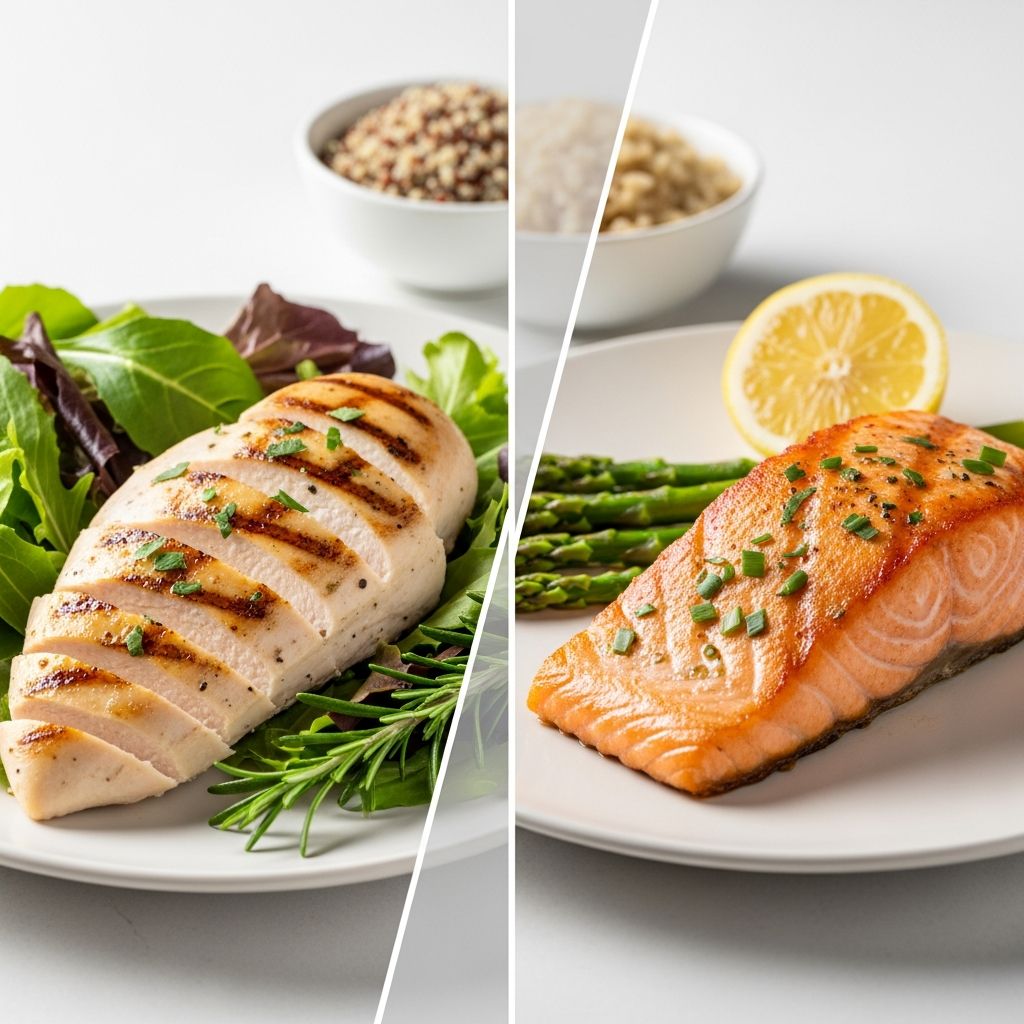
Chicken and fish are two of the most popular lean protein sources in modern diets, but determining which is healthier requires a detailed nutritional comparison. Both offer high-quality protein essential for muscle maintenance, satiety, and overall health, yet they differ significantly in fat profiles, vitamins, minerals, and calorie density. This article breaks down the key nutritional aspects, health benefits, potential drawbacks, and practical recommendations to help you decide based on your specific health goals, such as heart health, weight management, or muscle building.
Protein Content: A Close Match
**Chicken and fish provide nearly identical amounts of high-quality protein.** Per 100 grams of cooked serving, skinless chicken breast delivers about 25-31 grams of protein, while most fish like cod, tuna, or salmon offer 20-25 grams. This protein is complete, containing all essential amino acids with a biological value of 80-85, comparable to beef and slightly below eggs (100).
Protein from both sources supports muscle repair, immune function, and hormone production. For athletes or those building muscle, chicken’s slightly higher density in lean cuts makes it efficient for high-volume intake without excess calories. Fish, however, digests more easily, potentially reducing post-meal fatigue—ideal for lighter meals or those with digestive sensitivities.
- Chicken breast (skinless, grilled): 31g protein, 165 calories per 100g.
- Salmon (baked): 25g protein, 206 calories per 100g.
- Cod (baked): 23g protein, 105 calories per 100g.
Neither is definitively superior for protein; variety ensures a broad amino acid profile.
Fats and Fatty Acids: Where Fish Shines
**Fish outperforms chicken in healthy fats, particularly omega-3 fatty acids (EPA and DHA).** Oily fish like salmon, mackerel, sardines, and herring are rich in these anti-inflammatory fats, which reduce heart disease risk, lower triglycerides, and support brain health. Chicken, even skinless breast, contains minimal omega-3s and more saturated fat in darker meats like thighs.
Omega-3s in fish combat inflammation, unlike chicken’s neutral fat profile. However, fatty fish like salmon have higher total fat (10-15g per 100g) compared to chicken breast (3-4g). White fish (cod, tilapia) are as lean as chicken breast but lack omega-3 potency.
| Nutrient (per 100g) | Skinless Chicken Breast | Salmon | Cod |
|---|---|---|---|
| Total Fat | 3.6g | 12g | 0.7g |
| Saturated Fat | 1g | 2.5g | 0.1g |
| Omega-3 (EPA/DHA) | <0.1g | 2g | 0.2g |
Recommendation: Aim for 2-3 servings of fatty fish weekly for omega-3 benefits, supplementing chicken for low-fat days.
Vitamins and Minerals: Complementary Strengths
**Chicken edges out in B vitamins (niacin, B6, B12) and minerals like phosphorus and selenium.** These support energy metabolism and antioxidant defense. A 100g chicken breast provides 50% of daily B6 and 15% B12.
**Fish excels in vitamin D, iodine, and selenium.** Seafood is one of few natural vitamin D sources (salmon: 66% DV per 100g), crucial for bone health and immunity. Iodine in fish supports thyroid function, often deficient in land-based diets. Chicken lacks significant vitamin D unless fortified.
Related Stories



- Chicken advantages: Higher iron (1mg/100g heme iron, highly absorbable), zinc for immunity.
- Fish advantages: Iodine (cod: 30% DV), vitamin D, lower cholesterol (20% less than chicken).
Both are nutrient-dense, but fish’s unique micronutrients make it vital for comprehensive nutrition.
Calories and Weight Management
**Lean chicken and white fish are lowest in calories, ideal for weight loss.** Skinless chicken breast (165 kcal/100g) and cod (105 kcal/100g) beat fatty fish like salmon (206 kcal). Chicken thighs or skin-on cuts rise to 200-250 kcal, comparable to salmon.
Fish aids weight loss via easier digestion and prolonged satiety when paired with fiber-rich veggies, despite similar calories. Chicken provides longer fullness from denser protein. For dieting:
- Choose lean cuts: Chicken breast, turkey; white fish like tilapia, haddock.
- Avoid: Fried preparations, skin-on poultry, high-fat fish if calorie-restricted.
Fish’s edge in diets stems from anti-inflammatory effects and lighter feel post-meal.
Health Benefits and Risks
Heart Health
Fish’s omega-3s reduce cardiovascular risk; studies link 2 servings/week to 36% lower heart disease odds. Chicken is neutral but preferable lean over red meat.
Muscle Building and Satiety
Chicken’s high protein-to-calorie ratio suits bodybuilders. Both promote satiety equally per gram protein.
Potential Risks
Chicken: Salmonella risk if undercooked; commercial poultry may have antibiotics/hormones—opt for organic/free-range. Fish: Mercury in large predators (tuna, swordfish); PCBs in farmed salmon—choose wild-caught small fish.
Pregnant women: Limit high-mercury fish; prioritize low-mercury options like salmon, sardines.
How Much Should You Eat?
USDA recommends 26 oz/week total protein (e.g., 5-6 oz/day). Balance: 2-3 fish servings, rest chicken/other leans. Vegetarians: Tofu, legumes complement but lack omega-3 density.
Chicken vs. Fish: Bottom Line
**Neither is universally healthier—fish wins for heart/brain via omega-3s, chicken for lean protein and affordability.** Rotate both for optimal nutrition. Prioritize quality: Wild fish, pasture-raised chicken.
Frequently Asked Questions
Is fish or chicken better for weight loss?
Both lean options work; fish digests easier for lighter feel, chicken fills longer.
Does chicken have more protein than fish?
Slightly yes in breast (31g vs. 25g/100g), but both excellent.
Is salmon healthier than chicken?
Yes for omega-3s, but higher calories—ideal in moderation.
Can I eat fish every day?
Yes, low-mercury types; vary with chicken to avoid contaminants.
What’s healthier: chicken breast or salmon?
Chicken for low-cal protein; salmon for fats/nutrients.
References
- Where is there more protein: In fish, chicken, or red meat? — The Jerusalem Post. 2024-01-15. https://www.jpost.com/health-and-wellness/nutrition/article-876528
- Chicken or Fish? Compare the healthiest meats to help with fatigue — Lam Clinic. 2023-05-20. https://lamclinic.com/blog/healthiest-meats-to-eat/
- Chicken vs Fish: Nutrition Faceoff — YouTube (LAM Clinic). 2023-08-10. https://www.youtube.com/shorts/xgrECtmd2XI
Similar Articles








Read full bio of Sneha Tete