Chigger Bites: Identification, Treatment & Prevention
Learn how to identify, treat, and prevent chigger bites with expert guidance and proven remedies.
Understanding Chigger Bites
Chiggers, also known as red bugs or trombiculid mites, are tiny larval arachnids that cause intensely itchy skin reactions when they bite humans. These nearly invisible pests measure between 1/120 and 1/150 inches in diameter, making them extremely difficult to detect with the naked eye. While adult chiggers are not parasitic and pose minimal threat to humans, the larval stage is when these creatures become problematic. The larvae feed on skin cells and inject digestive enzymes that trigger an intense inflammatory response, resulting in clusters of itchy bumps. Understanding what chiggers are, how they bite, and where they thrive is essential for both treatment and prevention.
What Do Chigger Bites Look Like?
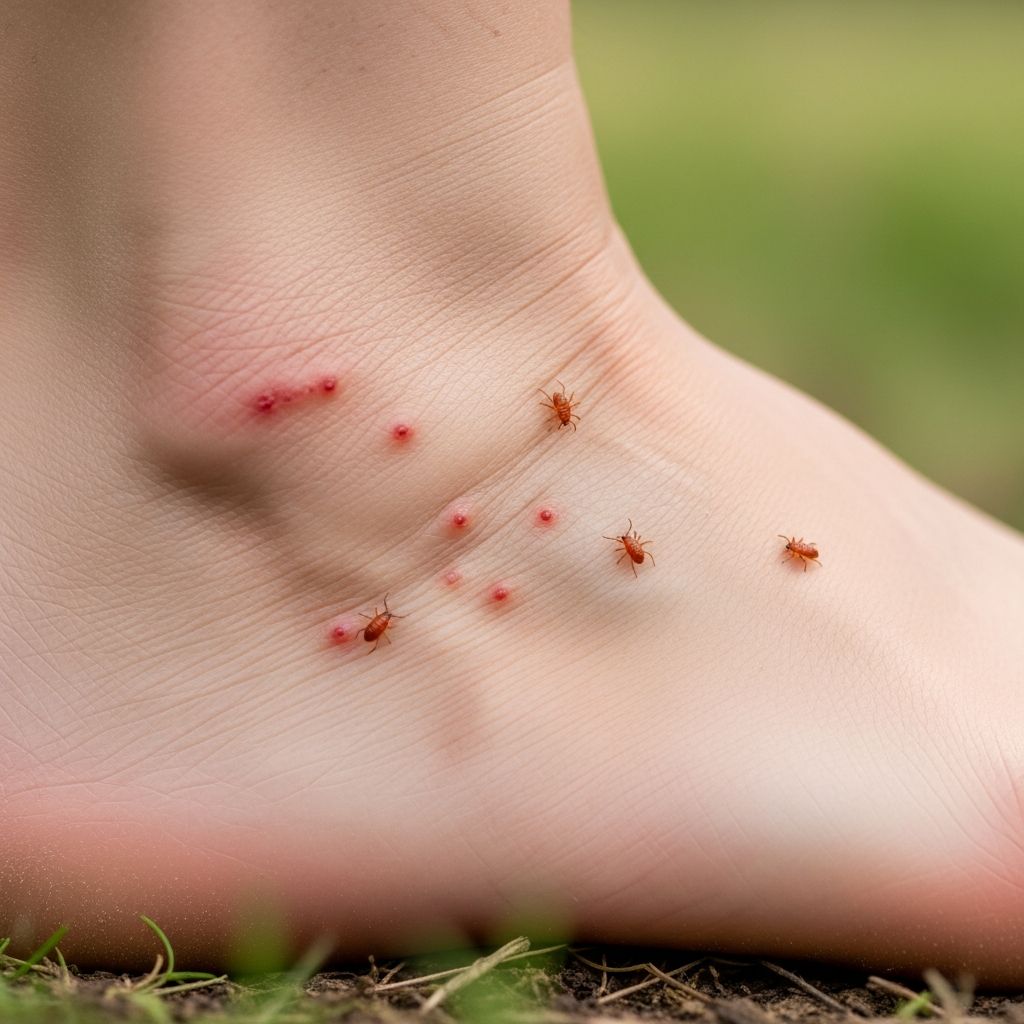
Chigger bites present distinctive characteristics that make them relatively easy to identify when compared to other arthropod bites. The appearance typically includes:
- Small, reddish or pink bumps that may resemble pimples, blisters, or small hives
- Clusters of spot-like bumps grouped together rather than scattered individually
- Welts or raised, hard bumps with scabby centers
- Possible swelling or a hive-like rash in affected areas
- Discoloration of the skin surrounding the bite site
The location of chigger bites is notably consistent and predictable. These pests preferentially attack areas where clothing fits tightly or where skin folds create warm, moist environments. Common bite locations include the ankles, waist, armpits, crotch, behind the knees, and groin area. In some cases, particularly severe infestations on the penis can cause a condition known as “summer penile syndrome,” characterized by significant swelling, itching, and painful urination.
How You Get Chigger Bites
Understanding the lifecycle of chiggers and how they locate and bite humans is crucial for prevention. After hatching, baby chiggers wait on plants and grass for suitable hosts to pass by. Once they detect a person or animal nearby, they use their tiny claws to attach themselves to exposed skin or areas covered by tight clothing. This initial attachment happens so quickly and subtly that most people do not feel it occurring.
After successfully attaching to the skin, the chigger pierces the outer layer and injects its saliva containing powerful digestive enzymes. These digestive juices dissolve nearby skin cells, which the chigger then consumes to obtain the protein necessary for growth and development into an adult. This feeding process typically lasts for a couple of days, after which the chigger detaches and falls off, leaving behind a characteristic red bump. Unlike common misconceptions, chiggers do not burrow into the skin or embed themselves permanently; they simply feed on the surface for a short duration.
Symptoms of Chigger Bites
The symptoms of chigger bites develop relatively quickly after the initial attachment. Most individuals experience noticeable symptoms within hours of being bitten, though the sensation of the bite itself goes undetected. The primary symptoms include:
- Intense itching and irritation that can be maddening and extremely uncomfortable
- Red or reddish-pink bumps on the skin
- Possible formation of blisters or hive-like rashes
- Skin discoloration in and around the bite area
- Hard, scabby-textured centers on the bumps
- Swelling or inflammation, particularly in sensitive areas
The itching typically peaks within the first few days after the bite occurs and gradually subsides over time. This intense itching response is actually the body’s reaction to the chemicals and digestive enzymes injected by the chigger larva. The discomfort can be severe enough to disrupt sleep and interfere with daily activities, making effective symptom management essential.
Related Stories



Distinguishing Chigger Bites from Other Insect Bites
Because multiple arthropods bite humans and cause similar skin reactions, distinguishing chigger bites from other insect bites is helpful for appropriate treatment. Here is how chigger bites compare to other common bites:
| Bite Type | Appearance | Pattern | Key Distinguishing Feature |
|---|---|---|---|
| Chigger Bites | Flat or raised red bumps, welts, blisters, or hives | Grouped clusters around tight clothing areas | Hard, scabby center; found at waist, ankles, folds |
| Bed Bug Bites | Raised red bumps | Clustered or zigzag formation | Clustered in linear patterns on exposed areas |
| Flea Bites | Small red bumps | Similar to chigger bites | Lack the hard, scabby center that chiggers have |
| Mosquito Bites | Larger individual bumps | Scattered rather than clustered | Appear as single bumps rather than grouped clusters |
The combination of clustering, location at tight clothing areas, and the characteristic hard, scabby appearance makes chigger bites relatively distinctive once you know what to look for.
How Long Do Chigger Bites Last?
The duration of chigger bite symptoms varies somewhat, but follows a predictable timeline. The intense itching that characterizes chigger bites typically subsides within a few days, though the physical bumps may persist longer. Complete healing of chigger bites can take anywhere from one to two weeks, and in some cases may extend even longer. During this healing period, it is critical to avoid scratching the affected areas, as further damage to the skin barrier significantly increases the risk of secondary bacterial infections.
Potential Complications and Risks
While chigger bites are generally not serious in the United States, complications can arise, particularly if the bites become infected through scratching. Potential complications include:
- Impetigo: A contagious bacterial skin infection characterized by crusting and pus-filled areas around the bite sites
- Cellulitis: A bacterial infection presenting as increasing redness, swelling, pain, and warmth in a larger area surrounding the bites
- Secondary skin infections: Any break in the skin barrier from scratching creates an entry point for bacteria
- Scrub typhus (in rare cases): While disease transmission via chigger bites is understudied, chiggers can rarely transmit scrub typhus, which can result in multiple organ failure and can be potentially fatal without treatment
Notably, chiggers in the United States do not carry or transmit diseases in typical circumstances, unlike their counterparts in Asia and the Pacific regions. This makes prevention of secondary infections through scratching the primary concern for most individuals.
Treatment Options for Chigger Bites
While chigger bites are annoying and uncomfortable, effective treatment options are available to manage symptoms and promote healing. Treatment can begin immediately after exposure is suspected.
Initial Care Steps
- Thoroughly wash the affected skin with soap and water to remove any remaining chiggers still attached to the body
- Wash all clothing worn during exposure in hot water to eliminate any chiggers that may be present
- Gently clean the area without aggressive scrubbing, which can increase irritation
Symptom Management
- Cold compresses or ice packs: Holding a cool, damp washcloth over the bites provides immediate soothing relief and helps reduce itching
- Calamine lotion: This traditional remedy helps reduce itching and inflammation
- Anti-itch creams: Over-the-counter cortisone creams and hydrocortisone ointments effectively reduce itching and inflammation
- Antihistamines: Oral antihistamines (allergy medications) can help manage itching, especially when it interferes with sleep
- Corticosteroid creams: Stronger formulations may be recommended for severe reactions
- Antiseptic applications: Applying antiseptic to any welts helps prevent infection
Important Don’ts
- Avoid scratching at the bites, even though the urge is strong, as this breaks the skin and invites infection
- Keeping fingernails short can help prevent damage from unconscious scratching
- Do not pick at scabs or crusts that form during healing
Prevention Strategies
Preventing chigger bites is far more effective than treating them after exposure. Chiggers thrive in grassy and woodland environments, particularly in warm, humid conditions. Implementation of these prevention strategies can significantly reduce your risk:
- Avoid high-risk areas: Stay away from tall grass, brush, and wooded areas during peak chigger season, typically late spring through early fall
- Wear protective clothing: When in areas where chiggers may be present, wear long pants, long sleeves, and closed-toe shoes to minimize exposed skin
- Use insect repellent: Apply insect repellent containing DEET or permethrin to skin and clothing before entering high-risk environments
- Shower promptly after exposure: Take a hot shower and wash all exposed areas with soap immediately after potentially being exposed to chiggers
- Wash clothing in hot water: Launder all clothes worn in potentially infested areas using hot water to kill any chiggers
- Tuck pants into socks: When hiking or being in grass, tuck your pant legs into your socks to prevent chiggers from crawling up your legs
- Apply sulfur powder: Some people use sulfur powder on shoes and pant legs as a deterrent, though effectiveness varies
Frequently Asked Questions About Chigger Bites
Q: Will I feel a chigger bite when it happens?
A: No, you will not feel the chigger latching on or initially biting. Symptoms typically develop within hours, but the initial bite sensation is imperceptible to most people.
Q: Can chiggers transmit diseases?
A: In the United States, chiggers do not typically carry or transmit diseases. However, in rare cases and particularly in Asia and the Pacific regions, chiggers may transmit scrub typhus, which requires medical treatment.
Q: How do I know if my chigger bites have become infected?
A: Signs of infection include crusting or pus around the bite sites (indicating impetigo) or increasing redness, swelling, pain, and warmth in a larger area surrounding the bites (indicating cellulitis). If you suspect infection, consult a healthcare provider.
Q: Is it safe to scratch chigger bites?
A: No, scratching is strongly discouraged as it breaks the skin barrier and significantly increases the risk of secondary bacterial infections like impetigo and cellulitis. Try to resist the urge and use cold compresses or anti-itch creams instead.
Q: What should I do if chigger bites don’t improve after two weeks?
A: If symptoms persist beyond two weeks or show signs of infection, schedule an appointment with a healthcare professional for evaluation and appropriate treatment.
Q: Do chiggers burrow into the skin?
A: No, chiggers do not burrow into or embed themselves in the skin like ticks do. They attach to the surface, feed for a couple of days, and then detach naturally.
When to See a Doctor
While most chigger bites resolve independently with home care, certain situations warrant professional medical evaluation. Contact a healthcare provider if:
- Symptoms do not improve within 2 weeks of the bite
- Signs of infection develop, such as crusting, pus, or spreading redness
- The affected area shows increasing swelling, pain, or warmth consistent with cellulitis
- Bites on the penis cause significant swelling, itching, or difficulty urinating
- You develop fever or systemic symptoms alongside the bites
- Secondary skin infections require antibiotic treatment
Key Takeaways
Chigger bites are a common but manageable skin condition caused by larval mites that feed on skin cells and inject irritating digestive enzymes. While intensely itchy and uncomfortable, these bites are generally not serious in the United States and do not transmit disease. Prompt treatment with cold compresses, anti-itch creams, and antihistamines effectively manages symptoms, while resistant scratching prevents secondary infections. Most bites heal within one to two weeks with appropriate care. Prevention through protective clothing, insect repellent, and avoidance of high-risk areas remains the most effective strategy for avoiding chigger bites altogether. By understanding how chiggers operate and implementing proper prevention and treatment measures, you can minimize the impact of these bothersome pests on your outdoor activities and overall comfort.
References
- Chigger Bites: What They Look Like, Treatment, and More — Healthline. November 27, 2023. https://www.healthline.com/health/chigger-bites
- Strategies for keeping chiggers at bay — UCLA Health. https://www.uclahealth.org/news/article/strategies-keeping-chiggers-bay
- Chigger Bites — Rady Children’s Health. https://www.rchsd.org/health-article/chigger-bites/
- What You Need to Know About Chigger Bites — Baptist Health. https://www.baptisthealth.com/blog/family-health/what-you-need-to-know-about-chigger-bites
- How to identify and treat chigger bites — Allina Health. https://www.allinahealth.org/healthysetgo/care/how-to-identify-and-treat-chigger-bites
- Chigger Bites: Signs, Causes & Treatment — Nemours KidsHealth. https://kidshealth.org/en/parents/chiggers.html
- Preventing and Treating Chigger Bites in Kids — Children’s Health. https://www.childrens.com/health-wellness/preventing-and-treating-chigger-bites-in-kid
Similar Articles








Read full bio of Sneha Tete