Chilblain Lupus Erythematosus: What You Need To Know
Rare cutaneous lupus variant triggered by cold: symptoms, causes, diagnosis, and management strategies for effective control.
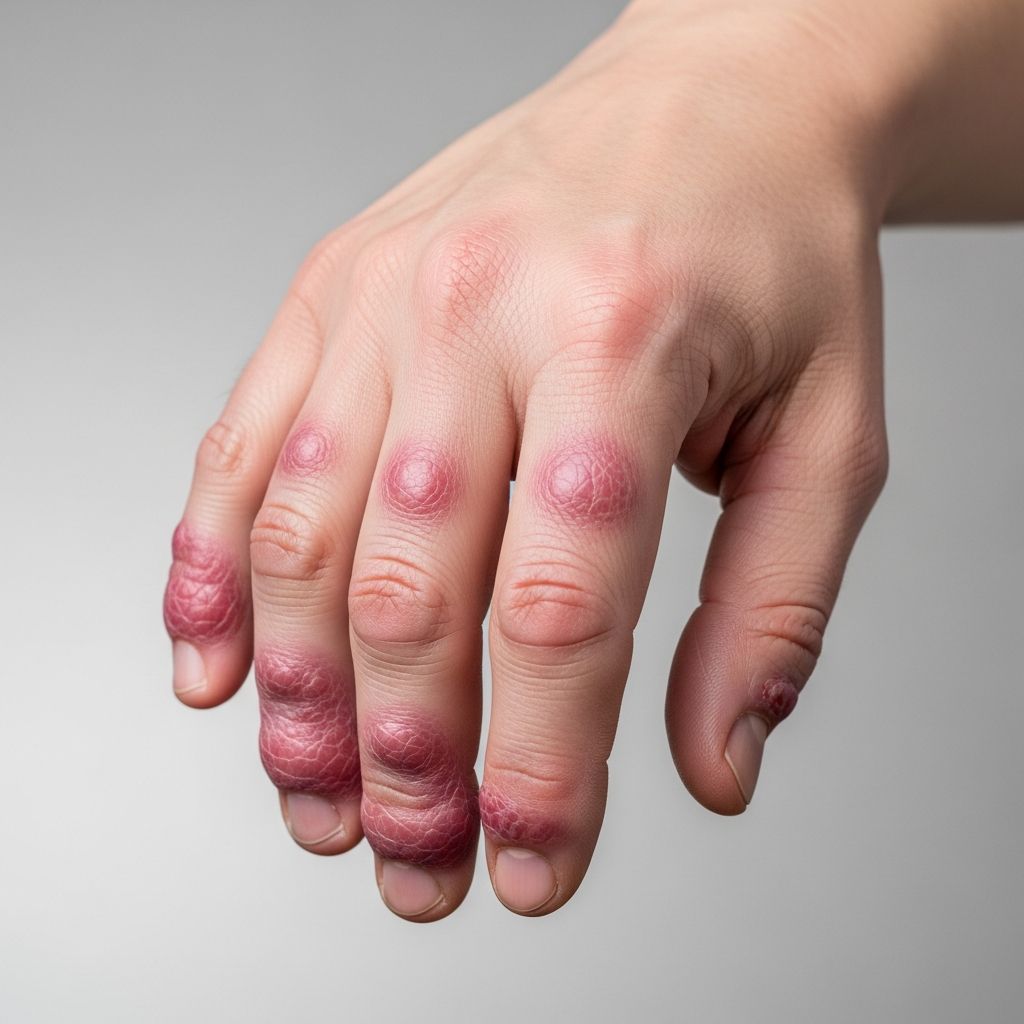
Chilblain lupus erythematosus (CHLE) is a rare subtype of chronic cutaneous lupus erythematosus characterised by the development of tender, erythematous to violaceous papules and plaques predominantly on the acral skin surfaces following exposure to cold temperatures.
What is chilblain lupus erythematosus?
Chilblain lupus erythematosus, also known as Hutchinson lupus erythematosus or lupus pernio, is a distinct form of chronic cutaneous lupus erythematosus (CCLE). It manifests as painful, itchy lesions that appear or worsen in cold, damp conditions, primarily affecting exposed areas such as fingers, toes, nose, cheeks, and ears. Unlike simple chilblains (pernio), which resolve without long-term sequelae, CHLE lesions often persist, heal with scarring, and may indicate underlying systemic autoimmune disease.
CHLE typically affects young adults, with a female predominance, and can be sporadic or familial. It belongs to the spectrum of lupus erythematosus, sharing histopathological features with discoid lupus erythematosus (DLE) but distinguished by its cold sensitivity.
Who gets chilblain lupus erythematosus?
CHLE most commonly occurs in young to middle-aged women, though it can affect any age group. Familial cases present in infancy or childhood.
- Sporadic CHLE: Associated with other autoimmune conditions like systemic lupus erythematosus (SLE, up to 20-40% of cases), discoid LE, subacute cutaneous LE, rheumatoid arthritis, Sjögren syndrome, or dermatomyositis.
- Familial CHLE: Rare autosomal dominant form linked to mutations in TREX1 or SAMHD1 genes, leading to early-onset lesions with potential for ulceration and mutilation.
- Risk factors include light skin phototypes, cold/damp climates, smoking, and genetic predisposition to microvascular dysfunction.
What causes chilblain lupus erythematosus?
The exact pathogenesis of sporadic CHLE remains unclear but involves cold-induced microvascular injury exacerbated by immunological abnormalities.
- Cold stimulus: Provokes vasoconstriction, capillary occlusion, and skin stasis, worsened by hyperviscosity and low temperatures.
- Immune dysregulation: Autoantibodies (e.g., ANA, anti-Ro/SS-A, rheumatoid factor), interferon-alpha signature, and lymphocytic infiltration target endothelium.
- Genetic factors: TREX1 mutations impair nucleic acid degradation, causing type I interferon overproduction; SAMHD1 mutations linked to Aicardi-Goutières syndrome-like phenotypes.
- Associations with anorexia nervosa, intestinal lymphoma, pregnancy, and viral infections reported anecdotally.
What are the clinical features of chilblain lupus erythematosus?
Lesions are initiated or exacerbated by cold/moist exposure in cool climates, resolving slowly in summer but recurring annually.
- Primary lesions: Red to dusky purple inflammatory papules, nodules, and plaques (1-30 mm); tender, pruritic, oedematous.
- Evolution: May ulcerate, crust, or develop central necrosis; heal with scarring, atrophy, or dyspigmentation.
- Sites: Acral predominance – fingers (dorsal), toes, heels, soles, nose, cheeks, ears; rarely trunk or legs.
- Associated features: Nailfold erythema/capillaritis, Raynaud phenomenon, livedo reticularis, telangiectasia, or ear involvement mimicking pernio.
| Feature | Description |
|---|---|
| Appearance | Purple plaques/nodules, oedematous, erosions/ulcers |
| Sensation | Tender, pruritic (worse at night), painful |
| Triggers | Cold exposure, damp weather |
| Resolution | Slow healing with scarring/dyspigmentation |
Pathology of chilblain lupus erythematosus
Histology resembles DLE/CCLE with vasculopathic changes:
- Epidermis: Vacuolar interface dermatitis, basal vacuolation, apoptotic keratinocytes.
- Dermis: Superficial/deep perivascular lymphocytic infiltrate, papillary dermal oedema, thickened basement membrane.
- Vessels: Endothelial swelling, fibrinoid necrosis, mucin deposition.
- Immunofluorescence: Dermoepidermal IgG/IgM/C3/fibrin deposition (lupus band test positive).
How is chilblain lupus erythematosus diagnosed?
Diagnosis combines clinical, serological, and histopathological findings; Mayo Clinic criteria require 2 major + 4 minor features.
- Clinical: Cold-induced acral lesions persisting >6 weeks.
- Labs: ANA (elevated in 80-90%), anti-Ro/La, rheumatoid factor; exclude SLE.
- Biopsy: Essential to confirm LE-specific changes and rule out mimics.
Related Stories



Differential diagnosis of chilblain lupus erythematosus
| Condition | Key Distinguishing Features |
|---|---|
| Idiopathic chilblains (pernio) | Resolves in 1-3 weeks, no scarring/LE histology, negative serology |
| Dermatomyositis | Nailfold changes + proximal weakness, Gottron papules, high CK/anti-Mi-2 |
| Cryoglobulinaemia | Systemic vasculitis, purpura, cryoglobulins+, HCV association |
| Raynaud phenomenon | Triphasic colour change, no plaques/ulcers |
| Discoid LE | Scaly plaques, scalp/central face, less cold-dependent |
| Acrocyanosis | Painless cyanosis, persistent, no induration |
Complications of chilblain lupus erythematosus
- Chronic scarring, ulceration, mutilating acral changes (familial form).
- Progression to systemic LE (10-20%).
- Secondary infection, dyspigmentation, nail dystrophy.
- Reduced quality of life from pain/pruritus.
Chilblain lupus erythematosus treatment
Management focuses on trigger avoidance, symptom relief, and immunosuppression.
- General measures: Keep warm/dry, protective clothing, smoking cessation, moisturisers, elevate limbs.
- Topical: High-potency steroids, calcineurin inhibitors (tacrolimus).
- Systemic:
- Antimalarials: Hydroxychloroquine (first-line, 200-400mg/day).
- Vasodilators: Nifedipine (30-60mg/day) for vasospasm.
- Immunosuppressants: Methotrexate, mycophenolate, thalidomide for refractory cases.
Response is variable; symptoms often remit incompletely.
Chilblain lupus erythematosus prevention
- Avoid cold/moisture exposure: Insulated gloves/socks, heated environments.
- Sunscreen for photoexacerbation.
- Regular rheumatology/dermatology follow-up for systemic screening.
Chilblains vs chilblain lupus erythematosus
| Feature | CHLE | Pernio |
|---|---|---|
| Duration | Months-years, scarring | Weeks, resolves |
| Histology | LE-specific interface changes | Nonspecific oedema |
| Serology | ANA+, autoantibodies | Negative |
| Associations | Autoimmune diseases | None |
Frequently Asked Questions
Is chilblain lupus erythematosus contagious?
No, CHLE is an autoimmune condition, not infectious.
Does chilblain lupus erythematosus always indicate systemic lupus?
No, most cases are skin-limited, but 10-20% progress to SLE; screen regularly.
Can chilblain lupus erythematosus be cured?
No cure exists, but symptoms are controllable with avoidance and medications.
Is surgery needed for CHLE ulcers?
Rarely; most heal with medical management, debridement if infected.
References
- Comprehensive Guide About Chilblain Lupus — Indiana University School of Medicine. 2023. https://dermatrials.medicine.iu.edu/blogs/comprehensive-guide-about-chilblain-lupus
- Chilblain lupus erythematosus — DermNet NZ. 2024. https://dermnetnz.org/topics/chilblain-lupus-erythematosus
- Chilblain lupus erythematosus — PubMed Central (PMC). 2013-10-01. https://pmc.ncbi.nlm.nih.gov/articles/PMC3847642/
- Chilblain Lupus: What It Is, Causes, Symptoms & Treatment — Cleveland Clinic. 2024. https://my.clevelandclinic.org/health/diseases/21980-chilblain-lupus
- Familial Chilblain lupus — Orphanet. 2024. https://www.orpha.net/en/disease/detail/481662
- Chilblain lupus: Symptoms, causes, treatments, and more — Medical News Today. 2023. https://www.medicalnewstoday.com/articles/chilblain-lupus
- Chilblain lupus erythematous- A rare encounter — Journal of Clinical Medicine and Images. 2023. https://www.jclinmedimages.org/articles/OJCMI-v3-1111.html
Similar Articles








Read full bio of Sneha Tete