Child Development: 5 Stages And Key Milestones
Track your child's growth with developmental milestones across five key stages from birth to adulthood.
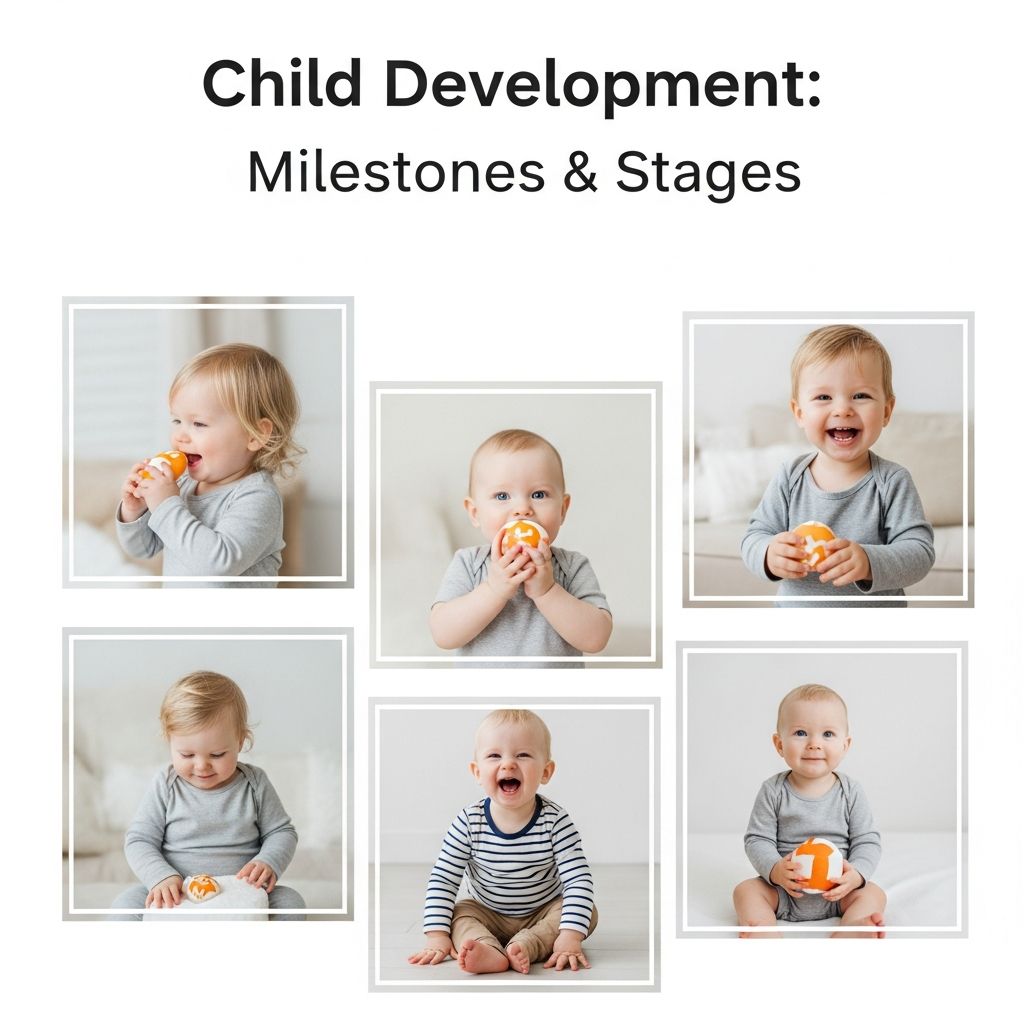
Child Development: Understanding Growth and Milestones
Child development refers to how a child grows, learns, and changes over time as they progress toward adulthood. This transformation encompasses multiple areas of growth, including physical abilities, cognitive skills, language development, and social-emotional maturity. Understanding the typical stages of development and associated milestones can help parents, caregivers, and healthcare providers create supportive environments that foster healthy growth and identify potential concerns early.
What Are Developmental Milestones?
Developmental milestones are specific behaviors and abilities that experts use as landmarks to track typical child development. These milestones represent skills that most children can perform at approximately the same age, such as taking a first step, smiling for the first time, waving goodbye, or speaking their first words. Healthcare professionals establish these milestones based on what approximately three out of four children can do at specific ages.
It is important to recognize that every child develops at their own individual pace. While milestones provide general guidelines for typical development, children may reach these achievements at slightly different times. If concerns arise about whether a child is meeting expected milestones, consulting with a pediatrician or early intervention specialist is recommended.
The Four Areas of Developmental Milestones
Experts group developmental milestones into four distinct areas that capture the comprehensive nature of child growth:
- Physical Development: Involves motor skills including both fine motor skills (such as grasping objects or using utensils) and gross motor skills (such as rolling over, sitting, walking, and running).
- Cognitive Development: Encompasses thinking, learning, problem-solving, and memory development as children process information about their world.
- Language Development: Includes both receptive language (understanding what is said) and expressive language (speaking and communicating), beginning with cooing and progressing to complex sentences.
- Social-Emotional Development: Involves the ability to interact with others, express emotions, develop relationships, and understand social cues and expectations.
The Five Developmental Stages of Childhood
Healthcare providers typically organize child development into five distinct stages, each characterized by unique milestones and developmental tasks:
Stage 1: Birth to 18 Months (Infancy)
The first year and a half of life represents a time of extraordinary growth and change. Newborns undergo rapid physical development and begin forming important attachments with caregivers. During this stage, infants progress from complete dependence to developing basic motor skills and communication abilities.
Milestones by 15 months: Most infants can make eye contact, respond to their name, smile socially, coo and babble, roll over in both directions, sit without support, and transfer objects from one hand to the other. They begin to understand simple words and may say their first words.
Milestones by 18 months: By the end of this stage, most children can walk independently, use 4 to 20 words, follow simple instructions, point to objects of interest, and begin showing affection toward familiar people and pets. Their curiosity about their environment increases significantly.
Stage 2: 18 Months to 3 Years (Toddlerhood)
The toddler years are full of remarkable changes and “firsts” as children become more mobile, verbal, and independent. During this stage, toddlers develop stronger personalities, begin engaging in pretend play, and show increasing interest in their peers. Physical abilities expand dramatically, and language skills accelerate.
Milestones by 2 years old: Most two-year-old children can walk up stairs with support, run and jump, speak in two-word phrases, follow two-step instructions, begin to dress themselves with help, and engage in associative play with other children. They demonstrate increased independence and may begin toilet training readiness.
Related Stories



Milestones by 2.5 years old: By two and a half years, most children can kick a ball, jump, use more complex sentences, follow more complicated instructions, wash and dry their hands with assistance, and express a wider range of emotions. They begin to show awareness of gender differences and develop longer attention spans.
Milestones by 3 years old: At age three, most children can pedal a tricycle, engage in conversations, use the toilet with increasing consistency, dress themselves with minimal help, play cooperatively with other children, and demonstrate understanding of concepts like “big” and “small.” Their creativity through play becomes more evident, and they show increased independence in daily activities.
Stage 3: 3 to 5 Years (Preschool)
Preschoolers are developmentally ready to explore and engage more actively with the world around them. They show increased interest in learning, forming friendships, and developing more sophisticated play skills. This stage often includes the transition to preschool or pre-kindergarten programs, which provide valuable social and educational experiences.
Milestones by 4 years old: At age four, children are no longer toddlers and demonstrate more advanced abilities. Most four-year-olds can hold a pencil correctly, draw shapes and simple pictures, tell stories and jokes, follow three-step instructions, play cooperatively in groups, and begin to understand concepts related to time, numbers, and letters. They show greater independence in self-care activities and develop more complex imaginative play scenarios.
Milestones by 5 years old: By the time children reach age five, they can begin to hold conversations, write some letters, count to ten, follow multi-step directions, play interactive games with rules, and demonstrate increased self-control in social situations. They show interest in reading and writing, and their physical coordination continues to improve significantly.
Stage 4: 6 to 12 Years (School Age)
School-age children experience significant cognitive growth and expanding social worlds. Friendships and organized activities become central to their development during this period. Children develop increased independence, improved academic skills, and more complex social relationships as they navigate school environments and extracurricular activities.
During these years, children demonstrate increasingly sophisticated motor skills, participate in organized sports and activities, develop stronger reading and mathematical abilities, show interest in peer relationships and group dynamics, and develop more nuanced understanding of rules, fairness, and social expectations. Their ability to focus attention expands, and they develop hobbies and interests beyond family activities.
Stage 5: 13 to 18 Years (Adolescence)
Adolescence is characterized by significant physical, emotional, cognitive, and social changes. During this stage, puberty occurs along with substantial growth in self-awareness, independence, and social consciousness. Teenagers develop more complex thinking abilities, begin establishing their identity, and navigate increasingly complex social relationships.
Physical changes during adolescence are particularly prominent, with growth spurts, sexual maturation, and hormonal changes transforming the body. Cognitively, teenagers develop more abstract thinking abilities and can engage in complex reasoning. Socially and emotionally, peer relationships often become more important, and teenagers begin developing longer-term goals and career interests.
Individual Variation in Development
While developmental milestones provide valuable guidelines, it is crucial to understand that no two children are exactly alike. Children develop at their own individual pace, and minor variations in the timing of milestone achievement are completely normal. Approximately three out of four children reach milestones at the ages indicated, meaning that some children will reach them earlier or later than average.
Factors that can influence the rate of development include genetic predisposition, temperament, health status, environmental stimulation, cultural practices, and quality of caregiving. Some children may excel in certain developmental areas while progressing more slowly in others, reflecting their unique strengths and learning patterns.
When to Seek Professional Guidance
While developmental variation is normal, parents and caregivers should remain alert for potential developmental delays or concerns. If you notice that your child consistently falls significantly behind in multiple developmental areas, regresses in previously achieved skills, or demonstrates unusual development patterns, consulting with your pediatrician or an early intervention specialist is appropriate.
Early identification of developmental delays or concerns allows for timely intervention and support, which can significantly impact outcomes. Pediatricians can screen for medical conditions, developmental delays, and other concerns that might benefit from additional support or therapy services.
Supporting Your Child’s Development
Creating an environment that supports healthy development involves understanding what your child needs at each stage and providing appropriate opportunities for growth. This includes offering age-appropriate toys and materials that encourage learning, providing safe spaces for physical exploration, engaging in conversation and language-rich interactions, fostering social opportunities with peers, and maintaining responsive, nurturing relationships.
Parents and caregivers can support development by spending quality time with children, reading together, engaging in play, encouraging curiosity, setting reasonable limits and expectations, and modeling positive behaviors and attitudes. Regular well-child visits with healthcare providers help monitor development and address any concerns promptly.
Developmental Milestone Tracking Chart
The following chart provides a quick reference for major developmental milestones across the five developmental stages:
| Age Range | Physical Development | Language Development | Social-Emotional Development |
|---|---|---|---|
| Birth – 18 months | Rolling, sitting, walking, grasping | Cooing, babbling, first words | Social smiling, attachment formation |
| 18 months – 3 years | Running, climbing, drawing | Two-word phrases, following instructions | Independence, parallel play |
| 3 – 5 years | Hopping, pedaling, drawing shapes | Conversations, storytelling | Cooperative play, friendships |
| 6 – 12 years | Organized sports, increased coordination | Reading, writing, complex sentences | Peer relationships, group activities |
| 13 – 18 years | Puberty changes, full growth | Abstract reasoning, complex discussion | Identity formation, independence |
Frequently Asked Questions About Child Development
Q: At what age do children typically speak their first words?
A: Most children say their first words between 12 and 18 months of age. However, some children may speak earlier or later than this range, which is still within the range of normal development. By 24 months, most toddlers can speak 50 or more words.
Q: When should children be toilet trained?
A: Most children show signs of readiness for toilet training between 18 months and 3 years of age. Every child is different, and pushing toilet training before a child is ready can create unnecessary stress. Look for signs of readiness such as staying dry for extended periods, showing interest in bathroom activities, and communicating toilet needs.
Q: Is it normal for children to develop at different rates?
A: Yes, absolutely. Children develop at their own individual pace, and variations in development are completely normal. Approximately 25% of typically developing children reach milestones at different times than the average. As long as your child is progressing steadily in multiple developmental areas, minor timing differences are not concerning.
Q: What should I do if my child seems behind in development?
A: If you have concerns about your child’s development or notice significant delays in multiple areas, schedule an appointment with your pediatrician. They can evaluate your child’s development, screen for medical conditions or developmental delays, and connect you with early intervention services if needed. Early identification and support can make a significant difference.
Q: How can I support my child’s language development?
A: You can support language development by talking to your child frequently, reading books together, responding to their communication attempts, using varied vocabulary, and limiting screen time. Engage in conversations, ask open-ended questions, and create language-rich environments. These interactions form the foundation for strong language skills.
Q: What role does play have in child development?
A: Play is essential for development across all areas—physical, cognitive, language, and social-emotional. Through play, children explore their environment, develop problem-solving skills, learn social interactions, build confidence, and have fun. Providing opportunities for both structured and unstructured play is important for healthy development.
References
- Child Development: Milestones & Stages — Cleveland Clinic. 2024-11-15. https://my.clevelandclinic.org/health/articles/21559-child-development
- Child Development Stages and Milestones: What to Expect — HealthDay News. 2023-05-30. https://www.healthday.com/a-to-z-health/child-health/child-development-2660654417.html
- Developmental Milestones in Early Childhood — Action for Children. https://www.actionforchildren.org/developmental-milestones-in-early-childhood/
- Toddler Milestones – Safety — Cleveland Clinic. https://my.clevelandclinic.org/health/articles/22625-toddler-developmental-milestones–safety
- Ages & Stages | Cleveland Clinic Children’s — Cleveland Clinic. https://my.clevelandclinic.org/pediatrics/stages
- Baby Developmental Milestones By Month — Cleveland Clinic. https://my.clevelandclinic.org/health/articles/22063-baby-development-milestones-safety
- Adolescent Development — Cleveland Clinic. https://my.clevelandclinic.org/health/articles/7060-adolescent-development
Similar Articles








Read full bio of Sneha Tete