Childhood Cataracts: A Practical Guide For Parents
Discover the causes, signs, diagnosis, and life-changing treatments for cataracts in children to safeguard their vision development.
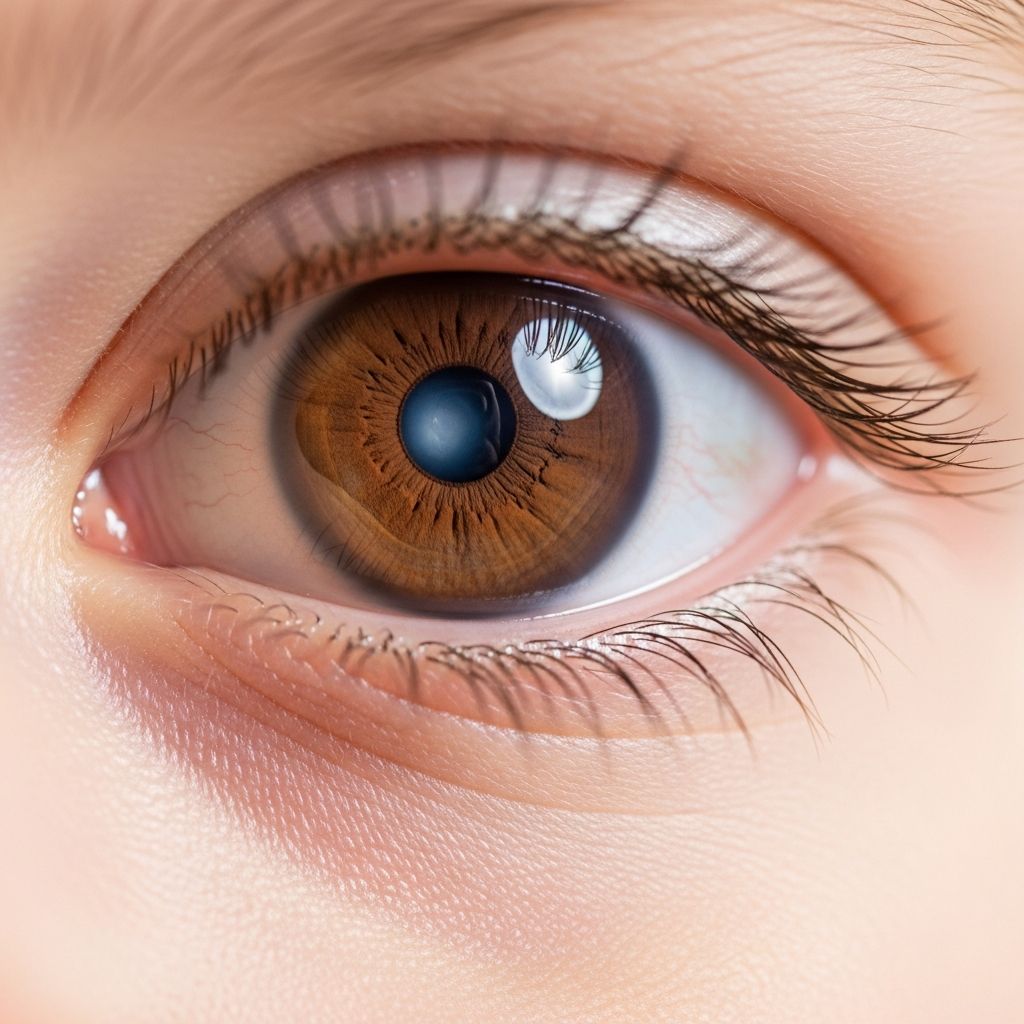
Childhood cataracts represent a significant yet treatable cause of vision impairment in young patients, where the eye’s lens develops opacity that hinders clear sight. These conditions demand prompt attention to support proper visual maturation during critical developmental windows.
Understanding the Lens and Its Role in Vision
The lens sits behind the iris and pupil, functioning as a flexible disc that adjusts shape to focus light onto the retina, enabling sharp images at varying distances. In children, this structure is vital for brain-eye connections that form the foundation of lifelong vision. When proteins within the lens clump, forming cloudy areas, light scattering occurs, distorting vision and potentially leading to permanent deficits if untreated.
Prevalence and Impact on Young Eyes
Occurring in approximately 1 to 15 per 10,000 births, congenital forms are a leading reversible blindness factor globally. Acquired types emerge later from injury or illness. Untreated, they risk amblyopia—lazy eye—where the brain ignores fuzzy input, causing irreversible loss. Early action preserves binocular vision and depth perception.
Primary Categories of Pediatric Lens Opacities
- Congenital: Evident at birth or soon after, often bilateral, stemming from prenatal influences.
- Acquired/Juvenile: Develop postnatally, unilateral typically, linked to trauma or systemic issues.
- Secondary: Triggered by underlying diseases like uveitis or medications.
Classification guides prognosis; nuclear opacities in the center often signal genetic roots, while cortical spokes suggest metabolic disruptions.
Genetic and Inherited Contributors
Hereditary patterns dominate about 30% of cases, with autosomal dominant transmission most frequent at 75%. Mutations in genes like PAX6, FOXE3, or crystallins disrupt lens protein assembly. Associated syndromes include Down, Turner, and myotonic dystrophy. Family screening proves essential for at-risk siblings.
Infectious Triggers During Fetal Development
TORCH infections—toxoplasmosis, rubella, cytomegalovirus, herpes, syphilis—disrupt lens formation in utero. Rubella historically caused spikes; modern vaccines mitigate but don’t eliminate risk. Maternal screening identifies exposures early.
Metabolic and Systemic Disorders
Galactosemia, from galactose metabolism enzyme defects, yields galactitol buildup, swelling the lens into oil-droplet shapes. Hypoglycemia, hypocalcemia, and diabetes create osmotic stress. Lowe and Fabry syndromes add layers of complexity. Newborn metabolic panels detect many, allowing intervention.
| Disorder | Mechanism | Typical Lens Change |
|---|---|---|
| Galactosemia | Galactitol accumulation | Oil-droplet opacities |
| Diabetes | Glucose-induced swelling | Water clefts |
| hypoparathyroidism | Calcium imbalance | Posterior subcapsular |
Trauma as a Key Acquired Cause
Blunt or penetrating injuries account for 12-46% of non-congenital cases, fracturing the lens capsule and inviting fluid that denatures proteins. Even minor hits years prior may manifest opacities. Protective eyewear prevents many.
Drug-Induced and Environmental Risks
Corticosteroids foster posterior subcapsular clouds via metabolic shifts; miotics, chlorpromazine, amiodarone add oxidative damage. UV overexposure heightens protein harm; antioxidant-poor diets exacerbate. Parental awareness averts some.
Recognizing Early Warning Signs
Infants show white pupil glow (leukocoria) in photos, pupil misalignment (strabismus), or nystagmus—rapid eye jerks. Older kids complain of blur, glare, or color fading. Routine well-child eye checks catch subtle shifts.
- Leukocoria: White reflex instead of red.
- Strabismus: Eye wandering.
- Nystagmus: Involuntary shaking.
- Developmental delays in tracking or reaching.
Related Stories



Diagnostic Approaches for Confirmation
Pediatric ophthalmologists use dilated slit-lamp exams to grade opacity density and site. Ultrasound images hidden lenses; electroretinography assesses retinal function. Genetic tests and TORCH serology pinpoint etiologies, informing family counseling.
Surgical Intervention: The Gold Standard
For vision-affecting cases, lens removal (lensectomy) via micro-incisions restores clarity, often before 8 weeks for bilateral congenital to avert amblyopia. Intraocular lenses (IOLs) suit older children; infants grow into contacts or glasses.
Post-op, inflammation control with drops is routine. Success rates exceed 90% for central vision recovery with adherence.
Optical Correction and Visual Rehabilitation
Aphakic eyes need powerful convex lenses: contacts for babies, spectacles later. Atropine penalizes stronger eyes to force weak ones’ use, combating amblyopia. Vision therapy strengthens pathways.
Potential Complications and Monitoring
Posterior capsule opacification (PCO) recurs in 20-50%, lasered outpatient. Glaucoma risks rise; lifelong checks track refraction shifts from eye growth. Compliance yields best outcomes.
Prognostic Factors Influencing Outcomes
Unilateral cases face steeper amblyopia hurdles but respond to patching. Bilateral fare better with symmetry. Etiology matters—idiopathic surpass syndromic. Intervention timing is paramount: under 6 weeks optimizes.
Family Guidance and Prevention Strategies
Vaccinate against rubella; manage maternal diabetes. Trauma-proof play areas. Genetic counseling for familial clusters. Annual pediatric eye screens from birth.
Emerging Research and Future Directions
Gene therapies target crystallin mutations; better biocompatible IOLs emerge. AI aids early detection via photo screening. Metabolic enzyme replacements show promise.
Frequently Asked Questions
Can childhood cataracts be prevented entirely?
Not always, given idiopathic and genetic bases, but prenatal care, vaccinations, and safety measures reduce risks significantly.
Is surgery safe for infants?
Yes, with specialized pediatric techniques; complication rates mirror adults when by experts.
What if we miss early treatment?
Amblyopia may set in irreversibly post-critical periods, underscoring newborn checks.
Do all cataracts need removal?
No—peripheral, non-vision-blocking ones may observe.
How often are follow-ups needed post-surgery?
Weekly initially, then monthly, tapering to yearly as stable.
References
- Pediatric Cataracts: Symptoms, Causes, and Treatment Options — Eyes on TX Vision. 2023. https://eyesontxvision.com/blog/1266712-pediatric-cataracts-what-parents-need-to-know
- Pediatric Cataract – StatPearls — NCBI Bookshelf. 2023-10-01. https://www.ncbi.nlm.nih.gov/books/NBK572080/
- Cataracts in Children — Children’s Hospital of Philadelphia. 2024. https://www.chop.edu/conditions-diseases/cataracts-children
- Pediatric Cataracts — UCLA Health Ophthalmology. 2024. https://www.uclahealth.org/medical-services/ophthalmology/eye-conditions/pediatric-cataract
- Cataracts in Children — Stanford Children’s Health. 2023. https://www.stanfordchildrens.org/en/topic/default?id=cataracts-in-children-90-P02105
- Juvenile and Congenital Cataracts — Pediatric Eye Doctors Michigan. 2024. https://www.pediatriceyedoctorsmichigan.com/pediatric-eye-care/cataracts/
Similar Articles








Read full bio of Sneha Tete