Chin-Ups: 6-Week Plan To Build A Stronger Upper Body
Master chin-ups with expert tips, variations, progressions, and workouts to build upper body strength effectively.
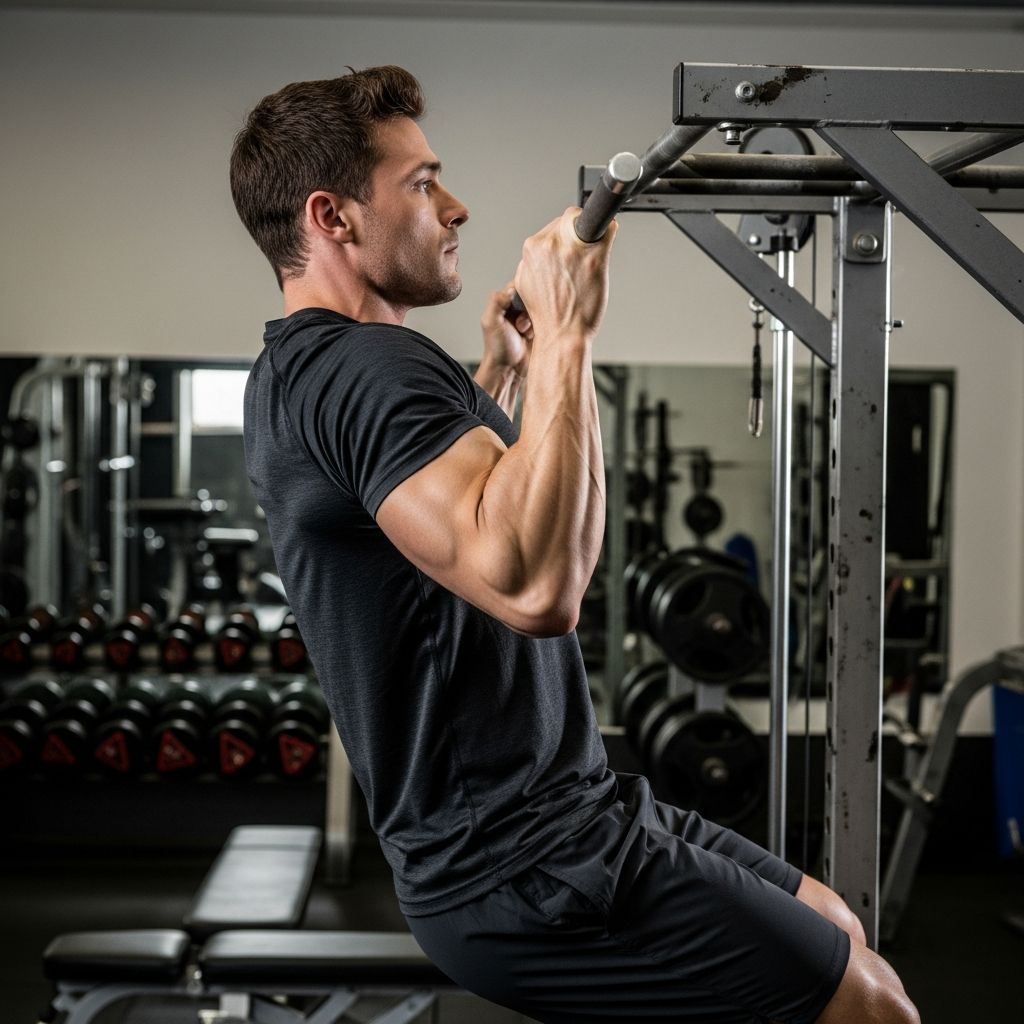
Chin-ups are a powerhouse bodyweight exercise that target the upper body, enhancing strength, muscle development, and grip power. Performed with palms facing you, they engage the lats, biceps, and more, often feeling more accessible than pull-ups for beginners.
What Are Chin-Ups?
Chin-ups involve hanging from a bar with a supinated grip (palms facing toward you), hands shoulder-width apart or closer, and pulling your body up until your chin clears the bar. This multi-joint movement uses shoulder extension, pulling elbows down and back, primarily strengthening the lats while recruiting biceps for support.
Unlike pull-ups, which use a pronated grip (palms away), chin-ups shift emphasis to the biceps, making them biomechanically easier for many. This grip reduces lat demand slightly but boosts overall upper body activation.
Chin-Ups vs. Pull-Ups: Key Differences
Chin-ups and pull-ups are similar vertical pulls but differ in grip and muscle focus:
- Grip: Chin-ups: supinated (underhand, palms facing you). Pull-ups: pronated (overhand, palms away).
- Muscles Worked: Chin-ups emphasize lats, biceps, posterior deltoids, and teres major. Pull-ups target lats, rhomboids, traps, shoulders, posterior deltoids, and brachialis more heavily, with less bicep help.
- Difficulty: Chin-ups are often easier due to bicep assistance; pull-ups challenge lats more with the wider grip.
Both build comprehensive upper body strength, but choose based on goals: chin-ups for bicep emphasis, pull-ups for back dominance.
Muscles Worked in Chin-Ups
Chin-ups are compound exercises engaging multiple groups:
- Primary: Latissimus dorsi (lats) – Main pulling force.
- Secondary: Biceps brachii – Heavily recruited due to supinated grip.
- Supporting: Posterior deltoids, teres major, rhomboids, trapezius – Stabilize and extend shoulders.
- Core and Grip: Forearms, brachialis, abs – Maintain hold and body control.
This full engagement promotes balanced upper body development and functional strength.
How to Do Chin-Ups: Proper Form
Master form to maximize gains and avoid injury:
- Hang from the bar with a firm supinated grip, hands shoulder-width.
- Engage shoulder blades: pull them down and back.
- Initiate by pulling elbows down and back to lift.
- Drive chin over the bar, keeping neutral spine—no swinging.
- Lower slowly with control for eccentric strength.
Maintain scapular retraction throughout for optimal lat activation.
Chin-Up Variations
Progress with these to challenge muscles differently:
- Close-Grip Chin-Ups: Hands closer than shoulder-width; amps biceps and grip strength. Great starter variation.
- Neutral-Grip Chin-Ups: Palms facing each other; balances back and arm focus.
- Wide-Grip Chin-Ups: Hands wider; shifts to lats like pull-ups.
- Assisted Chin-Ups: Use bands or machines for support.
Progressions for Beginners: 6-Week Plan
Build to unassisted chin-ups with this structured program, performed 3x/week on fresh muscles.
Weeks 1-3: Build Foundation
- Isometric Chin-Up (2-3 sets, 5-20 sec): Jump to top position (chest near bar), hold. Builds tension endurance.
- Suspended Pull-Up (2-3 sets, 8-10 reps): Use TRX; pull chest to handles from seated. Enhances pulling pattern.
Related Stories



Weeks 4-6: Increase Strength
- Eccentric Chin-Up (2-4 sets, 4-6 reps): Jump up, lower slowly (5-10 sec). Leverages eccentric strength.
- Band-Assisted Chin-Up (2-4 sets, 5-8 reps): Knee in band loop; pull chest to bar. Reduces bodyweight load.
Alternate workouts weekly (e.g., Week 1: 1-2-1). Ditch machines for functional gains.
Sample Chin-Up Workout Routine
Incorporate into upper body days:
- Warm-Up: 5-10 min light cardio/dynamic stretches.
- Neutral-Grip Pull-Ups: 3×8
- Wide-Grip Pull-Ups: 3×8
- Close-Grip Chin-Ups: 3×10
- Assisted Pull-Ups: 2×8 (bands)
- Standard Chin-Ups: 3×8
- Cooldown: 5 min static stretches.
Rep Guidelines: Beginners: 2-3 sets of 5-8 reps. Advanced: 3-4 sets of 8-12. Progress via weight or volume.
Benefits of Chin-Ups
- Upper Body Strength: Multi-joint move for lats, biceps, shoulders, back.
- Grip Strength: Essential for lifts and daily function; combats age-related decline.
- Muscle Mass & Metabolism: Builds hypertrophy, boosts calorie burn.
- Functional Power: Improves pulling strength for sports, posture.
Common Mistakes to Avoid
- Using momentum/kipping: Reduces muscle work, risks injury.
- Partial range: Full motion maximizes gains.
- Shrugging shoulders: Keep scapulae depressed.
- Neglecting eccentrics: Slow lowers build control.
Frequently Asked Questions (FAQs)
Why are chin-ups easier than pull-ups?
The supinated grip engages biceps more, assisting lats and reducing overall difficulty.
How many chin-ups should a beginner aim for?
Start with assisted variations; progress to 2-3 sets of 5-8 unassisted reps.
Can chin-ups help build muscle?
Yes, as compound exercises, they promote hypertrophy in back, arms, and core when progressed properly.
What’s the best grip for biceps?
Close-grip chin-ups maximize bicep activation.
How often should I train chin-ups?
2-3 times weekly, with rest days for recovery.
Conclusion
Chin-ups offer scalable strength building for all levels. Consistent practice with proper form unlocks upper body power. Start today!
References
- Chin Ups vs. Pull-Ups: The Difference, The Benefits & Muscles Worked — National Academy of Sports Medicine (NASM). 2023. https://blog.nasm.org/chin-ups-vs.-pull-ups-the-difference-the-benefits-muscles-worked
- Learn to Do a Chin-Up in 6 Weeks: Training Plan — Women’s Health Magazine. 2023. https://www.womenshealthmag.com/fitness/a20702707/chin-up-challenge-workout/
- How to Do Perfect, Strict Pull-Ups with Progressions — Men’s Health UK. 2023. https://www.menshealth.com/uk/building-muscle/a30380542/how-to-pullup-best-exercises/
Similar Articles








Read full bio of medha deb