Chloroquine Tablets and Liquid Medicine (Avloclor, Malarivon)
Comprehensive guide to chloroquine (Avloclor, Malarivon) for malaria prevention, treatment, dosage, side effects, and safety precautions.
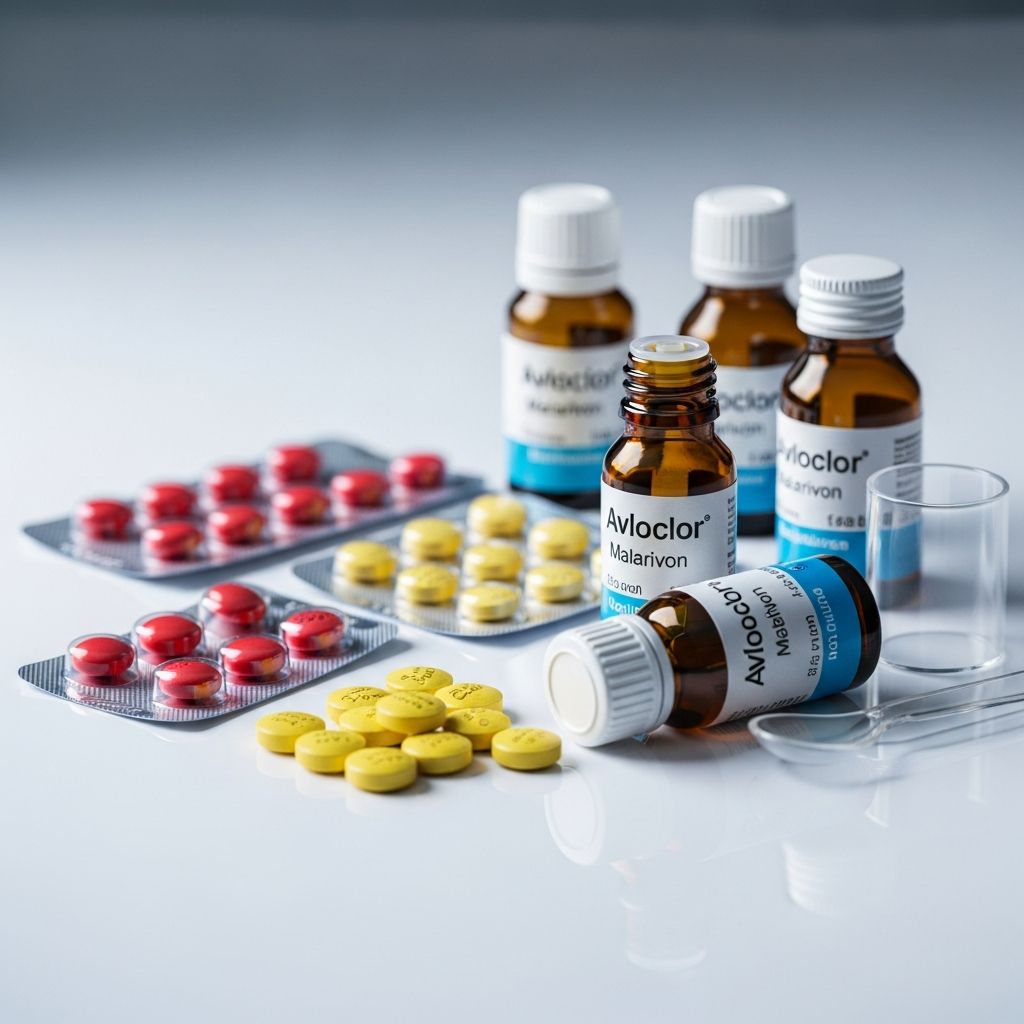
Chloroquine is an antimalarial medication available as tablets or liquid under brand names like Avloclor and Malarivon. It prevents and treats malaria by killing the Plasmodium parasite and is also used for extraintestinal amebiasis.
About chloroquine tablets and liquid medicine
Chloroquine phosphate, the active ingredient in Avloclor and Malarivon, works by interfering with the parasite’s ability to detoxify heme in red blood cells, leading to parasite death. It is primarily used for malaria prophylaxis in chloroquine-sensitive areas and treatment of uncomplicated malaria. The medicine comes in 250 mg tablets (equivalent to 155 mg base) or oral liquid suspension.
Historically effective against most Plasmodium strains, resistance has emerged in some regions, so suitability depends on travel destination. Always consult a doctor or travel clinic for current recommendations. No medicine offers 100% protection; combine with mosquito bite prevention like repellents, nets, and long clothing.
Key facts
- Best taken with food or milk to reduce stomach upset.
- Start 1 week before entering malaria area; continue 4 weeks after leaving.
- Common brands: Avloclor (UK), Aralen (US).
- Available on prescription only.
- May cause heart rhythm changes; monitor if at risk.
Before taking chloroquine
Allergies
Do not take if allergic to chloroquine, 4-aminoquinolines, or ingredients like maize starch, calcium hydrogen phosphate.
Who should not take it (contraindications)
- Allergy to chloroquine or components.
- Current or recent amiodarone use (heart medication).
- Psoriasis (may worsen).
- Myasthenia gravis (worsens muscle weakness).
- Glucose-6-phosphate dehydrogenase (G6PD) deficiency (risk of hemolysis).
- Retinopathy or hypersensitivity to 4-aminoquinolines.
- Family history of prolonged QT interval or heart disorders.
Cautions
Inform your doctor if you have:
- Heart disease, irregular heartbeat, low potassium/magnesium.
- Liver or kidney problems.
- Neurological disorders like epilepsy.
- Psoriasis, porphyria, or diabetes.
- Pregnancy or breastfeeding (generally safe but discuss risks).
- Long-term use requires eye, blood, and heart monitoring.
Interactions with other medicines
Chloroquine interacts with many drugs:
| Drug Class/Example | Effect |
|---|---|
| Amiodarone, QT-prolonging drugs | Increased heart rhythm risk. |
| Antacids, kaolin | Reduced absorption; separate by 4 hours. |
| Ampicillin | Separate by 2 hours. |
| Cimetidine | Increased chloroquine levels. |
| Digoxin | Increased digoxin levels. |
Full list in patient leaflet; always check with pharmacist.
Pregnancy and breastfeeding
Chloroquine is considered safe in pregnancy for malaria prevention/treatment when benefits outweigh risks, as malaria poses greater threat to mother and baby. Crosses placenta but no increased birth defect risk in studies. Use in breastfeeding passes into milk in small amounts; generally compatible if infant not G6PD deficient.
Age and dosage adjustments
Elderly may need lower doses and blood tests. Children dosed by weight.
How and when to take chloroquine
Dosage for malaria prevention (prophylaxis)
- Adults/children over 14: 2 tablets (500 mg) once weekly, same day each week.
- Children under 14: 5 mg/kg (base) weekly, doctor-determined.
- Start 1 week before travel, continue in area, 4 weeks after.
Dosage for malaria treatment
- Adults: 1 g (4 tablets) initially, then 500 mg after 6-8 hours, and 500 mg on days 2 and 3.
- Children: 10 mg/kg initially, then 5 mg/kg at 6, 24, 36 hours.
Dosage for amebiasis
- Adults: 1 g daily for 2 days, then 500 mg daily for 2-3 weeks.
Swallow tablets whole with water or milk, preferably after meals. Shake liquid well. Do not exceed dose to avoid toxicity.
Related Stories



If you forget a dose
Take as soon as remembered, unless near next dose. Never double up. For prophylaxis, restart weekly schedule; consult doctor if many missed.
Overdose
Symptoms: nausea, vomiting, visual changes, drowsiness, seizures. Seek emergency help immediately; treatment may include activated charcoal, supportive care.
Side effects of chloroquine
Most side effects mild; serious ones rare but require immediate attention.
Common side effects
- Loss of appetite, nausea, diarrhea, stomach pain.
- Headache, dizziness.
- Itching, skin rash.
Serious side effects (stop and seek help)
- Heart palpitations, irregular beat (QT prolongation).
- Vision changes, blurred vision, retinopathy (long-term).
- Mental changes: confusion, hallucinations, depression, suicidal thoughts.
- Muscle weakness, seizures.
- Blood disorders: anemia (in G6PD deficiency).
- Hearing loss, tinnitus.
Report persistent issues to doctor. Long-term use needs regular eye/heart checks.
How to cope with chloroquine side effects
- Stomach upset: Take with food/milk.
- Headache: Paracetamol; rest.
- Itchiness: Antihistamine if approved.
- Dizziness: Avoid driving; sit until passes.
- Do not use remedies without advice.
Pregnancy, breastfeeding, and fertility while taking chloroquine
Safe in pregnancy for indicated uses; discuss alternatives if possible. Minimal fertility impact known. In breastfeeding, low risk to infant.
Common questions about chloroquine
Is chloroquine safe during pregnancy?
Yes, when needed for malaria; benefits exceed risks.
Does chloroquine protect 100% from malaria?
No; use with bite prevention. Seek care if fever develops.
How long after travel to stop chloroquine?
4 weeks.
Can I drink alcohol with chloroquine?
Avoid excess; may worsen liver effects.
What if I miss a dose?
Take soon as possible; resume schedule.
Further information
Store below 25°C, away from children. Dispose unused medicine properly. For full details, read patient leaflet or consult healthcare provider.
References
- Avloclor Tablets Patient Information Leaflet — Alliance Pharmaceuticals. 2023. https://www.medicines.org.uk/emc/files/pil.5490.pdf
- Chloroquine (oral route) Description — Mayo Clinic. 2024-01-01. https://www.mayoclinic.org/drugs-supplements/chloroquine-oral-route/description/drg-20062834
- Avloclor Tablets PIL — electronic Medicines Compendium (emc). 2024. https://www.medicines.org.uk/emc/product/5490/pil
- Chloroquine — Johns Hopkins ABX Guide. 2024. https://www.hopkinsguides.com/hopkins/view/Johns_Hopkins_ABX_Guide/540120/all/Chloroquine
- Chloroquine in Pregnancy — UKTIS/Medicines in Pregnancy. 2023. https://medlineplus.gov/druginfo/meds/a682318.html
- Chloroquine Tablets — Cleveland Clinic. 2024. https://my.clevelandclinic.org/health/drugs/20371-chloroquine-tablets
Similar Articles








Read full bio of Sneha Tete