Choledocholithiasis: Symptoms, Causes & Treatment
Understanding bile duct stones: causes, symptoms, diagnosis, and effective treatment options.
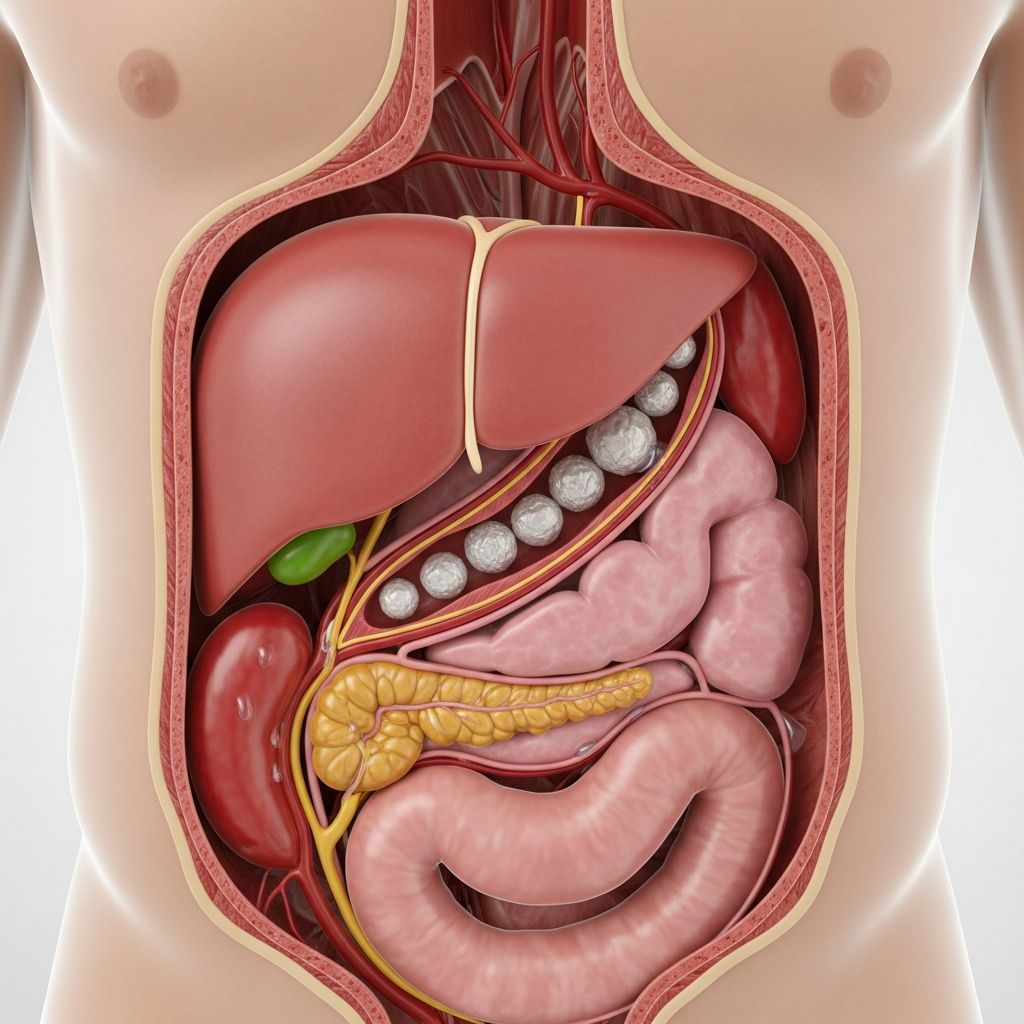
What Is Choledocholithiasis?
Choledocholithiasis is a medical condition characterized by the presence of gallstones within the common bile duct (CBD), the tube that carries bile from your liver and gallbladder into your small intestine. These stones can either form directly within the bile duct or migrate from your gallbladder over time. The condition affects a significant portion of the population, with common bile duct stones present in approximately 1-15% of patients who have gallstones in their gallbladder. Understanding this condition is crucial because untreated choledocholithiasis can lead to serious complications including cholangitis (bile duct infection), pancreatitis, and hepatic dysfunction.
The presence of stones in the common bile duct can obstruct the normal flow of bile, leading to a buildup of digestive fluid and subsequent inflammation. Unlike gallstones that remain in the gallbladder and often cause no symptoms, stones in the bile duct typically require prompt medical intervention to prevent complications and relieve symptoms.
Causes and Risk Factors
Choledocholithiasis develops through several mechanisms. Most commonly, gallstones form in the gallbladder and subsequently migrate into the common bile duct through the cystic duct. However, stones can also form directly within the bile duct itself, particularly in cases where there is bile stasis or altered bile composition. Several factors increase your risk of developing this condition:
- Presence of gallstones in the gallbladder (cholelithiasis)
- Female gender (women are more likely to develop gallstones)
- Advanced age
- Obesity or rapid weight loss
- Certain dietary patterns high in cholesterol and low in fiber
- Previous episodes of biliary colic
- Bile duct dilation
- Conditions affecting bile acid metabolism
Understanding these risk factors helps identify individuals who may benefit from preventive measures or closer monitoring.
Symptoms of Choledocholithiasis
The manifestations of choledocholithiasis vary depending on whether obstruction is present and whether secondary infection has developed. Common symptoms include:
- Colicky pain in the right upper quadrant of the abdomen that is moderate in severity and intermittent
- Pain that may radiate to the back or shoulder blade (particularly in female patients)
- Jaundice (yellowing of the skin and eyes due to elevated bilirubin)
- Dark urine that may appear tea-colored
- Pale or clay-colored stools
- Nausea and vomiting
- Fever and chills (indicating infection or cholangitis)
- Abdominal tenderness, particularly in the right upper quadrant
Symptoms may be acute and severe or develop gradually. Some patients experience recurrent episodes of pain over months or years before seeking medical attention. The onset, timing, and severity of abdominal pain should be carefully evaluated, along with any history of previous similar episodes.
Diagnosis and Evaluation
Accurate diagnosis of choledocholithiasis requires a combination of clinical assessment, laboratory tests, and imaging studies. Healthcare providers conduct a thorough history and physical examination, with particular attention to the characteristics of pain and any systemic signs of infection.
Physical Examination Findings
During physical examination, physicians assess the patient’s general appearance, skin condition, vital signs, and abdomen. Key findings may include tenderness in the right upper quadrant of the abdomen. Systemic signs such as fever, hypotension, and flushed skin indicate possible infection or sepsis. Courvoisier sign—the presence of a palpable gallbladder on examination—may be noted when gallbladder dilation develops due to common bile duct obstruction.
Related Stories



Laboratory Tests
Blood tests are essential for confirming bile duct obstruction and assessing liver function:
- Liver function tests detecting elevated aspartate aminotransferase (AST), alanine aminotransferase (ALT), alkaline phosphatase (ALP), and total/direct bilirubin
- Complete blood count to assess for signs of infection (elevated white blood cell count)
- Renal function tests to evaluate kidney status
- Lipase levels to screen for pancreatitis
Imaging Studies
Multiple imaging modalities can identify choledocholithiasis:
Abdominal ultrasound: This is the initial imaging modality of choice and may demonstrate biliary duct dilation or gallstones; however, it may miss stones within the common bile duct.
Magnetic resonance cholangiopancreatography (MRCP): This non-invasive imaging technique provides detailed visualization of the biliary tree and is highly accurate for detecting common bile duct stones.
Computed tomography (CT): CT scanning can identify stones and assess for complications such as pancreatitis.
Intraoperative imaging: If a patient is undergoing laparoscopic or open cholecystectomy, an intraoperative cholangiogram can be performed by inserting a catheter into the cystic duct and injecting contrast material to outline the biliary tree. Intraoperative ultrasound or laparoscopic ultrasound can also identify choledocholithiasis, though this technique is operator-dependent and not commonly performed by general surgeons.
Treatment Options
The primary goals of therapy for choledocholithiasis are to remove stones from the biliary tree and decompress the biliary system, particularly if bacterial cholangitis is present. The treatment approach depends on several factors including stone size, patient stability, and available resources.
Endoscopic Retrograde Cholangiopancreatography (ERCP)
ERCP with sphincterotomy and stone extraction represents the first-line treatment to relieve obstruction and prevent complications. This procedure is minimally invasive and highly effective. During ERCP, an endoscope is advanced into the second portion of the duodenum, and a catheter and guidewire are carefully positioned within the common bile duct. The procedure is typically performed under general anesthesia with the patient positioned prone, left lateral, or supine, though prone positioning is most common.
Doctors attach special tools to the endoscope to break up and remove stones when they are identified. Sometimes, providers make an incision into the muscle of the duct to open it up and allow stones to pass—a procedure called sphincterotomy. This technique relieves the obstruction and permits normal bile flow. In cases where stones are too large for endoscopic removal, an endoscopically placed biliary stent can decompress the biliary tree.
Surgical Management
Laparoscopic or open common bile duct exploration is required when stones cannot be removed via endoscopic methods. Laparoscopic cholecystectomy is the standard surgical treatment and is recommended following ERCP in most cases to prevent recurrence of stones. This approach combines stone removal with gallbladder removal to reduce the risk of future episodes of choledocholithiasis.
Alternative surgical options include open choledochotomy, transcystic exploration (a technique to clear the CBD during laparoscopic cholecystectomy), percutaneous extraction, and extracorporeal shock wave lithotripsy. When choledocholithiasis is discovered during surgery for cholelithiasis or cholecystitis, options include intraoperative common bile duct exploration, intraoperative ERCP, and postoperative ERCP.
Supportive Care
Comprehensive management includes several supportive measures to stabilize the patient and manage symptoms:
- IV fluid resuscitation and broad-spectrum antibiotics for cases involving cholangitis or systemic infection
- Analgesics and antiemetics to manage pain, nausea, and improve patient comfort during acute episodes
- Enforcing nothing by mouth (NPO) status during acute presentation to reduce biliary stimulation
- Administering IV hydration while monitoring electrolytes and renal function
- Frequent monitoring of temperature, heart rate, and urine output to detect early signs of sepsis
- Oxygen supplementation and hemodynamic support as needed in unstable patients
It is important to note that there are no medications that will cure choledocholithiasis. However, a one-time dose of 50-100 mg rectal indomethacin can be used to prevent post-procedure pancreatitis if the pancreatic duct was manipulated during an ERCP. Antibiotics are typically not needed unless the patient also has associated cholecystitis or cholangitis.
Potential Complications
If left untreated, choledocholithiasis can lead to several serious complications. Ascending cholangitis occurs when bacteria travel up the biliary tree causing infection. Gallstone pancreatitis develops when stones obstruct the pancreatic duct, triggering pancreatic inflammation. The long-standing presence of stones in the bile duct can lead to secondary biliary cirrhosis. These complications require urgent intervention and may result in hospitalization, extended recovery periods, and potentially permanent organ damage.
Prevention and Recovery
While choledocholithiasis cannot always be prevented, certain lifestyle modifications may reduce risk. Maintaining a healthy weight, consuming a balanced diet low in cholesterol and high in fiber, and avoiding rapid weight loss can help prevent gallstone formation. After treatment, patients should follow their healthcare provider’s recommendations regarding diet and activity levels. Most patients experience a gradual return to normal activities with appropriate pain management and follow-up care.
Frequently Asked Questions
Q: Can choledocholithiasis go away on its own?
A: No, choledocholithiasis typically requires medical intervention. While some patients may experience intermittent pain, the stones will not dissolve on their own and can lead to serious complications if left untreated.
Q: Is ERCP always successful in removing stones?
A: ERCP is successful in removing stones in the majority of cases; however, large stones or anatomical variations may require alternative approaches such as surgical exploration or repeat procedures.
Q: How long is the recovery period after treatment?
A: Recovery varies depending on the treatment method. After ERCP, most patients recover within a few days to a week. Surgical recovery typically takes 2-4 weeks for laparoscopic approaches and longer for open surgery.
Q: Will my gallbladder need to be removed?
A: Most experts recommend cholecystectomy (gallbladder removal) following ERCP to prevent future recurrence of stones, though exceptions may exist for patients with significant surgical risks.
Q: What dietary changes are recommended after treatment?
A: Adopting a low-fat diet following treatment can minimize biliary stimulation and reduce the risk of recurrent symptoms. Your healthcare provider will provide specific dietary recommendations.
References
- Choledocholithiasis Guide for Nurses — Nurse.com. 2024. https://www.nurse.com/clinical-guides/choledocholithiasis/
- Choledocholithiasis – StatPearls — National Center for Biotechnology Information (NCBI), U.S. National Library of Medicine. 2024. https://www.ncbi.nlm.nih.gov/books/NBK441961/
- Gallbladder and Biliary Tract Disease — Cleveland Clinic. 2024. https://my.clevelandclinic.org/departments/digestive/medical-professionals/hepatology/gallbladder-biliary-tract-disease
- Choledocholithiasis: Symptoms, Causes & Treatment — Cleveland Clinic. 2024. https://my.clevelandclinic.org/health/diseases/24210-choledocholithiasis
- Gallbladder Disease: An Update on Diagnosis and Treatment — Cleveland Clinic Journal of Medicine. 2002. https://www.ccjm.org/content/ccjom/69/12/977.full.pdf
Similar Articles








Read full bio of Sneha Tete