Cholesterol Numbers: 4 Key Readings To Know
Understand your cholesterol levels and what the numbers mean for your health.
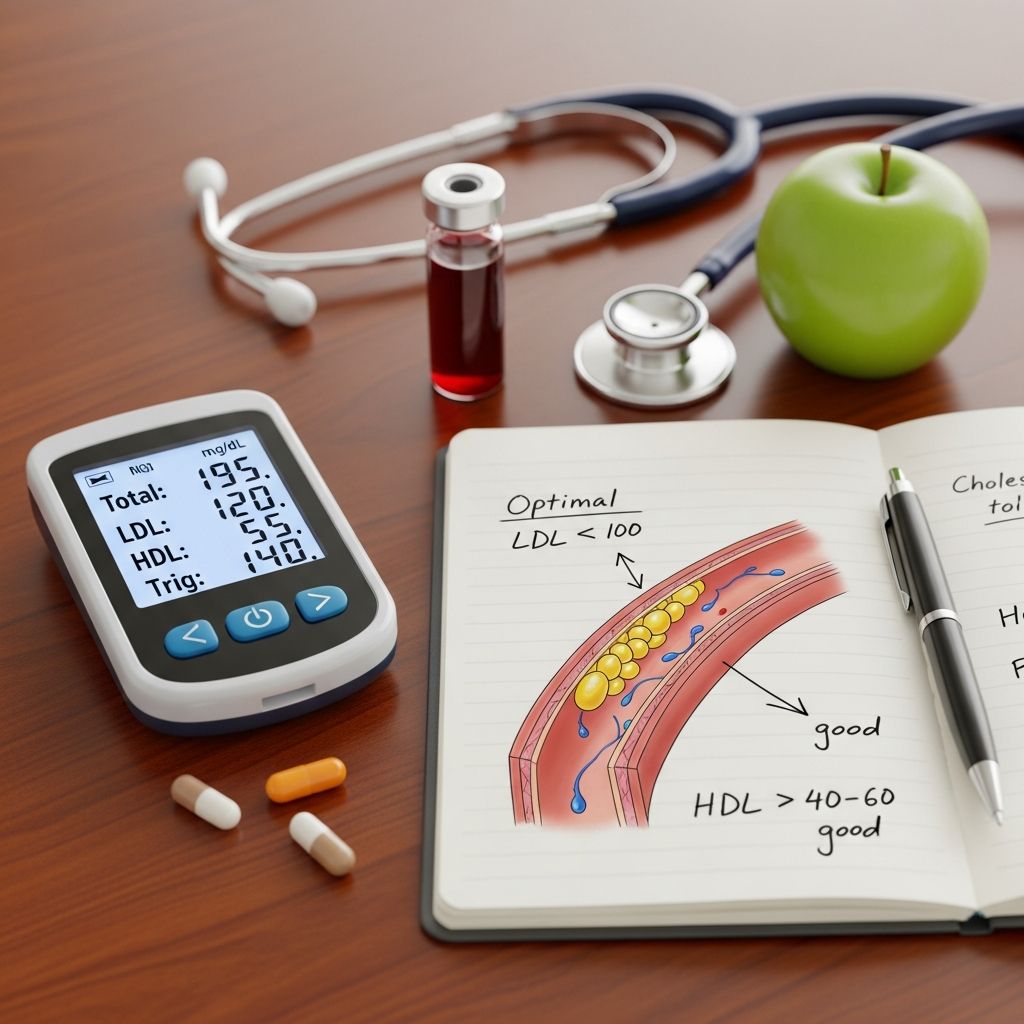
Understanding Your Cholesterol Numbers
Cholesterol is a waxy substance found in your blood that plays an essential role in building cells and producing hormones. However, too much cholesterol circulating in your bloodstream can increase your risk of heart disease and stroke. Understanding your cholesterol numbers is crucial for maintaining good cardiovascular health and making informed decisions about your lifestyle and treatment options.
Your cholesterol levels reveal how much cholesterol is currently circulating in your blood. These numbers are typically measured through a blood test called a lipid panel, which provides a comprehensive picture of your cholesterol profile. Knowing what these numbers mean empowers you to work with your healthcare provider to manage your cholesterol effectively and reduce your risk of serious health complications.
What Is a Lipid Panel?
A lipid panel, also known as a lipid profile, is a blood test that measures your cholesterol levels and provides detailed information about the different types of cholesterol in your bloodstream. During this test, a healthcare provider draws blood from a vein in your arm and sends it to a laboratory for analysis.
To prepare for a lipid panel, you’ll typically need to fast for 12 hours beforehand. This means avoiding all foods and drinks except water. Fasting ensures accurate results because food can temporarily affect your cholesterol and triglyceride measurements. Be sure to closely follow your provider’s instructions on how to prepare for the test to ensure the most reliable results.
Once your results come back from the laboratory, your healthcare provider will review them with you and explain what the numbers mean for your individual health situation. You may also be able to access your results through your electronic medical record for your own reference.
How Cholesterol Is Measured
Healthcare providers measure cholesterol levels using a specific unit of measurement: milligrams of cholesterol per deciliter of blood, abbreviated as mg/dL. This standardized measurement allows healthcare professionals to compare your results against established normal ranges and track changes in your cholesterol levels over time.
The same measurement unit (mg/dL) is also used to measure triglycerides, another important type of fat in your blood that is included in your lipid panel results. Understanding this measurement system helps you interpret your lab results and communicate effectively with your healthcare provider about your cholesterol management.
The Main Cholesterol Numbers Your Provider Checks
Your lipid panel provides four key measurements that give a complete picture of your cholesterol profile. Each of these numbers tells an important story about your cardiovascular health:
Total Cholesterol
Total cholesterol represents the complete amount of cholesterol in your blood, combining both HDL and LDL cholesterol. This number provides an overall assessment of your cholesterol status. Ideally, your total cholesterol should be below 200 mg/dL. A total cholesterol level between 200-239 mg/dL is considered borderline high, while 240 mg/dL or higher is classified as high cholesterol.
LDL Cholesterol (Bad Cholesterol)
LDL, or low-density lipoprotein cholesterol, is often called “bad” cholesterol because it’s the main source of blockages in your arteries. When LDL cholesterol levels are too high, the excess cholesterol can accumulate on artery walls, forming plaque that narrows blood vessels and restricts blood flow to your heart and brain. This process increases your risk of heart attack and stroke.
Related Stories



Your LDL cholesterol should ideally be below 100 mg/dL. However, if you have heart disease or multiple risk factors for cardiovascular disease, your healthcare provider may recommend an even lower target, such as below 70 mg/dL. This more aggressive LDL goal helps provide additional protection against cardiovascular events.
HDL Cholesterol (Good Cholesterol)
HDL, or high-density lipoprotein cholesterol, is known as “good” cholesterol because it helps remove excess LDL cholesterol from your arteries and transport it to your liver for disposal. Higher HDL levels may help reduce your risk of heart attack and stroke. This is one cholesterol number where you want the value to be as high as possible.
Ideally, your HDL cholesterol should be above 60 mg/dL to offer you protection against heart disease. For men, an HDL level of 40 mg/dL or higher is considered acceptable, while for women, the minimum recommended level is 50 mg/dL. However, the higher your HDL, the better your cardiovascular protection.
Triglycerides
Triglycerides are a type of fat found in your blood that comes from the food you eat. Your body converts excess calories into triglycerides for storage and energy use. High triglyceride levels may increase your risk of heart disease, particularly in women. Triglyceride levels should ideally remain below 150 mg/dL for adults.
Normal Cholesterol Levels by Age and Gender
Normal cholesterol levels vary based on your age, ethnicity, and sex. Understanding the recommended ranges for your specific demographic helps you know whether your cholesterol numbers are in a healthy range. The following guidelines represent good cholesterol numbers for most people:
| Age Group | Total Cholesterol | LDL Cholesterol | HDL Cholesterol | Triglycerides |
|---|---|---|---|---|
| 19 and younger | Below 170 mg/dL | Below 110 mg/dL | Above 45 mg/dL | Below 150 mg/dL |
| 20 and older (Males) | 125-200 mg/dL | Below 100 mg/dL | 40 mg/dL or higher | Below 150 mg/dL |
| 20 and older (Females) | 125-200 mg/dL | Below 100 mg/dL | 50 mg/dL or higher | Below 150 mg/dL |
It’s important to note that if you have heart disease or multiple cardiovascular risk factors, your healthcare provider may recommend different targets than these standard ranges. Always talk with your provider about what your specific results mean for you and what cholesterol goals you should be working toward.
Understanding Abnormal Cholesterol Levels
When your cholesterol numbers fall outside the normal ranges, your healthcare provider may classify them as borderline high or high. Understanding these classifications helps you recognize when you need to take action to manage your cholesterol:
| Cholesterol Type | Borderline High | High |
|---|---|---|
| Total Cholesterol (19 and younger) | 170-199 mg/dL | 200 mg/dL or higher |
| Total Cholesterol (20 and older) | 200-239 mg/dL | 240 mg/dL or higher |
| LDL Cholesterol (19 and younger) | 110-129 mg/dL | 130 mg/dL or higher |
| LDL Cholesterol (20 and older) | 100-129 mg/dL (Near-optimal to borderline high) | 160 mg/dL or higher |
How Often Should You Get Your Cholesterol Checked?
Regular cholesterol screening is an important part of preventive healthcare. The frequency of your cholesterol checks should be based on your age and individual risk factors:
Ages 20 to 44: Get your cholesterol checked every five years, unless you have risk factors for heart disease that require more frequent monitoring.
Ages 45 to 65: Get your cholesterol checked every one to two years as part of routine health maintenance.
Ages 65 and older: Get your cholesterol checked every year to monitor changes and ensure your cholesterol management strategy is working effectively.
If you have a personal or family history of high cholesterol, heart disease, or other cardiovascular risk factors, your healthcare provider may recommend more frequent cholesterol screening regardless of your age.
Key Takeaways for Managing Your Cholesterol
When reviewing your cholesterol results, remember the fundamental principle: you want your LDL to be low and your HDL to be high. Ideally, your HDL should be above 60 mg/dL to offer you optimal protection against heart disease. Your LDL should remain below 100 mg/dL for most people, and your total cholesterol should stay below 200 mg/dL.
Some people can improve their cholesterol numbers through lifestyle changes alone, including eating a heart-healthy diet, exercising regularly, maintaining a healthy weight, and avoiding smoking. For others, these lifestyle modifications may not be enough, and medication may be necessary to reach cholesterol goals and reduce cardiovascular risk.
Frequently Asked Questions (FAQs)
Q: What does it mean if my total cholesterol is 200 mg/dL?
A: A total cholesterol level of 200 mg/dL is at the upper limit of the desirable range. While it’s technically within normal limits, it’s at the threshold where your healthcare provider may recommend lifestyle modifications to prevent it from rising further. Work with your provider to develop a cholesterol management plan.
Q: Why do HDL and LDL cholesterol have different target ranges?
A: HDL cholesterol is protective and helps remove harmful cholesterol from your arteries, so higher levels are beneficial. LDL cholesterol contributes to artery blockages, so lower levels are better. This is why the goals are opposite: you want HDL high and LDL low.
Q: Can I check my cholesterol without fasting?
A: While non-fasting lipid panels are sometimes performed, fasting lipid panels provide more accurate results, especially for triglycerides. Your healthcare provider will specify whether fasting is required for your specific test.
Q: What if my cholesterol numbers are high despite healthy eating?
A: High cholesterol can be influenced by genetics, age, and other factors beyond diet alone. If lifestyle changes don’t lower your cholesterol sufficiently, your healthcare provider may recommend cholesterol-lowering medications like statins to help reduce your cardiovascular risk.
Q: How quickly can cholesterol levels change?
A: Cholesterol levels can change over weeks to months with significant lifestyle modifications or medication adjustments. Your healthcare provider will typically recheck your levels 4-12 weeks after starting medication or making major lifestyle changes to assess whether your goals are being met.
Q: Are there symptoms of high cholesterol I should watch for?
A: High cholesterol typically has no symptoms, which is why it’s called a “silent” condition. The only way to know your cholesterol levels is through blood testing. This underscores the importance of regular cholesterol screening as part of your preventive healthcare routine.
References
- Cholesterol: Understanding Levels & Numbers — Cleveland Clinic. 2024. https://my.clevelandclinic.org/health/articles/11920-cholesterol-numbers-what-do-they-mean
- Cholesterol Levels: MedlinePlus Medical Test — National Library of Medicine. 2024. https://medlineplus.gov/lab-tests/cholesterol-levels/
- Hyperlipidemia (High Cholesterol): Levels, Causes, Symptoms — Cleveland Clinic. 2024. https://my.clevelandclinic.org/health/diseases/21656-hyperlipidemia
- How to Interpret Cholesterol Numbers — WebMD. 2024. https://www.webmd.com/cholesterol-management/understanding-numbers
Similar Articles








Read full bio of Sneha Tete