How It’s Made: Cholesterol Production in Your Body
Understand how your body manufactures cholesterol and why it's essential for survival.
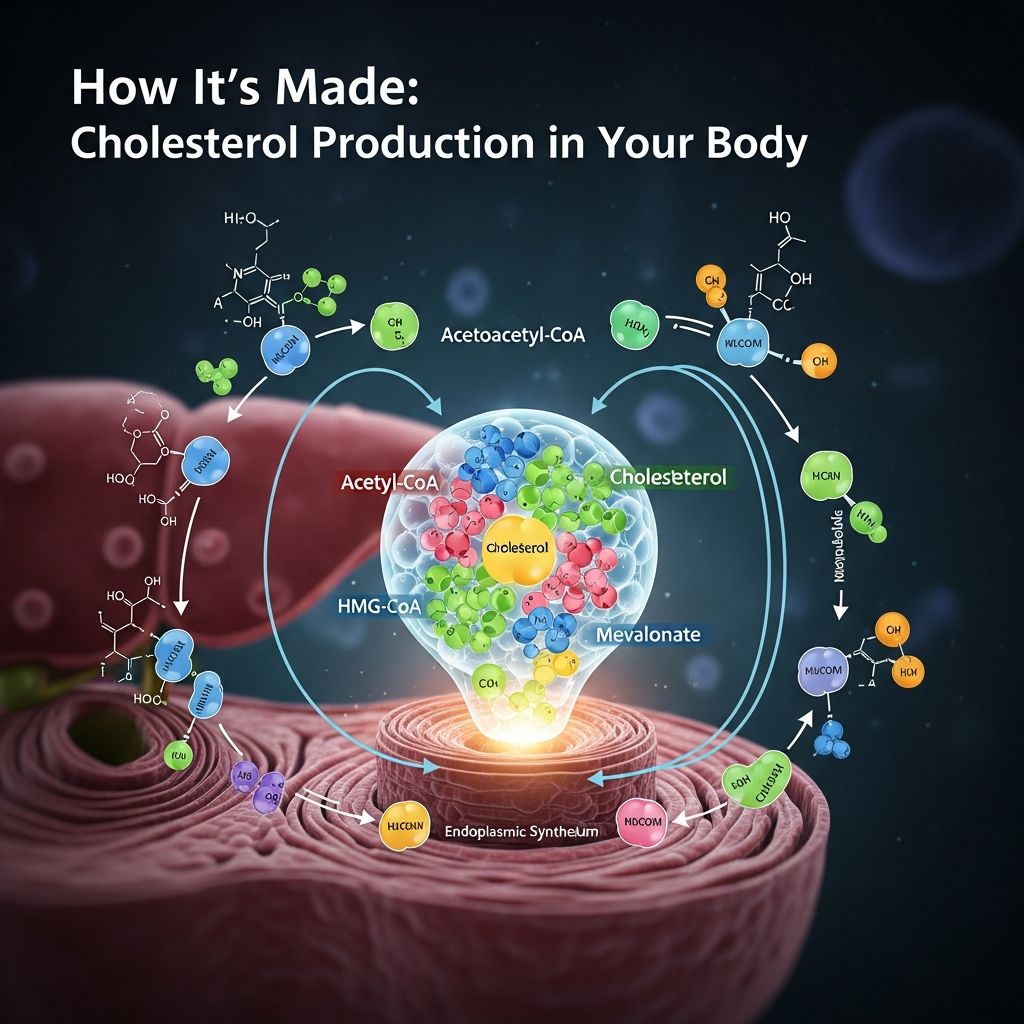
Cholesterol is one of the most misunderstood substances in the human body. While it has earned a reputation as a villain in discussions about heart disease, the reality is far more nuanced. Your body actually needs cholesterol to survive and function properly. Understanding how your body produces cholesterol and regulates its levels is essential to making informed decisions about your health.
What Is Cholesterol?
Cholesterol is a waxy, fat-like substance that your body uses for many essential functions. It’s not inherently harmful—in fact, your body requires it to build cell membranes, produce hormones, create vitamin D, and generate bile acids for digestion. The key to maintaining good health lies not in eliminating cholesterol entirely, but in understanding how much your body produces and how it’s transported through your bloodstream.
Your body obtains cholesterol from two main sources: synthesis within your cells and absorption from dietary sources. However, the majority of the cholesterol in your body is manufactured internally rather than consumed through food. This self-regulation system demonstrates just how important cholesterol is to your physiological survival.
The Primary Site of Cholesterol Production
While virtually all cells in your body can synthesize cholesterol, the liver is the primary organ responsible for cholesterol production. The liver manufactures approximately 80% of the cholesterol found in your body, making it the cholesterol production headquarters. This internal production ensures that your body maintains adequate cholesterol levels regardless of dietary intake.
The liver’s role in cholesterol production is just one aspect of its broader responsibility for lipid metabolism. Hepatocytes, which are the main functional cells of the liver, contain the enzymatic machinery necessary to produce cholesterol from simpler molecular precursors. This process occurs continuously throughout your life, adjusting production based on your body’s needs and the amount of cholesterol you consume through food.
The Cholesterol Synthesis Process
Cholesterol synthesis is a complex biochemical process that involves multiple enzymatic steps. The process begins with a molecule called acetyl-CoA, which undergoes a series of enzymatic transformations. These transformations eventually lead to the formation of mevalonate, which is then converted through additional steps into the cholesterol molecule itself.
This synthesis pathway is tightly regulated by the body through a feedback mechanism. When cholesterol levels are adequate, the body reduces the activity of key enzymes involved in cholesterol synthesis, thereby decreasing production. Conversely, when cholesterol levels drop, the body upregulates these enzymes to increase production. This elegant self-regulating system ensures that your body maintains cholesterol levels within an optimal range.
Dietary Sources and Absorption
While your body produces most of its cholesterol, you also consume cholesterol through food. Dietary cholesterol comes exclusively from animal products—meat, poultry, eggs, and dairy products all contain cholesterol. The amount of cholesterol you consume through diet accounts for approximately 20% of your total body cholesterol.
Related Stories



When you eat foods containing cholesterol, your digestive system must process it. Cholesterol is an insoluble lipid, so it cannot simply dissolve in your digestive fluids. Instead, it must be incorporated into complex structures called micelles, which allow it to be absorbed through the intestinal wall. Following absorption, dietary cholesterol is transported to your liver, where it becomes part of your overall cholesterol pool.
Interestingly, your body has adapted to regulate cholesterol absorption based on your dietary intake. When you consume more dietary cholesterol, your body absorbs less of it and reduces its internal synthesis. When dietary cholesterol is low, your body compensates by increasing synthesis. This homeostatic mechanism explains why dietary cholesterol has surprisingly little effect on blood cholesterol levels in most people.
Transport and Regulation of Cholesterol
Once cholesterol is produced or absorbed, it must be transported throughout your body. Since cholesterol is insoluble in the aqueous environment of blood, it cannot travel alone through your bloodstream. Instead, it must be packaged into specialized transport particles called lipoproteins.
Lipoproteins: The Cholesterol Carriers
Lipoproteins are complex particles consisting of cholesterol, triglycerides, phospholipids, and proteins. The two most important types for heart health are low-density lipoprotein (LDL) and high-density lipoprotein (HDL).
LDL cholesterol carries cholesterol from the liver to cells throughout your body where it is needed. However, when LDL levels are elevated, excess LDL can deposit cholesterol in artery walls, contributing to atherosclerosis and increasing heart disease risk.
HDL cholesterol performs the opposite function. It picks up excess cholesterol from tissues and arteries, transporting it back to the liver where it can be used or eliminated from the body. This reverse cholesterol transport is critical for maintaining cardiovascular health. HDL is often called “good” cholesterol because higher levels are associated with lower heart disease risk.
The Liver’s Role in Cholesterol Elimination
While the liver produces cholesterol, it also has the unique responsibility of eliminating excess cholesterol from your body. Unlike other cells, which can synthesize cholesterol but cannot significantly degrade it, the liver can degrade cholesterol and remove it from the body through bile.
The liver converts excess cholesterol into bile acids, which are then secreted into the bile. This process is catalyzed by an enzyme called cholesterol 7α-hydroxylase, which is found exclusively in liver cells. The bile acids serve critical digestive functions, helping to emulsify fats so they can be absorbed in the intestines. After performing this function, approximately 95% of these bile acids are reabsorbed in the intestine and recycled back to the liver. However, a small fraction is lost in the feces—approximately 0.4 grams per day—and this represents the primary route for cholesterol elimination from your body.
To maintain cholesterol balance, your liver carefully regulates both the synthesis and breakdown of cholesterol. This balance is maintained through nuclear hormone receptors that sense bile acid concentrations in the liver and intestine. When bile acid levels drop, indicating that cholesterol has been lost, the liver responds by synthesizing more cholesterol and producing more bile acids. This precise regulation ensures that your body maintains adequate cholesterol for its vital functions while eliminating excess.
Factors That Influence Cholesterol Production
Several factors can influence how much cholesterol your body produces:
Genetic factors: Your genes largely determine how much cholesterol your body produces and how efficiently it regulates cholesterol levels. Some people are naturally “hyperresponders” to dietary cholesterol, meaning their blood cholesterol levels rise more readily when they consume high-cholesterol foods. However, even in these individuals, the ratio of LDL to HDL cholesterol typically remains stable, and heart disease risk may not increase.
Dietary saturated and trans fats: While dietary cholesterol itself has minimal impact on blood cholesterol for most people, the type and amount of fat in your diet can significantly affect cholesterol production. Saturated fats and trans fats can increase cholesterol synthesis in your liver.
Physical activity: Regular exercise can influence cholesterol metabolism and improve your lipoprotein profile. The American Heart Association recommends 150 minutes of moderate-intensity exercise or 75 minutes of vigorous-intensity exercise weekly.
Overall diet quality: A diet rich in whole grains, fruits, vegetables, legumes, and nuts while limiting red meat and sugary drinks supports healthy cholesterol production and regulation.
Why Your Body Produces Cholesterol
Understanding why your body produces cholesterol highlights its critical importance. Cholesterol serves multiple essential functions:
Cell membrane structure: Cholesterol is a crucial component of cell membranes, where it helps maintain membrane fluidity and stability. Proper membrane cholesterol content is essential for cell function.
Hormone production: Your body uses cholesterol as the starting material for synthesizing all steroid hormones, including testosterone, estrogen, and cortisol.
Vitamin D synthesis: Cholesterol serves as a precursor for vitamin D production, which is essential for bone health, immune function, and calcium regulation.
Bile acid production: As discussed, cholesterol is converted into bile acids necessary for fat digestion and absorption.
Nerve function: Cholesterol is a major component of myelin, the insulating sheath around nerve fibers that allows for proper nerve signal transmission.
Cholesterol Balance and Overall Health
The body maintains cholesterol balance through a sophisticated interplay between production, absorption, utilization, and elimination. This balance is critical for health. Both excessive and insufficient cholesterol levels can be problematic. When cholesterol levels are excessive, particularly when LDL cholesterol is high, the risk of atherosclerosis increases. However, cholesterol is absolutely necessary for survival, and your body has evolved intricate mechanisms to ensure adequate cholesterol availability while preventing excess accumulation.
Understanding this balance helps explain why simply reducing dietary cholesterol is insufficient to significantly lower blood cholesterol levels for most people. Your body’s internal regulation system compensates for dietary changes by adjusting synthesis. For individuals with genetic predispositions to high cholesterol or those at high risk for heart disease, medication combined with lifestyle modifications may be necessary to achieve optimal cholesterol levels.
Frequently Asked Questions
Q: Does eating foods high in cholesterol raise your blood cholesterol?
A: For most people, dietary cholesterol has minimal effect on blood cholesterol levels because your body tightly regulates cholesterol production based on intake. However, some individuals classified as “hyperresponders” may experience higher blood cholesterol when consuming more dietary cholesterol. Even in these cases, the ratio of LDL to HDL cholesterol typically remains unchanged, and heart disease risk may not increase.
Q: Where is most of your body’s cholesterol produced?
A: The liver produces approximately 80% of the cholesterol in your body. While virtually all cells can synthesize cholesterol, the liver is the primary organ responsible for cholesterol production and also for eliminating excess cholesterol.
Q: Why does your body need cholesterol?
A: Cholesterol is essential for multiple critical functions including building cell membranes, producing hormones and vitamin D, creating bile acids for digestion, and insulating nerve fibers. Your body cannot survive without cholesterol.
Q: Can you eliminate cholesterol production in your body?
A: No, your body must continuously produce cholesterol to maintain basic physiological functions. However, certain medications called statins can reduce cholesterol synthesis. These medications work by inhibiting key enzymes in the cholesterol production pathway, allowing the body to lower cholesterol levels while still maintaining adequate amounts for essential functions.
Q: How does exercise affect cholesterol production?
A: Regular physical activity can improve your cholesterol profile by helping to lower LDL cholesterol and raise HDL cholesterol. The American Heart Association recommends at least 150 minutes of moderate exercise or 75 minutes of vigorous exercise weekly for optimal heart health.
Q: What role do genes play in cholesterol production?
A: Genetics significantly influence how much cholesterol your body produces and how efficiently it regulates cholesterol levels. Some people inherit genes that cause their bodies to produce more cholesterol or to be more sensitive to dietary cholesterol. Understanding your genetic predisposition can help guide appropriate dietary and medical interventions.
Conclusion
Cholesterol production is a complex, carefully regulated process essential to human survival. Your liver manufactures the majority of your body’s cholesterol while also managing the balance between production, absorption, utilization, and elimination. Rather than viewing cholesterol as a villain to be avoided entirely, it’s more accurate to understand it as a vital substance that your body carefully controls through sophisticated regulatory mechanisms.
While maintaining healthy cholesterol levels through diet, exercise, and when necessary, medication, is important for cardiovascular health, understanding the biological reality of cholesterol production helps dispel myths and allows for more effective health management strategies.
References
- Balancing Cholesterol Synthesis and Absorption in the Body — National Center for Biotechnology Information (NCBI). Published in PMC. https://pmc.ncbi.nlm.nih.gov/articles/PMC2390860/
- Why Dietary Cholesterol Does Not Matter (For Most People) — Healthline. https://www.healthline.com/nutrition/dietary-cholesterol-does-not-matter
- What Is Cholesterol? — American Heart Association. https://www.heart.org/en/health-topics/cholesterol/about-cholesterol
- Your Heart in Your Hands: Cholesterol — We Care For Every Heartbeat. https://wecareforeveryheartbeat.com/your-heart-in-your-hands-cholesterol/
- Why Does Your Body Produce Cholesterol? Understanding Production — DHGate Smart. https://smart.dhgate.com/why-does-your-body-produce-cholesterol-understanding-production/
Similar Articles








Read full bio of medha deb