Chondrodermatitis Nodularis: Symptoms, Diagnosis, Treatment
Painful ear nodule: causes, diagnosis, and effective treatments for chondrodermatitis nodularis helicis.
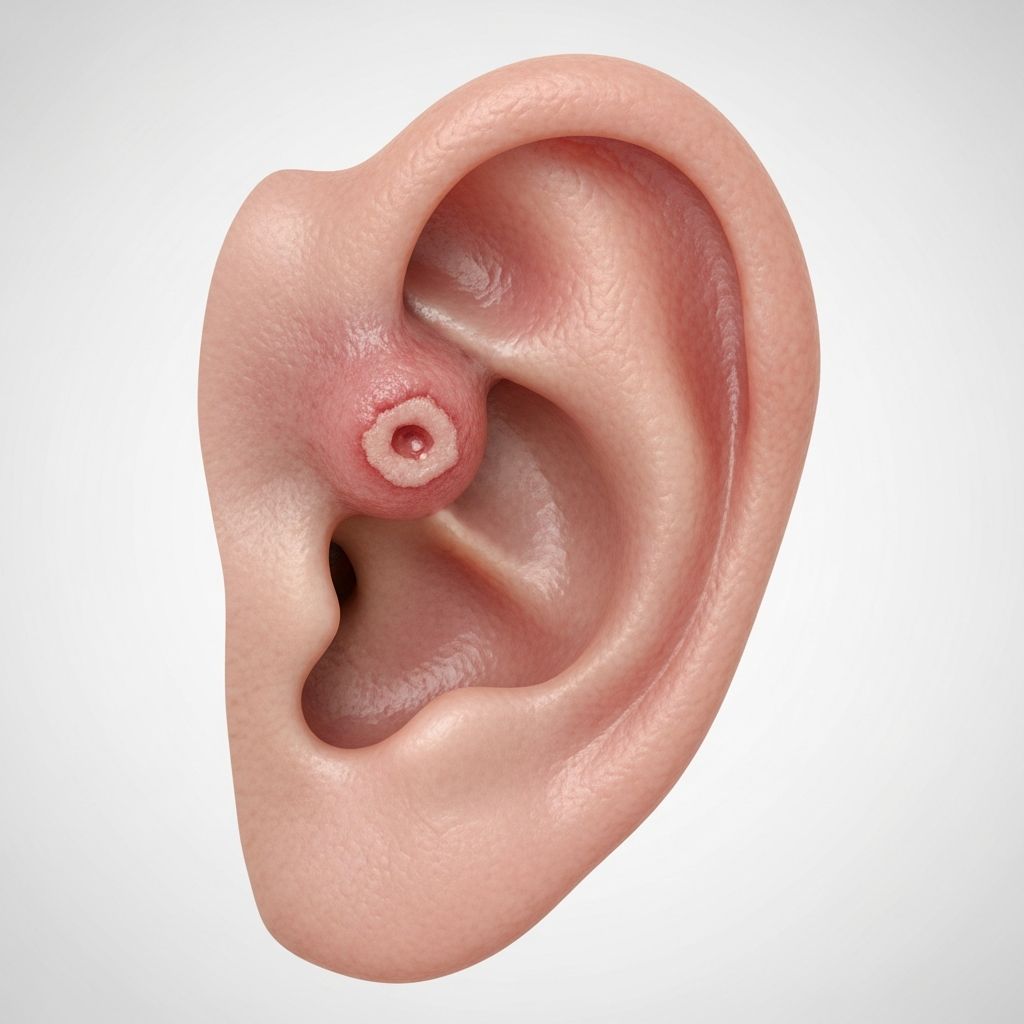
Authoritative facts about chondrodermatitis nodularis helicis (CNH): what it is, symptoms, causes, histopathology, diagnosis, management, and prevention.
What is chondrodermatitis nodularis?
Chondrodermatitis nodularis helicis (CNH), also known as chondrodermatitis nodularis chronica helicis or Winkler nodules, is a benign inflammatory condition affecting the cartilage and overlying skin of the ear, most commonly on the helix or antihelix. It presents as a painful, tender nodule that can disrupt sleep and daily activities due to exquisite sensitivity. CNH is not malignant but is frequently biopsied to rule out skin cancer because of its clinical appearance. The condition predominantly affects middle-aged to elderly individuals, especially men, though it can occur at any age.
The nodule typically measures 4-6 mm in diameter, with raised edges, a central crust, ulcer or depression, and surrounding erythema. Pain is the hallmark symptom, often nocturnal and preventing side-sleeping on the affected ear. Other features include crusting, bleeding, or exudate, which heighten concerns for malignancy.
Who gets chondrodermatitis nodularis?
CNH primarily affects adults over 50 years, with a peak incidence in the 50-80 age group, and shows a strong male predominance (up to 10:1 male-to-female ratio in some studies). Risk factors include prolonged pressure from sleeping on the affected side, use of hearing aids or earphones, telephone earpiece pressure, actinic damage from sun exposure, cold weather exposure, and trauma. Individuals with thin ear cartilage or minimal subcutaneous fat are more susceptible, as are those with habits exacerbating local ischemia.
- Demographics: Mostly men aged 50-80.
- Predisposing factors: Side-sleeping, sun damage, cold exposure, hearing aids.
What causes chondrodermatitis nodularis?
The precise etiology remains unclear, but the prevailing theory is vascular compromise leading to ischemia of the cartilage. Chronic pressure from lateral decubitus sleeping compresses the helix against the pillow, causing arteriolar narrowing in the perichondrium, particularly in the apex farthest from arterial supply. This results in cartilage necrosis, extrusion of necrotic debris, and intense local inflammation with a foreign body reaction.
Supporting evidence includes nerve hyperplasia explaining tenderness, and response to therapies improving perfusion like nitroglycerin. Additional contributors: actinic damage thinning skin, cold-induced vasospasm, and lack of protective subcutaneous fat in the ear. Histopathology confirms ischemic changes, perichondrial fibrosis, and granulation tissue.
What are the clinical features of chondrodermatitis nodularis?
CNH manifests as a firm, oval-shaped nodule (3-8 mm) on the helical rim or antihelix, with elevated borders and a central keratin plug, ulcer, or crust. It is exquisitely tender to touch, with sharp, stabbing pain worse at night, often preventing sleep on that side. Erythema surrounds the lesion, and minor trauma causes bleeding or exudate.
Symptoms range from mild discomfort to severe pain lasting hours. The lesion may appear spontaneously or follow trauma/frostbite. Multiple nodules can occur, and it rarely affects the external auditory canal or lobule.
Diagnosis
Diagnosis is primarily clinical based on characteristic location, pain, and appearance, but biopsy is often performed to exclude squamous cell carcinoma (SCC) due to similarities. Key differentials: basal cell carcinoma, actinic keratosis, keratoacanthoma, and pyogenic granuloma.
Histopathology: Epidermal acanthosis, parakeratotic plug, ulceration, scale crust, dermal sclerosis, perichondrial fibrosis, cartilage degeneration with granulation tissue, arteriolar narrowing, and nerve hyperplasia. These features distinguish CNH from malignancies.
Differential diagnosis
| Condition | Key Features | Differentiating from CNH |
|---|---|---|
| Squamous cell carcinoma | Irregular borders, rapid growth, less tender | Biopsy shows atypia; CNH has ischemic cartilage changes |
| Basal cell carcinoma | Pearly, rolled edges, telangiectasia | Less painful; histo lacks cartilage involvement |
| Actinic keratosis | Scaly, rough; less nodular | No deep tenderness or cartilage erosion |
| Keratoacanthoma | Volcano-like, rapid onset | Regresses spontaneously; different histo |
Related Stories



Treatment of chondrodermatitis nodularis
First-line: Conservative pressure-relief measures, as they address the root cause without invasiveness. Surgery is reserved for failures.
Conservative / medical management
- Pressure offloading: Custom CNH pillows or ear protectors to prevent sleeping pressure (e.g., modified pillows with cutouts). Highly effective in preventing recurrence.
- Topical nitroglycerin (2% paste or 1% gel): Improves perfusion; applied BID, relieves pain and size in weeks. Side effects: headache (dose-reduce if needed).
- Topical diltiazem cream: Vasodilator alternative.
- Corticosteroids: Topical or intralesional, but ineffective without pressure relief.
- Collagen/hyaluronic acid injections: Cushions cartilage.
- Topical antibiotics: For secondary infection/ulceration.
Physical modalities
- Cryotherapy (liquid nitrogen): Freezes nodule; multiple sessions may be needed.
- Photodynamic therapy (PDT): Light-activated after photosensitizer; high success, few side effects.
- Laser ablation (CO2): Precise removal with low recurrence.
Surgical options
Indicated if conservatives fail. Recurrence 10-30%.
- Wedge excision: Skin and partial cartilage; most common, good cosmesis.
- Shave excision + curettage: Superficial removal.
- Punch excision: Small lesions.
- Electrodessication/curettage: Destroys tissue.
Post-op: Pressure relief essential to prevent recurrence.
Prevention of chondrodermatitis nodularis
- Avoid sleeping on affected side; use opposite side or back-sleeping aids.
- Employ CNH-specific pillows/ear guards nightly.
- Protect ears from sun (hats, sunscreen) and extreme cold.
- Minimize hearing aid/telephone pressure; use alternatives.
- Early intervention for symptoms prevents progression.
Chondrodermatitis nodularis FAQs
Q: Is chondrodermatitis nodularis cancerous?
A: No, CNH is benign inflammatory, not malignant. Biopsy rules out cancer.
Q: Why is CNH so painful?
A: Due to nerve hyperplasia and inflammation around ischemic cartilage.
Q: Can CNH resolve without treatment?
A: Rarely; usually persists or recurs without intervention.
Q: What is the best first treatment?
A: Pressure-relieving devices like custom pillows.
Q: Does surgery cure CNH permanently?
A: High success but 10-30% recurrence; combine with prevention.
Q: Can women get CNH?
A: Yes, though less common than in men.
Q: How long does nitroglycerin treatment take?
A: Symptoms improve in 2-4 weeks; full resolution may take longer.
Related topics
- Actinic keratosis
- Squamous cell carcinoma of the skin
- Ear anatomy
- Pressure ulcers
References
- Therapeutic Options of Chondrodermatitis Nodularis Helicis — Kürten et al. PMC. 2016-01-12. https://pmc.ncbi.nlm.nih.gov/articles/PMC4748103/
- Chondrodermatitis Nodularis Helicis — Adekeye et al. StatPearls, NCBI. 2023-07-17. https://www.ncbi.nlm.nih.gov/books/NBK482507/
- Chondrodermatitis (CNH) – Ear Pressure Sore — Chondrodermatitis.com. Accessed 2026. https://chondrodermatitis.com
- Chondrodermatitis nodularis helicis: Symptoms and treatment — Medical News Today. 2023-08-14. https://www.medicalnewstoday.com/articles/322024
- Chondrodermatitis Nodularis Helicis — Dermatology Advisor. Accessed 2026. https://www.dermatologyadvisor.com/home/decision-support-in-medicine/dermatology/chondrodermatitis-nodularis-helicis-chondrodermatitis-chondrodermatitis-nodularis-chronica-helicis-chondrodermatitis-nodularis-chronica-helicis-et-antihelicis-ear-corn/
- Chondrodermatitis Nodularis Helicis: Symptoms and More — Healthline. 2023-10-10. https://www.healthline.com/health/chondrodermatitis-nodularis-helicis
Similar Articles








Read full bio of medha deb