Choose Healthy Fats: 5 Practical Swaps For Heart Health
Learn how to select and incorporate monounsaturated and polyunsaturated fats into your diet for optimal heart health and overall wellness.
Fats are an essential part of a balanced diet, providing energy, aiding in the absorption of fat-soluble vitamins, and supporting cell growth and hormone production.
Healthy fats
, primarily monounsaturated and polyunsaturated fats, help lower bad cholesterol levels, reduce heart disease risk, and promote overall wellness when they replace saturated and trans fats.A general goal is for 20% to 35% of total daily calories to come from these healthy fats. Incorporating them through plant-based oils, nuts, avocados, and fatty fish can improve blood cholesterol, blood sugar control, inflammation reduction, and gut health.
Monounsaturated Fats
**Monounsaturated fats** are healthy fats that help increase HDL, the “good” cholesterol, while potentially reducing LDL, the “bad” cholesterol. Replacing saturated fats like butter with monounsaturated fats from vegetable oils can lower cholesterol buildup in arteries, decreasing the risk of heart attack and stroke.
These fats maintain healthy cholesterol balance and support heart protection. They are liquid at room temperature and found in various plant sources.
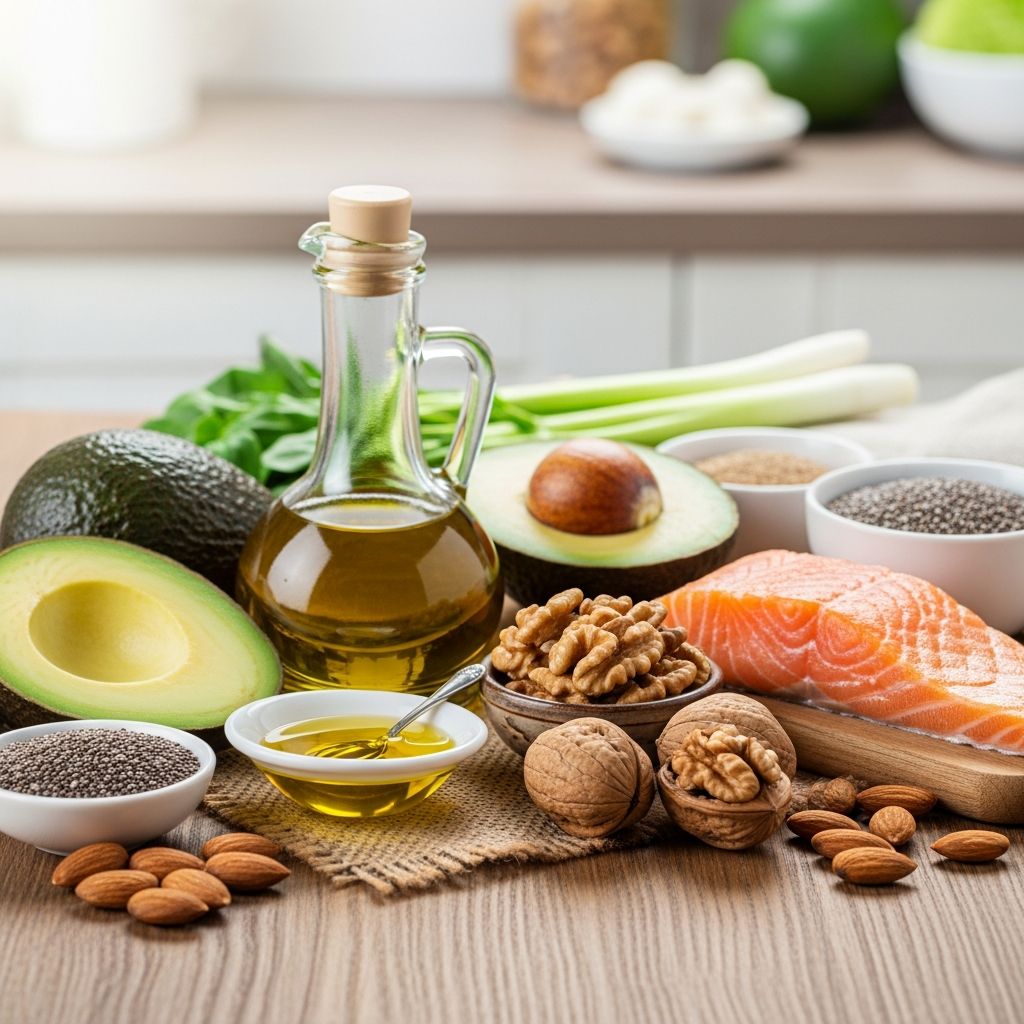
- Nuts: Enjoy a small handful of almonds, pecans, peanuts, or cashews instead of chips or fried snacks for a nutrient-dense option rich in monounsaturated fats.
- Oils: Use olive, canola, peanut, or avocado oil in place of solid fats like butter or lard. Ideal for salad dressings, sautéing vegetables, seafood, poultry, meat, tofu, or tempeh.
- Avocados: Packed with monounsaturated fats, dietary fiber, potassium, and vitamins like folate, B6, C, and E. Add slices to salads, sandwiches, or smoothies.
Dark chocolate in moderation also provides small amounts of monounsaturated fats alongside antioxidants, though it contains sugar.
Polyunsaturated Fats
**Polyunsaturated fats** offer similar benefits to monounsaturated fats and include essential omega-3 and omega-6 fatty acids that the body cannot produce. These support brain function, skin and hair growth, bone health, metabolism, and reducing bad cholesterol.
Omega-3 fats, a key type, are vital for heart health and inflammation reduction. Eating two or more servings of fatty fish weekly can prevent cardiovascular disease, especially in high-risk individuals.
- Sunflower, corn, soybean, flaxseed, safflower, sesame, and walnut oils: Use for cooking, dressings, or baking to incorporate these fats.
- Walnuts, flax seeds, chia seeds: Sprinkle on yogurt, oatmeal, or salads for omega-3 boosts.
- Fatty fish: Salmon, tuna, mackerel, herring, sardines, whitefish, trout, oysters, mussels, and fish roe provide EPA and DHA omega-3s.
Plant sources like soybeans and seeds are excellent for vegetarians seeking omega-3s.
Why Fats Are Essential
Fats play critical roles beyond energy provision (9 calories per gram). They enable absorption of vitamins A, D, E, and K—fat-soluble nutrients crucial for vision, bone health, immunity, and antioxidant protection.
Healthy fats support brain function and mood, hormone and gene regulation, organ protection, cell growth, and satiety, making meals more flavorful and filling. They also promote gut barrier integrity, nutrient absorption, microbiome health, and immune function.
| Function | Benefits |
|---|---|
| Energy Source | Provides sustained fuel for daily activities. |
| Vitamin Absorption | Helps uptake of vitamins A, D, E, K. |
| Heart Health | Lowers LDL cholesterol, raises HDL. |
| Brain & Metabolism | Supports omega-3/6 for cognitive and metabolic health. |
| Inflammation Control | Reduces chronic inflammation risks. |
Related Stories



Limit Saturated Fats
Saturated fats, solid at room temperature, are found in animal products like beef, pork, poultry, full-fat dairy (butter, cheese), eggs, and tropical oils (coconut, palm). They can raise both good and bad cholesterol when overconsumed.
The American Heart Association advises limiting saturated fats to reduce heart disease risk. Opt for skinless poultry, lean meats, low-fat dairy, or plant alternatives.
- Choose beans, peas, lentils, or tofu over fatty meats.
- Select low-fat or fat-free dairy products.
Avoid Trans Fats
**Trans fats** are the unhealthiest, artificially created through hydrogenation or found in some processed foods. They raise bad cholesterol, lower good cholesterol, and increase heart disease, stroke, and type 2 diabetes risks.
Avoid partially hydrogenated oils in fried foods, baked goods, margarine, and ultra-processed snacks. Check labels and choose products without trans fats.
Practical Tips to Choose Healthy Fats
Make simple swaps for better health:
- Cook with liquid plant oils (canola, olive, nut oils) instead of butter.
- Snack on nuts/seeds rather than chips.
- Add avocado to meals for creaminess without saturated fats.
- Eat fatty fish twice weekly for omega-3s.
- Follow Mediterranean or plant-forward diets emphasizing these fats.
Aim for daily omega-3 sources. These changes lower heart disease risk, improve cholesterol, and enhance well-being.
Frequently Asked Questions (FAQs)
What percentage of daily calories should come from healthy fats?
A general goal is 20% to 35% from polyunsaturated and monounsaturated fats.
Are avocados a good source of healthy fats?
Yes, avocados are rich in monounsaturated fats, fiber, potassium, and vitamins.
How often should I eat fatty fish?
Aim for two or more servings per week to gain omega-3 benefits and reduce cardiovascular risk.
Can I eat nuts every day?
Yes, a small handful daily provides healthy fats; choose unsalted varieties.
What’s the difference between saturated and unsaturated fats?
Saturated fats are solid and raise cholesterol; unsaturated (mono/poly) are liquid and improve cholesterol profiles.
Healthy Fats Food Sources Table
| Type | Food Examples |
|---|---|
| Monounsaturated | Olive/canola/peanut oil, avocados, almonds, pecans, peanuts, cashews, pumpkin/sesame seeds |
| Polyunsaturated | Sunflower/corn/soybean/flaxseed oil, walnuts, flax/chia seeds, salmon, tuna, mackerel, sardines |
References
- Eating healthy fats has many benefits — UCLA Health. 2023-10-12. https://www.uclahealth.org/news/article/eating-healthy-fats-has-many-benefits
- Fats in Foods — American Heart Association. 2024-05-15. https://www.heart.org/en/healthy-living/healthy-eating/eat-smart/fats/fats-in-foods
- Choose Healthy Fats — Academy of Nutrition and Dietetics. 2023-11-01. https://www.eatright.org/food/food-groups/fats/choose-healthy-fats
- Facts about fat — NHS. 2024-02-20. https://www.nhs.uk/live-well/eat-well/food-types/different-fats-nutrition/
- Healthy Fats — UC Davis Health. 2023-08-10. https://healthy.ucdavis.edu/eating-well/nourish-labels/healthy-fats
Similar Articles








Read full bio of Sneha Tete