Choriocarcinoma: Causes, Symptoms, Treatment & Prevention
Understanding choriocarcinoma: A rare uterine cancer with high cure rates when caught early.
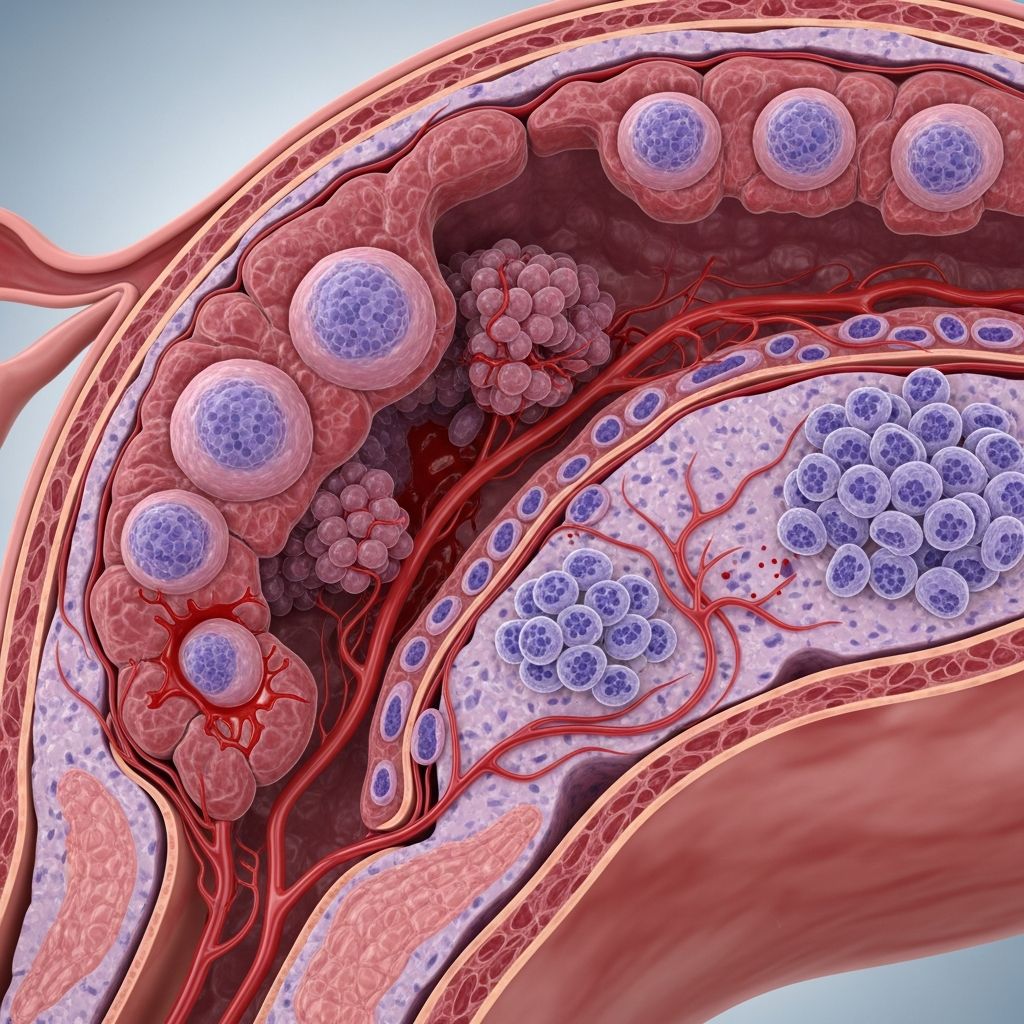
Understanding Choriocarcinoma
Choriocarcinoma is a rare and aggressive form of cancer that develops in the uterus, originating from cells that were part of the placenta during pregnancy. This malignant tumor represents a form of gestational trophoblastic neoplasia and can develop during pregnancy or shortly after it concludes. Unlike many other cancers, choriocarcinoma has a remarkably high cure rate when detected and treated promptly, with survival rates exceeding 90% in most cases. However, because this cancer spreads rapidly to other parts of the body, early diagnosis and aggressive treatment are essential for achieving the best outcomes.
The condition primarily affects individuals who have experienced pregnancy, regardless of how that pregnancy ended. While choriocarcinoma is rare, understanding its risk factors, symptoms, and treatment options is crucial for anyone who has been pregnant or is planning pregnancy. This comprehensive guide provides detailed information about this serious but highly treatable condition.
Types of Choriocarcinoma
Medical professionals classify choriocarcinoma into two distinct categories based on when and how the cancer develops:
Gestational Choriocarcinoma
Gestational choriocarcinoma is the more common form, accounting for the majority of cases. This type develops during pregnancy or shortly after pregnancy concludes, regardless of the pregnancy outcome. It arises from trophoblastic tissue—cells that normally form the placenta. The cancer can develop after a molar pregnancy, ectopic pregnancy, miscarriage, pregnancy termination, or even after a successful full-term pregnancy resulting in live birth. The fact that it can occur after any type of pregnancy means that all individuals who have been pregnant should be aware of the warning signs and risk factors.
Non-Gestational Choriocarcinoma
Non-gestational choriocarcinoma is significantly rarer and develops from germ cells in tissues outside the reproductive system. This type is not related to pregnancy and requires different diagnostic and treatment approaches. Because of its rarity and different origin, healthcare providers must distinguish between the two types to determine the most appropriate treatment strategy.
Risk Factors and Causes
While choriocarcinoma can theoretically develop in anyone who has been pregnant, certain conditions and circumstances significantly increase the risk of developing this cancer.
Primary Risk Factors
Molar Pregnancy: A molar pregnancy, also called a hydatidiform mole, represents the highest risk factor for choriocarcinoma development. In a molar pregnancy, the sperm and egg join incorrectly, creating abnormal tissue instead of a viable fetus. Approximately 15% to 20% of complete molar pregnancies progress to persistent gestational trophoblastic neoplasia, with some developing into choriocarcinoma. Complete molar pregnancies carry a higher risk than partial molar pregnancies.
Any Pregnancy History: Although less common, choriocarcinoma can develop after any type of pregnancy, including ectopic pregnancies, miscarriages, induced terminations, or uncomplicated full-term pregnancies followed by normal delivery.
Additional Risk Factors
Beyond pregnancy type, several other factors may increase choriocarcinoma risk:
– Age extremes (very young or older maternal age)- Previous history of gestational trophoblastic disease- Maternal blood type incompatibility- Immunosuppression- Delayed or incomplete evacuation of molar pregnancy tissue
Symptoms and Warning Signs
Recognizing the early symptoms of choriocarcinoma is vital for timely diagnosis and treatment. Many symptoms overlap with normal post-pregnancy experiences, making awareness and medical consultation essential.
Common Symptoms
Related Stories



– Abnormal vaginal bleeding or hemorrhage, particularly after pregnancy- Persistent or unusual vaginal bleeding that doesn’t stop after the expected time- Severe pelvic pain or pressure sensations- Abdominal discomfort or bloating- Anemia and associated fatigue- Shortness of breath or chest pain (if cancer has spread to the lungs)- Neurological symptoms (if cancer has spread to the brain)- Gastrointestinal symptoms if organs are affected
When to Seek Medical Attention
If you have recently experienced any type of pregnancy and develop any of these symptoms, contact your healthcare provider immediately. Persistent or unusually heavy vaginal bleeding weeks or months after pregnancy, especially when accompanied by other symptoms, warrants urgent evaluation. Do not assume that bleeding is normal post-pregnancy recovery if it seems excessive or prolonged.
How Choriocarcinoma Spreads
One of the defining characteristics of choriocarcinoma is its ability to spread rapidly to distant sites throughout the body. Understanding where cancer typically metastasizes can help patients and providers recognize concerning symptoms early.
Choriocarcinoma commonly spreads to:
– Lungs (the most frequent site of metastasis)- Liver- Brain- Vagina- Kidneys- Gastrointestinal tract- Pelvis and regional lymph nodes
The rapid progression and propensity for early dissemination underscore the importance of immediate medical evaluation and aggressive treatment initiation. Untreated choriocarcinoma can rapidly become life-threatening as it spreads to vital organs.
Diagnosis of Choriocarcinoma
Healthcare providers use several diagnostic approaches to identify choriocarcinoma and determine the extent of disease spread.
Diagnostic Tests and Procedures
Blood Tests
Quantitative Human Chorionic Gonadotropin (hCG) Assay: This is the most important diagnostic test for choriocarcinoma. hCG is a hormone produced during normal pregnancy and by trophoblastic tissue, including choriocarcinoma cells. Elevated hCG levels weeks or months after pregnancy has ended are highly suspicious for choriocarcinoma. Serial measurements track disease progression and treatment response. Persistently elevated or rising hCG levels after pregnancy ends indicate the need for further investigation.
Complete Blood Count: This test evaluates red blood cells, white blood cells, and platelets to assess for anemia and other blood abnormalities that may develop with cancer progression.
Liver and Kidney Function Tests: These assess organ function and determine whether cancer has affected the liver or kidneys.
Imaging Studies
Pelvic Ultrasound: A Doppler pelvic ultrasound evaluates the uterus for abnormal masses, assesses vascularity, and measures uterine size. This non-invasive test provides detailed information about local disease.
Chest X-ray: Since the lungs are the most common site of metastasis, a chest x-ray is routinely obtained. If abnormalities are detected, further imaging follows.
CT Scans: Computed tomography of the abdomen, pelvis, and chest may be performed if metastatic disease is suspected, providing detailed cross-sectional images of internal organs.
Brain MRI: Magnetic resonance imaging of the brain is performed when metastatic disease is confirmed, particularly if neurological symptoms are present, since brain involvement affects treatment decisions.
Biopsy and Pathology
Pathological examination of uterine tissue provides definitive diagnosis. Tissue may be obtained through dilation and curettage (D&C) or hysterectomy. Histopathological evaluation confirms the diagnosis of choriocarcinoma when present.
Staging and Prognosis
Staging determines cancer extent and guides treatment selection. Healthcare providers rate choriocarcinoma based on tumor size, spread beyond the uterus, and other clinical factors using scoring systems that help predict treatment response and outcomes.
Risk Stratification
Choriocarcinoma is classified as low-risk or high-risk based on various prognostic factors. Low-risk disease, when treated appropriately, has nearly 100% survival rates. High-risk disease, which includes metastatic disease and other unfavorable prognostic indicators, has approximately 94% survival rates with aggressive treatment. Early detection dramatically improves prognosis, as does treatment before cancer spreads to distant organs.
Treatment Options for Choriocarcinoma
Most cases of choriocarcinoma are cured through chemotherapy, making it one of the most curable cancers despite its aggressive nature. Treatment approaches depend on disease stage, risk stratification, and patient factors.
Chemotherapy
Chemotherapy is the primary treatment for choriocarcinoma and is highly effective at killing cancer cells. For low-risk disease, single-agent chemotherapy is often used. Common chemotherapy drugs include:
– Methotrexate- Dactinomycin- Etoposide
For high-risk disease, combination chemotherapy regimens provide superior outcomes. The most commonly used regimen is EMA/CO (etoposide, methotrexate, dactinomycin alternating with cyclophosphamide and vincristine). This regimen is repeated every two weeks until hCG levels normalize, followed by additional cycles to consolidate remission. Combination therapy addresses the aggressive nature of high-risk disease and prevents drug resistance.
Surgery
Hysterectomy (surgical removal of the uterus) may be recommended, particularly in non-gestational choriocarcinoma or when cancer is confined to the uterus without metastatic spread. Surgery may also be considered for patients who have completed childbearing or when fertility preservation is not a priority. In some cases with metastatic disease, surgical removal of isolated metastatic lesions may improve treatment outcomes when feasible.
Radiation Therapy
Radiation therapy may be recommended for specific metastatic sites, particularly brain or other organ involvement. Radiation can target areas of metastatic disease and may be combined with chemotherapy for optimal control.
Combination Approaches
Treatment often combines multiple modalities. For example, a patient might receive chemotherapy plus surgery, or chemotherapy plus radiation for metastatic disease. Your healthcare team individualizes the approach based on disease extent, risk factors, and overall health status.
Follow-up Care and Monitoring
After completing treatment for choriocarcinoma, regular follow-up examinations are essential to ensure the cancer does not return. Monitoring typically includes:
– Serial hCG level measurements at regular intervals- Periodic imaging studies to assess for recurrence- Physical examinations by your oncology team- Long-term surveillance typically lasting 12 months or longer
Effective contraception is recommended during monitoring periods to avoid confusion from new pregnancy-related hCG elevations and to prevent pregnancy during vulnerable recovery periods. Most patients who achieve complete remission remain cancer-free with appropriate follow-up care.
Prognosis and Cure Rates
Choriocarcinoma has an excellent prognosis when diagnosed early and treated appropriately. The survival rates are impressive for a malignancy:
| Disease Category | Survival Rate |
|---|---|
| Low-risk gestational choriocarcinoma | Nearly 100% |
| High-risk gestational choriocarcinoma | 94% |
| Early-stage disease (before spread) | Excellent |
Several factors affect prognosis negatively:
– Late diagnosis after widespread metastasis- High hCG levels at diagnosis- Large tumor burden- Involvement of multiple organs- Brain or liver metastases- Long interval since antecedent pregnancy
Conversely, early detection, low disease burden, and lack of metastatic spread are associated with superior outcomes. The key to achieving cure is recognizing symptoms early and seeking immediate medical evaluation and treatment.
Prevention and Risk Reduction
While choriocarcinoma cannot always be prevented, several strategies may reduce risk or enable early detection:
Awareness and Monitoring
– Know the symptoms and seek immediate medical attention for abnormal vaginal bleeding after pregnancy- Inform your healthcare provider about any history of molar pregnancy or gestational trophoblastic disease- Report any concerning symptoms during post-pregnancy recovery
Proper Pregnancy Management
– Ensure complete evacuation of molar pregnancy tissue when diagnosed- Follow recommended post-molar pregnancy monitoring protocols- Maintain regular follow-up appointments after any pregnancy complication
Early Detection
– Monitor hCG levels as recommended after high-risk pregnancies- Seek prompt medical evaluation for persistent bleeding- Report pelvic pain or pressure symptoms
Frequently Asked Questions
Q: Is choriocarcinoma curable?
A: Yes, choriocarcinoma is highly curable. With appropriate chemotherapy treatment, cure rates exceed 90% in most cases. Early detection before spread to distant organs provides the best outcomes.
Q: Can choriocarcinoma occur after a normal pregnancy?
A: Yes, although rare, choriocarcinoma can develop after any type of pregnancy, including normal full-term pregnancies with live birth. However, it is most common after molar pregnancies.
Q: What is the most important diagnostic test for choriocarcinoma?
A: The quantitative hCG blood test is the most important diagnostic tool. Elevated hCG levels weeks or months after pregnancy has ended strongly suggest choriocarcinoma and warrant further investigation.
Q: How long does choriocarcinoma treatment take?
A: Treatment duration varies based on disease stage and risk factors. Low-risk disease may require weeks to months of chemotherapy, while high-risk disease requires more intensive and prolonged treatment. Follow-up monitoring typically continues for 12 months.
Q: Can women who have had choriocarcinoma get pregnant again?
A: Many women can become pregnant after successful treatment of choriocarcinoma. However, they should discuss pregnancy plans with their oncology and obstetric teams, as there may be specific recommendations or precautions based on their individual circumstances.
Q: Is chemotherapy for choriocarcinoma effective?
A: Yes, chemotherapy is highly effective for choriocarcinoma. Most cases are cured with chemotherapy alone, making it one of the most successfully treated malignancies. High-risk disease may require combination chemotherapy regimens.
Q: What happens if choriocarcinoma is not treated?
A: Untreated choriocarcinoma spreads rapidly to vital organs and can become life-threatening. Because of its aggressive nature and propensity for early metastasis, immediate treatment is essential. With treatment, most people achieve remission or complete cure.
References
- Choriocarcinoma: Causes, Symptoms, Treatment & Prevention — Cleveland Clinic. April 10, 2023. https://my.clevelandclinic.org/health/diseases/24863-choriocarcinoma
- NCCN Guidelines for Gestational Trophoblastic Neoplasia — National Comprehensive Cancer Network. https://www.nccn.org
- Molar Pregnancy – Symptoms and Causes — Mayo Clinic. https://www.mayoclinic.org/diseases-conditions/molar-pregnancy/symptoms-causes/syc-20375175
- Gestational Trophoblastic Disease — MSD Manuals Professional Version. https://www.msdmanuals.com/professional/gynecology-and-obstetrics/gynecologic-tumors/gestational-trophoblastic-disease
- Gestational Trophoblastic Disease: Symptoms & Treatment — Cleveland Clinic. https://my.clevelandclinic.org/health/diseases/6130-gestational-trophoblastic-disease
- Practical Guidelines for the Treatment of Gestational Trophoblastic Neoplasia — Journal of Clinical Oncology. 2024. https://ascopubs.org/doi/10.1200/JCO-24-02326
Similar Articles








Read full bio of Sneha Tete