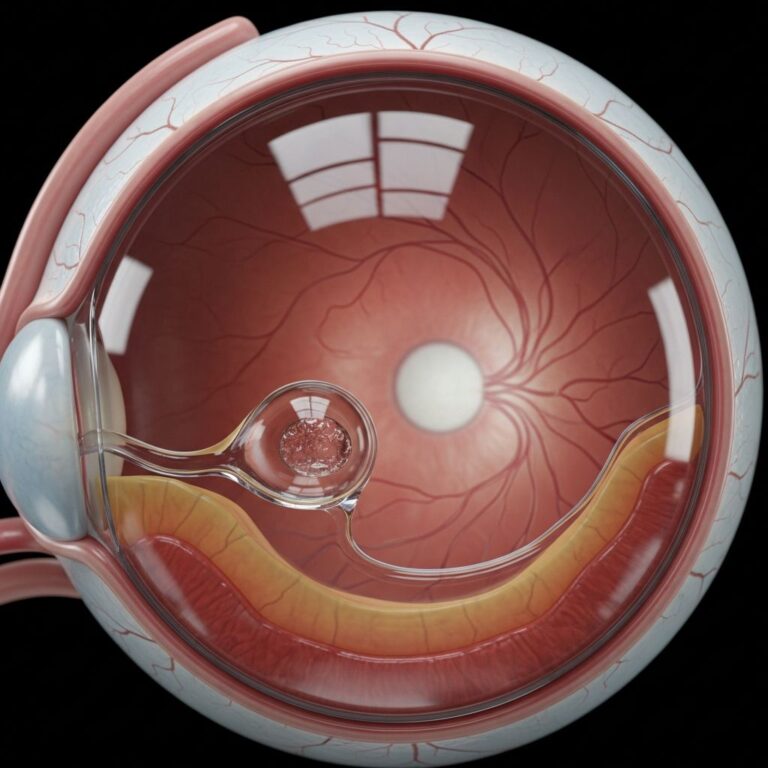
Chorioretinal Scars from ROP: Treatment Insights
Explore management strategies for chorioretinal scars caused by retinopathy of prematurity, from monitoring to advanced interventions.
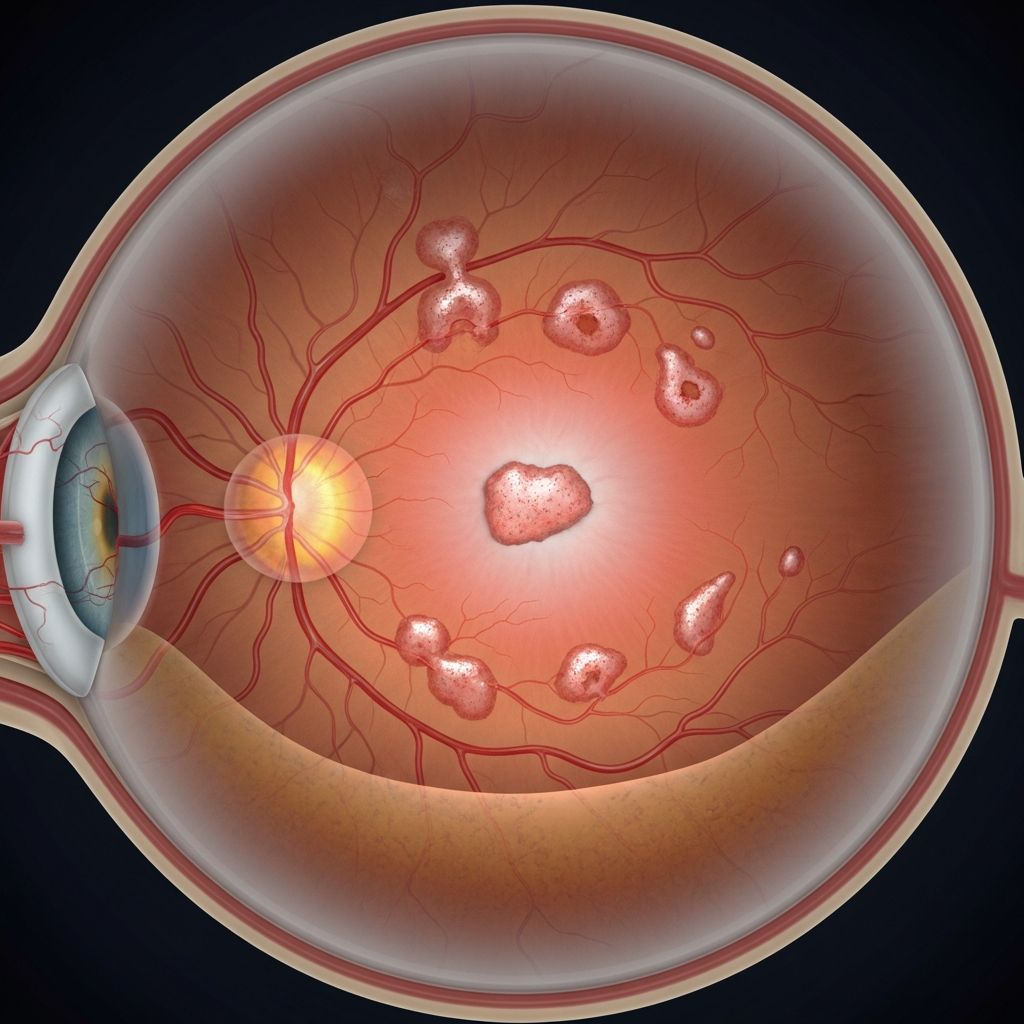
Chorioretinal scars from retinopathy of prematurity (ROP) represent a lasting consequence of this condition affecting premature infants, where abnormal blood vessel growth in the retina leads to tissue damage and permanent scarring in the choroid and retina layers. While no direct reversal exists for established scars, targeted monitoring and interventions address complications to safeguard remaining vision.
Understanding Retinopathy of Prematurity and Scar Development
Retinopathy of prematurity arises in preterm babies, particularly those born before 32 weeks or weighing under 1500 grams, due to incomplete vascularization of the retina coupled with oxygen fluctuations in neonatal care. This triggers neovascularization, potentially causing retinal detachment and fibrosis, culminating in chorioretinal scars—opaque patches disrupting light transmission and photoreceptor function.
These scars vary in size and location; peripheral ones may minimally impair central vision, but macular involvement severely compromises acuity. Early laser therapy during active ROP aims to ablate avascular retina, halting progression, yet residual scarring persists as a marker of prior disease severity.
- Common scar locations: Temporal retina, vascular arcs.
- Risk amplifiers: Low birth weight, prolonged ventilation.
- Long-term prevalence: Up to 90% in threshold ROP cases post-treatment.
Recognizing Symptoms and Visual Consequences
Individuals with ROP scars often experience strabismus, myopia, or amblyopia in childhood, evolving into field defects, reduced contrast sensitivity, or metamorphopsia in adulthood. Floaters from vitreous changes and scotomas—blind spots corresponding to scar positions—frequently emerge.
| Symptom | Description | Impact on Daily Life |
|---|---|---|
| Scotoma | Blind spot in visual field | Reading difficulties, navigation challenges |
| Metamorphopsia | Straight lines appear wavy | Driving hazards, facial recognition issues |
| Floaters | Dark spots drifting in vision | Distraction, anxiety about progression |
| Vision loss | Gradual central or peripheral decline | Employment limitations, independence loss |
Regular screening from infancy detects these early, allowing timely spectacle correction or patching for amblyopia.
Diagnostic Approaches for Accurate Assessment
Comprehensive exams by retina specialists employ indirect ophthalmoscopy, wide-field imaging, and optical coherence tomography (OCT) to map scar extent, vitreoretinal traction, and macular integrity. Fluorescein angiography delineates leakage or ischemia, while electroretinography quantifies retinal function.
- Fundus photography: Documents progression.
- OCT: Reveals subretinal fluid or thinning.
- Visual field testing: Quantifies defects.
These tools differentiate stable scars from active complications like neovascularization, guiding intervention decisions.
Primary Management: Observation and Monitoring
For asymptomatic, stable scars, vigilant observation suffices, with annual dilated exams tracking stability. This conservative approach minimizes intervention risks while detecting issues like retinal tears promptly.
Lifestyle modifications enhance outcomes: UV-protective eyewear, smoking cessation, and blood sugar control in diabetics prevent exacerbation.
Interventional Therapies for Complications
When scars induce traction, detachment, or neovascular membranes, targeted therapies activate.
Laser Photocoagulation
This outpatient procedure seals leaks or aberrant vessels using focused argon laser, promoting chorioretinal adhesion. Effective for peripheral tears near scars, it stabilizes the retina with minimal recovery.
Related Stories



Cryopexy
Freezing via scleral probe induces scarring to tether retina, ideal for anterior tears. Quick and office-based, it complements laser for comprehensive repair.
Surgical Options: Vitrectomy and Scleral Buckling
Advanced cases with tractional detachment necessitate pars plana vitrectomy—removing vitreous and peeling membranes—or scleral buckling to support reattachment. Success rates exceed 85% in skilled hands, though cataract formation risks rise.
Anti-VEGF Injections
For choroidal neovascularization secondary to scars, intravitreal bevacizumab or ranibizumab inhibits vessel growth, improving acuity in responsive cases. Monthly dosing initially, then as-needed.
Addressing Inflammation and Infection Risks
Though ROP scars are typically quiescent, superimposed inflammation (e.g., uveitis) or rare infections demand steroids—topical prednisolone or systemic prednisone—post-antimicrobial therapy if infectious. Immunomodulators like methotrexate spare steroids in chronic scenarios.
Pyrimethamine-sulfadiazine regimens treat toxoplasmosis-related chorioretinitis mimics, with folinic acid mitigating bone marrow suppression.
Pediatric Considerations and Long-Term Care
ROP survivors require lifelong ophthalmology follow-up, transitioning from pediatric to adult retina care. Myopia correction, low-vision aids, and genetic counseling for familial risks optimize quality of life.
- Infant screening: Every 1-2 weeks until resolution.
- Adolescent checks: Biennial for myopia progression.
- Adult monitoring: Annual for detachment risk.
Emerging Therapies and Research Directions
Gene therapies targeting vascular endothelial growth factor pathways show promise in preclinical ROP models. Stem cell patches for retinal regeneration and neuroprotective agents aim to restore scar-damaged tissue, with clinical trials underway.
Photodynamic therapy, using verteporfin-activated laser, selectively occludes neovessels while sparing healthy retina, expanding options for complex cases.
Frequently Asked Questions (FAQs)
Can chorioretinal scars from ROP be removed surgically?
Surgery removes tractional membranes but not the scars themselves; focus remains on complication relief.
Do ROP scars worsen over time?
Stable scars do not progress, but traction or new vessels can; monitoring prevents this.
Is laser treatment safe for children with ROP scars?
Yes, when indicated, with low complication rates under specialist care.
What is the vision prognosis with ROP scars?
Varies by scar location; peripheral scars often allow functional vision, macular ones challenge it.
Are there preventive measures for ROP scarring?
Neonatal oxygen management and timely screening reduce severe ROP incidence.
Patient Resources and Support
Organizations like the American Academy of Ophthalmology and ROP Foundations offer education, support groups, and trial access. Low-vision rehabilitation teaches adaptive strategies for maximal independence.
References
- What to Know About Retinal Scarring: Causes, Symptoms, and Treatment Options — California Retina Consultants. 2023. https://www.californiaretina.com/blog/what-to-know-about-retinal-scarring-causes-symptoms-and-treatment-options
- Chorioretinitis – Inflammation of the choroid and retina — NCBI Bookshelf (StatPearls). 2023-10-15. https://www.ncbi.nlm.nih.gov/books/NBK551705/
- Toxoplasmosis Chorioretinitis – June, 2022 — Illinois Retina Associates. 2022-06. https://www.illinoisretina.com/blog/toxoplasmosis-chorioretinitis-june-2022
- Retina Treatment – Other Treatments — Retina Utah. 2024. https://www.retinautah.com/retina-treatment/other-treatments
- Chorioretinitis: Symptoms, Causes & Treatment Options — Cleveland Clinic. 2023-11-01. https://my.clevelandclinic.org/health/diseases/25138-chorioretinitis
Similar Articles








Read full bio of Sneha Tete