Chrome Allergy: Causes, Diagnosis, And Prevention Guide
Understanding chrome contact allergy: causes, symptoms, diagnosis, treatment, and prevention strategies for chromium sensitivity.

Chrome allergy, also known as chromate allergy, manifests as allergic contact dermatitis due to a delayed type IV hypersensitivity reaction to chromium salts, primarily trivalent Cr(III) and hexavalent Cr(VI) compounds.
This condition affects individuals through skin contact with chromates found in various everyday and occupational products, leading to eczematous reactions that can become chronic if exposure persists.
What is chrome allergy?
Chrome allergy arises from sensitization to chromium salts (chromates), which trigger an immune-mediated inflammatory response in the skin upon re-exposure.
Unlike immediate allergies, this is a T-cell mediated delayed hypersensitivity, typically appearing 24-72 hours after contact.
Although ‘chrome’ evokes shiny metal plating, such items rarely cause reactions because the chromium is tightly bound; instead, soluble chromium salts from manufacturing processes are the culprits.
Sensitization often occurs occupationally, but once developed, reactions can persist lifelong, with about two-thirds of affected individuals remaining positive on patch tests years later.
Sources of chromium salts
Chromium salts are ubiquitous in industrial applications, leading to frequent exposure in construction, manufacturing, and consumer products.
- Cement and mortar: Highest occupational risk, containing 10-20 ppm hexavalent chromate from gypsum additives; wet cement penetrates skin, especially with sweat or cuts.
- Leather: Chrome-tanned leather in shoes, belts, gloves releases chromates with perspiration, causing shoe dermatitis.
- Paints and anticorrosives: Used in primers, varnishes, and rust preventives for metal protection.
- Wood preservatives and glues: In treated timber and adhesives.
- Batteries, welding fumes, and matches: Dry cell batteries, arc welding, and matchbox strikers.
- Cosmetics and dyes: Rare, in some hair dyes, tattoos, and anticorrosive agents.
- Other: Printing inks, textiles, anodized aluminum, flameproofing, photography chemicals, and chrome-plated objects with soluble residues.
Occupational groups at highest risk include construction workers (masons, tilers), metalworkers, mechanics, and tanners.
Reactions
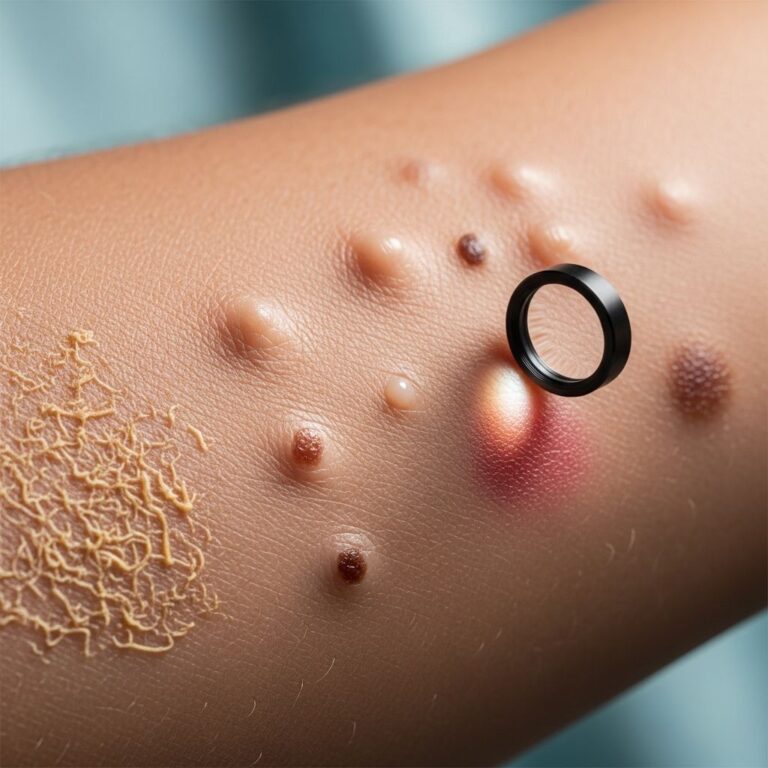
Chrome allergy presents as classic allergic contact dermatitis: erythematous, pruritic, eczematous patches at exposure sites, evolving to vesicles, bullae, scaling, and lichenification if chronic.
- Hands: Most common, ‘cement dermatitis’ with hyperkeratosis, fissures on palms, sides of fingers.
- Feet: Shoe dermatitis with moist, edematous, scaling skin between toes or on soles.
- Face and neck: From anticorrosives in soaps or splashes.
- Generalized: Id-like spread or systemic contact dermatitis (SCD) from oral chromium intake exacerbating skin symptoms.
Severe cases may show oozing, crusting, secondary bacterial infection (*Staphylococcus aureus*), or occupational disablement.
Rarely, inhalation causes respiratory symptoms like wheezing; ocular exposure leads to watery, red eyes.
Diagnosis
Diagnosis combines clinical history of relevant exposure and patch testing with 0.5% potassium dichromate in petrolatum, standard in baseline series.
Positive reactions (++) or (+++ ) at D4 confirm chromate hypersensitivity; false negatives occur if hands not tested or chromate-reduced cement used.
Differential includes irritant dermatitis (more common in wet cement work), nickel allergy, or other haptens; biopsy shows spongiosis, exocytosis.
Systemic chromate contact dermatitis diagnosed if skin worsens post-ingestion of chromium supplements.
Treatment
Primary treatment is strict chromate avoidance; symptomatic relief mirrors acute eczema management.
- Topical: Potent corticosteroids (e.g., clobetasol), calcineurin inhibitors (tacrolimus), emollients.
- Infection: Antibiotics for *S. aureus* superinfection.
- Severe/persistent: Phototherapy (NB-UVB), immunosuppressants (azathioprine, ciclosporin, methotrexate).
- Supportive: Oral antihistamines, wet wraps.
Related Stories



Desensitization unreliable; chronic cases may require occupational change.
Prevention
Avoidance is cornerstone; early intervention prevents chronicity.
Workplace measures
- Substitute with chromate-reduced cement (<2 ppm Cr(VI)).
- Personal protective equipment: Waterproof gloves (not occlusive), barrier creams with ferrous sulfate (reduces Cr(VI) to insoluble Cr(III)).
- Launder work clothes separately, use exhaust ventilation for fumes.
- Consult Material Safety Data Sheets (MSDS) for chromate content.
General avoidance
- Vegetable-tanned leather shoes, thick socks to reduce sweat.
- Avoid chromate-containing cosmetics, matches in pockets.
- Wash chromate-contaminated clothes thoroughly.
- Diet: Limit high-chromium foods (tomatoes, broccoli, lettuce, turnips, brewer’s yeast) if SCD suspected, though evidence limited.
Boost immunity with vitamin C, omega-3s, quercetin-rich foods, probiotics, but not curative.
Alternative names
- Chromate allergy
- Chromium allergy
- Dichromate allergy
- Potassium dichromate allergy
Frequently Asked Questions
Who is most at risk for chrome allergy?
Construction workers handling wet cement/mortar, leather workers, and painters face highest risk due to soluble chromate exposure.
Can chrome allergy be cured?
No cure exists; lifelong avoidance is essential, as sensitivity persists in most cases.
Does eating chromium-rich foods worsen chrome allergy?
Possibly in systemic contact dermatitis; avoid tomatoes, broccoli if symptoms flare post-ingestion.
How is chrome allergy tested?
Patch testing with 0.5% potassium dichromate; positive at 48-96 hours confirms diagnosis.
Is chrome-plated jewelry dangerous for chrome allergy?
Rarely, as metallic chromium is insoluble; nickel often the true allergen.
Table: Common Sources and Avoidance Strategies
| Source | Exposure Risk | Avoidance |
|---|---|---|
| Cement/Mortar | High (wet work) | Chromate-reduced (<2ppm), gloves, barrier cream |
| Leather (shoes) | Medium (sweat) | Vegetable-tanned, thick socks |
| Paints/Anticorrosives | High (occupational) | PPE, ventilation |
| Matches/Welding | Low-Medium | Avoid direct contact |
| Foods (tomatoes, etc.) | Low (SCD) | Dietary restriction if symptomatic |
References
- Chrome contact allergy – DermNet — DermNet NZ. 2023. https://dermnetnz.org/topics/chrome-allergy
- Chrome Allergy: Symptoms, Diagnosis & Treatment — Curex. 2025-07-09. https://getcurex.com/allergens-and-symptoms/allergy-symptoms-immunotherapy-chrome
- Chromium Allergy and its Activation of the Innate Immune Response — Wesleyan University Metals Blog. 2020-11-23. https://metals.blogs.wesleyan.edu/2020/11/23/chromium-allergy-and-its-activation-of-the-innate-immune-response/
- Metal Allergy and Systemic Contact Dermatitis: An Overview — PMC (NCBI). 2012. https://pmc.ncbi.nlm.nih.gov/articles/PMC3369403/
- Contact Dermatitis — Cedars-Sinai. Accessed 2026. https://www.cedars-sinai.org/health-library/diseases-and-conditions/c/contact-dermatitis.html
Similar Articles








Read full bio of medha deb