Chromosomes: Definition, Structure & Function
Understanding chromosomes: The threadlike structures carrying your genetic blueprint and DNA instructions.
What Are Chromosomes?
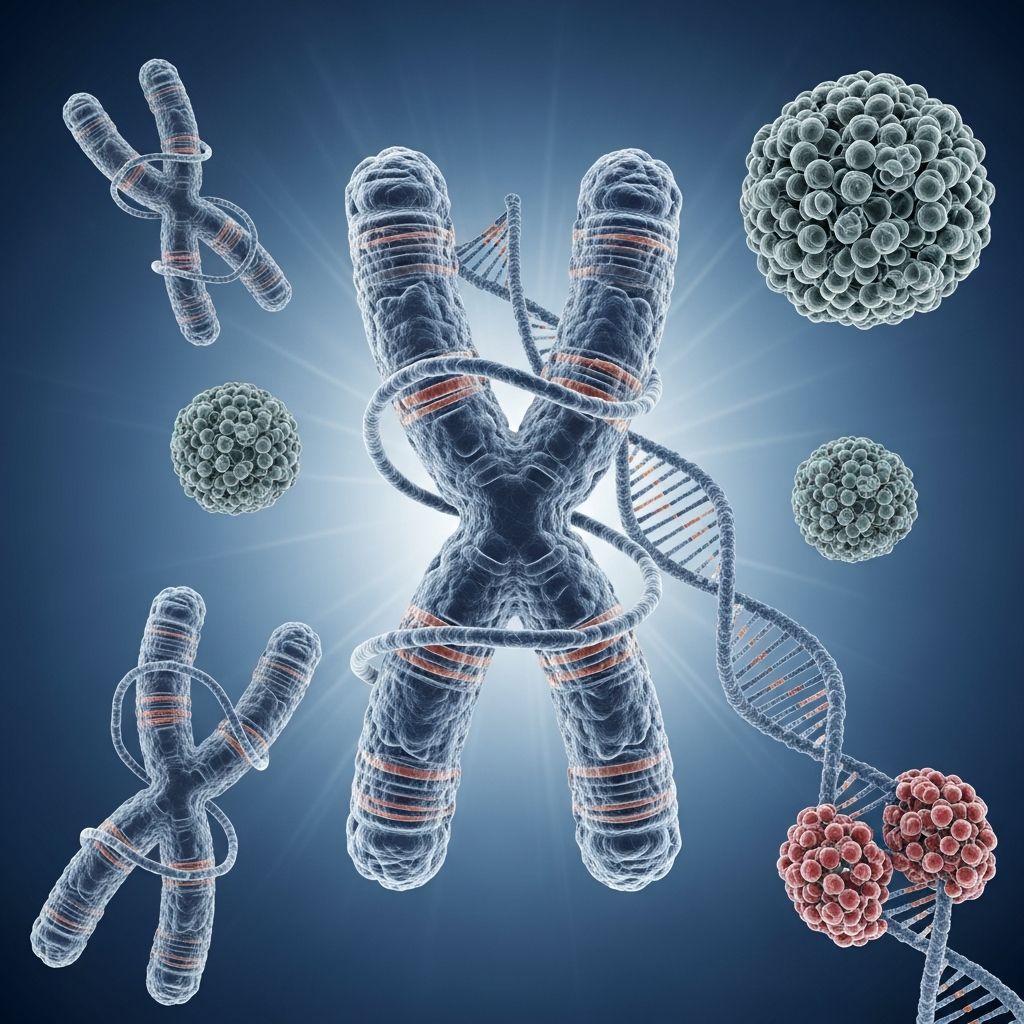
Chromosomes are long strings of DNA wrapped tightly around proteins to make them compact and organized within your cells. Think of them as the filing system for your genetic information—they package your DNA into manageable, functional units. Humans have 23 pairs of chromosomes, totaling 46 chromosomes in most cells. These chromosomes contain the genetic instructions that determine how your body forms, functions, and develops throughout your life.
Each chromosome is essentially a collection of genes, which are specific segments of DNA that code for particular traits and proteins. Your chromosomes are inherited from both biological parents—you receive one chromosome from each pair from your mother and one from your father. This genetic inheritance determines characteristics ranging from eye color to height to susceptibility to certain diseases.
Understanding Chromosome Structure
Chromosomes have a distinct physical structure that allows them to store and organize genetic information efficiently. The main parts of a chromosome include:
- Centromere: The constricted region of the chromosome that holds sister chromatids together during cell division. This structure is crucial for proper chromosome segregation during mitosis and meiosis.
- Arms: Chromosomes typically have two arms extending from the centromere—the short arm (p arm) and the long arm (q arm). These arms contain genes and other genetic sequences.
- Telomeres: Protective caps at the ends of chromosomes that prevent genetic information from being lost during cell replication. They shorten with age and cell division.
- DNA and Proteins: The chromosome consists of double-stranded DNA wound around histone proteins, forming structures called nucleosomes. This packaging allows approximately 3 billion base pairs of DNA to fit into the nucleus of a single cell.
The Role of Chromosomes in Genetics
Chromosomes serve as the primary vehicles for transmitting genetic information from one generation to the next. They organize genes in a linear fashion, with each gene occupying a specific location, or locus, on a particular chromosome. This organization allows for predictable inheritance patterns and helps scientists understand how traits and diseases are passed through families.
During reproduction, chromosomes undergo a special type of cell division called meiosis, which reduces the chromosome number by half. This process ensures that when sperm and egg cells combine during fertilization, the resulting embryo receives the standard 46 chromosomes (23 pairs) rather than having a doubled number. Without this reduction division, each generation would have twice as many chromosomes as the previous one.
Chromosome Pairs and Human Genetics
The 23 pairs of human chromosomes consist of 22 pairs of autosomes (numbered chromosomes 1 through 22) and one pair of sex chromosomes (X and Y). The autosomes contain genes responsible for most physical traits and bodily functions. The sex chromosomes determine biological sex: individuals with XX chromosomes are typically female, while those with XY chromosomes are typically male.
Each chromosome pair carries similar genes, though not necessarily identical versions. These variations, called alleles, contribute to genetic diversity and individual differences. For example, while everyone has a gene for eye color on their chromosome pair 15, the specific version of that gene may differ, resulting in different eye colors among individuals.
Related Stories



Chromosome Abnormalities and Health Conditions
Sometimes, chromosomal abnormalities occur that can significantly affect health and development. These abnormalities can involve changes in chromosome number or structure.
Numerical Abnormalities
Aneuploidy occurs when individuals have an abnormal total number of chromosomes—either too many or too few. In cases of trisomy, a person has an extra chromosome copy, resulting in 47 total chromosomes instead of 46. Conversely, monosomy means a person is missing one chromosome copy, resulting in 45 total chromosomes. Aneuploidy affects almost half of all pregnancies that end in miscarriage during the first trimester, demonstrating its significant impact on fetal development.
Down Syndrome (Trisomy 21) is one of the most common and well-known examples of aneuploidy. Individuals with Down syndrome have an extra copy of chromosome 21, giving them 47 total chromosomes instead of 46. This genetic variation affects brain and body development, leading to intellectual disabilities and characteristic physical features. However, with supportive care and appropriate therapies, people with Down syndrome can lead happy, healthy lives and achieve meaningful milestones in education and employment.
Down syndrome occurs in three main forms. Trisomy 21 is the most common, accounting for approximately 95% of cases, where there are three complete copies of chromosome 21. Translocation Down syndrome accounts for less than 4% of cases and occurs when part or all of chromosome 21 attaches to another chromosome, usually chromosome 14. Mosaic Down syndrome is the rarest form, representing less than 1% of cases, where some cells contain the typical 46 chromosomes while others contain 47 chromosomes with an extra chromosome 21.
Another example of trisomy is Trisomy 13 (Patau Syndrome), a rare genetic condition where individuals have an extra copy of chromosome 13, resulting in 47 total chromosomes. This condition causes more severe symptoms than Down syndrome and typically results in significant developmental challenges and health complications.
Structural Abnormalities
Chromosomal abnormalities can also involve changes to chromosome structure rather than just number. These include:
- Deletions: Loss of a chromosomal segment, removing genes and potentially causing genetic information to be missing.
- Duplications: A chromosomal segment is copied, resulting in extra genetic material and potentially disrupting normal gene function.
- Inversions: A chromosome segment breaks at two points and reinserts in reverse orientation, which may disrupt genes at the breakpoints.
- Translocations: A segment from one chromosome transfers to another chromosome, potentially causing problems if genes are disrupted or if there is an imbalance of genetic material.
A well-known example of a translocation is the Philadelphia chromosome, which occurs when pieces of chromosome 9 and chromosome 22 break off and exchange places, creating a fusion gene (BCR::ABL1). This chromosomal abnormality causes certain types of leukemia and has important implications for cancer treatment strategies.
Diagnostic Testing for Chromosome Abnormalities
Modern genetic testing has revolutionized our ability to detect chromosomal abnormalities. Cytogenetics is the scientific study of chromosomes and chromosome behavior, and cytogenetic testing is used to identify changes to chromosomes that can cause diseases. These tests can detect numerous types of chromosomal variations that might otherwise go undiagnosed.
Chromosomal Microarray Analysis (CMA), particularly whole-genome single nucleotide polymorphism (SNP) microarray testing, has become the recommended first-tier test for diagnosing unexplained intellectual disabilities, dysmorphic features, congenital anomalies, and autism spectrum disorders. This advanced technology can detect copy number changes with approximately 15-20% yield of pathogenic or clinically significant findings in pediatric populations, compared with only 3-5% yield using standard cytogenetic analysis.
SNP microarray testing can identify multiple types of chromosomal abnormalities, including:
- Chromosomal abnormalities or micro-duplication/deletion syndromes with a normal karyotype
- The size of duplications or deletions involved in unbalanced translocations
- Triploidy (having three complete sets of chromosomes)
- Cryptic duplications or deletions in phenotypically abnormal individuals with apparently balanced karyotypes
- Uniparental disomy (both chromosomes in a pair inherited from one parent)
- Absence of heterozygosity to determine relatedness and assess autosomal recessive condition risks
Chromosome Disorders and Associated Health Risks
Chromosomal abnormalities can predispose individuals to specific health conditions. For instance, individuals with Down syndrome have an increased risk of developing Alzheimer’s disease. Genes on chromosome 21 produce amyloid precursor protein, which plays an important role in the brain changes associated with Alzheimer’s disease, explaining this elevated risk.
Chromosomal abnormalities can arise from various causes. Errors in cell copying during the formation of sperm and egg cells, or during fetal development, can lead to chromosomal changes that cause genetic conditions present from birth. Additionally, dividing cells can accumulate chromosomal changes during a person’s lifetime, which may lead to cancer development. In some cases, chromosomal changes can be inherited directly from biological parents.
The Importance of Genetic Counseling
When chromosome abnormalities are identified, appropriate follow-up is essential. This may include additional cytogenetic or fluorescence in situ hybridization (FISH) testing, molecular studies of the patient or parents, and clinical genetics consultation. Genetic counselors help families understand the implications of chromosomal findings, interpret test results, and make informed decisions about medical care and family planning.
Frequently Asked Questions
Q: How many chromosomes do humans have?
A: Humans have 23 pairs of chromosomes, totaling 46 chromosomes in most cells. The 23rd pair consists of sex chromosomes that determine biological sex.
Q: Can chromosome abnormalities be detected during pregnancy?
A: Yes, healthcare providers can suspect chromosome abnormalities during pregnancy using prenatal screening tests and can confirm them with diagnostic tests such as amniocentesis or chorionic villus sampling (CVS).
Q: Is Down syndrome life-threatening?
A: Down syndrome itself is not inherently life-threatening. With appropriate medical care and support, people with Down syndrome can live healthy, fulfilling lives and achieve significant personal and professional goals.
Q: What causes chromosome abnormalities?
A: Chromosome abnormalities can result from errors during cell division, mistakes during the formation of sperm and egg cells, or be inherited from biological parents. Environmental factors and advanced parental age can increase the risk of certain chromosomal abnormalities.
Q: Can chromosome abnormalities be treated?
A: While chromosome abnormalities cannot be cured, their symptoms can often be managed through medical treatments, therapies, and supportive care tailored to the individual’s needs.
References
- Whole Genome Single Nucleotide Polymorphism Microarray Testing — Cleveland Clinic Labs. 2024. https://clevelandcliniclabs.com/whole-genome-single-nucleotide-polymorphism-microarray-testing/
- Aneuploidy: Genetic Disorder Causes & Types — Cleveland Clinic. 2024. https://my.clevelandclinic.org/health/diseases/24060-aneuploidy
- Down Syndrome: Symptoms & Causes — Cleveland Clinic. 2024. https://my.clevelandclinic.org/health/diseases/17818-down-syndrome
- Trisomy 13 (Patau Syndrome): Symptoms, Causes & Outlook — Cleveland Clinic. 2024. https://my.clevelandclinic.org/health/diseases/24647-trisomy-13-patau-syndrome
- What Is Cytogenetics? — Cleveland Clinic. 2024. https://my.clevelandclinic.org/health/articles/cytogenetics
- Chromosomes: Definition, Structure & Function — Cleveland Clinic. 2024. https://my.clevelandclinic.org/health/body/chromosomes
Similar Articles








Read full bio of Sneha Tete