Chronic Actinic Dermatitis: Diagnosis & Treatment Essentials
Understanding chronic actinic dermatitis: causes, symptoms, diagnosis, and effective management strategies for this persistent photosensitive skin condition.
Revised: January 2026
What is chronic actinic dermatitis?
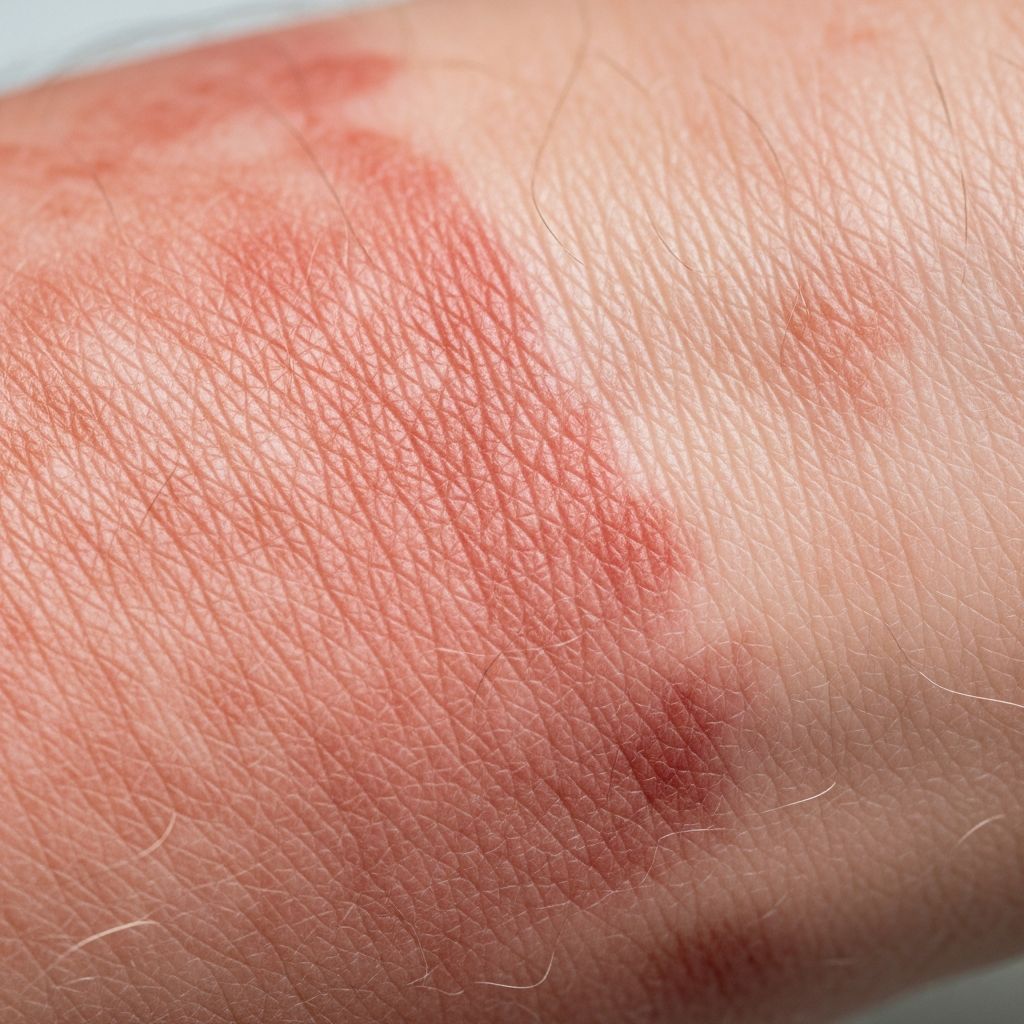
Chronic actinic dermatitis (CAD) is a rare, persistent form of eczema characterised by extreme sensitivity to sunlight, particularly ultraviolet (UV) radiation. It manifests as an intensely pruritic, eczematous rash predominantly on photo-exposed sites such as the face, neck, upper chest, dorsal hands, and forearms. The condition can progress to a pseudolymphomatous eruption known as actinic reticuloid, where skin thickening and infiltration mimic lymphoma. CAD typically affects older adults, especially middle-aged to elderly men with a history of outdoor occupations or prolonged sun exposure.
Synonyms include photosensitivity dermatitis, actinic reticuloid syndrome, and persistent light reaction. The rash spares covered areas like the upper eyelids, scalp beneath hair, retroauricular skin, and submental region, providing a distinctive ‘photodistribution’ pattern. Symptoms worsen with even brief sun exposure, leading to red, swollen, scaly plaques that may blister or lichenify over time.
Who gets chronic actinic dermatitis?
CAD predominantly impacts males over 50 years, with a male-to-female ratio of approximately 2–3:1. It is uncommon in children and young adults. Risk factors include:
- Chronic outdoor work or hobbies involving sun exposure (e.g., farmers, gardeners, sailors).
- History of allergic contact dermatitis (ACD) to plants (e.g., sesquiterpene lactones in Compositae family like chrysanthemums), fragrances, sunscreens, or preservatives.
- Pre-existing atopic dermatitis or other eczematous conditions.
- Immunological dysregulation, with increased CD8+ T-cells and low CD4:CD8 ratio.
In severe cases, photosensitivity extends to UVA, UVB, and visible light, affecting up to 80% of the body surface even under glass or clothing. Climate change and air pollutants may exacerbate symptoms.
What causes chronic actinic dermatitis?
The exact aetiology remains unclear, but CAD involves an abnormal immune response to UV-altered skin antigens. Key hypotheses include:
- Photoallergic contact dermatitis: Cross-reactivity between photoallergens (e.g., from plants or chemicals) and endogenous antigens, persisting after allergen removal.
- Cell-mediated immunity dysfunction: UV exposure triggers CD8+ cytotoxic T-cells, resident memory T-cells, and cytokines like IFN-γ, IL-17, and IL-36γ via NF-κB pathway.
- Oxidative stress and inflammation from repeated UV damage, leading to mast cell, dendritic cell, and T-cell infiltration.
Many patients (up to 75%) have concurrent contact allergies, amplifying photosensitivity. Genetic predisposition and environmental triggers like summer sun peaks contribute.
What are the clinical features of chronic actinic dermatitis?
The hallmark is a chronic, relapsing pruritic eruption on sun-exposed skin:
- Acute phase: Red, oedematous, vesicular plaques with burning/itching.
- Chronic phase: Lichenified, scaly, infiltrated plaques; leonine facies in severe cases; pigmentary changes.
- Photosensitivity spectrum: UVB most common, extending to UVA/visible light in 50–80%.
- Exacerbations in summer; year-round in advanced disease.
Skin may feel hot, sore, or burning; secondary infection from scratching is common. Histology shows eczematous changes to dense lymphocytic infiltrates mimicking mycosis fungoides.
Related Stories



How is chronic actinic dermatitis diagnosed?
Diagnosis relies on clinical history, examination, and specialised testing:
- Patch testing: Identifies contact allergens (e.g., Compositae mix, fragrances).
- Photopatch testing: Detects photoallergens.
- Phototesting: Monochromator phototesting determines action spectrum (abnormally low minimal erythema dose to UVB/UVA).
- Skin biopsy: Confirms dermatitis or pseudolymphoma; low CD4:CD8 ratio.
- Exclusion of other photodermatoses (e.g., polymorphic light eruption, drug-induced).
Blood tests rule out systemic causes; photoprovocation may reproduce lesions.
What is the treatment of chronic actinic dermatitis?
Treatment is multifaceted, focusing on strict
sun avoidance
and anti-inflammatory therapies:Sun Protection
- Broad-spectrum SPF50+ sunscreens (applied 20–30 min prior, reapplied every 2h).
- UV-protective clothing, hats, window films; avoid outdoors 10am–4pm.
Topical Therapies
- Potent corticosteroids (e.g., clobetasol) once daily for flares; emollients for xerosis.
- Calcineurin inhibitors (tacrolimus, pimecrolimus) as steroid-sparing agents.
Systemic Therapies
| Agent | Indication | Dose/Example | Notes |
|---|---|---|---|
| Prednisolone | Acute flares | 0.5–1 mg/kg/day, taper | Short-term only |
| Azathioprine | Refractory | 1.5–2.5 mg/kg/day | Monitor TPMT; T-cell suppression |
| Ciclosporin | Severe | 3–5 mg/kg/day | Nephrotoxicity risk |
| Methotrexate | Chronic | 15–25 mg/week | Folate supplement |
| Mycophenolate mofetil | Refractory | 1–2 g/day | GI upset common |
| Tofacitinib/Upadacitinib | Novel JAK inhibitors | 5–15 mg BD | Targets IL pathways; case successes |
| Dupilumab | Biologic | 300 mg/2wks | IL-4/13 inhibition |
Phototherapy
PUVA or narrowband UVB for desensitisation in selected cases.
Allergen avoidance is crucial if identified.
What is the outcome for chronic actinic dermatitis?
CAD is chronic; no cure exists, but 50% remit after 15 years with management. Strict sun protection prevents flares; severe cases require lifelong immunosuppressants. Complications include secondary infection, scarring, and rarely progression to cutaneous T-cell lymphoma (debated). Regular dermatologist follow-up is essential. Patient education improves compliance.
Frequently Asked Questions
Can CAD be cured?
No, there is no cure, but symptoms can be controlled with sun avoidance and treatments. Many improve over 10–15 years.
Is CAD caused by sunscreen allergy?
Possibly; photoallergy to sunscreen chemicals is common. Patch/photopatch testing identifies triggers.
Does CAD affect indoors?
Yes, in severe cases, UVA/visible light through windows triggers flares.
Is CAD linked to cancer?
Rarely; pseudolymphomatous histology mimics lymphoma but is benign. Monitor changes.
What daily precautions for CAD?
Use SPF50+, cover-up clothing, avoid peak sun; emollients daily.
References
- Diagnosis and treatment of chronic actinic dermatitis — PubMed. 2003-08-01. https://pubmed.ncbi.nlm.nih.gov/12919126/
- Successful Treatment of Chronic Actinic Dermatitis with Tofacitinib — Dove Press. 2023. https://www.dovepress.com/successful-treatment-of-chronic-actinic-dermatitis-with-tofacitinib-peer-reviewed-fulltext-article-CCID
- Chronic actinic dermatitis — Indian Journal of Skin Allergy. 2023. https://skinallergyjournal.com/chronic-actinic-dermatitis/
- Chronic Actinic Dermatitis — DermNet NZ. 2024. https://dermnetnz.org/topics/chronic-actinic-dermatitis
- Chronic actinic dermatitis — Skin Health Info (BAD). 2023. https://www.skinhealthinfo.org.uk/condition/chronic-actinic-dermatitis/
- Dermatology – Chronic Actinic Dermatitis — Northern Care Alliance NHS. 2024. https://www.northerncarealliance.nhs.uk/patient-information/patient-leaflets/dermatology-chronic-actinic-dermatitis
Similar Articles








Read full bio of Sneha Tete