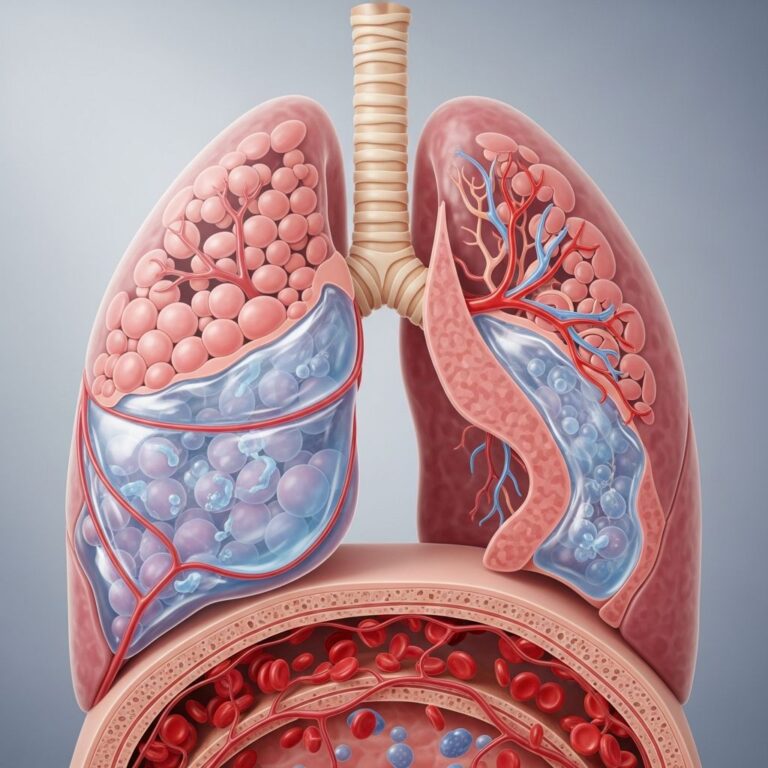
Chronic Cough: Causes, Diagnosis, and Treatment
Understanding chronic cough: comprehensive guide to causes, diagnosis strategies, and effective management options.

What Is Chronic Cough?
Chronic cough is defined as a persistent cough lasting 8 weeks or longer in adults. This distinction is important for diagnosis and treatment planning. Healthcare providers classify cough by duration into three categories: acute cough (less than 3 weeks), subacute cough (3 to 8 weeks), and chronic cough (8 weeks or longer). While coughing is typically a protective reflex that helps clear airways and maintain respiratory health, a chronic cough represents a significant departure from this normal function and warrants medical investigation.
Chronic cough presents a considerable diagnostic challenge because it can stem from numerous underlying conditions, ranging from respiratory to gastrointestinal disorders. Despite being one of the most frequent reasons for both primary care and specialty physician visits, chronic cough diagnosis and treatment remain challenging for healthcare providers. Within pulmonology clinics specifically, up to 40% of patient visits are to evaluate chronic cough.
Impact on Quality of Life
The impact of chronic cough on patients often extends far beyond the cough itself. Chronic cough can lead to marked reduction in quality of life, depression, anxiety, urinary incontinence, and dysphonia. Many healthcare professionals underappreciate this significant impact on patients’ daily functioning and mental health. The persistent nature of the condition can interfere with sleep, work productivity, and social interactions, making effective diagnosis and treatment essential for overall patient wellbeing.
Most Common Causes of Chronic Cough
Understanding the underlying cause is essential for effective treatment, as chronic cough can suggest diverse conditions. The most common causes include:
- Upper Airway Cough Syndrome (UACS) — Formerly known as postnasal drip syndrome, UACS is a significant contributor to chronic cough, comparable to other major causes such as asthma and gastroesophageal reflux. The mechanisms involve postnasal drip, direct irritation of nasal mucosa, inflammation in the upper and lower airways, and sensitization of the cough reflex.
- Asthma — A leading cause of chronic cough, particularly in both adults and children.
- Gastroesophageal Reflux Disease (GERD) — Stomach acid reflux can trigger chronic cough through direct irritation and airway hypersensitivity.
- ACE Inhibitor Medications — Certain blood pressure medications are known to cause chronic cough as a side effect.
- Smoking — Both current and former smoking is associated with chronic cough.
- Non-asthmatic Eosinophilic Bronchitis — An inflammatory airway condition without asthma features.
Understanding the Pathophysiology
The cough reflex involves coordinated activity of muscles and neural pathways serving as a crucial protective response. In chronic cough, this reflex becomes dysregulated. Recent research has identified cough hypersensitivity syndrome as a unifying mechanism that may link many underlying etiologies. This condition involves increased sensitivity of sensory nerves in the airways and abnormal processing in the central nervous system.
Studies have demonstrated that patients with chronic cough can have overall increased afferent hypersensitivity that predisposes them to the condition. Additionally, research suggests that gaseous nonacid reflux and low levels of thermal, mechanical, or chemical exposures may contribute significantly to this hypersensitivity.
Related Stories



Post-Infection Cough
Respiratory tract infections are a common trigger for chronic cough. Although cough typically resolves within days following infection, cough reflex hypersensitivity might persist for several weeks or even longer. This prolonged sensitivity may be related to inflammation of the vagal nerves. Approximately 25% of patients with chronic cough report a postinfectious etiology due to upper respiratory infection.
Bronchiectasis and Chronic Cough
Bronchiectasis, a condition involving dilation and damage to the airways, makes it difficult for the lungs to effectively clear mucus, leading to chronic cough. While some individuals with this condition may experience only a dry cough, most tend to produce chronic sputum that is mucopurulent (containing mucus and pus). During exacerbations, the sputum may become frankly purulent. Research shows overlap between bronchiectasis and other airway diseases associated with increased lung inflammation and frequent exacerbations that precipitate chronic cough.
Diagnostic Approach
Proper diagnosis of chronic cough involves a systematic approach. Assessments should include a detailed history and examination to identify potential causes and triggers. Healthcare providers will evaluate the clinical presentation, epidemiology, and various examination findings to determine the underlying etiology.
The impact and severity of chronic cough can be assessed in clinical settings using subjective questionnaires that measure cough-specific quality of life. These assessment tools help quantify the burden of the condition and track response to treatment over time.
Treatment Options
Identifying and Treating Underlying Causes
The first step in chronic cough management involves identifying and treating the underlying cause. Management strategies must be tailored to the specific etiology identified during evaluation. For example, if asthma is the cause, asthma-specific medications may resolve the cough. If GERD is responsible, acid-suppressing medications might be effective.
ACE Inhibitor-Induced Cough
The only effective treatment of ACE-inhibitor-induced cough is discontinuation of the ACE-inhibitor. Improvement can be seen within 4 to 8 weeks, although some cases report that the effect can last up to 6 months. Patients are recommended to switch to another class of antihypertensive, such as angiotensin receptor blockers, which are not associated with increased cough.
Refractory and Unexplained Chronic Cough
Persistent cough despite optimal treatment of the underlying condition is called refractory chronic cough (RCC), while persistent cough for which no underlying cause is found is labeled unexplained chronic cough (UCC). When standard treatments fail, neuromodulator treatments may offer therapeutic benefit.
These advanced treatment options include:
- Speech and language therapy
- Low-dose opioid medications
- Gabapentin
- Pregabalin
Recent research indicates that excessive cough in patients with RCC/UCC could result from increased activation of airway peripheral nerve terminals by chemical irritants, hypersensitivity of the afferent vagal nerve and brainstem, or impaired voluntary control and descending inhibitory control pathways.
Speech and Language Therapy
Speech and language therapy has shown promising results in clinical trials. Two studies demonstrated improvements in cough-specific quality of life and objective cough frequency in the intervention group compared to placebo. The benefits observed in the intervention groups were sustained for up to 3 months, and neither study reported any adverse effects.
Protracted Bacterial Bronchitis in Children
In children, protracted bacterial bronchitis is characterized by isolated chronic cough, wet or moist cough, resolution of cough with antibiotic treatment, and absence of findings suggestive of an alternative cause. Treatment consists of a two-week course of an appropriate antibiotic, such as amoxicillin/clavulanate.
Long-Term Prognosis
Understanding the long-term outlook for chronic cough patients is important for setting realistic expectations. A recent study revealed that many individuals diagnosed with chronic cough continued to experience persistent coughing for at least 5 years. This finding was somewhat more optimistic than a prior study on the same subject, which reported that 60% of patients experienced worsening or unchanged cough symptoms at a 7-year follow-up. The disparity in results can be attributed to differences in the patient populations studied.
Collaboration in Care
Effective management of chronic cough benefits from an interprofessional healthcare team approach. This collaboration enhances diagnostic accuracy and improves patient outcomes through coordinated care involving primary care physicians, pulmonologists, gastroenterologists, and other specialists as needed.
Frequently Asked Questions
Q: How long must a cough last to be considered chronic?
A: A cough that lasts 8 weeks or longer in adults is classified as chronic. This timeframe helps distinguish chronic cough from acute cough (less than 3 weeks) and subacute cough (3 to 8 weeks).
Q: What are the most common causes of chronic cough?
A: The most common causes are upper airway cough syndrome, asthma, and gastroesophageal reflux disease. New research has also identified cough hypersensitivity syndrome as a potential unifying mechanism.
Q: Can a cough persist after a respiratory infection clears?
A: Yes. Even after an infection resolves, cough reflex hypersensitivity can persist for several weeks or longer, possibly due to inflammation of the vagal nerves. This postinfectious cough accounts for approximately 25% of chronic cough cases.
Q: Is chronic cough curable?
A: Treatment success depends on identifying and addressing the underlying cause. Some patients experience complete resolution, while others may have persistent symptoms requiring long-term management strategies.
Q: What should I do if my chronic cough doesn’t respond to standard treatments?
A: If your cough persists despite optimal treatment of the underlying condition (refractory chronic cough), your healthcare provider may recommend neuromodulator treatments such as speech and language therapy, low-dose opioids, gabapentin, or pregabalin.
Q: Can blood pressure medications cause chronic cough?
A: Yes. ACE inhibitor medications commonly cause chronic cough as a side effect. The only effective treatment is discontinuation of the medication, with improvement typically seen within 4 to 8 weeks. Alternative antihypertensive classes like angiotensin receptor blockers do not have this association.
References
- Chronic Cough — StatPearls — National Center for Biotechnology Information (NCBI). 2024. https://www.ncbi.nlm.nih.gov/books/NBK430791/
- Understanding the Foundations of Chronic Cough — American Journal of Managed Care (AJMC). 2024. https://www.ajmc.com/view/understanding-the-foundations-of-chronic-cough
- Chronic Cough: Investigations, Management, Current and Future Treatment Options — Taylor & Francis Online. 2021. https://www.tandfonline.com/doi/full/10.1080/24745332.2021.1979904
- Chronic Cough: Evaluation and Management — American Academy of Family Physicians (AAFP). 2017. https://www.aafp.org/pubs/afp/issues/2017/1101/p575.html
Similar Articles








Read full bio of Sneha Tete