Chronic Kidney Disease: Symptoms, Stages & Treatment
Understanding CKD: Learn about symptoms, diagnosis, stages, and management strategies for chronic kidney disease.
Understanding Chronic Kidney Disease (CKD)
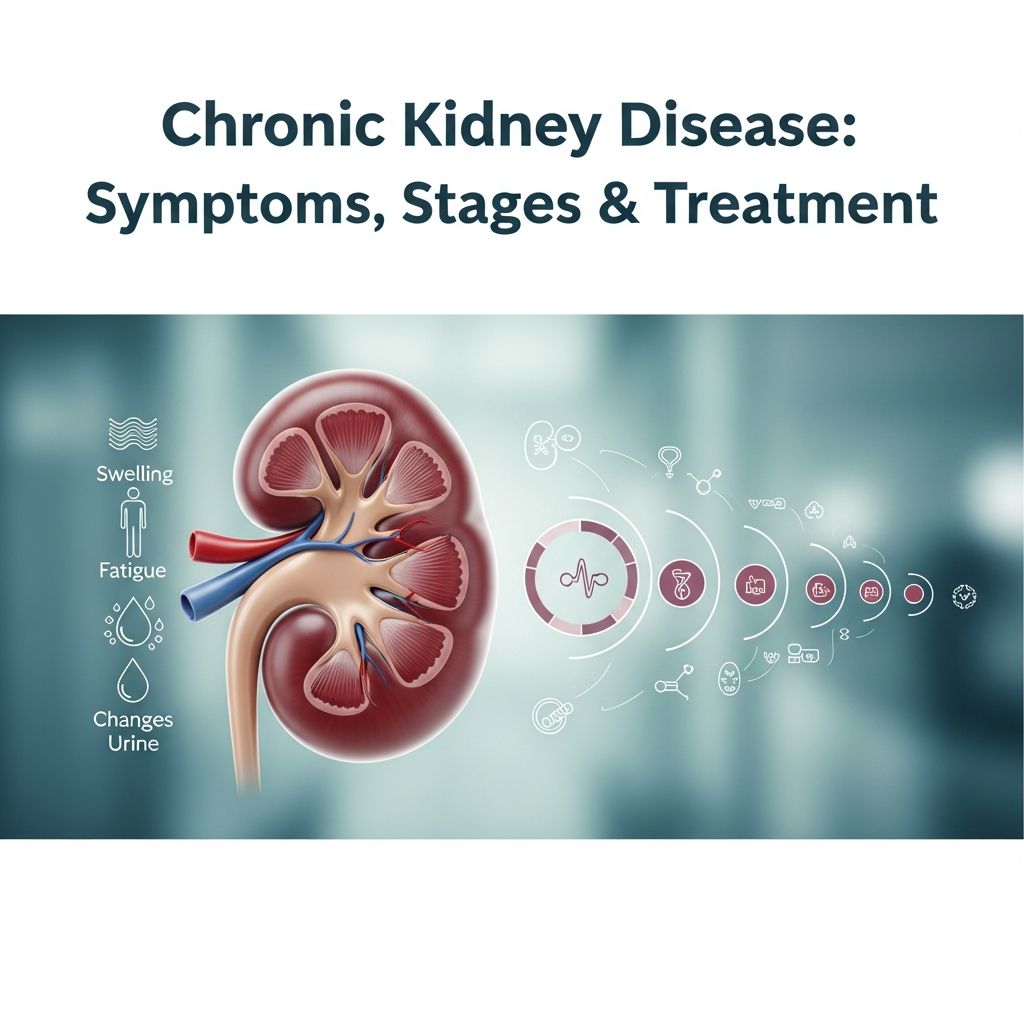
Chronic kidney disease (CKD) is a condition in which your kidneys gradually lose their ability to function properly over time. The kidneys’ primary role is to filter waste products and excess water from your blood, which are then eliminated through urine. When kidney function declines progressively, these waste products accumulate in your body, leading to serious health complications if left untreated. CKD becomes a clinical concern when kidney function decreases over a period of three or more months and is characterized by either kidney damage or a decreased glomerular filtration rate (GFR), regardless of the underlying cause.
It is crucial to understand that chronic kidney disease has no cure, but early detection and proper management can significantly slow its progression and help preserve kidney function for as long as possible. The condition represents a spectrum of kidney dysfunction rather than a single disease entity, encompassing various underlying causes such as diabetes, high blood pressure, autoimmune diseases, and congenital conditions.
What Causes Chronic Kidney Disease?
Multiple factors and conditions can lead to the development of chronic kidney disease. The two most common causes are diabetes and hypertension, which together account for the majority of CKD cases. However, numerous other conditions can damage the kidneys and weaken their ability to filter waste and water from your blood.
Common causes of CKD include:
- Diabetes mellitus (diabetic nephropathy) – the leading cause in many developed countries
- High blood pressure (hypertensive nephrosclerosis)
- Polycystic kidney disease – a hereditary condition causing multiple fluid-filled cysts
- Glomerulonephritis – inflammation of the kidney’s filtering units
- Renovascular disease – narrowing of arteries supplying the kidneys
- Chronic urinary tract obstructions
- Autoimmune diseases affecting the kidneys
- Recurrent kidney infections
- Certain medications and nephrotoxins
Managing conditions known to cause kidney disease, particularly diabetes and high blood pressure, is essential for preventing or delaying the onset of CKD.
The Five Stages of Chronic Kidney Disease
Kidney disease is medically classified into five distinct stages, based on the presence of kidney damage and the level of kidney function measured by glomerular filtration rate (GFR). This staging system helps healthcare providers determine disease severity and guide treatment decisions. Early detection before significant irreversible damage occurs is crucial for optimal outcomes.
| Stage | Description | GFR Level | Kidney Function |
|---|---|---|---|
| Stage 1 | Kidney damage with normal or high kidney function | 90 or higher | 90% or more |
| Stage 2 | Kidney damage with mildly reduced kidney function | 60-89 | 60-89% |
| Stage 3a | Mildly to moderately reduced kidney function | 45-59 | 45-59% |
| Stage 3b | Moderately to severely reduced kidney function | 30-44 | 30-44% |
| Stage 4 | Severely reduced kidney function | 15-29 | 15-29% |
| Stage 5 | Kidney failure (ESKD) – requires dialysis or transplant | Less than 15 | Less than 15% |
Often, chronic kidney disease is discovered in later stages because early-stage CKD typically produces no noticeable symptoms. Sometimes by the time CKD is detected, a person may have already lost 70 percent of kidney function. This underscores the importance of regular screening through routine blood and urine tests, especially for individuals with risk factors.
Recognizing Symptoms of CKD
Early-stage chronic kidney disease often causes no noticeable symptoms, which is why it is sometimes called a “silent disease.” However, as kidney function declines, symptoms may gradually develop. It is important to recognize potential warning signs and seek medical evaluation.
Common symptoms of CKD include:
Related Stories



- Fatigue and weakness – resulting from anemia and electrolyte imbalances
- Difficulty concentrating – related to metabolic changes
- Swelling in the feet, ankles, hands, or face (edema) – caused by fluid retention
- Shortness of breath – due to fluid accumulation in the lungs
- Decreased urination – indicating reduced kidney filtration
- Bubbly, foamy, or bloody urine – suggesting protein loss or hematuria
- Back pain – particularly near the kidneys
- High blood pressure – difficult to control with standard medications
- Poor appetite – related to metabolic waste accumulation
- Nausea and vomiting – consequences of uremia
- Muscle cramps – from electrolyte imbalances
If you experience any of these symptoms, particularly in combination, consult with your healthcare provider for appropriate evaluation and testing.
Diagnosis of Chronic Kidney Disease
CKD is discovered through routine testing of blood or urine. The primary diagnostic approach involves specific laboratory tests that assess kidney function and detect signs of kidney damage.
Major diagnostic tests include:
- Serum Creatinine Test – measures the level of creatinine in your blood, which estimates how well the kidneys are removing waste products
- Glomerular Filtration Rate (GFR) – calculated using serum creatinine along with age, race, and gender to estimate kidney function
- Blood Urea Nitrogen (BUN) – another marker of kidney waste filtration
- Urinalysis – examines urine for protein (proteinuria or albuminuria) and blood, which indicate kidney damage
- Ultrasound or CT Imaging – visualizes kidney structure to identify abnormalities
Regular monitoring through these tests is particularly important for individuals with diabetes, hypertension, or a family history of kidney disease.
Complications Associated with CKD
Chronic kidney disease can lead to numerous serious complications that affect overall health and quality of life. Understanding these potential complications emphasizes the importance of early intervention and proper disease management.
Major complications include:
- Cardiovascular Disease – the leading cause of death in people with CKD, requiring careful monitoring and management
- Anemia – reduced red blood cell production due to decreased erythropoietin
- Bone and Mineral Disorders – including secondary hyperparathyroidism and vitamin D deficiency
- High Blood Pressure – both a cause and consequence of CKD
- Elevated Cholesterol – increasing cardiovascular risk
- Fluid Overload – leading to swelling and breathing difficulties
- Hyperphosphatemia – elevated phosphorus levels affecting bone health
- Electrolyte Imbalances – disrupting normal body functions
- Progression to End-Stage Renal Disease (ESRD) – requiring dialysis or kidney transplantation
Treatment Approaches for Chronic Kidney Disease
While there is no cure for CKD, comprehensive management focuses on slowing disease progression, identifying and managing risks for cardiovascular disease, and facilitating transition to kidney replacement therapy when necessary. Treatment is highly individualized and depends on the underlying cause, stage of disease, and presence of comorbid conditions.
Key treatment strategies include:
- Blood Pressure Management – controlling hypertension is essential for slowing CKD progression
- Diabetes Control – maintaining optimal blood glucose levels prevents further kidney damage
- Medication Management – including ACE inhibitors, angiotensin receptor blockers (ARBs), and SGLT2 inhibitors
- Dietary Modifications – restricting sodium, phosphorus, potassium, and protein as appropriate
- Anemia Management – through iron therapy and erythropoietin-stimulating agents (ESAs)
- Bone Health Support – vitamin D supplementation and management of secondary hyperparathyroidism
- Cardiovascular Risk Reduction – managing cholesterol and other cardiac risk factors
- Kidney Replacement Therapy – dialysis or transplantation for advanced stages
Managing Your Kidneys: Prevention and Self-Care
Taking an active role in managing your kidney health is essential. Early detection can help prevent kidney disease from worsening to kidney failure. Work collaboratively with your healthcare provider to implement strategies that preserve kidney function.
Important steps to protect your kidneys include:
- Monitor and control blood pressure regularly
- Maintain healthy blood glucose levels if diabetic
- Follow prescribed medications consistently
- Adopt a kidney-friendly diet low in salt and processed foods
- Stay hydrated with appropriate fluid intake
- Exercise regularly as recommended by your healthcare provider
- Maintain a healthy weight
- Avoid smoking and limit alcohol consumption
- Attend all scheduled medical appointments
- Get regular lab tests to monitor kidney function
Advanced Care and Research Initiatives
Healthcare institutions like Cleveland Clinic are advancing CKD care through innovative research and comprehensive registries. Cleveland Clinic developed a registry with over 100,000 CKD patients that aids in monitoring disease progression and outcomes across the disease spectrum. This registry enables researchers and clinicians to better understand CKD patterns, improve early detection, and develop targeted interventions. The Chronic Renal Insufficiency Cohort (CRIC) Study, involving 3,000 individuals with mild to moderate CKD, examines the relationship between CKD and cardiovascular disease to improve diagnosis and treatment of both conditions.
The Role of Collaborative Healthcare Teams
People with chronic kidney disease often have other long-term health issues, such as diabetes or autoimmune diseases. Your healthcare providers take these comorbidities into account when designing your personalized treatment plan. A collaborative team approach, including nephrologists, primary care physicians, nurses, and dietitians, ensures comprehensive management addressing all aspects of your health.
Frequently Asked Questions
Q: Is there a cure for chronic kidney disease?
A: No, there is currently no cure for chronic kidney disease. However, early detection and proper management can slow progression and help preserve kidney function for many years. Treatment focuses on slowing disease advancement and managing complications.
Q: Can CKD be prevented?
A: While you cannot always prevent CKD, you can reduce your risk by managing conditions that cause kidney disease, particularly diabetes and high blood pressure. Maintaining a healthy lifestyle, controlling weight, avoiding smoking, and limiting alcohol intake also help protect kidney health.
Q: How often should I have kidney function tests?
A: Testing frequency depends on your stage of CKD and other risk factors. People with diabetes, hypertension, or family history of kidney disease should have regular screening. Your healthcare provider will recommend an appropriate testing schedule based on your individual situation.
Q: What is the difference between acute kidney disease and chronic kidney disease?
A: Acute kidney disease develops suddenly and may be reversible with proper treatment, while chronic kidney disease develops gradually over months to years and is progressive. CKD is defined by reduced kidney function lasting three or more months.
Q: Will I need dialysis or a transplant?
A: Not everyone with CKD will progress to kidney failure requiring dialysis or transplant. Early intervention and proper management can slow disease progression significantly. Your healthcare provider will discuss your individual prognosis and treatment options based on your specific situation.
Q: What dietary changes are necessary with CKD?
A: Dietary modifications vary depending on your CKD stage but typically include limiting sodium, managing protein intake, controlling phosphorus and potassium levels, and staying appropriately hydrated. A renal dietitian can provide personalized dietary guidance.
Taking Control of Your Kidney Health
Chronic kidney disease represents a significant health challenge, but with proper management and early intervention, you can take steps to preserve your kidney function and maintain quality of life. The most important step you can take is to become informed about your condition, understand treatment options, and work closely with your healthcare team. Regular monitoring, medication adherence, lifestyle modifications, and management of underlying conditions are essential components of successful CKD management. If you suspect you have kidney disease or have risk factors for developing it, consult your healthcare provider for evaluation and appropriate testing.
References
- Chronic Kidney Disease (CKD): Symptoms & Treatment — Cleveland Clinic. 2024. https://my.clevelandclinic.org/health/diseases/15096-chronic-kidney-disease
- Kidney Disease: Fact Sheet — National Kidney Foundation. 2024. https://www.kidney.org/about/kidney-disease-fact-sheet
- Chronic Kidney Disease | Cleveland Clinic — Cleveland Clinic Urology & Kidney Department. 2024. https://my.clevelandclinic.org/departments/urology-kidney/depts/chronic-kidney-disease
- Cleveland Clinic Development of an EHR-based CKD Registry — Cleveland Clinic Glickman Urological and Kidney Institute. 2013. https://www.niddk.nih.gov/health-information/kidney-disease/researchers
- Chronic Kidney Disease (CKD) – YouTube — Cleveland Clinic, Georges Nakhoul, MD. 2024. https://www.youtube.com/watch?v=XEl-YTQp6rY
- Get Chronic Kidney Disease Treatment — Cleveland Clinic Services. 2024. https://my.clevelandclinic.org/services/chronic-kidney-disease-treatment
Similar Articles








Read full bio of Sneha Tete