Chronic Pancreatitis Treatment: Johns Hopkins Care
Comprehensive treatment approaches for chronic pancreatitis pain management and care.
Chronic Pancreatitis Treatment
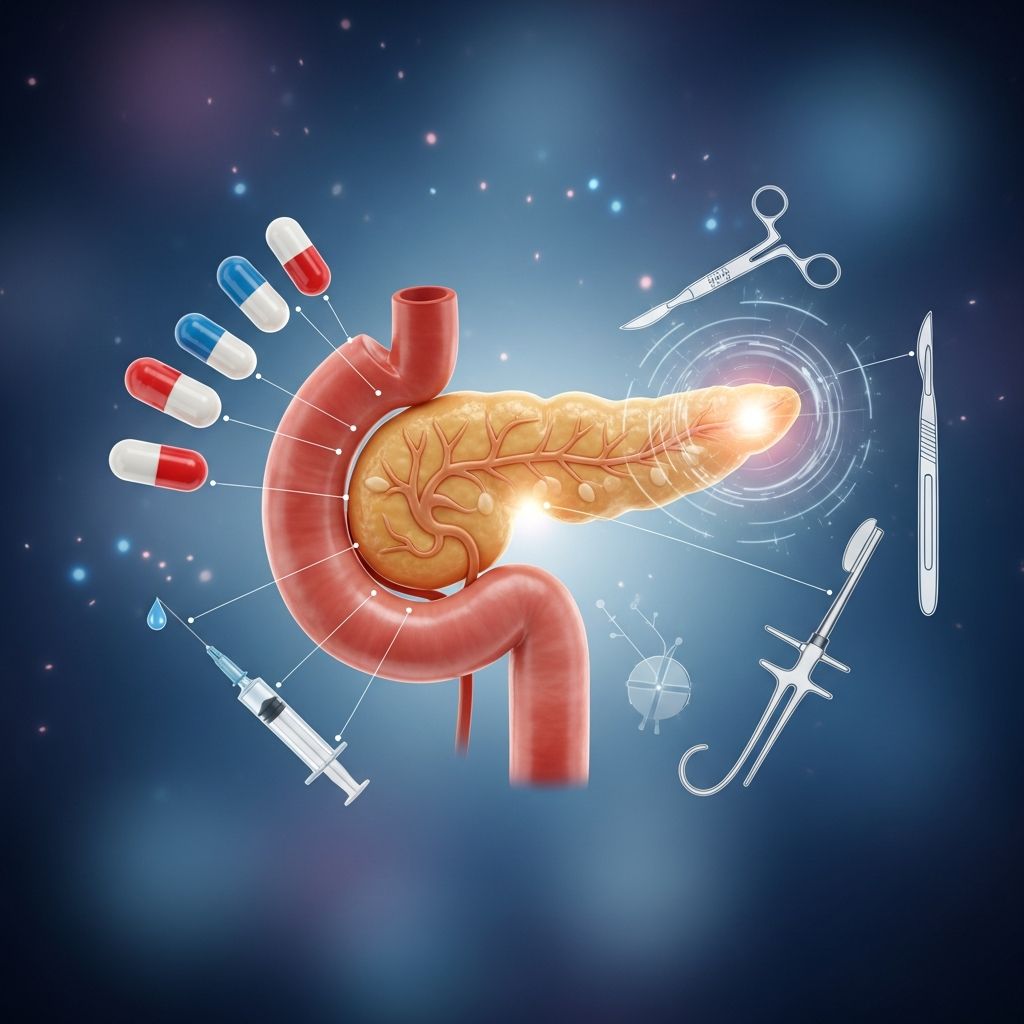
Chronic pancreatitis is a progressive inflammatory condition of the pancreas that results in permanent damage to its structure and function. Treatment of chronic pancreatitis requires a comprehensive, multidisciplinary approach that addresses both the underlying pancreatic dysfunction and the associated pain that significantly impacts quality of life. Johns Hopkins Medicine offers a team-based approach to evaluating and managing patients with chronic pancreatitis, combining expertise from gastroenterologists, surgeons, pain management specialists, and endocrinologists to develop personalized treatment plans.
Understanding Chronic Pancreatitis Pain
Pain is the most debilitating symptom of chronic pancreatitis, affecting nearly all patients with this condition. Research has demonstrated that pain in chronic pancreatitis results from both peripheral and central sensitization, which develops over time due to chronic inflammation and fibrosis of the pancreas. Understanding the underlying mechanisms of pain is crucial for developing effective treatment strategies. Some patients experience pain due to ongoing inflammation, while others suffer from nerve damage or other co-occurring conditions that activate pain pathways. A thorough evaluation by specialists can determine the specific cause of pain and guide appropriate treatment interventions.
Medical Management Options
Medical management forms the foundation of chronic pancreatitis treatment and is offered to all patients as an initial approach. These conservative treatments aim to reduce symptoms, prevent further pancreatic damage, and maintain digestive function.
Dietary Modifications and Lifestyle Changes
A critical component of medical management involves adherence to a low-fat diet, as fat consumption can trigger pancreatic enzyme secretion and exacerbate pain. Patients are advised to avoid alcohol completely, as alcohol is a major risk factor for chronic pancreatitis progression and can significantly worsen symptoms. Tobacco use should also be eliminated, as smoking accelerates pancreatic deterioration. These lifestyle modifications form the cornerstone of conservative management and can help prevent disease progression.
Pancreatic Enzyme Supplementation
Chronic pancreatitis leads to pancreatic insufficiency, which impairs the pancreas’s ability to produce digestive enzymes. Pancreatic enzyme supplements help restore digestive capacity, reduce bloating and malabsorption, and improve nutritional status. These supplements are typically taken with meals and are essential for patients experiencing fat malabsorption and weight loss.
Pain Medication Management
Pharmacological pain management in chronic pancreatitis involves a stepwise approach. Initial treatment often includes standard analgesics, but many patients require additional interventions. Centrally acting medications such as gabapentinoids have demonstrated effectiveness in treating chronic pancreatitis pain through their inhibition of neurotransmitters involved in central sensitization. These medications are often more effective than traditional analgesics because they address the underlying neurobiological mechanisms of chronic pain rather than simply masking symptoms.
When standard medications prove insufficient, providers may increase existing medication doses to maximize therapeutic benefits. Medications traditionally used for other chronic pain conditions, such as those prescribed for migraines, may also be considered. While opioid analgesics are sometimes necessary for severe pain management, their use is carefully monitored due to risks associated with long-term opioid therapy. The goal is to use the lowest effective dose for the shortest duration possible while exploring alternative pain management strategies.
Psychological and Behavioral Interventions
Psychological support plays an essential role in chronic pancreatitis management. Chronic pain conditions frequently lead to maladaptive behaviors and psychological distress that can amplify pain perception. Evidence-based psychological interventions, including cognitive behavioral therapy and mindfulness-based approaches, help patients develop healthier coping strategies and reduce pain-related disability. These interventions address both the psychological aspect of pain and the disease itself, improving overall quality of life and functional capacity. Many patients benefit significantly from working with mental health specialists experienced in chronic pain management.
Related Stories



Endoscopic Treatment Options
When medical management alone proves insufficient, endoscopic therapy offers an important intermediate treatment option. Endoscopic procedures are particularly effective for patients with dilated pancreatic ducts and ductal obstruction.
Endoscopic Retrograde Cholangiopancreatography (ERCP)
Endoscopic retrograde cholangiopancreatography is the most commonly offered endoscopic procedure for chronic pancreatitis. During ERCP, specialists use an endoscope to visualize the pancreatic duct and biliary system. The procedure allows physicians to dilate strictures (narrowed areas of the duct), remove pancreatic duct stones that may obstruct pancreatic secretions, and place stents to maintain duct patency. These interventions can significantly reduce pain by relieving ductal obstruction and improving pancreatic secretion flow.
Endoscopic Ultrasound with Celiac Plexus Blockade
Recent developments in endoscopic ultrasound technology have introduced celiac plexus blockade as an innovative pain management procedure. This technique involves using ultrasound guidance to deliver pain-relieving medication directly to the celiac plexus nerves, which transmit pancreatic pain signals. While primarily effective for short-term pain relief, this procedure can provide meaningful symptom improvement while more definitive long-term treatment options are pursued.
Surgical Treatment Options
Surgical intervention is considered for patients who do not respond adequately to medical and endoscopic management. The selection of the appropriate surgical procedure depends on pancreatic duct anatomy, disease severity, and individual patient factors.
Lateral Pancreaticojejunostomy (Puestow Procedure)
The Puestow procedure is recommended for patients with large duct disease and pancreatic head dilation. This procedure involves creating a direct anastomosis between the pancreatic duct and the small intestine, allowing pancreatic secretions to bypass areas of obstruction. The procedure effectively relieves ductal hypertension and associated pain.
Pancreaticoduodenectomy (Whipple Procedure)
The Whipple procedure involves resection of the pancreatic head, duodenum, and associated structures. This surgical option is considered for patients with small duct disease, significant pain, and suspected malignancy or other indications requiring head resection.
The Frey Procedure
The Frey procedure combines aspects of lateral pancreaticojejunostomy with pancreatic head resurfacing. This approach is particularly useful for patients with both large duct disease and pancreatic head enlargement, providing comprehensive relief through combined ductal drainage and tissue resection.
Total Pancreatectomy with Islet Cell Auto-transplantation
Total pancreatectomy with islet cell auto-transplantation represents a major advancement in surgical management of chronic pancreatitis. This procedure involves complete pancreas removal followed by isolation and auto-transplantation of insulin-producing islet cells into the portal vein or liver, preserving endocrine function while eliminating the source of chronic pain and inflammation. This represents the most significant development in surgical treatment for carefully selected patients with severe, refractory chronic pancreatitis. Selection of optimal candidates for this procedure requires coordinated evaluation by a multidisciplinary team of specialists including gastroenterologists, surgeons, pain management specialists, and endocrinologists.
The Johns Hopkins Multidisciplinary Approach
Johns Hopkins Medicine employs a distinctive team-based approach to chronic pancreatitis management that maximizes treatment effectiveness. The comprehensive evaluation process typically takes two hours and involves assessment by multiple specialists who work collaboratively to develop individualized treatment plans.
Initial Comprehensive Evaluation
During the initial evaluation, the team performs a thorough assessment to understand the underlying causes of pain and the mechanisms driving the disease process. Specialists examine imaging and laboratory results to determine whether pain results from ongoing inflammation, nerve damage, or other contributing factors. This detailed diagnostic work informs personalized treatment recommendations tailored to each patient’s specific condition.
Specialized Expertise Integration
The team brings together international leaders in pain science and brain science, combining neurogastroenterology, pain psychiatry, mental health specialization, and surgical expertise. This integrated approach allows the team to offer best-practice treatment that is difficult to find elsewhere, addressing both the medical and psychological dimensions of chronic pancreatitis.
Ongoing Management and Follow-up
Following the initial comprehensive evaluation, the team schedules follow-up visits, typically occurring approximately three months after the initial assessment. This ongoing relationship allows specialists to monitor treatment effectiveness, adjust therapeutic approaches as needed, and pursue additional interventions or referrals to other specialists as indicated. The team remains committed to optimizing outcomes and improving quality of life for patients living with chronic pancreatitis.
Specialized Pain Management Programs
The Johns Hopkins Pancreatitis Pain Program represents a dedicated research and patient care initiative specifically designed to help patients with chronic pancreatitis-related pain. This program combines expertise from pain psychiatrists, neurogastroenterologists, and mental health specialists to offer innovative neuromodulation treatments and comprehensive pain management strategies. The program’s mission is to prevent chronic pancreatitis from ruining patients’ lives by providing effective treatment and support.
Frequently Asked Questions
Q: Why is a multidisciplinary approach important in chronic pancreatitis treatment?
A: Chronic pancreatitis is a complex disease requiring expertise from multiple specialists. A multidisciplinary team approach ensures comprehensive evaluation of the underlying disease mechanisms, personalized treatment planning, and access to the full spectrum of medical, endoscopic, and surgical options. This coordinated approach maximizes the likelihood of achieving effective pain control and improving quality of life.
Q: What happens if medical management alone doesn’t control my pain?
A: If conservative medical management is insufficient, endoscopic interventions can be considered for patients with ductal obstruction. If endoscopic therapy is ineffective or inappropriate, surgical options ranging from ductal drainage procedures to total pancreatectomy with islet cell auto-transplantation may be considered. Your physicians will work with you to determine the most appropriate next steps based on your specific condition and treatment response.
Q: Are there psychological interventions that can help with chronic pancreatitis pain?
A: Yes, evidence-based psychological interventions including cognitive behavioral therapy and mindfulness-based approaches have demonstrated effectiveness in reducing chronic pancreatitis pain and improving quality of life. These interventions help patients develop healthier coping strategies and address the psychological components of chronic pain conditions. Many patients benefit significantly from working with mental health specialists experienced in pain management.
Q: What is total pancreatectomy with islet cell auto-transplantation?
A: This procedure involves complete surgical removal of the diseased pancreas followed by isolation and transplantation of insulin-producing islet cells into the liver. This approach eliminates the source of chronic pain and inflammation while preserving the ability to produce insulin, avoiding permanent diabetes. It represents an important surgical option for carefully selected patients with severe, refractory chronic pancreatitis.
Q: How long does the initial evaluation at Johns Hopkins typically take?
A: The comprehensive initial evaluation by the multidisciplinary team typically takes approximately two hours. During this time, specialists perform detailed assessments, order necessary laboratory tests and imaging studies, develop a diagnostic formulation explaining your pain, and provide treatment recommendations. Follow-up visits are usually scheduled for approximately three months after the initial evaluation.
References
- Johns Hopkins Pancreatitis Pain Program — Johns Hopkins Medicine. 2025. https://www.hopkinsmedicine.org/health/conditions-and-diseases/chronic-pancreatitis
- Medical Management of Pain in Chronic Pancreatitis — PubMed/National Center for Biotechnology Information. 2017. https://pubmed.ncbi.nlm.nih.gov/28523574/
- Diagnosis and Management of Chronic Pancreatitis: A Review — Johns Hopkins University Research Database. 2024. https://pure.johnshopkins.edu/en/publications/diagnosis-and-management-of-chronic-pancreatitis-a-review
- Treatment Options for Pancreatitis — Johns Hopkins Medicine. 2011. https://www.hopkinsmedicine.org/
- Mission Cure: New Collaboration with Johns Hopkins to Treat Pancreatitis Pain — Mission Cure Organization. 2024. https://mission-cure.org/johns-hopkins-pancreatitis-pain-program/
Similar Articles








Read full bio of Sneha Tete