Chronic Ulcerative Stomatitis: Diagnosis, Treatment, Outlook
Rare autoimmune disorder causing painful oral ulcers resistant to steroids, responsive to hydroxychloroquine therapy.
What is chronic ulcerative stomatitis?
Chronic ulcerative stomatitis (CUS) is a rare, chronic inflammatory condition primarily affecting the oral mucosa. It manifests as painful, persistent erosions and ulcers that resist conventional corticosteroid treatments. Unlike common aphthous stomatitis or lichen planus, CUS is characterized by a unique autoimmune pathogenesis involving stratified epithelium-specific antinuclear antibodies (SES-ANA).
First described in 1982, CUS predominantly affects middle-aged women and can significantly impair quality of life due to severe pain, eating difficulties, and secondary infections. The disease may extend to skin involvement in about 25% of cases, presenting as lichenoid eruptions.
Histologically, CUS shows lichenoid mucositis with basal cell degeneration, but the definitive diagnosis relies on direct immunofluorescence (DIF) revealing IgG deposits in a speckled pattern in the nuclei of basal and parabasal keratinocytes, known as SES-ANA pattern.
Who gets chronic ulcerative stomatitis?
CUS typically occurs in adults, with a strong female predominance (approximately 90% of cases). The mean age at onset is around 50–60 years, though cases in younger patients have been reported.
- Demographics: Predominantly Caucasian women; rare in men and children.
- Risk factors: Autoimmune predisposition; possible genetic factors, though not well-defined. No strong associations with smoking, alcohol, or specific infections.
- Prevalence: Extremely rare; fewer than 100 cases well-documented in literature.
Differential diagnosis includes erosive lichen planus (OLP), pemphigus vulgaris, mucous membrane pemphigoid, and recurrent aphthous stomatitis, but treatment response and DIF distinguish CUS.
What causes chronic ulcerative stomatitis?
CUS is an autoimmune disorder where autoantibodies target desmosomal and hemidesmosomal proteins in the stratified squamous epithelium. Circulating stratified epithelium-specific antinuclear antibodies (SES-ANA) bind to keratinocyte nuclei, triggering a lichenoid interface reaction.
Unlike systemic lupus erythematosus (SLE), SES-ANA are specific to CUS and not detected in serum ANA tests routinely. The trigger remains unknown but may involve molecular mimicry or environmental factors in genetically susceptible individuals.
What are the clinical features of chronic ulcerative stomatitis?
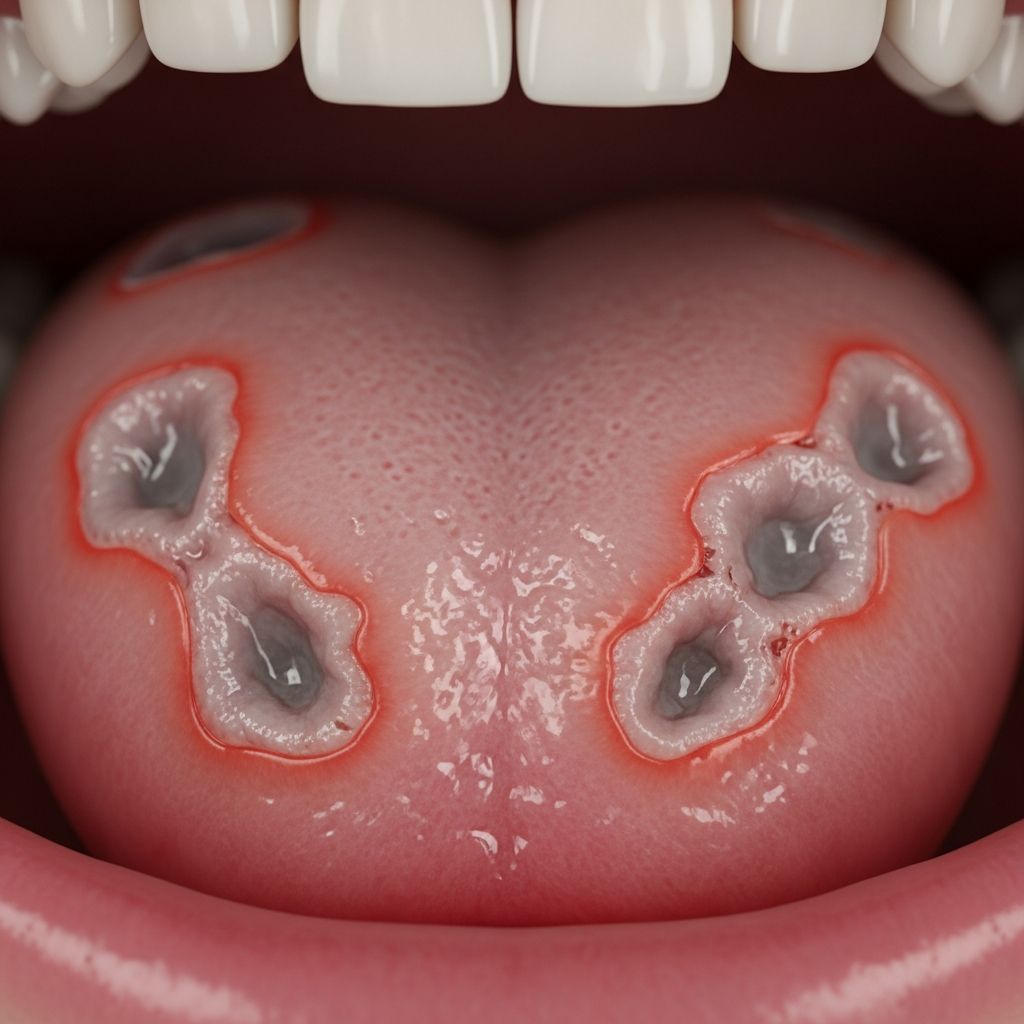
The hallmark is chronic, painful oral erosions and ulcers, often bilateral and symmetric, affecting buccal mucosa, gingiva, tongue, and labial mucosa.
- Oral lesions: Shallow to deep ulcers with erythematous borders; white plaques may precede erosions; desquamative gingivitis common.
- Symptoms: Severe pain exacerbated by eating spicy/acidic foods; halitosis; weight loss from dysphagia.
- Skin involvement (25%): Lichenoid papules on trunk, extremities; nail dystrophy rare.
- Progression: Relapsing-remitting; ulcers heal with scarring in chronic cases.
Clinical presentation closely mimics erosive OLP, leading to frequent misdiagnosis.
How is chronic ulcerative stomatitis diagnosed?
Diagnosis combines clinical, histopathological, and immunofluorescence findings.
- Clinical examination: Persistent oral ulcers unresponsive to topical steroids.
- Biopsy: Routine histology shows lichenoid infiltrate, basal vacuolization, Civatte bodies—nonspecific.
- Direct immunofluorescence (DIF): Pathognomonic IgG in speckled nuclear pattern in basal/parabasal keratinocytes (SES-ANA). No basement membrane zone deposition.
- Serum testing: Positive SES-ANA by ANA on monkey esophagus substrate.
Related Stories



Differential diagnosis table:
| Feature | CUS | Erosive OLP |
|---|---|---|
| DIF | IgG SES-ANA speckled basal nuclei | Fibrin at BMZ |
| Treatment response | Hydroxychloroquine effective; steroids fail | Corticosteroids effective |
| Histology | Lichenoid, nonspecific | Lichenoid bands, hyperkeratosis |
What is the treatment of chronic ulcerative stomatitis?
CUS is notoriously resistant to corticosteroids (topical/systemic) and immunosuppressants, distinguishing it from mimics.
- First-line: Hydroxychloroquine (200–400 mg/day); response in weeks to months. Often combined with low-dose prednisone initially.
- Alternatives: Chloroquine; dapsone; thalidomide (limited data).
- Symptomatic: Topical anesthetics (lidocaine); barrier pastes; analgesics; avoid irritants.
- Monitoring: Eye exams for antimalarials; liver/renal function.
Remission achievable in 70–80% with hydroxychloroquine; lifelong therapy often required.
What is the outcome for chronic ulcerative stomatitis?
With appropriate therapy, most achieve symptom control and mucosal healing. Untreated, it leads to chronic pain and nutritional deficits. Rare malignant transformation reported. Regular follow-up essential.
Frequently Asked Questions
Is chronic ulcerative stomatitis contagious?
No, CUS is autoimmune, not infectious.
Can CUS be cured?
No cure, but manageable with hydroxychloroquine for long-term remission.
How long do CUS ulcers last?
Weeks to months without treatment; heal faster with therapy.
Does CUS affect skin?
Yes, in 25% of cases with lichenoid eruptions.
Is biopsy always needed for CUS?
Yes, with DIF for confirmation.
References
- Chronic ulcerative stomatitis: diagnostic and management challenges — PubMed/NCBI. 2007-06-01. https://pubmed.ncbi.nlm.nih.gov/17560144/
- Chronic Ulcerative Stomatitis (CUS) as an Interdisciplinary Challenge—Diagnostic and Treatment Procedures. A Review of the Literature. — PMC/NCBI. 2022-11-01. https://pmc.ncbi.nlm.nih.gov/articles/PMC9692827/
- Canine Chronic Ulcerative Stomatitis — Texas Veterinary Dental Center. 2023-01-01. https://texasveterinarydentalcenter.com/canine-chronic-ulcerative-stomatitis/
- Canine chronic ulcerative stomatitis – what we know — Vet Times. 2023-05-01. https://www.vettimes.com/news/vets/small-animal-vets/canine-chronic-ulcerative-stomatitis-what-we-know
- Stomatitis: Types, Symptoms, Causes, and Treatment — WebMD. 2024-01-01. https://www.webmd.com/oral-health/stomatitis-causes-treatment
- Stomatitis (Oral Mucositis): Types, Symptoms & Treatment — Cleveland Clinic. 2024-06-01. https://my.clevelandclinic.org/health/diseases/stomatitis-oral-mucositis
Similar Articles








Read full bio of medha deb