Cidofovir: Antiviral Treatment for Viral Skin Infections
Comprehensive guide to cidofovir therapy for refractory viral skin conditions and infections.

Cidofovir: An Overview
Cidofovir is a potent antiviral medication originally developed and approved by the FDA for the treatment of cytomegalovirus (CMV) retinitis in patients with acquired immunodeficiency syndrome (AIDS) caused by human immunodeficiency virus (HIV) infection. The drug, manufactured by Gilead Sciences in California, has emerged as an effective therapeutic option for various viral skin conditions beyond its initial indication. In recent years, dermatologists have increasingly utilized cidofovir for managing refractory viral skin diseases, particularly when conventional treatments have failed.
Mechanism of Action
Cidofovir functions as a nucleotide analog that inhibits viral DNA polymerase, the enzyme responsible for viral DNA replication in infected cells. By blocking this critical enzyme, cidofovir prevents the propagation of viral genetic material, effectively halting the growth and spread of viral infections. This mechanism makes cidofovir effective against a broad spectrum of DNA viruses, including human papillomavirus (HPV), which causes cutaneous warts, and other dermatotropic viruses.
Approved Indications and Off-Label Uses
While cidofovir’s primary FDA-approved indication remains CMV retinitis in immunocompromised patients, several small studies and case reports document successful off-label applications in dermatology. These applications include:
- Cutaneous viral warts — including plantar, periungual, and common warts resistant to conventional therapies
- Molluscum contagiosum — particularly generalized and facial lesions in immunocompromised individuals
- Acyclovir-resistant herpes simplex virus infections
- BK virus infections
- Adenovirus infections
- Recurrent respiratory papillomatosis
Routes of Administration
Cidofovir can be administered through multiple routes depending on the clinical indication and treatment goals. The three primary administration methods include:
- Intravenous administration — typically reserved for systemic infections such as CMV retinitis
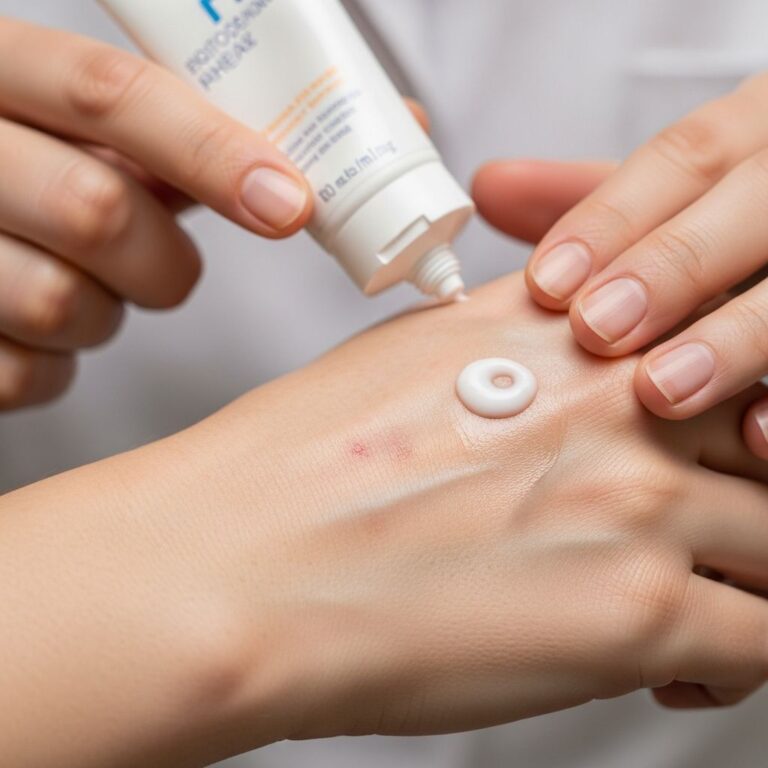
- Topical application — applied directly to skin lesions as a cream or compounded formulation
- Intralesional injection — administered directly into individual lesions for localized viral infections
Topical Cidofovir for Skin Lesions
Application and Dosage
For topical treatment of viral skin conditions, cidofovir is typically applied at a concentration of 1% to 3% depending on the specific condition and patient tolerance. The standard recommended protocol involves:
- Concentration: 1% cream formulation for most wart indications; 3% for molluscum contagiosum
- Frequency: Applied daily, five days per week
- Duration: Eight weeks per treatment cycle
- Occlusion: Treatment areas should be covered with occlusive dressing to enhance medication penetration
Preparation and Application Technique
Cidofovir lacks a commercially available topical formulation and must be compounded by a pharmacy into a cream base. Before application, proper preparation of the lesion site is essential for optimal efficacy:
- Gently debride the wart to remove thickened skin and debris
- Protect surrounding healthy skin with petroleum jelly to prevent irritation and irritant dermatitis
- Apply cidofovir only to the target lesion using a cotton-tipped applicator or gloved finger
- Cover the treated area with an occlusive dressing for at least 12 hours to maximize penetration
Clinical Efficacy in Viral Warts
Research has demonstrated that topical cidofovir exhibits efficacy against various types of refractory warts. Published evidence supports its use for:
Related Stories



- Plantar warts — successfully treated in multiple case series
- Periungual warts — lesions around nail structures that are notoriously difficult to treat
- Common and facial verrucae — particularly in pediatric and immunocompromised populations
Treatment cycles may be repeated after a 1-2 week interval, with most patients requiring two to four treatment cycles for optimal results and complete resolution.
Molluscum Contagiosum Management
Cidofovir has demonstrated remarkable efficacy in treating recalcitrant molluscum contagiosum, especially in immunocompromised individuals. In a landmark case series, two children with AIDS and extensive molluscum contagiosum that had failed multiple conventional treatments—including liquid nitrogen, cantharidin, and tretinoin—were successfully treated with topical 3% cidofovir.
Treatment Protocol for Molluscum Contagiosum
The protocol employed in documented cases involved:
- Topical 3% cidofovir compounded in a specialized vehicle (Dermovan)
- Once-daily application, five days per week
- Eight weeks of continuous treatment
- Occlusion with adhesive tape for nonfacial lesions (minimum 12 hours)
- Avoidance of treatment near eyelids to prevent conjunctival irritation
In the documented cases, all treated lesions showed complete clinical resolution after two months of therapy. Lesions healed with superficial scarring and postinflammatory changes, which is superior to scarring patterns observed with more invasive treatments.
Safety Profile and Adverse Effects
Local Side Effects
Topical cidofovir is generally well-tolerated, with local irritation being the predominant adverse effect. Common local reactions include:
- Erythema and redness — typically appearing 5-15 days after initial application
- Painful erosions — at treatment sites, usually resolving during two-day rest periods
- Inflammation — localized to treated lesions with minimal perilesional involvement
- Postinflammatory hyperpigmentation and hypopigmentation — may occur after lesion resolution
- Burning sensation — at the application site during treatment
- Transient alopecia — reported in some cases with scalp involvement
Systemic Safety Considerations
The primary advantage of topical cidofovir over systemic administration is the avoidance of significant renal toxicity. When applied topically, systemic absorption is minimal, eliminating the nephrotoxicity concerns associated with intravenous therapy. Clinical monitoring in documented cases revealed:
- No development of neutropenia during treatment
- Normal serum urea nitrogen levels
- Normal creatinine levels within the physiological range
- Absence of systemic adverse effects in immunocompromised populations
However, one documented case reported acute renal function deterioration in a patient with preexisting chronic renal failure, suggesting that patients with baseline renal impairment require careful monitoring.
Comparison with Alternative Treatments
| Treatment Option | Mechanism | Efficacy | Advantages | Limitations |
|---|---|---|---|---|
| Topical Cidofovir | Inhibits viral DNA polymerase | High for refractory lesions | Minimal scarring, safe in immunocompromised patients, non-invasive | Requires compounding, long treatment duration, local irritation |
| Cryotherapy | Tissue destruction via freezing | Moderate to high | Quick application, widely available | Pain, risk of scarring, multiple treatments often needed |
| Salicylic Acid | Chemical keratolysis | Moderate | Over-the-counter availability, low cost | Slow results, multiple applications required, skin irritation |
| Imiquimod | Immune activation | Moderate to high | Stimulates immune response, useful for multiple lesions | Prolonged treatment, variable response, cost |
| Intralesional Bleomycin | DNA damage and apoptosis | High for resistant warts | Single or few injections, effective | Potential systemic toxicity, pain with injection, Raynaud’s phenomenon risk |
Cost Considerations and Accessibility
While topical cidofovir demonstrates significant therapeutic potential, accessibility remains limited in clinical practice. The primary barriers to widespread utilization include:
- High cost — cidofovir is an expensive antiviral medication, making treatment financially burdensome for many patients
- Lack of FDA approval — for dermatological indications limits insurance coverage and standardized prescribing
- Compounding requirements — absence of commercial topical formulations necessitates pharmacy compounding, adding cost and delay
- Limited clinical trial data — absence of large-scale randomized controlled trials restricts adoption by many practitioners
Despite these barriers, cidofovir represents a cost-effective alternative compared to surgical intervention or repeated office-based treatments for refractory warts.
Special Populations
Immunocompromised Patients
Cidofovir has proven particularly valuable for immunocompromised individuals, including those with HIV/AIDS and other immunosuppressive conditions. These patients often experience severe, widespread viral skin infections that resist conventional therapies. Topical cidofovir avoids the renal toxicity of intravenous therapy while effectively treating extensive lesions that cause significant physical and psychological burden.
Pediatric Patients
Case reports document successful cidofovir use in pediatric populations, including a 12-year-old child with Wiskott-Aldrich syndrome who had extensive molluscum contagiosum covering more than 75% of body surface area. Within 2-3 weeks of topical cidofovir therapy, acute inflammation was followed by lesion resolution, demonstrating efficacy and tolerability in children.
Treatment Considerations and Monitoring
Successful cidofovir therapy requires careful patient selection and monitoring. Key considerations include:
- Baseline renal function assessment — particularly important in patients with diabetes, hypertension, or preexisting renal disease
- Patient counseling — preparation for expected local reactions including erythema and erosion
- Regular monitoring — assessment at each visit for excessive irritation or systemic symptoms
- Skin barrier protection — use of emollients and barrier creams to minimize irritation
- Treatment adherence — compliance with the five-days-per-week regimen for optimal outcomes
Future Directions and Research Needs
While cidofovir demonstrates promise for managing refractory viral skin infections, several areas require further investigation:
- Double-blind controlled trials — to establish efficacy and safety compared to standard therapies
- Formulation optimization — development of commercial topical preparations to improve accessibility
- Comparative effectiveness studies — evaluation against emerging therapies and combinations
- Long-term follow-up data — assessment of recurrence rates and durability of response
- Mechanism-based research — investigation of viral resistance development and optimization strategies
Frequently Asked Questions
Q: Is topical cidofovir FDA-approved for treating warts?
A: No, cidofovir is FDA-approved only for CMV retinitis in AIDS patients. Its use for viral warts represents off-label therapy, though supported by published case reports and small studies.
Q: How long does cidofovir treatment typically take to show results?
A: Initial clinical response often appears within 5-15 days with redness and erosion at treatment sites. Complete resolution typically occurs after 8 weeks of continuous therapy, with some patients requiring multiple treatment cycles.
Q: Can topical cidofovir cause systemic side effects?
A: When applied topically, cidofovir has minimal systemic absorption and generally does not cause nephrotoxicity associated with intravenous administration. However, patients with preexisting renal impairment require careful monitoring.
Q: How does cidofovir compare to cryotherapy?
A: Cidofovir may cause less scarring than cryotherapy and is particularly useful for extensive or refractory lesions. However, cryotherapy is more readily available and requires fewer applications.
Q: Is cidofovir suitable for treating molluscum contagiosum in children?
A: Yes, case reports demonstrate successful treatment of extensive molluscum contagiosum in pediatric patients with AIDS and immunodeficiency syndromes, with good tolerability and minimal systemic effects.
Q: What precautions should be taken when applying topical cidofovir?
A: Protect surrounding healthy skin with petroleum jelly, avoid treatment near the eyes to prevent conjunctival irritation, debride lesions gently before application, and use occlusive dressing to enhance penetration.
References
- Topical Cidofovir: A Novel Treatment for Recalcitrant Molluscum Contagiosum — JAMA Dermatology. 2002. https://jamanetwork.com/journals/jamadermatology/fullarticle/190453
- Intralesional cidofovir for the management of refractory cutaneous viral warts — National Center for Biotechnology Information (NCBI). 2023. https://pmc.ncbi.nlm.nih.gov/articles/PMC10088403/
- Cidofovir in the Management of Non-Genital Warts: A Review — Journal of Drugs in Dermatology. 2023. https://jddonline.com/articles/cidofovir-in-the-management-of-non-genital-warts-a-review-S1545961623P1009X
- Cidofovir – DermNet — DermNet New Zealand. 2024. https://dermnetnz.org/topics/cidofovir
- FDA approval for cidofovir in cytomegalovirus retinitis treatment — Gilead Sciences Official Documentation. 2024. https://www.gilead.com
- Antiviral mechanisms and DNA polymerase inhibition — U.S. National Library of Medicine. 2024. https://pubchem.ncbi.nlm.nih.gov
Similar Articles








Read full bio of Sneha Tete