Cirrhosis: Expert Guide To Causes, Symptoms, And Treatment
Understand cirrhosis: symptoms, causes, complications, diagnosis, treatment, and living with this serious liver condition.
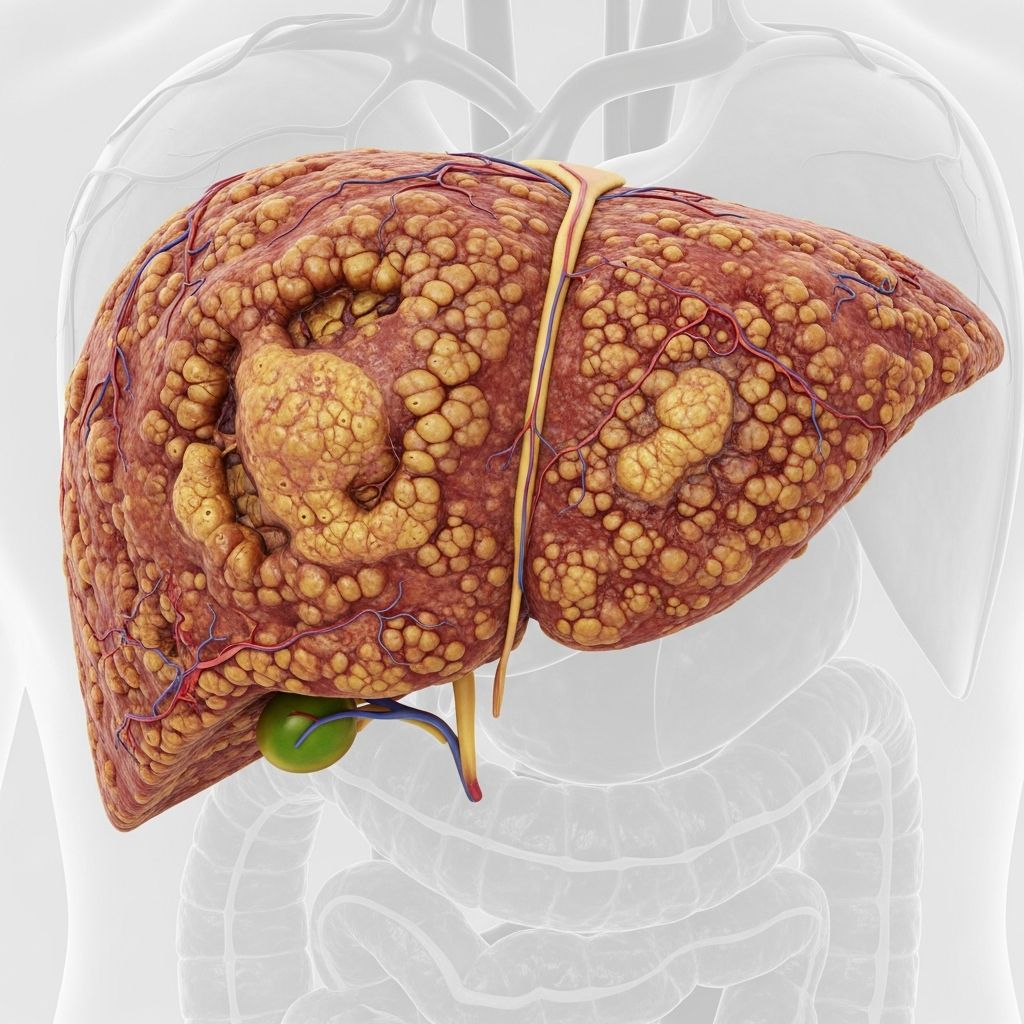
Cirrhosis represents the final stage of chronic liver disease, where healthy liver tissue is progressively replaced by scar tissue, impairing the organ’s vital functions such as detoxification, protein synthesis, and bile production. This condition develops slowly over years due to repeated injury and inflammation from various causes. While early stages may be asymptomatic, advanced cirrhosis can lead to life-threatening complications. Early detection and management of underlying causes are crucial to slow progression and improve quality of life.
What is cirrhosis?
The liver, a vital organ located in the upper right abdomen, performs over 500 essential functions, including filtering toxins from the blood, producing bile for digestion, storing vitamins and minerals, and synthesizing proteins like albumin and clotting factors. In cirrhosis, chronic damage triggers inflammation and fibrosis, where scar tissue (fibrosis) replaces healthy hepatocytes (liver cells). This scarring disrupts blood flow through the liver and impairs its regenerative capacity, leading to liver dysfunction.
Cirrhosis is classified into compensated (early, functioning liver) and decompensated (advanced, with complications) stages. Compensated cirrhosis can remain stable for years, but decompensated cirrhosis signals severe damage, often requiring urgent intervention. Globally, cirrhosis affects millions, contributing to significant morbidity and mortality, particularly in regions with high alcohol consumption or viral hepatitis prevalence.
How common is cirrhosis?
Cirrhosis is a major public health concern worldwide. In the United States, it is the 12th leading cause of death, with over 140,000 annual deaths reported. Alcohol-associated liver disease and nonalcoholic fatty liver disease (now termed metabolic dysfunction-associated steatotic liver disease or MASLD) account for the majority of cases. Viral hepatitis, particularly hepatitis C, has historically been a leading cause, though eradication efforts have reduced incidence. Prevalence is rising due to obesity epidemics, with MASLD projected to become the primary cause in Western countries by 2030.
In Europe and Australia, similar trends are observed, with fatty liver disease overtaking alcohol as the top etiology in some populations. Men are affected more frequently than women, partly due to higher alcohol intake and metabolic risks. Risk factors include age over 50, obesity, diabetes, and chronic infections.
Causes of cirrhosis
Cirrhosis results from long-term liver injury. Common causes include:
- Alcohol-associated liver disease: Excessive alcohol consumption over years leads to fat accumulation, inflammation (alcoholic hepatitis), and fibrosis. Even moderate drinking in susceptible individuals can contribute.
- Nonalcoholic fatty liver disease (MASLD/MASH): Fat buildup in the liver unrelated to alcohol, linked to obesity, type 2 diabetes, metabolic syndrome, and high cholesterol. It progresses to inflammation (steatohepatitis) and scarring.
- Chronic viral hepatitis: Hepatitis B and C viruses cause persistent infection, inflammation, and fibrosis. About 25% of chronic hepatitis C cases progress to cirrhosis over 20-30 years.
Less common causes encompass:
- Autoimmune hepatitis, where the immune system attacks liver cells.
- Bile duct disorders like primary biliary cholangitis (PBC) and primary sclerosing cholangitis (PSC), obstructing bile flow.
- Inherited conditions: hemochromatosis (iron overload), Wilson disease (copper accumulation), alpha-1 antitrypsin deficiency, cystic fibrosis, and galactosemia.
- Other: heart failure (causing liver congestion), certain medications, toxins, or venous outflow obstruction.
Symptoms of cirrhosis
Early cirrhosis is often silent, detected incidentally via blood tests or imaging showing abnormal liver function or nodularity. As scarring advances, symptoms emerge due to failing liver function and portal hypertension (high pressure in the portal vein).
Early symptoms:
Related Stories



- Fatigue and weakness
- Poor appetite, nausea, unintentional weight loss
- Mild right upper abdominal pain
- Itchy skin, muscle cramps, sexual dysfunction
Advanced (decompensated) symptoms:
- Jaundice (yellowing of skin/eyes), dark urine, pale stools
- Ascites (abdominal fluid buildup), edema (leg swelling)
- Easy bruising/bleeding, spider angiomas, palmar erythema
- Hepatic encephalopathy (confusion, sleep reversal, personality changes from toxin buildup)
- Variceal bleeding (from esophageal varices)
Complications of cirrhosis
Cirrhosis complications arise from portal hypertension, synthetic dysfunction, and immune compromise:
- Ascites and spontaneous bacterial peritonitis: Fluid accumulation prone to infection.
- Variceal hemorrhage: Ruptured enlarged veins, potentially fatal.
- Hepatic encephalopathy: Brain dysfunction from ammonia buildup.
- Hepatorenal syndrome: Kidney failure secondary to liver disease.
- Hepatocellular carcinoma (HCC): Liver cancer risk increases 20-30 fold; requires surveillance.
- Osteoporosis, infections, coagulopathy: Due to malnutrition and impaired clotting.
Who gets cirrhosis?
Anyone with chronic liver insults is at risk, but heavy drinkers (men >40g/day, women >20g/day for 10+ years), those with obesity/diabetes, or chronic hepatitis carriers are most vulnerable. Genetic factors influence susceptibility, e.g., PNPLA3 gene variants in MASLD. Men predominate, but women progress faster post-menopause.
How is cirrhosis diagnosed?
Diagnosis combines history, exams, labs, imaging, and biopsy:
- Blood tests: Elevated liver enzymes (ALT/AST), low albumin/platelets, high bilirubin/INR. FIB-4 or ELF scores assess fibrosis.
- Imaging: Ultrasound (nodular liver, splenomegaly), CT/MRI, elastography (FibroScan measures stiffness).
- Biopsy: Gold standard, via needle or transjugular route, stages fibrosis (F0-F4).
- Endoscopy: Screens for varices.
Treatment and management of cirrhosis
No cure reverses scarring, but treatments target causes and complications:
- Lifestyle: Alcohol abstinence, weight loss, diabetes control, low-sodium diet.
- Medications: Antivirals for hepatitis, diuretics/albumin for ascites, beta-blockers for varices, lactulose/rifaximin for encephalopathy.
- Procedures: Paracentesis, TIPS shunt, band ligation.
- Transplant: For end-stage disease; MELD score prioritizes.
Preventing cirrhosis
Prevention focuses on modifiable risks: limit alcohol (<14 units/week), vaccinate against hepatitis B, treat hepatitis C, maintain healthy weight, avoid toxins. Regular screening for at-risk groups (e.g., ultrasound every 6 months for HCC).
Prognosis for cirrhosis
Compensated cirrhosis has 1-2% annual decompensation risk; median survival 12 years. Decompensated: 50% 2-year mortality without transplant. Child-Pugh/MELD scores predict outcomes.
Living with cirrhosis
Patients need multidisciplinary care: nutrition (high-protein unless encephalopathic), exercise, vaccinations (influenza, pneumococcal). Support groups aid coping. Monitor for depression.
Frequently Asked Questions (FAQs)
Q: Can cirrhosis be reversed?
A: Early fibrosis may regress with cause removal (e.g., sobriety, antivirals), but advanced scarring is irreversible.
Q: Is cirrhosis always fatal?
A: Not always; many live years with management. Transplant cures eligible patients.
Q: Does coffee help cirrhosis?
A: Moderate coffee (2-3 cups/day) associates with lower fibrosis progression in studies.
Q: Can you live with cirrhosis for 20 years?
A: Yes, compensated cases often do with lifestyle adherence.
References
- Symptoms & Causes of Cirrhosis — National Institute of Diabetes and Digestive and Kidney Diseases (NIDDK). 2023-08-18. https://www.niddk.nih.gov/health-information/liver-disease/cirrhosis/symptoms-causes
- Cirrhosis of the Liver: Symptoms, Causes & Treatments — American Liver Foundation. 2024-05-15. https://liverfoundation.org/liver-diseases/complications-of-liver-disease/cirrhosis/
- Cirrhosis of the liver — Better Health Channel, Victoria Government. 2023-11-02. https://www.betterhealth.vic.gov.au/health/conditionsandtreatments/cirrhosis-of-the-liver
- Cirrhosis — MedlinePlus, U.S. National Library of Medicine. 2024-07-10. https://medlineplus.gov/ency/article/000255.htm
- Cirrhosis of the Liver: What It Is, Symptom & Treatment — Cleveland Clinic. 2024-09-05. https://my.clevelandclinic.org/health/diseases/15572-cirrhosis-of-the-liver
- Cirrhosis Symptoms — Stanford Health Care. 2023-06-20. https://stanfordhealthcare.org/medical-conditions/liver-kidneys-and-urinary-system/chronic-liver-disease/symptoms.html
Similar Articles








Read full bio of Sneha Tete